In the fast-moving consumer goods (FMCG) sector, implementing a Sales Force Automation (SFA) app can significantly enhance operational efficiency, improve sales performance, and streamline communication between teams. This document outlines the key steps and best practices for successfully implementing an SFA app in the FMCG industry, ensuring that organizations maximize their return on investment and achieve their sales objectives.
Key Steps for Implementation
1. Define Clear Objectives
Before initiating the implementation process, it is crucial to define clear objectives for what the SFA app should achieve. This includes identifying specific pain points, desired outcomes, and key performance indicators (KPIs) that will measure success.
2. Involve Stakeholders
Engaging stakeholders from various departments—such as sales, marketing, IT, and management—ensures that the app meets the diverse needs of the organization. Their input can help shape the app’s features and functionalities.
3. Choose the Right SFA Solution
Selecting the right SFA app is critical. Evaluate different solutions based on features, scalability, user-friendliness, and integration capabilities with existing systems. Consider conducting a pilot test with a small group of users to assess the app’s effectiveness.
4. Develop a Comprehensive Implementation Plan
Create a detailed implementation plan that outlines timelines, responsibilities, and resources required. This plan should also include training schedules for users to ensure they are comfortable using the new system.
5. Data Migration and Integration
Ensure that existing data is accurately migrated to the new SFA app. This may involve cleaning and formatting data to ensure compatibility. Additionally, integrate the app with other systems (e.g., CRM, ERP) to create a seamless flow of information.
6. Training and Support
Provide thorough training for all users to familiarize them with the app’s features and functionalities. Ongoing support should also be available to address any issues or questions that arise post-implementation.
7. Monitor and Evaluate Performance
After the SFA app is implemented, continuously monitor its performance against the defined KPIs. Gather feedback from users to identify areas for improvement and make necessary adjustments to enhance functionality.
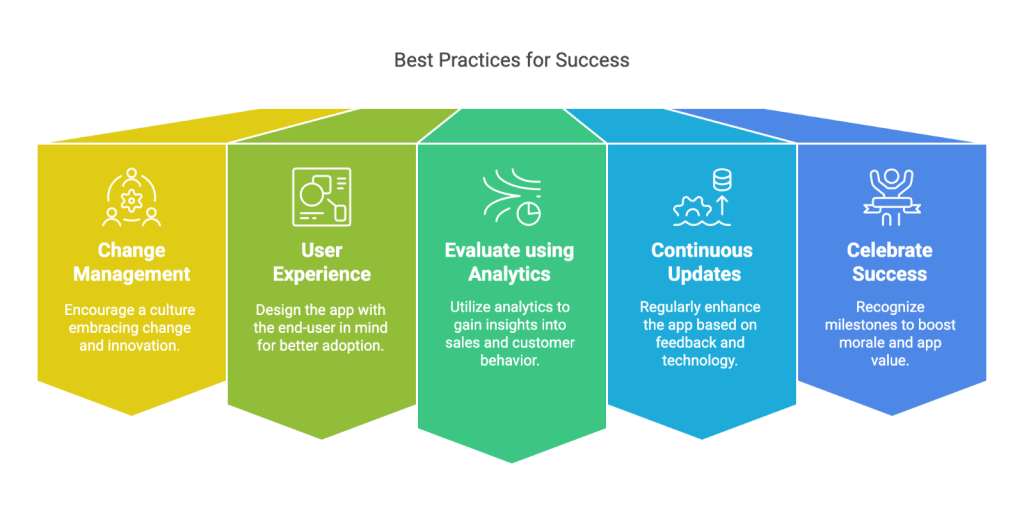
Best Practices for Success
1. Foster a Change Management Culture
Encourage a culture that embraces change and innovation. Communicate the benefits of the SFA app to all employees to gain their buy-in and reduce resistance to new processes.
2. Focus on User Experience
Design the app with the end-user in mind. A user-friendly interface and intuitive navigation can significantly enhance adoption rates and overall satisfaction.
3. Leverage Analytics
Utilize the analytics capabilities of the SFA app to gain insights into sales performance, customer behavior, and market trends. This data can inform strategic decisions and drive sales growth.
4. Regularly Update and Improve
Technology is constantly evolving, and so should your SFA app. Regular updates and enhancements based on user feedback and technological advancements will keep the app relevant and effective.
5. Celebrate Successes
Recognize and celebrate milestones achieved through the use of the field sales engagement app. This not only boosts morale but also reinforces the value of the app within the organization.
Opting for an effective Sales Force Automation app in the FMCG sector can transform sales processes and drive significant business growth. By following the outlined key steps and best practices along with the help of a dedicated field sales app, organizations can ensure a successful implementation that meets their unique needs and enhances overall performance.
In today’s fast-paced business environment, accurate sales volume planning is crucial for organizations aiming to thrive in 2025. This document outlines practical strategies that can enhance the precision of sales forecasts, ensuring that businesses can meet customer demand while optimizing resources. By implementing these strategies, companies can improve their decision-making processes, align their operations with market trends, and ultimately drive profitability.
Understanding Sales Volume Planning
Sales volume planning involves predicting future sales to ensure that a business can meet customer demand without overproducing or underproducing. It requires a deep understanding of market trends, customer behavior, and internal capabilities. Accurate sales volume planning not only helps in inventory management but also in financial forecasting and resource allocation.
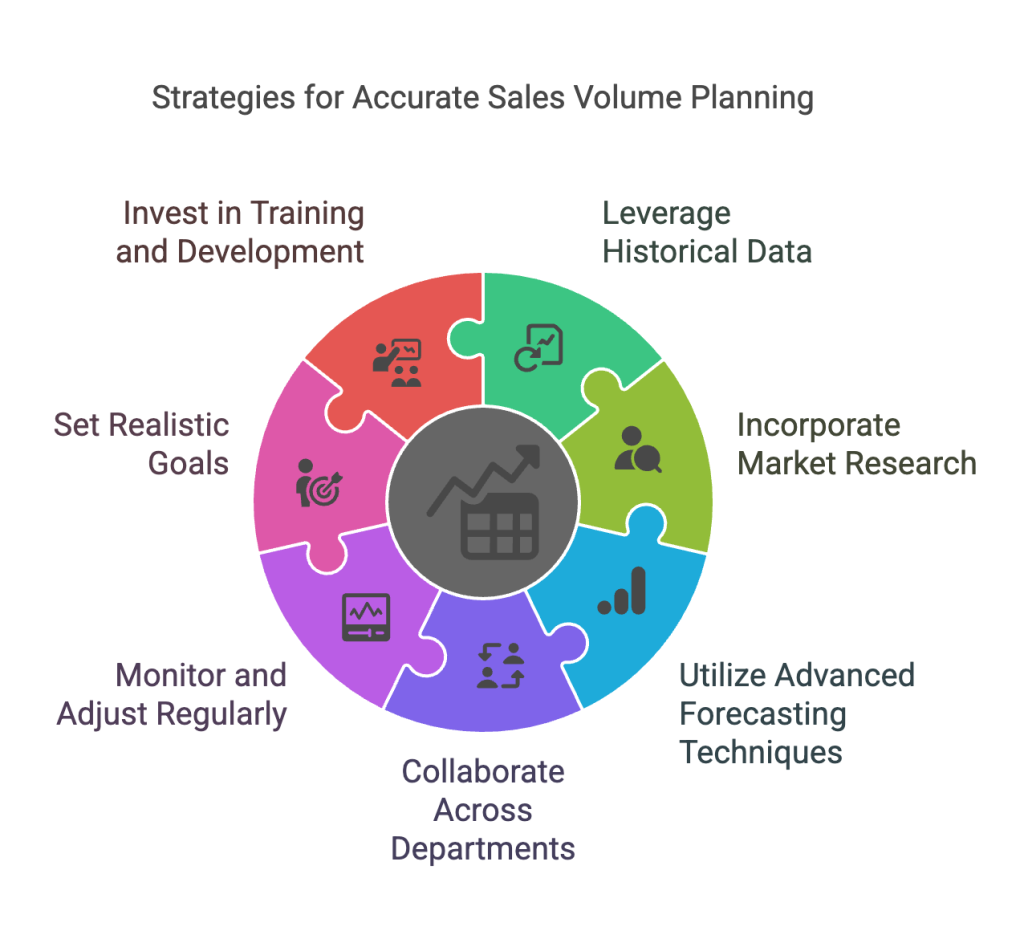
Key Strategies for Accurate Sales Volume Planning
1. Leverage Historical Data
Utilizing historical sales data is one of the most effective ways to forecast future sales. Analyzing past sales trends can provide insights into seasonal fluctuations, customer preferences, and market dynamics. Businesses should invest in robust data analytics tools to extract actionable insights from their historical data.
2. Incorporate Market Research
Conducting thorough market research is essential for understanding external factors that can influence sales volume. This includes analyzing competitor strategies, market conditions, and consumer behavior trends. Engaging with customers through surveys and feedback can also provide valuable information that can refine sales forecasts.
3. Utilize Advanced Forecasting Techniques
Employing advanced forecasting techniques, such as machine learning algorithms and predictive analytics, can significantly enhance the accuracy of sales volume predictions. These technologies can analyze vast amounts of data and identify patterns that traditional methods may overlook.
4. Collaborate Across Departments
Sales volume planning should not be a siloed process. Collaboration between sales, marketing, finance, and supply chain departments can lead to more accurate forecasts. Regular communication and sharing of insights among these teams can help align strategies and improve overall planning accuracy.
5. Monitor and Adjust Regularly
Sales volume planning is not a one-time activity. It requires continuous monitoring and adjustment based on real-time data and market changes. Businesses should establish a routine for reviewing forecasts and making necessary adjustments to stay aligned with actual sales performance.
6. Set Realistic Goals
Setting realistic sales targets is crucial for effective volume planning. Overly ambitious goals can lead to disappointment and misallocation of resources. Businesses should base their targets on data-driven insights and market realities to ensure they are achievable.
7. Invest in Training and Development
Equipping teams with the necessary skills and knowledge in sales forecasting can lead to improved accuracy. Investing in training programs that focus on data analysis, market research, and forecasting techniques can empower employees to contribute effectively to the planning process.
Mastering sales volume planning for 2025 requires a multifaceted approach that combines data analysis, market research, and cross-departmental collaboration. To achieve this, an effective sales force management software would be really ideal. A field sales app that covers most of the features mentioned above will help you in effective sales volume planning.
As we move towards 2025, organizations that prioritize effective sales volume planning will be better positioned to navigate challenges and seize opportunities.
Frequently Asked Questions
1. How can sales forecasting improve sales performance?
Accurate sales forecasting helps businesses plan resources, set realistic targets, and align sales efforts with market demand for better results.
2. What strategies ensure accurate sales volume planning?
Use historical data, market research, advanced forecasting techniques, and cross-department collaboration to predict sales accurately.
3. How can historical data and market research help predict sales?
Analyzing past sales trends and market conditions reveals patterns in demand, customer behavior, and seasonal fluctuations.
4. How does cross-department collaboration improve sales forecasts?
Sharing insights between sales, marketing, finance, and supply chain ensures forecasts reflect all operational realities and market trends.
5. What tools or software can streamline sales volume planning for FMCG businesses?
Sales force management software and field sales apps automate data collection, analysis, and reporting for faster, precise planning.
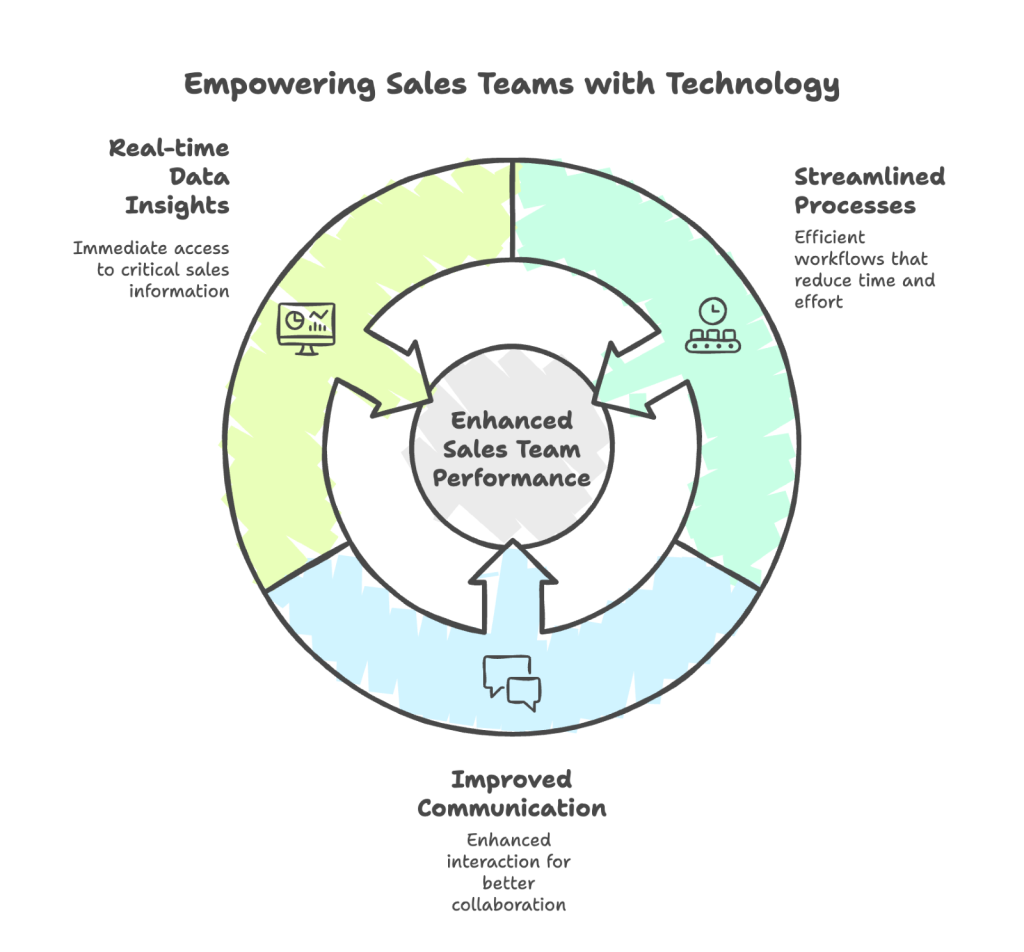
In today’s fast-paced business environment, field sales teams must leverage technology to stay ahead of the competition. A field sales app can significantly enhance the competitive nature of a sales team by streamlining processes, improving communication, and providing real-time data insights. This document explores the various ways a field sales app can empower sales teams to outperform their competitors and achieve their sales goals.
Improved Efficiency and Productivity
A field sales app can automate routine tasks such as scheduling appointments, tracking leads, and managing customer interactions. By reducing the time spent on administrative duties, sales representatives can focus more on selling and building relationships with clients. This increased efficiency allows teams to cover more ground and engage with more prospects, ultimately leading to higher sales volumes.
Real-Time Data Access
With a field sales app, sales teams have access to real-time data and analytics. This information can include customer preferences, purchase history, and market trends. By leveraging this data, sales representatives can tailor their pitches to meet the specific needs of each client, making their approach more personalized and effective. Additionally, real-time insights enable teams to make informed decisions quickly, allowing them to adapt their strategies to changing market conditions.
Enhanced Communication and Collaboration
A field sales app fosters better communication among team members and between sales reps and management. Features such as instant messaging, shared calendars, and collaborative tools ensure that everyone is on the same page. This improved communication helps in sharing best practices, discussing challenges, and strategizing collectively, which can lead to a more cohesive and competitive sales force.
Performance Tracking and Accountability
Sales apps often come equipped with performance-tracking features that allow managers to monitor individual and team performance metrics. By setting clear goals and benchmarks, sales teams can hold themselves accountable for their results. This transparency encourages healthy competition within the team, motivating members to strive for excellence and surpass their targets.
Integrating a field sales app with a CRM system can provide a comprehensive view of customer interactions and sales history. This integration allows sales representatives to manage their relationships more effectively, ensuring that no lead is overlooked and that follow-ups are timely. A strong CRM foundation enhances customer satisfaction and loyalty, giving the sales team a competitive advantage.
Training and Development Opportunities
Many field sales apps include training modules and resources that can help sales representatives improve their skills. By providing ongoing training and development opportunities, companies can ensure that their sales teams are equipped with the latest techniques and knowledge. This investment in professional growth not only boosts individual performance but also strengthens the overall competitiveness of the team.
A field sales app is a powerful tool that can significantly enhance the competitive nature of a field sales team. By improving efficiency, providing real-time data, fostering communication, tracking performance, integrating with CRM systems, and offering training opportunities, sales teams can position themselves for success in a competitive marketplace. Embracing technology in the field sales process is no longer optional; it is essential for staying ahead of the competition.
Choosing the right field sales app is crucial for enhancing productivity, improving customer relationships, and streamlining operations in your business. With numerous options available, it can be overwhelming to determine which app best fits your specific needs. This document outlines key considerations and features to look for when selecting a field sales app, ensuring you make an informed decision that aligns with your business goals.
1. Identify Your Business Needs
Before diving into the features of various apps, take the time to assess your business requirements. Consider the following questions:
What specific challenges are you facing in your field sales operations?
What functionalities do you need (e.g., lead management, route optimization, reporting)?
How many users will require access to the app?
Understanding your needs will help narrow down your options and focus on apps that offer relevant solutions.
2. Evaluate Key Features
When comparing field sales apps, look for essential features that can enhance your sales process:
Lead Management: The app should allow you to capture, track, and manage leads effectively.
Route Optimization: A feature that helps plan the most efficient routes for field visits can save time and fuel costs.
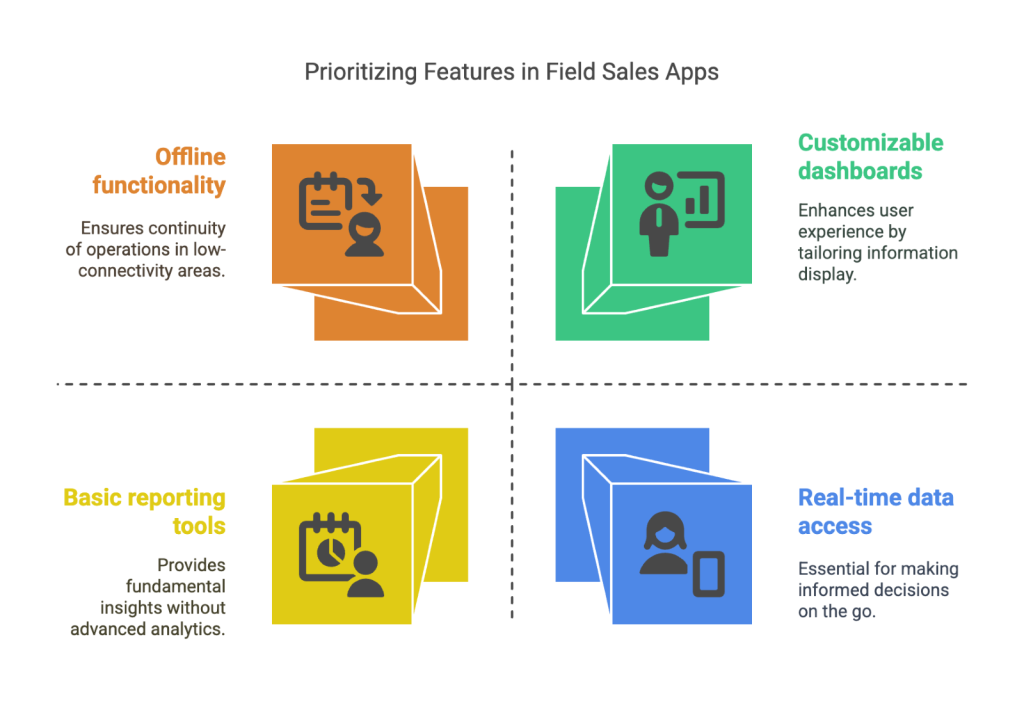
Offline Access: Ensure the app can function without an internet connection, allowing your sales team to work in remote areas.
Integration Capabilities: Check if the app can integrate with your existing CRM, email, and other tools to streamline workflows.
Reporting and Analytics: Look for robust reporting features that provide insights into sales performance and customer interactions.
3. User Experience and Interface
A user-friendly interface is vital for ensuring that your sales team can adopt the app quickly and efficiently. Consider the following:
Ease of Use: The app should have an intuitive design that minimizes the learning curve.
Mobile Compatibility: Since field sales reps will be using the app on-the-go, ensure it is optimized for mobile devices.
Customization Options: Look for apps that allow customization to fit your specific sales processes and branding.
4. Assess Customer Support and Training
Reliable customer support can make a significant difference in your experience with a field sales app. Consider:
Availability of Support: Check if the app provider offers 24/7 support, live chat, or phone assistance.
Training Resources: Look for comprehensive training materials, such as tutorials, webinars, and documentation, to help your team get started.
5. Read Reviews and Testimonials
Researching user reviews and testimonials can provide valuable insights into the app’s performance and reliability. Look for feedback on:
Overall user satisfaction
Specific features that users find beneficial or lacking
Any recurring issues or challenges faced by users
6. Consider Pricing and ROI
Finally, evaluate the pricing structure of the field sales app. Consider:
Subscription Models: Determine if the app offers a one-time purchase, monthly subscription, or tiered pricing based on features.
Hidden Costs: Be aware of any additional fees for integrations, support, or upgrades.
Return on Investment: Assess how the app can improve efficiency and sales performance, ultimately contributing to your bottom line.
Selecting the best field sales appfor your business requires careful consideration of your specific needs, desired features, user experience, support options, and pricing. By following the outlined steps, you can make an informed decision that enhances your field sales operations and drives business growth. Take the time to explore different options, and don’t hesitate to request demos or trials to find the perfect fit for your team.
As businesses expand their on-the-ground operations, managing a field sales team effectively becomes critical for sustained growth. In 2025, organizations need to leverage technology, data-driven strategies, and streamlined workflows to ensure their teams remain productive while maintaining real-time visibility into sales activities.
Here’s how businesses can optimize field sales management for maximum efficiency:
1. Leverage Real-Time Tracking and Reporting
One of the biggest challenges in field sales management is knowing where your team is and what they are doing. GPS-enabled tracking systems provide live location updates, helping managers monitor daily activities, reduce idle time, and ensure timely customer visits. Automated check-ins and geo-fencing eliminate the need for manual attendance tracking, improving accuracy and accountability.
2. Implement Smart Route Planning
A well-structured route plan minimizes travel time, allowing sales representatives to cover more clients efficiently. AI-driven route optimization helps field teams plan their visits effectively, reducing fuel costs and improving customer interactions. With real-time updates, sales reps can reschedule meetings based on last-minute changes, ensuring flexibility without impacting productivity.
3. Streamline Communication and Collaboration
Clear and instant communication between managers and field sales teams is crucial for operational efficiency. Cloud-based platforms enable seamless information sharing, from customer updates to order confirmations. Omnichannel communication tools—such as in-app messaging, automated follow-ups, and mobile CRM access—help sales reps stay connected with both managers and clients.
4. Empower Sales Teams with Mobile-First Solutions
A field sales app that offers offline functionality ensures that sales reps can log visits, update orders, and capture client feedback without internet disruptions. Mobile-first solutions with voice-to-text notes, quick data entry, and seamless CRM integration reduce administrative burdens, allowing sales teams to focus on selling.
5. Use Data Analytics for Performance Monitoring
Real-time dashboards and AI-powered insights help managers evaluate team performance, identify sales trends, and take proactive measures to boost productivity. With customizable reports, sales leaders can track KPIs such as conversion rates, visit frequency, and revenue generation, leading to data-driven decision-making.
6. Automate Repetitive Tasks
A sales force automation app eliminates manual tasks like reporting, appointment scheduling, and order processing, allowing sales teams to focus on revenue-generating activities. Automating these processes minimizes errors and ensures consistency in data management.
By integrating a robust field force management app, businesses can enhance productivity, improve transparency, and optimize sales performance. With the right tools and strategies, companies can stay ahead in 2025’s competitive sales landscape.
The sales landscape is evolving rapidly, and businesses are relying more than ever on technology to enhance productivity, improve customer relationships, and drive revenue growth. A sales force automation app has become indispensable for streamlining sales operations, reducing manual tasks, and boosting field team efficiency. As we enter 2025, here are the must-have features defining a high-performing sales automation solution.
1. AI-Powered Sales Insights
Artificial intelligence revolutionizes sales processes by offering predictive analytics, lead scoring, and sales forecasting. AI-driven insights help sales reps prioritize high-potential leads, personalize customer interactions, and make data-backed decisions for better conversions.
2. Real-Time Location Tracking & Geo-Fencing
For businesses managing on-the-go sales teams, real-time GPS tracking ensures complete visibility of field executives’ movements. Geo-fencing enables automatic check-ins and check-outs, reducing manual reporting and ensuring accountability.
3. Offline Functionality
Internet connectivity issues shouldn’t disrupt field operations. The ability to access data, update records, and log customer interactions even in offline mode ensures uninterrupted productivity. Once connectivity is restored, the data syncs automatically.
4. Seamless CRM Integration
A sales automation app must integrate seamlessly with popular CRM platforms to ensure smooth data flow between teams. This eliminates redundant data entry, enhances customer profiling, and improves sales follow-ups.
5. Automated Order Management
Sales reps need a quick and hassle-free way to place orders, generate invoices, and update inventory in real-time. An automated order management system reduces delays, minimizes errors, and improves operational efficiency.
6. Smart Route Optimization
Time is money in sales, and intelligent route planning can help field reps cover more clients in less time. Route optimization suggests the shortest and most efficient travel paths, saving fuel costs and increasing daily visits.
7. Customizable Reporting & Analytics
Sales leaders require actionable reports to monitor performance metrics, conversion rates, and sales trends. A dashboard with customizable reports provides real-time visibility into team performance, helping managers make informed decisions.
8. Omnichannel Communication
Today’s customers engage across multiple channels—calls, emails, WhatsApp, and chatbots. A robust solution must integrate all these channels, ensuring seamless customer interactions and follow-ups from a single interface.
In 2025, businesses must equip their teams with a cutting-edge field sales app that enhances efficiency, ensures accountability, and delivers actionable insights. Choosing the right field force management app can significantly improve sales performance, customer engagement, and revenue growth.
Field Sales in India has undergone a digital revolution, with businesses embracing Sales Force Automation Software to optimize sales processes, improve team efficiency, and boost customer engagement. Gone are the days of manual data entry and paper-based sales tracking—modern sales teams rely on smart field sales automation software to increase productivity and close deals faster.
If you’re searching for the best field sales app in 2025, here’s a list of top solutions tailored for Indian businesses.
1. Happisales – Best for End-to-End Field Sales Automation
Happisales is a leading field sales automation software designed specifically for businesses in India. It provides real-time tracking, automated visit planning, and intelligent sales reporting. With its intuitive field sales app, sales reps can manage customer interactions, capture orders, and optimize their routes efficiently.
Key Features:
✅ Real-time location tracking of field agents
✅ Order and collection management
✅ Intelligent customer insights and reporting
✅ Seamless integration with CRM and ERP systems
✅ User-friendly mobile field sales app for on-the-go sales reps
Why Choose Happisales?
Happisales is ideal for FMCG, pharmaceuticals, BFSI, and manufacturing industries that need comprehensive Sales Force Automation Software with a strong focus on field operations.
2. FieldSense – Best for GPS Tracking and Attendance Management
FieldSense is a simple yet powerful field sales automation software that helps businesses monitor field employees with GPS tracking, manage attendance, and automate sales processes. It is widely used in sectors like retail, distribution, and services.
Key Features:
✅ GPS-based employee tracking
✅ Attendance and task management
✅ Automated check-ins and reporting
✅ Expense tracking for field executives
3. BeatRoute – Best for AI-Driven Sales Execution
BeatRoute is an AI-powered field sales app that offers a unique goal-driven approach to sales execution. It helps Indian businesses optimize their field sales strategies with real-time insights and automated workflows.
Key Features:
✅ AI-powered sales recommendations
✅ Visual dashboards and sales analytics
✅ Geo-tagged customer visits and route optimization
✅ Customizable sales workflows for different industries
4. Spotio – Best for Outside Sales Teams
Spotio is an advanced Sales Force Automation Software that helps sales reps in the field manage leads, track sales performance, and improve customer interactions. It is well-suited for Indian businesses with on-the-go sales teams.
Key Features:
✅ Lead management with automated follow-ups
✅ Territory mapping for sales reps
✅ Integration with popular CRM platforms
✅ Performance tracking and sales forecasting
5. PepUpSales – Best for Distributor and Dealer Management
PepUpSales is a comprehensive field sales automation software designed for businesses managing distributors, dealers, and on-field sales representatives. It is particularly popular in industries like FMCG, pharmaceuticals, and consumer goods.
Key Features:
✅ Distributor and retailer management
✅ Sales order and inventory tracking
✅ Field force tracking with live updates
✅ AI-powered sales forecasting
How to Choose the Best Sales Force Automation Software?
When selecting the right field sales app, consider these key factors:
Industry Suitability – Ensure the software meets your industry-specific sales needs.
Mobile Accessibility – A robust field sales app is crucial for sales reps in the field.
Integration Capabilities – The software should integrate with your CRM, ERP, and other business tools.
Ease of Use – A simple, intuitive interface leads to better adoption among sales reps.
Analytics and Reporting – Real-time insights help optimize sales strategies and improve decision-making.
If you’re looking for an advanced yet easy-to-use field sales automation software, Happisales is the perfect choice. Book a free demo today and transform your field sales operations!
Field sales in India has undergone a remarkable transformation in 2025, driven by digital advancements, AI-powered tools, and changing customer expectations. Sales teams that once relied on manual processes, paper-based records, and intuition are now leveraging field sales automation software to enhance productivity, improve customer interactions, and maximize revenue.
Key Trends Shaping Field Sales in 2025
1. Rise of AI and Automation
Artificial intelligence (AI) is playing a pivotal role in optimizing sales operations. From intelligent lead scoring to automated follow-ups, AI-driven insights enable sales teams to focus on high-potential opportunities rather than on unqualified leads.
2. Mobile-First Sales Approach
With India’s increasing smartphone penetration, a field sales app has become indispensable for sales representatives. Whether it’s updating customer details, checking inventory, or tracking real-time sales performance, sales reps now have everything at their fingertips—eliminating the need for frequent office visits.
3. Hyper-Personalization in Customer Engagement
Today’s customers expect personalized solutions rather than generic pitches. Field sales teams are using automation tools to analyze customer preferences, purchase history, and engagement levels to offer tailor-made solutions.
4. Seamless Integration with CRMs and ERPs
Modern field sales automation software seamlessly integrates with enterprise CRMs and ERPs, ensuring smooth data flow across departments. Sales reps can access real-time customer information, track sales history, and provide accurate updates without switching between multiple tools.
5. Data-Driven Sales Decisions
Gone are the days when field sales relied purely on gut feelings. With analytics-driven dashboards, sales managers now get real-time insights into team performance, sales trends, and customer behavior. This data-driven approach helps in setting realistic targets and optimizing sales strategies.
6. Efficient Route Planning and Geo-Tracking
Field sales teams in India, especially in the FMCG, pharmaceuticals, and BFSI sectors, are benefiting from geo-tracking and route optimization. Sales reps can now plan their visits more efficiently, reduce travel time, and cover more customers in a day, leading to improved sales performance.
The Future of Field Sales
With rapid digital adoption, field sales are set to become more tech-driven, automated, and customer-centric. Organizations that invest in the right field sales automation software will stay ahead in the game, ensuring higher efficiency and better customer engagement.
Want to see how technology can transform your field sales operations? Book a free demo with Happisales today!
In today’s digital age, businesses are constantly seeking innovative solutions to streamline their operations and enhance the customer experience. One such solution that has gained significant traction is the field sales app. A field sales app is a mobile sales application that empowers field sales representatives to seamlessly manage the entire sales process, from lead generation to order fulfillment. This article delves into the various ways in which a field sales app revolutionizes online-to-offline order fulfillment, improving efficiency and driving growth for businesses.
How Field Sales Apps Revolutionize Online-to-Offline Order Fulfillment
Field sales apps have revolutionized the way businesses fulfill orders in the online-to-offline space. Traditionally, the process of order fulfillment involved manual paperwork, which was not only time-consuming but also prone to errors. With a field sales app, sales representatives can now access real-time information on product availability, pricing, and customer preferences, allowing them to make informed decisions on the spot. This streamlined approach eliminates the need for back-and-forth communication between the field and the office, resulting in faster order processing and enhanced customer satisfaction.
Moreover, field sales apps integrate seamlessly with existing enterprise resource planning (ERP) systems, enabling sales representatives to synchronize data between the field and the office effortlessly. This integration ensures accurate inventory management, reduces the risk of stockouts, and improves overall order accuracy. By leveraging the power of field sales automation software, businesses can optimize their order Fulfilment processes, minimize human errors, and provide customers with a seamless buying experience.
How a Mobile Sales App Improves Efficiency in the Field
A key advantage of using a mobile sales app is the significant boost in efficiency it brings to field sales representatives. With a mobile sales app, sales reps no longer need to carry around heavy catalogues or rely on outdated product information. Instead, they can access product catalogs, pricing information, and customer data instantly on their mobile devices. This instant access to information allows sales representatives to respond to customer inquiries promptly, personalize their sales pitches, and close deals faster.
Furthermore, a mobile sales app empowers sales representatives to create and process orders directly from the field. Gone are the days of writing down orders on paper or manually entering them into the system back at the office. With a mobile sales app, sales reps can generate accurate orders on the spot, ensuring that customers receive the right products promptly. This streamlined order creation and processing not only saves time but also reduces the chances of order errors, further enhancing customer satisfaction.
Field Sales App vs Traditional Order Fulfillment Methods
When comparing field sales apps to traditional order Fulfilment methods, it becomes evident that field sales apps offer numerous advantages. Traditional methods often involve a time-consuming back-and-forth process between the field and the office, leading to delays in order processing and increased chances of errors. On the other hand, field sales apps enable real-time communication and data synchronization, ensuring that sales representatives have the most up-to-date information at their fingertips.
Moreover, with traditional methods, there is a higher risk of miscommunication and misunderstandings due to manual paperwork and reliance on verbal communication. A field sales app eliminates these risks by providing a centralized platform for all order-related information, including product details, pricing, and customer preferences. This centralized approach improves communication, minimizes errors, and allows for seamless collaboration between the field and the office.
Field sales apps have transformed the way businesses fulfill orders in the online-to-offline space. By leveraging the power of mobile technology, field sales apps enhance efficiency, accuracy, and customer satisfaction. Sales representatives can access real-time information, create orders on the spot, and synchronize data seamlessly with back-office systems. When choosing a field sales app for your business, consider factors such as ease of use, integration capabilities, customization options, and offline functionality. Finally, provide comprehensive training and ongoing support to ensure that your sales team can fully utilize the field sales app’s capabilities. With the right field sales app, your business can revolutionize online-to-offline order Fulfilment and drive growth in the digital era.
To learn more about how a field sales app can transform your business, contact us today for a demo and see the benefits firsthand.
In today’s fast-paced retail industry, staying competitive means finding ways to maximize efficiency and streamline operations. One powerful tool that can help achieve this is field sales automation software. This innovative technology has revolutionized the way businesses manage their sales force, enabling them to optimize productivity and ultimately boost revenue.
Understanding the challenges in the retail industry
The retail industry is faced with numerous challenges, such as high competition, complex supply chains, and ever-changing consumer demands. These challenges can put a strain on sales teams, making it difficult to meet targets and deliver exceptional customer experiences. Field sales automation software addresses these challenges by providing a comprehensive solution that enhances the efficiency of sales processes, enabling businesses to stay ahead in the market.
The benefits of field sales automation software
Field sales automation software offers a wide range of benefits for retail businesses. Firstly, it streamlines sales operations by automating repetitive tasks, allowing sales teams to focus on building relationships with customers and closing deals. This automation reduces the chances of errors and ensures consistency in sales processes.
Secondly, field sales automation software provides real-time data and analytics, giving businesses valuable insights into their sales performance. This data-driven approach enables businesses to make informed decisions, identify areas for improvement, and adjust strategies accordingly.
Lastly, field sales automation software enhances collaboration and communication within sales teams. With features like shared calendars, task assignments, and document sharing, sales representatives can easily coordinate their efforts, resulting in a more efficient and productive sales force.
How field sales automation software improves efficiency
Field sales automation software improves efficiency in various ways. Firstly, it eliminates time-consuming manual tasks such as data entry, report generation, and order processing. By automating these processes, sales representatives can dedicate more time to engaging with customers and closing deals.
Additionally, field sales automation software provides real-time access to customer information, purchase history, and inventory levels. This enables sales representatives to provide personalized recommendations and ensure that customers have access to the products they need. The ability to access this information on-the-go through a field sales app further enhances efficiency by eliminating the need for paperwork and reducing administrative overhead.
Furthermore, field sales automation software enables businesses to track sales performance and identify areas for improvement. By analyzing data on sales activity, conversion rates, and customer feedback, businesses can implement targeted strategies to optimize their sales processes and increase revenue.
Case studies of successful implementation
Several businesses have already experienced the benefits of field sales automation software. One such case study is the implementation of a field sales tool by a leading retail chain. By automating their sales processes and providing their sales representatives with real-time access to customer information, they were able to increase their sales revenue by 20% within the first year.
Another case study involves a medium-sized retail business that integrated field sales automation software with its existing CRM system. This integration allowed them to consolidate their sales data, streamline their reporting process, and gain a comprehensive view of their sales performance. As a result, they were able to identify sales trends, optimize their sales strategies, and achieve a 15% increase in sales.
Key features to look for in field sales automation software
When choosing field sales automation software for your business, there are several key features to consider. Firstly, ensure that the software provides seamless integration with your existing systems, such as CRM, ERP, and inventory management. This integration ensures that data is shared across all platforms, eliminating the need for manual data entry and reducing the risk of errors.
Secondly, look for a field sales tool that offers real-time data and analytics. This feature enables you to monitor your sales performance, track key metrics, and make data-driven decisions. The ability to generate customizable reports and dashboards is also crucial for gaining valuable insights into your business’s sales processes.
Another important feature to consider is the mobile accessibility of the field sales app. Sales representatives should be able to access the software from their smartphones or tablets, allowing them to update customer information, process orders, and view product catalogs while on the go. This mobility enhances productivity and enables sales representatives to provide a seamless customer experience.
Choosing the right field sales tool for your business
Choosing the right field sales tool for your business requires careful consideration of your specific needs and objectives. Start by assessing your current sales processes and identifying the areas that need improvement. This will help you determine which features are essential for your business.
Next, research different field sales automation software providers and evaluate their offerings. Look for reputable vendors with a proven track record of successful implementations and positive customer reviews. Consider factors such as ease of use, scalability, and customer support.
Finally, request demos or trial versions of the software to get hands-on experience. This will allow you to assess the user interface, functionality, and compatibility with your existing systems. By carefully evaluating your options, you can choose a field sales tool that aligns with your business requirements and maximizes efficiency.
Integrating field sales automation software with existing systems
Integrating field sales automation software with your existing systems is crucial for ensuring a seamless workflow and maximizing efficiency. Start by identifying the systems that need to be integrated, such as CRM, ERP, and inventory management.
Next, work with your software provider to establish the integration process. This may involve mapping data fields, setting up data synchronization schedules, and configuring access permissions. It’s important to thoroughly test the integration to ensure that data is accurately shared between systems.
Once the integration is complete, provide training and support to your sales representatives to ensure a smooth transition. Offer comprehensive onboarding sessions and provide ongoing support to address any questions or issues that may arise. By effectively integrating field sales automation software with your existing systems, you can optimize your sales processes and achieve maximum efficiency.
Training and onboarding for field sales teams
Training and onboarding are crucial for successfully implementing field sales automation software. Start by providing comprehensive training sessions to familiarize your sales representatives with the software’s features and functionalities. This training should cover topics such as data entry, order processing, customer management, and reporting.
Additionally, it offers ongoing support and resources to address any questions or issues that may arise. This can include providing user manuals, hosting online forums or webinars, and assigning dedicated support personnel to assist sales representatives.
Furthermore, consider implementing a phased approach to onboarding. Start with a small group of sales representatives to pilot the software and gather feedback. Use this feedback to make any necessary adjustments before rolling out the software to the entire sales team.
By investing in training and onboarding, you can ensure that your sales representatives are equipped with the knowledge and skills to effectively utilize the field sales automation software, leading to improved efficiency and productivity.
The future of field sales automation
The future of field sales automation looks promising, with advancements in technology and the increasing demand for streamlined sales processes. As artificial intelligence and machine learning continue to evolve, field sales automation software will become even more intelligent and intuitive.
One exciting development is the integration of virtual reality and augmented reality into field sales automation software. This technology will enable sales representatives to provide immersive product demonstrations, visualize product placements in retail spaces, and offer interactive experiences to customers. This will not only enhance the sales process but also create memorable customer interactions.
Another trend to watch out for is the integration of voice recognition and natural language processing into field sales tools. This will enable sales representatives to interact with the software through voice commands, making data entry and information retrieval even more convenient and efficient.
Field sales automation software is a powerful tool that can revolutionize the retail industry. By automating sales processes, providing real-time data and analytics, and enhancing collaboration within sales teams, this software improves efficiency, boosts revenue, and enables businesses to stay ahead in a competitive market.
By carefully selecting the right field sales tool for your business, integrating it with existing systems, providing comprehensive training and support, and staying updated on future trends, you can maximize the benefits of field sales automation software and drive success in your retail operations.