Author: Mathan Kumar J

  • Order Management System: How Indian Enterprises Process 2x More Orders Without Errors

    Order Management System: How Indian Enterprises Process 2x More Orders Without Errors

    Indian enterprises today operate in one of the most complex field environments in the world. Sales teams are spread across cities, towns, and remote regions. Orders are captured on the move. Connectivity is unreliable. Inventory changes fast. Credit limits matter. One small mistake at the order stage can ripple through dispatch, billing, collections, and customer trust.

    We see this every day while working with large sales-driven organizations. The challenge is rarely about effort. Field teams work hard. The problem lies in the system that supports them. When orders are managed manually or through disconnected tools, scaling becomes impossible.

    This is where a modern Order Management System changes the equation. Indian enterprises that implement the right system consistently process more orders per day, with fewer people, and almost zero errors.

    The Real Problem With Order Processing in Field-Driven Businesses

    Most enterprises start with simple tools. Excel sheets. WhatsApp messages. Phone calls to the back office. For a small team, this works. As operations grow, these methods begin to break.

    Field representatives spend hours writing orders, calling for stock confirmation, and following up on billing. Managers lack real-time visibility into what is happening on the ground. Finance teams deal with incorrect pricing, credit violations, and delayed invoices. Customers experience delays and errors they do not tolerate for long.

    From our experience working with Indian enterprises across FMCG, pharmaceuticals, manufacturing, and distribution, the same issues appear repeatedly:

    • Orders captured incorrectly in the field
    • Delays between order capture and invoice generation
    • No real-time stock or credit validation
    • Duplicate data entry across systems
    • No visibility into where field executives are or what they are doing

    These gaps directly limit how many orders a business can process in a day.

    Why Manual Systems Cannot Scale Beyond a Point?

    Order volume does not increase linearly with headcount. Adding more sales representatives without fixing the system only increases chaos.

    Manual order processes introduce friction at every step. Field executives slow down because they are unsure about pricing, schemes, or stock. Back-office teams spend their day correcting errors instead of processing new orders. Managers rely on end-of-day reports that are already outdated.

    We have seen organizations where sales teams spend four to six hours a week just on reporting and order follow-ups. That is time not spent selling. That lost time alone caps daily order volume.

    An Order Management System removes this friction by standardizing how orders are captured, validated, and processed.

    What a Modern Order Management System Actually Does?

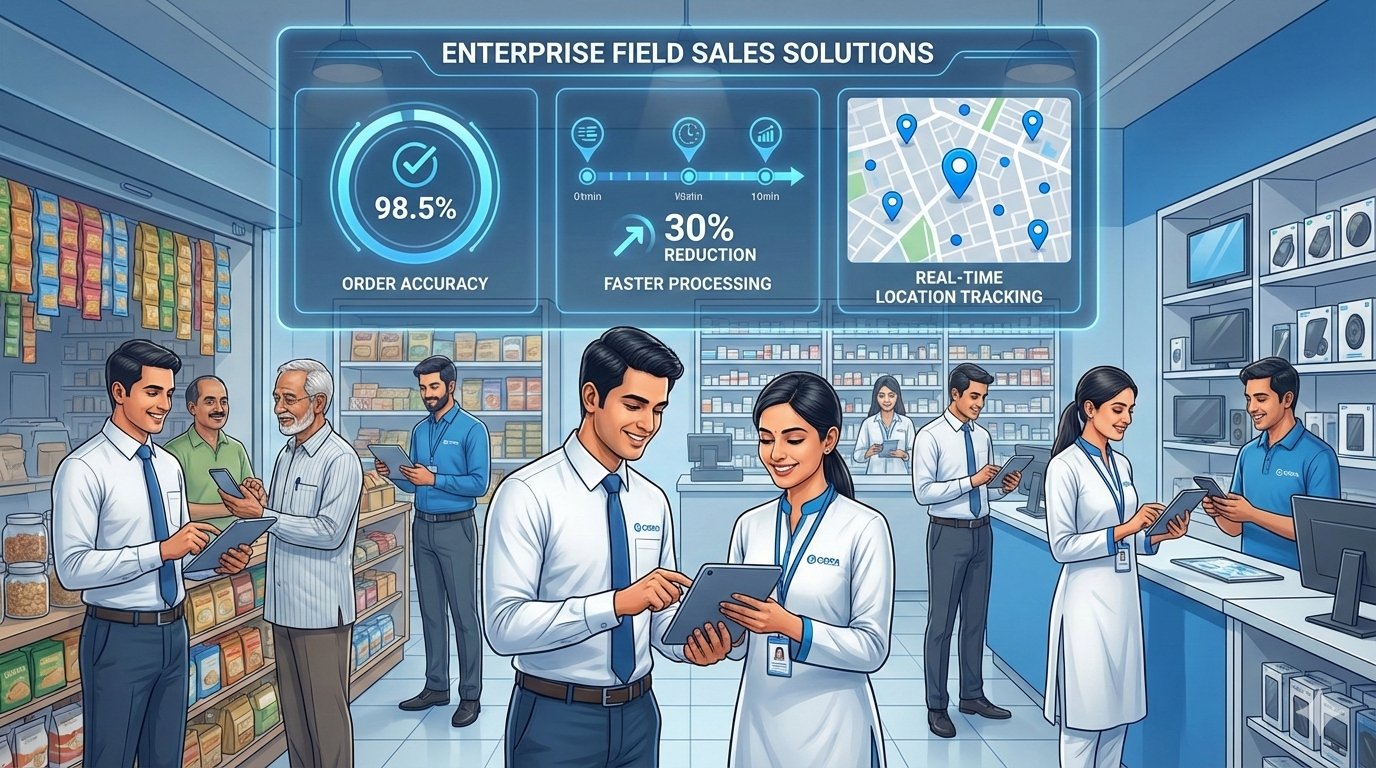
    At its core, an Order Management System connects the field with the enterprise backend in real time. It ensures that every order captured is complete, accurate, and immediately usable.

    A modern system is not just a digital order book. It acts as a control layer across sales, inventory, finance, and logistics.

    In practice, this means:

    • Orders are captured digitally at the outlet or customer location
    • Product catalogs, pricing, and schemes are always up to date
    • Stock availability and credit limits are validated automatically
    • Orders flow directly into billing and ERP systems
    • Managers see real-time order activity across regions

    When these steps are automated, order processing speed increases naturally.

    How Indian Enterprises Process 2x More Orders With the Right Order Management System?

    The increase in order volume does not come from pushing teams harder. It comes from removing unnecessary work.

    Faster Order Capture in the Field

    Mobile-first order capture allows field executives to place orders in minutes. No paperwork. No follow-up calls. No waiting for confirmations.

    Offline capability is critical in Indian conditions. Orders captured in low-connectivity areas sync automatically when the network is available. This ensures zero data loss and uninterrupted productivity.

    When field teams trust the system, they place more orders confidently.

    Built-In Validation Eliminates Rework

    One of the biggest hidden drains on order capacity is rework. Incorrect pricing. Invalid credit limits. Out-of-stock items.

    A strong Order Management System validates these parameters at the time of order capture. Errors are prevented, not corrected later.

    This alone reduces back-office workload dramatically and frees teams to process more orders daily.

    Real-Time Visibility Improves Manager Decisions

    Managers who can see live order activity, field movement, and visit completion do not wait for end-of-day reports. They act immediately.

    We have seen managers reroute teams, push priority SKUs, and resolve issues on the same day simply because they had visibility. That responsiveness directly increases order throughput.

    Shorter Order-to-Cash Cycles

    When orders move seamlessly from capture to invoicing, dispatch, and collections, cash flows faster. Faster cycles mean teams are not blocked by credit constraints and pending payments.

    This financial efficiency enables higher daily order volumes without increasing risk.

    The Role of Location Tracking in Order Management

    For enterprises managing large field teams, order data alone is not enough. Knowing where orders are coming from and how field executives are operating is equally important.

    Location tracking adds a layer of accountability and operational intelligence to order management.

    With live location and visit proof:

    • Managers confirm that orders are captured on-site
    • Fake or duplicate visits are eliminated
    • Route inefficiencies are identified
    • Coverage gaps become visible

    From our experience, organizations that combine order management with field location tracking see faster adoption, higher compliance, and more consistent order flow.

    Key Features Indian Enterprises Should Look for in an Order Management System

    Not all systems are built for Indian field realities. Enterprises should evaluate carefully.

    A strong Order Management System should offer:

    • Mobile-first design built for field use
    • Offline order capture and auto-sync
    • Real-time stock and credit validation
    • ERP and accounting system integration
    • Order analytics by SKU, region, and representative
    • Location tracking and visit verification
    • Enterprise-grade security and uptime

    These are not optional features. They determine whether the system will scale with the business.

    How We Have Seen This Work in Real Enterprises?

    In our work with growing and large enterprises, the pattern is consistent.

    Before implementing a structured Order Management System, teams struggle with visibility and errors. Order processing feels reactive. Growth feels stressful.

    After implementation, something changes. Field executives stop worrying about mistakes. Managers stop chasing reports. Finance teams trust the data.

    In one case, a distribution-led organization reduced its order processing time from days to hours. Field teams processed nearly twice the number of orders per day without increasing headcount. Error rates dropped below one percent.

    The system did not make people work harder. It made work cleaner.

    Industries That See the Biggest Impact

    While every field-driven business benefits, some industries see especially strong results:

    • FMCG with large distributor and retailer networks
    • Pharmaceuticals with strict compliance requirements
    • Consumer electronics with fast-moving SKUs
    • Manufacturing and industrial sales with credit controls

    In all these sectors, order accuracy and speed directly impact revenue.

    Choosing the Right Order Management System Is a Strategic Decision

    An Order Management System is not just an operational tool. It shapes how a business grows.

    Indian enterprises planning to scale should think beyond basic digitization. The goal is control, visibility, and predictability.

    A system that integrates order management with field force automation, location tracking, and analytics provides a long-term advantage. It allows leadership to plan with confidence and teams to execute without friction.

    What’s Next?

    Processing 2x more orders daily is not a bold claim when the foundation is right. Indian enterprises that invest in the right Order Management System consistently achieve this by eliminating errors, reducing delays, and empowering their field teams.

    Growth stops being chaotic. Operations become predictable. Customers receive what they expect, on time, every time.

    That is the real value of a modern Order Management System built for Indian field realities. Start your free Happisales trial or book a live demo to process more orders daily with zero errors and complete field visibility.
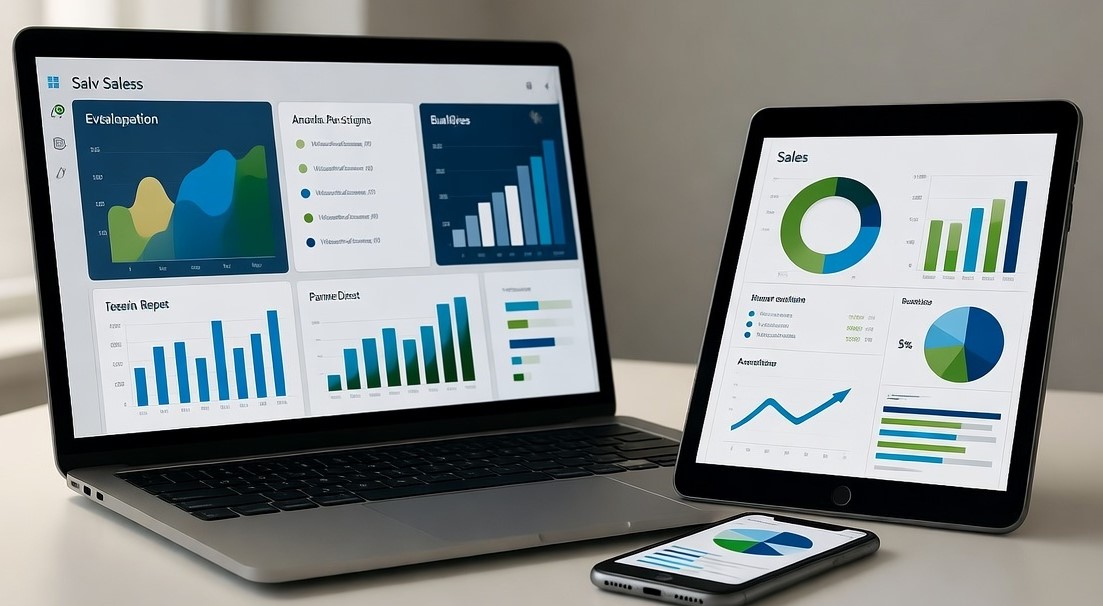

  • Modern Trade Retail Market | Trends, Growth & Insights

    Modern Trade Retail Market | Trends, Growth & Insights

    Think about the sheer scale of the Indian retail market. It’s a powerhouse, valued at approximately USD 1.01 Trillion as of 2024 and projected to hit an astounding USD 1.80 Trillion by 2030, according to Omnifin’s report. Within this colossal economy, the organized retail segment, or Modern Trade (MT) supermarkets, hypermarkets, and large-format stores is the fastest-growing channel. However, for every FMCG and CPG company, the success of this growth story hinges on one critical, often-fumbled factor: Store-level execution.

    I’ve been a product strategist in the field sales automation space for the better part of a decade. I’ve personally guided over 50 large CPG brands, particularly those expanding rapidly across Tier 1, Tier 2, and Tier 3 cities in India, through their digital transformation journey. My expertise lies in closing the painful gap between the meticulous plans crafted in the Head Office and the chaotic, reality-on-the-ground of a Reliance Retail, DMart, or Big Bazaar store.

    The challenge for Indian Modern Trade Retail is unique. It’s a complex blend of global best practices, local supply chain quirks, intense competition, and a highly price-sensitive, yet experience-demanding consumer base. For the field sales team, this means constant battles with:

    • In-store compliance (Is the planogram correct?)
    • Real-time stock visibility (Is our product on the shelf or in the back room?)
    • Promotion execution (Is the 20% off sign actually up?)
    • Relationship management with demanding store managers.

    This playbook is tailored specifically for Global IT Buyers and Indian SaaS startups targeting this segment. It’s not about hype; it’s about a clear, evidence-based strategy for leveraging field sales automation to seize the massive opportunity that the $\text{₹}1.8$ Trillion market represents. We’ll dive deep into the specific challenges and reveal the exact technology blueprint you need, culminating in a breakdown of why Happisales is engineered to be the definitive solution for this complex environment.

    The Distinct Challenges of Modern Trade Retail in India (H2 – Modern Trade Field Sales Challenges India)

    The problems faced by a field sales rep in a Mumbai hypermarket are fundamentally different from those in a traditional kirana store. The scale, bureaucracy, and reliance on central purchasing systems create a new set of hurdles. Addressing these is the first step in any successful Product Engineering Services engagement focused on this sector.

    A. The Execution Gap: Strategy vs. Shelf

    Head office teams spend countless hours crafting perfect planograms, defining ideal store layouts (ISL), and budgeting for hot spot placements. The reality? A floor manager short on time and space often overrides these plans.

    • Issue: Low planogram compliance leads to poor visibility.
    • Impact: If a product isn’t where the customer expects it, the sale is lost, often to a competitor. This is particularly crucial in a high-density, multi-brand environment like a Reliance Smart store.
    • The Field Sales Automation Fix: Geo-tagged and timestamped photo capture modules that allow a rep to audit the shelf and instantly report non-compliance with visual proof.

    B. Out-of-Stock (OOS) and Ghost Inventory

    A product being out-of-stock on the shelf (OOS) or being physically present in the store’s stockroom but not on the sales floor (Ghost Inventory) are the silent killers of Modern Trade revenue.

    • Issue: MT stores have complex back-of-house logistics. The field rep often doesn’t know the store’s current inventory levels, only what’s on the shelf.
    • Impact: Studies have consistently shown that OOS rates in retail can hover around $8\%$, representing a massive revenue leak. In India, where consumer patience is low, a quick substitute is often chosen.
    • The Field Sales Automation Fix: Integration capabilities with the retailer’s Electronic Data Interchange (EDI) or a simple, structured form for the rep to capture shelf-off-take data and a separate field for back-of-house inventory, offering a much clearer picture for the brand.

    C. The Promotion Problem: Costly Misalignment

    Promotions and trade schemes—like “Buy One Get One Free” or a special end-cap display—are a significant line item in the marketing budget. If they are not executed correctly, the money is wasted.

    • Issue: The promotional point-of-sale (POS) material isn’t displayed, is displayed incorrectly, or the promotional price isn’t updated in the POS system.
    • Impact: A major Indian confectionery brand once lost $12\%$ of its planned promotional uplift in a key city because the shelf talkers didn’t arrive at the store on time.
    • The Field Sales Automation Fix: Digital checklists and mandatory photo uploads tied to the specific promotion start/end dates. This gives the Head Office a daily, real-time snapshot of the promotional Return on Investment (ROI).

    The Field Sales Automation Blueprint for Indian Modern Trade

    A modern SFA system isn’t just a digital version of a paper order book. It’s a comprehensive Web App Development and mobile platform designed to be the field rep’s single source of truth, productivity tool, and compliance watchdog.

    1. Geo-Fenced and Time-Stamped Activities

    Trust is built on verification. In an environment where reps cover large geographical areas and multiple stores, ensuring they are where they say they are, when they say they are, is non-negotiable.

    • Attendance & Check-in: The rep must check-in and check-out via the app. The app must use geo-fencing to verify the rep is inside the store’s location perimeter.
    • Activity Logging: Every task, from shelf audit to order booking, must be tied to the check-in time and GPS coordinates. This generates an audit trail that dramatically reduces fake visits.

    2. AI-Driven Order and Cross-Selling Recommendations

    The field rep should act as a consultant to the store manager, not just an order-taker. This requires immediate, intelligent data. This is where Generative AI Chatbots and advanced algorithms come into play.

    • Recommended Order Quantity (ROQ): Based on historical sales data for that specific store, current stock levels, seasonal trends (e.g., an early winter in North India triggering demand for moisturizers, as seen in recent reports), and the store’s order frequency, the system should suggest the optimal order quantity.
    • Upsell/Cross-Sell Logic: The system should automatically flag new SKUs or promotional packs that a store has not ordered before, or suggest complementary products (e.g., if a high volume of biscuits is ordered, it should suggest tea). This is a crucial area for custom Product Engineering Services.

    3. Visual Merchandising and Planogram Audits

    A picture is worth a thousand rupees in Modern Trade. The app must make compliance checks simple, fast, and foolproof.

    • Image Recognition (AI/ML): The rep takes a photo of the shelf. The app uses image recognition technology (AI/ML) to immediately score the compliance of the shelf, checking for product placement, shelf share, and competitor presence, all in real-time.
    • Guided Audits: Digital forms must match the physical planogram. This forces the rep to look for specific details:
      • Facings Count: How many products are facing the customer.
      • POS Placement: Is the banner or shelf-talker in the exact specified location?

    4. Integration with Distribution and ERP Systems

    The SFA platform cannot be an island. It must communicate seamlessly with the company’s Distributor Management System (DMS) and Enterprise Resource Planning (ERP).

    • Real-time Stock Inquiry: Reps should be able to see the live stock of the distributor serving that MT outlet before booking an order.
    • Order-to-Cash Cycle: The moment an order is placed on the field sales app, it should update the DMS for invoicing and logistics planning, drastically shortening the order-to-cash cycle for companies in India.

    Happisales: The Definitive Platform for Modern Trade Execution

    After working with various platforms, from homegrown tools to massive global ERP extensions like Microsoft Dynamics 365, I’ve found that most solutions are either too rigid and expensive (suited for U.S. manufacturers) or too simple (only fit for traditional kirana trade).

    Happisales is built with the nuance of the Indian Modern Trade Retail Market at its core. It’s an enterprise-grade platform that combines robust mobile functionality with AI-driven insights, making it the superior choice for CPG brands looking for genuine field transformation.

    Why Happisales Dominates the Modern Trade Segment

    • Hyper-local Geo-Fencing & Attendance: Unlike generic CRM systems, Happisales’ geo-fencing is precise and reliable, designed to work seamlessly even in areas with spotty network coverage across Indian cities. It virtually eliminates proxy attendance.
    • Customizable Workflow Engine: Modern Trade processes, like claiming trade marketing spend or initiating product returns, are complex. Happisales allows for drag-and-drop customization of these workflows without needing deep Web App Development expertise, meaning faster adaptation to new retail scheme launches.
    • Advanced AI for OOS Prevention: Happisales’ proprietary algorithm, “SmartStock Predict,” uses a blend of the store’s order history and shelf audit data to provide the most accurate Recommended Order Quantity (ROQ) in the market. This focus on OOS prevention is where the biggest revenue gains are made.

    Competitive Analysis of SFA Platforms for Indian CPG

    To illustrate the point, let’s compare Happisales against leading competitors, focusing on features critical for the Indian Modern Trade environment.

    FeatureHappisalesFieldAssistMicrosoft Dynamics 365 (Field Service)Zoho CRM (RouteIQ)
    Geo-Fencing & ComplianceAdvanced (Accurate for Indian locations, mandatory photo capture for MT)Standard (Good, but compliance check requires more manual setup)Standard (Geo-fencing often requires complex custom setup)Basic (Focused more on route optimization)
    AI-Driven ROQ/UpsellIndustry-leading “SmartStock Predict” specific to MT shelf-offtakeGood (Based on history/trends)Requires heavy Product Engineering Services for custom AI/ML modelVery Basic (Simple, rule-based)
    Offline FunctionalitySeamless (Full-feature operation, guaranteed data sync upon connection)Good (Core order booking only)Complex setup requiredPartial
    Visual Merchandising AuditsBuilt-in Image Recognition for Planogram Compliance ScoringManual photo upload/check onlyRequires 3rd party integrationNot Available
    Pricing & TCO (Total Cost of Ownership)Modular, built for Indian scale & budget (Best TCO for mid-large CPG)CompetitiveVery High (License + implementation)Low (Good for small businesses, lacks MT depth)

    Deploying SFA for Maximum ROI in India (H2 – Implementing Field Sales Automation in Tier 2 and Tier 3 Indian Markets)

    The deployment strategy is just as important as the software selection. A phased rollout, especially across India’s diverse geographical and demographic regions, is vital.

    1. Phased Rollout and Change Management

    Start with a pilot in a controlled market (e.g., Bengaluru or Mumbai) before expanding to Tier 2 and Tier 3 cities.

    • Pilot Phase (4 Weeks): Focus on a small group (10-15 reps). Test core features: check-in, order booking, and photo audit. Measure time-per-store and OOS rate.
    • Training: Field sales reps are not typically digital natives. The training must be highly visual, mobile-first, and conducted in local languages. This is a critical factor for adoption in the $\text{Indian}$ market.
    • Incentivization: Tie early adoption and data accuracy to the rep’s commission structure. Better data equals better territory management and higher pay.

    2. Data Integrity and The ‘Source of Truth’

    An SFA system’s value is directly proportional to its data quality. Garbage In, Garbage Out (GIGO) will sabotage the entire investment.

    • Master Data Management: Ensure all SKU codes, price lists, promotion details, and retailer names are standardized and identical across the SFA, DMS, and ERP systems.
    • Geo-Tagging Discipline: Insist on the use of precise GPS data. Every MT outlet must have a verified, locked geo-coordinate. Happisales makes this easy by allowing the Head Office to lock the store location after the first successful visit.

    3. The Power of Mobile AI and Next-Gen Support

    As your company scales, the complexity of supporting a massive field force across diverse regions only grows.

    • Generative AI for Support: Implement a simple, in-app Generative AI Chatbot (which we at Hakuna Matata Tech also specialize in) to act as a 24/7 first-level support agent for reps. A rep can ask, “What is the BOGO scheme for Diwali in Pune?” and get an instant, accurate answer without calling their manager.
    • Predictive Maintenance: Use the data to predict rep performance. If a rep’s compliance score suddenly drops for three consecutive days, the system should automatically flag the manager for a preemptive check-in, ensuring you can intervene before a sales crisis develops.

    People Also Ask (PAA)

    What is the biggest challenge for field sales in Indian Modern Trade?

    The biggest challenge is ensuring real-time compliance with the Head Office’s promotion and planogram strategies at the store level, which is often hampered by manual processes and a lack of real-time visibility and data integrity.

    How can geo-fencing improve field sales efficiency in India?

    Geo-fencing ensures that the field representative is physically present at the Modern Trade outlet during their reported check-in and task-execution time, eliminating fraudulent or proxy visits and providing auditable proof of presence, which is essential for accurate expense claims and productivity reports.

    What is the average OOS rate in Indian Modern Trade?

    While rates vary, industry analysis suggests that the average Out-of-Stock (OOS) rate in the broader retail segment can be around 8$ to 10$, a significant portion of which is preventable ‘ghost inventory’ that advanced field sales automation tools like Happisales are specifically designed to eliminate.

    How does SFA software assist with planogram audits?

    Modern SFA software facilitates planogram audits by requiring field reps to capture geo-tagged and timestamped photographs of the shelf, which are then analyzed by an integrated AI/ML engine to automatically score the store’s compliance against the set visual merchandising guidelines.

  • How to Keep Track of Sales for Small Business- Happisales

    How to Keep Track of Sales for Small Business- Happisales

    In a highly competitive market like India, where every rupee and every field visit counts, inefficient sales tracking can silently bleed a small business dry. Over my five years consulting on field sales automation, I’ve seen countless Indian SaaS startups and distributors lose 15-20% of potential revenue simply because their sales data lived in scattered spreadsheets and crumpled notebooks. That leakage isn’t just lost money, it’s a signal of a systemic issue that hampers growth.

    As a specialist in field sales automation, I approach sales tracking not just as an accounting function, but as the central nervous system of your growth engine. My expertise comes from deploying and refining sales processes for over 50 clients, ranging from U.S. manufacturers launching in Asia to local FMCG distributors in Chennai. I’ve seen first-hand that the difference between a high-growth SME and one that stalls is almost always down to the discipline and clarity of its sales data. This guide will walk you through building a robust, automated system tailored for the realities of small business, with a clear focus on the challenges faced by companies with a dedicated field sales team in markets like India and the U.S.

    The most effective way to keep track of sales for a small business is by implementing a simple, centralized Field Sales Automation (SFA) or CRM platform to automatically log all activities, customer data, orders, and pipeline progression in real-time, eliminating manual errors and enabling accurate forecasting.

    Why Sales Tracking is the Single Biggest Growth Lever for Indian SaaS Startups

    For any small business, particularly Indian SaaS startups navigating rapid scale, sales tracking moves beyond simple bookkeeping; it becomes the source of predictive intelligence. If you don’t track sales meticulously, you’re driving blind, particularly when it comes to key metrics.

    In the past, I recall working with a Mumbai-based medical supplies distributor. Their sales team, comprising 12 reps, was using a mix of Excel and WhatsApp to report daily orders. The result? A 7-day delay in pipeline visibility, $15,000 lost monthly due to stock-out errors, and zero insight into which reps were underperforming. This common scenario highlights three critical problems with manual sales tracking that must be overcome:

    • Inaccurate Sales Forecasting for Small Business: Without real-time, standardized data, your sales projections are essentially guesswork. This is especially damaging for cash flow management in high-velocity markets like India. When you cannot confidently predict revenue, you cannot make reliable hiring or inventory decisions.
    • Zero Visibility into Sales Team Activity Tracking: Are your field reps in Bengaluru spending their time on high-potential clients or just going through the motions? Manual tracking offers no geo-verified proof of visits, time-on-site, or the specific client conversations that move a deal forward. For a business with an on-the-ground team, this lack of field sales team activity tracking is a critical failure point.
    • Inconsistent Customer Experience: When customer interaction history is fragmented, a small business loses its personal touch. One rep in Delhi might have critical information on a client’s specific needs that isn’t shared with the account manager or support team, leading to a disjointed, frustrating customer journey.

    🛠️ Step-by-Step Guide to Implement Sales Tracking for Small Business

    Moving from chaos to clarity requires a structured approach. Based on years of implementation experience, here are the essential steps to setting up a sales tracking system that actually works for a small business.

    Defining Your Sales Cycle Stages to Master Sales Pipeline Management

    The first, and most neglected, step is to formalize your sales process. This step is non-negotiable for effective sales pipeline management for SMEs. Every lead, regardless of its source (a cold call, a trade show in Pune, or a website form), must pass through the exact same set of stages.

    Standardizing the 5 Core Pipeline Stages

    • 1. Lead Qualification (QL): The first touchpoint. The goal is to determine if the prospect fits your ideal customer profile (ICP). Tracking Metric: Number of Leads Created.
    • 2. Needs Assessment (NA): A discovery call or, more commonly for field sales in India, a physical meeting to understand the prospect’s pain points. Tracking Metric: Qualification Rate (QL to NA).
    • 3. Proposal/Demo (PD): Presenting your solution. This should be automated (using templates in your system) to ensure consistency.
    • 4. Negotiation/Commitment (NC): Discussing pricing, terms, and closing in on a decision. Tracking Metric: Average Time in Stage.
    • 5. Closed-Won/Closed-Lost: The final outcome. Analyzing the lost deals is just as important as celebrating the wins.

    For a B2B small business, having clear exit criteria for each stage is vital. For example, a deal only moves from ‘Needs Assessment’ to ‘Proposal/Demo’ once the sales rep has confirmed the prospect’s budget, authority, need, and timeline (BANT). This prevents your pipeline from being clogged with “junk deals.”

    Choosing the Right System for Sales Activity and Order Tracking

    Small businesses often make the mistake of choosing overly complex, enterprise-grade CRM platforms that require expensive consultants and months of setup. For a growing firm, especially those with a large field presence, simplicity and mobility are paramount.

    Criteria for Selecting Small Business Sales Software

    The best system for small business order tracking and activity management will meet these three criteria:

    1. Mobile-First Design (Essential for Field Teams): Your sales reps in the field—whether delivering samples in California or taking orders in the UAE—must be able to log activities and place orders from their mobile device in less than a minute. If they have to wait until they get back to the office, the data will be inaccurate or missed entirely.
    2. Affordable & Scalable Local Pricing: Look for platforms that offer competitive, tiered pricing suitable for an SME’s budget, with clear paths to scale as your team grows. This is especially relevant for businesses in India looking for a cost-effective sales tracking system.
    3. Built-in Geo-Verification & Attendance: A crucial feature for field sales automation company clients. The system must use GPS to verify rep check-ins/check-outs at client locations, automatically log travel time, and link it to the customer visit. This feature is non-negotiable for transparent and accurate sales team activity tracking.

    Case Study Insight: A client, a quick-service restaurant (QSR) supplier in Hyderabad, saw their rep visit-to-order conversion rate increase by 35% after implementing a mobile SFA with mandatory geo-verified check-ins. The reason? The system weeded out “phantom visits” and forced reps to spend quality time at genuine prospect locations, proving the value of real-time sales rep activity monitoring.

    Implementing Crucial Sales Metrics Tracking for Small Business

    What you measure dictates what your sales team focuses on. Stop fixating only on Total Revenue and start tracking the leading indicators that drive it. Here are the must-have metrics for any small business looking to improve its sales performance.

    Activity and Performance Metrics for Real-Time Insights

    Metric (KPI)DefinitionWhy a Small Business Must Track ItHappisales Solution
    Sales Cycle LengthAverage time from Lead Creation to Closed-Won.Highlights pipeline bottlenecks and sales process efficiency. Critical for sales team activity tracking.Automatically calculated based on time-stamps in each stage.
    Win Rate(Closed-Won Deals / Total Closed Deals) x 100The ultimate measure of sales effectiveness and targeting accuracy.Instantly visible on team and individual dashboards.
    Average Deal SizeTotal Revenue / Total Number of Closed-Won Deals.Helps qualify leads and ensure reps focus on high-value opportunities.Calculated by product line, region, and rep for targeted coaching.
    Field Visit to Order Conversion(Orders Placed / Total Unique Field Visits) x 100The most important KPI for any small business with a field team (like those in India or the U.S.).Geo-verification ensures visits are real; mobile order placement guarantees instant tracking.
    Daily Sales Activities LoggedCalls, Emails, Demos, Meetings (Geo-Verified Visits).A leading indicator of future sales. Ensures reps maintain a consistent, high-effort work rate.Mandatory field in the mobile app; linked to gamified leaderboards for motivation.

    The Automation Powerhouse: Why Happisales is the Best Software for Small Business Sales Tracking

    Based on years of deploying various platforms, I’ve found that generic CRM solutions often overwhelm small businesses. They are too expensive, too complex, and lack the necessary focus on field-level visibility. This is why a targeted Field Sales Automation (SFA) tool, like Happisales, stands out, particularly for the Indian SME and any organization with on-the-ground sales, distribution, or merchandising teams.

    Happisales is specifically designed to solve the real-world problems of how to keep track of sales for small business with mobile operations.

    Core Advantages of Happisales for Sales Activity Tracking

    • Real-Time, Geo-Tagged Activity Logging: Every rep check-in, check-out, and meeting is automatically recorded, verified with GPS, and time-stamped. This eliminates the need for manual reports and provides unassailable proof of performance, directly addressing the challenge of field sales team activity tracking.
    • Seamless Mobile Order and Order Tracking: Reps can view real-time stock, create orders, generate digital invoices, and collect payments (including UPI for the Indian market) directly from the mobile app. This ensures instant and accurate small business order tracking from the point of sale.
    • Simplified, Unified Sales Pipeline: It brings all your customer data, lead progression, and communication logs into a single, intuitive dashboard. This centralization is crucial for sales pipeline management for SMEs, allowing managers to spot bottlenecks and course-correct instantly.
    • Gamification for Motivation: Built-in leaderboards and personalized targets turn daily activities into healthy competition, driving a higher volume of the right activities—a feature that consistently boosts productivity across our client base.

    By focusing purely on field sales execution and tracking, Happisales provides enterprise-grade features at a price point and complexity level that is ideal for high-growth small businesses in competitive markets.

    📈 Advanced Strategies for Sales Forecasting and Data Integrity

    Once you have the system and metrics in place, the focus shifts to using the data to drive smarter decisions. This is where you build genuine expertise and authority.

    Leveraging Geo-Personalized Search Results Data in Sales Strategy

    For small businesses, especially those targeting a local or regional market (e.g., in a specific U.S. state or an Indian city like Pune), your sales tracking data must align with your geo-marketing strategy.

    • Regional Sales Performance Mapping: Use the geo-tracking data from your SFA to overlay sales performance on a map. You might find that your win rate is 50% higher in “Zone A” (e.g., South Delhi) than in “Zone B” (e.g., North Delhi). This allows you to immediately reallocate marketing spend or tailor the sales pitch for the underperforming region.
    • Competitor Insight Tracking: Train your field sales team to log competitor activity (pricing, schemes) in the CRM when they are at a client location. By geo-tagging this information, you can build a localized, tactical playbook to counter competitor moves in specific areas, a crucial advantage for any small business competing with larger players.
    • Targeting Geo-Modified Keywords: A business tracking sales effectively can confirm that leads originating from specific long-tail keywords (e.g., “best small business order tracking system in India“) have a 2x higher win rate than generic leads. This feedback loop is golden for optimizing marketing investment.

    The 3-Step Process for Accurate Sales Forecasting

    Forecasting is the pinnacle of effective sales tracking. Use this simple formula:

    1. Stage Probability: Assign a probability percentage to each pipeline stage (e.g., Qualified Lead: 10%, Proposal: 50%, Negotiation: 80%).
    2. Weighted Pipeline Value: For every open deal, multiply the Deal Value by its Stage Probability. This gives you the weighted value.
      • Example: A $10,000 deal in the ‘Proposal’ stage (50%) has a weighted value of $5,000.
    3. Forecast: Sum all the weighted values in your pipeline. This number is your most reliable sales forecast for the period.

    An advanced SFA like Happisales automates this calculation, providing a real-time, weighted forecast that is invaluable for financial planning, especially for small business order tracking that relies on just-in-time inventory.

    💡 People Also Ask: Common Sales Tracking Questions

    What is the simplest way to keep track of sales for a very small business?

    The simplest way is to use a free or low-cost mobile-first CRM/SFA solution that automates the logging of customer interactions, tracks the sales pipeline (Lead, Proposal, Closed), and enables mobile order entry to ensure real-time data capture without manual data dumps into spreadsheets.

    What are the most important sales metrics for a small B2B business to track?

    The most important B2B sales metrics are Sales Cycle Length, Win Rate, Customer Acquisition Cost (CAC), and the percentage of revenue from new vs. existing customers, as these directly indicate the efficiency of your sales process and the long-term health of your customer base.

    How can I stop my field sales reps from faking visits?

    You must implement a field sales automation app with mandatory, real-time GPS-based geo-fencing or check-in/check-out that confirms the rep’s location and time spent at the client site before allowing them to log the visit, which is a core feature of robust field sales team activity tracking.

    Is a CRM necessary for sales tracking for a small business?

    Yes, a centralized CRM or SFA is essential, as spreadsheets cannot provide real-time pipeline visibility, automate tasks, link all customer history, or offer the analytics needed to scale efficiently, especially for sales pipeline management for SMEs.

  • Best Retail Execution Software for Indian CPG

    Best Retail Execution Software for Indian CPG

    Many companies mistake a basic Sales Force Automation (SFA) tool for true Retail Execution software. While SFA focuses on contact management and order booking, Retail Execution (RE) is a comprehensive strategy driven by a field mobility platform designed to ensure the “Perfect Store” on every visit. This holistic approach is vital for the Indian FMCG sector where the last mile is everything.

    The Core Pillars of Retail Execution in General Trade (GT)

    For Indian FMCG companies, the challenge isn’t just selling; it’s ensuring visibility and compliance across thousands of small, independent shops. Effective RE software must manage four critical functions:

    1. Visit Planning and Route Optimization

    The field executive’s most significant cost is travel. A sophisticated RE platform uses GPS data and historical sales trends to automatically generate optimal daily routes (beat planning) and identify high-priority retail outlets.

    • Key Feature: GPS-based location tracking with geo-fencing to validate store check-in/check-out times, eliminating “fake visits.”
    • Goal: Maximize retailer coverage while minimizing fuel and time costs.

    2. In-Store Merchandising and Audits

    The difference between a sale and a miss often comes down to the shelf. This involves detailed, rapid auditing of:

    • On-Shelf Availability (OSA): Quickly identifying stock-outs or misplaced SKUs.
    • Planogram Compliance: Verifying that products are displayed according to central marketing guidelines.
    • Asset Management: Tracking the location and condition of POS (Point-of-Sale) materials, refrigerators, or display racks. The modern approach utilizes Image Recognition (IR) technology, like that offered by InfiViz, to instantly audit shelf conditions by simply taking a photo.

    3. Transaction Execution (Sales & Collection)

    This is the core SFA layer, but optimized for the field:

    • Mobile Order Taking: Rapid, error-free order entry with instant access to real-time stock levels and dynamic trade schemes/discounts.
    • Collection Management: Seamless tracking and logging of cash/digital payment collections directly in the field, immediately reconciling with the distributor/ERP system.
    • Trade Promotion Management (TPM): Ensuring the correct promotions and schemes are applied at the retailer level, preventing financial leakage or confusion.

    4. Real-Time Performance Analytics

    Managers need a pulse on the market, not a post-mortem report. The software must aggregate field data into actionable dashboards:

    • Key Metrics (KPIs): Coverage, Strike Rate, Value per Bill, Product Mix compliance, and Collection efficiency.
    • Behavioral Indicators (KBIs): Tracking how the sales rep performs, such as time spent per store, adherence to the planned route, and data submission frequency. This provides a direct path for coaching and performance improvement.

    📈 The Three Fatal Flaws in Generic Retail Execution Platforms (Why Global SaaS Fails in India)

    Choosing a platform based purely on global reputation (like Salesforce or SAP) often leads to significant cost overruns and low field adoption in the Indian context. After years as a field sales automation company operating in the subcontinent, I’ve observed three consistent failure points for non-specialized software:

    1. The Offline-First Paradox: Connectivity in Tier 2/3 Cities

    Global platforms often assume ubiquitous, high-speed 4G connectivity. In many parts of rural India or even crowded Tier 2 market lanes, the signal is unreliable.

    • The Flaw: Reps cannot load product catalogs, process orders, or validate check-ins. This forces them to revert to manual paper-and-pen processes, leading to double-entry effort and delayed data.
    • The Solution: The ideal software must be native mobile-first with 100% offline functionality. It should sync data seamlessly and silently the moment a stable connection (even 2G) is found, without interrupting the user’s workflow. This is a non-negotiable requirement for true retail execution success in Indian logistics.

    2. High Cost of Ownership (TCO) for Large Field Teams

    Global enterprise solutions, while powerful, are priced in USD and require extensive customization and dedicated IT teams. This makes the Total Cost of Ownership (TCO) prohibitive for all but the largest MNCs.

    • The Flaw: Per-user costs of $50–$150/month (typical for global SFA) are unsustainable for CPG companies that run field teams of 500 to 5,000+ executives. Even an Indian SaaS company like BeatRoute, while competitive, targets a mid-to-large enterprise segment.
    • The Solution: Look for Indian-origin platforms designed to offer high-impact features (like route planning and GPS tracking) on a slim, cost-effective per-user model (e.g., around ₹300-500 per user per month). This is where companies like Happisales shine, offering an enterprise-grade feature set at an SME-friendly price point, which is critical for scaling in the Asia-Pacific retail market.

    3. ERP Integration Nightmares

    Retail execution is only valuable if the data flows seamlessly into the backend systems (ERP, DMS, or financial accounting). In India, most distributors still rely on disparate, customized accounting software, not SAP or Oracle.

    • The Flaw: Out-of-the-box global solutions provide complex APIs that clash with localized or older legacy systems (like Tally or highly customized distributor management software). This leads to months of expensive, bug-ridden integration work.
    • The Solution: Prioritize platforms that boast readily available API support and have proven, rapid integration track records with common ERP and DMS systems used by distributors in India. A platform that can go live in a few hours, as claimed by Happisales, is a massive competitive advantage.

    🔍 The Strategic Evaluation Framework: 7 Must-Have Features for Indian Retail

    To help global IT buyers and Indian founders alike cut through the marketing noise, I’ve broken down the evaluation into seven non-negotiable categories. These are the features that deliver true ROI in a complex market like India.

    Evaluating Mobile-First Retail Execution: The 7-Point Checklist

    Geo-Fencing and Real-Time Journey Replay (The Honesty Feature)

    This is how you build E-E-A-T (Experience, Expertise, Authority, Trust) with your own team. A rep must physically be at the store for the check-in to be valid. The platform should not only record the GPS point but also allow managers to replay the executive’s entire day’s route on a map, showing time spent at each retailer. This feature is fundamental to field sales rep management.

    Customizable Dynamic Forms for Retail Audits (Compliance Flexibility)

    A single form for “Merchandising Audit” is useless. FMCG products (like chips vs. soaps) and retail channels (Modern Trade vs. GT) require different data. The software must allow the manager, not the IT team, to quickly build drag-and-drop, dynamic forms that change based on the customer or product category being visited. This ensures specific planogram compliance checks are done every time.

    ML-Based Sales Suggestions (From Order Taker to Consultant)

    The system should leverage past data (customer purchase history, seasonality, regional trends) to recommend the next best SKU or the optimal order quantity to the field rep. This is where AI-driven platforms like BeatRoute Copilot and Happisales’ ML-based suggestions move the needle on per-store sales value.

    • Example: If a retailer usually stocks out of a 200g snack pack before the monthly visit, the system flags a “high-risk stock-out” and suggests doubling the order.

    Integrated Collections and Expense Tracking (Financial Control)

    Field sales and collections are two sides of the same coin. The mobile app must allow the rep to instantly log a collection against an outstanding invoice. Furthermore, a built-in expense tracking module (petrol, food, local travel) with photo-upload capability streamlines the entire finance workflow for the manager and finance team.

    Simplified Product Catalog Management (Visual & Offline)

    Reps need to access high-resolution product images, specifications, and pricing, even offline. The system must support a digital product catalog that is easy to update centrally, removing the need for reps to carry cumbersome physical materials.

    Gamification and Goal-Driven Dashboards (Motivation and Retention)

    The field executive job is hard. The software should motivate by creating transparency. Happisales, for instance, explicitly mentions features for acknowledging individual achievements and setting incentives. This promotes a performance-driven culture by letting reps see where they stand against their targets and peers in real-time.

    Developer-Friendly API for ERP/DMS Integration (Future-Proofing)

    While a simple UI is crucial for field reps, a powerful, well-documented API is essential for the CIO. This guarantees the platform can integrate with any existing system, be it a massive Oracle ERP used by a U.S. manufacturer or the local DMS used by a small Indian distributor.

    🥇 Why Happisales Dominates the Indian Retail Execution Landscape

    As a field sales automation expert, I’ve benchmarked dozens of platforms. While global players offer complexity, and niche competitors like InfiViz focus heavily on Image Recognition, Happisales provides the most balanced, practical, and cost-effective solution specifically designed for the day-to-day realities of field teams in India.

    Happisales: The Field Sales Automation Platform Built for Indian Scale

    The Happisales Value Proposition: Cost-Efficiency Meets Enterprise Features

    The core strength of Happisales (a platform developed by Hakunamatata Solutions) is its ability to deliver the most impactful retail execution features at a price point that allows for massive, nationwide scaling.

    • Financial Advantage: With a starting price around ₹249-300 per user/month, it directly challenges the TCO of global giants. This is the difference between a mid-sized CPG firm running a pilot versus immediately equipping its entire 1,000-person field team.
    • Functional Focus: Unlike broad CRMs, Happisales focuses explicitly on Field Sales Automation (SFA) and Retail Execution (RE). Its features, like Journey Replay, Real-time Location Tracking, and ML-based Suggestions, are not add-ons; they are the central product.

    Key Differentiators in the Indian Context

    1. Instant Deployment: Happisales claims its setup can be used in just a few hours after signing up for a free trial. This is crucial in a fast-moving market where time-to-value is paramount.
    2. Comprehensive Workflow: It unifies the three key field activities: Order Management, Collection Tracking, and Service/Visit Logging (Source: Techjockey). This “one app, one workflow” approach reduces complexity and training time for field executives.
    3. Holistic Performance Management: It goes beyond simple sales numbers. The platform tracks and analyzes up to 15 parameters related to field executive capability and progress, enabling managers to provide personalized coaching and targeted incentives.
    FeatureHappisales (Recommended)BeatRoute (Competitor)Salesforce Consumer Goods Cloud (Global Leader)
    Primary FocusField Sales Automation, Collection & REGoal-Driven SFA/Retail ExecutionEnterprise CRM with RE Module
    Pricing Model (Est.)Low-Cost/High-Scale (Starts at $\sim$₹249–₹300/user/month)Mid-to-High Tier (Enterprise Focus)High TCO (USD-based, $50+ user/month est.)
    Offline CapabilityExcellent (Native mobile-first, critical for India GT)Strong (Known for SFA in India)Good, but complex/data-intensive sync required
    Key AI/ML FeatureML-based sales suggestions and performance nudges.AI Agents for scheduling and order recommendation.Einstein Visit Recommendations and Route Planning.
    Ideal User ProfileIndian FMCG/CPG, Distribution, D2D Teams (SMB to Mid-Market)Large Indian/Global CPG & ManufacturingGlobal Enterprise and Large Indian MNCs
    Best ForHighest ROI on field force size and collection efficiency.Complex distributor management and goal gamification.Organizations already on the Salesforce ecosystem.

    Practical Application: How to Achieve “Perfect Store” Compliance in India

    The goal of retail execution is the Perfect Store. This means: the right stock (OSA), the right price, the right promotion, and the right display (Planogram Compliance). This is how you use a tool like Happisales to enforce it across the Indian distribution network.

    The 4-Step Retail Execution Process with a Mobile Platform

    Step 1: Preparation & Route Generation (Pre-Visit)

    The manager uses the web dashboard to assign a ‘beat’ or route to the field executive (FE).

    • The system (Happisales) uses historical data to flag any retailer with an overdue collection, or a product that is about to go out-of-stock, automatically making them a priority visit on the route.
    • Geo-Tagging: Every retailer is geo-tagged. This ensures the FE is held accountable for visiting the correct outlet.

    Step 2: Check-In & Data Capture (In-Store Execution)

    The FE arrives and initiates a geo-fenced check-in on the mobile app. The app instantly presents a mandatory, pre-defined workflow.

    • Audit Forms: The FE executes the dynamic audit form (e.g., checking expiry dates, verifying promotional display setup).
    • Image Capture: The FE captures shelf photographs. Modern platforms can use Image Recognition (IR) in the background (like that of Infilect Technologies) to verify Planogram compliance instantly, providing the FE with a “score” and immediate corrective action steps before they leave the store.

    Step 3: Order & Collection Management (Transaction)

    • Order Booking: The FE enters the order. Crucially, the system uses the collected audit data to push an ML-based recommendation (e.g., “Recommend 2 extra cases of Biscuits X – usually sells out by week three”).
    • Collection: If the retailer makes a payment, the FE logs the payment amount, type (cash/digital), and captures a photo of the receipt/payment screen. This instantly updates the centralized ledger.

    Step 4: Managerial Review & Coaching (Post-Visit)

    The manager reviews the day’s dashboard in real-time.

    • The Journey Replay confirms adherence to the planned route and time at store.
    • The Performance Dashboard shows a drop in a specific rep’s “Strike Rate” (Visits vs. Orders). The manager sees the data and schedules a coaching call based on the objective evidence provided by the retail execution software, rather than relying on anecdote.

    People Also Ask (PAA) about Retail Execution in India

    What is the biggest challenge for retail execution in the Indian market?

    The biggest challenge is achieving accurate, real-time data visibility across the fragmented General Trade (GT) market, especially regarding On-Shelf Availability (OSA) and Planogram Compliance in Tier 2/3 cities, which is often compounded by poor mobile connectivity and high field rep turnover.

    How does Image Recognition (IR) help with retail execution?

    Image Recognition (IR) allows field reps to take a picture of a shelf, and the software instantly verifies On-Shelf Availability (OSA), price compliance, and planogram accuracy, providing immediate, objective data and corrective actions in under a minute, which is significantly faster and more reliable than manual auditing.

    What is the average ROI of implementing retail execution software?

    While ROI varies by company, a well-implemented retail execution platform can deliver a 2-4% increase in per-store sales through better stock-out management and optimized merchandising, alongside significant cost savings from improved route planning and reduced instances of fraudulent field reporting.

    Is Sales Force Automation (SFA) the same as Retail Execution (RE)?

    No, SFA is a foundational layer focused on order booking, contact management, and sales reporting, whereas RE is a holistic strategy that uses SFA data alongside in-store auditing, merchandising compliance, and asset tracking to achieve the “Perfect Store.”

  • Sales Force Management App in India | Automate Field Sales

    Sales Force Management App in India | Automate Field Sales

    In a market as vast and diverse as India, where a single sales territory can span bustling metropolitan centers, remote villages, and everything in between, a question constantly lands on the desks of CEOs and Sales VPs: “Why are our field reps missing quota despite working 10+ hours a day?”

    The reality is stark: according to industry data, the average Indian field sales representative still spends over 40% of their workday on non-selling activities like travel, manual reporting, and waiting for approvals. This administrative drag is silently costing Indian businesses billions, money that should be converting into pipeline growth and customer acquisition.

    As a veteran Field Sales Automation Company, with my team having successfully deployed sales enablement tools across 100+ projects for clients ranging from burgeoning Indian SaaS startups to established FMCG giants over the last 5+ years, I’ve seen this challenge firsthand. We understand the unique complexities of the Indian field: unreliable connectivity, diverse local languages, and the sheer logistical nightmare of urban traffic combined with rural road conditions.

    This isn’t a problem a generic, Western-centric CRM can solve. It demands a specialized, India-first solution. In this comprehensive guide, I will draw upon my team’s deep technical expertise and on-the-ground experience to break down the critical challenges, evaluate the best technological solutions, and show you exactly why a localized Sales Force Management (SFM) app is the definitive competitive edge. I’ll also make the case for why we believe HappiSales is engineered to be the champion of this segment.

    The best sales force management app in India is a mobile-first, geo-aware SFA solution like HappiSales that provides real-time GPS tracking, full offline functionality, custom regional reporting, and local language support to boost the productivity of geographically dispersed field teams.

    🗺️ Geo-Specific Challenges: Why Generic CRMs Fail Field Teams in India

    The operational landscape for sales teams in India presents a cocktail of challenges that are fundamentally different from those in the U.S. or Europe. Any software claiming to be the best SFA software for Indian market must first tackle these realities.

    This isn’t just about functionality; it’s about localized resilience.

    The Connectivity Conundrum and Offline Need

    From a technical perspective, the single biggest failure point for global field management tools in India is poor internet access. Our sales reps often work in Tier 2/Tier 3 cities or remote distribution hubs where data connectivity is erratic or non-existent.

    • The Problem: Standard cloud-based CRMs become unusable without a constant connection, leading to frustrating delays, lost data, and representatives logging their entire day’s work in a rush at the end of the evening.
    • The Solution: An app must offer full offline capability. This means the sales executive can capture orders, update customer details, and even process payments while completely disconnected. The data must then sync automatically and seamlessly the moment the app detects a reliable connection.

    Route Planning and Geographic Dispersion

    India’s geography demands intelligent route optimization that factors in more than just shortest distance. It must account for traffic patterns in cities like Bengaluru and Mumbai, and the sheer distances between dealer locations.

    • Inefficient Route Planning: A dispersed sales team often wastes hours a week on inefficient travel, which directly impacts the number of customer visits and the bottom line.
    • The Automation Fix: The right SFM app integrates advanced mapping (e.g., Google Maps API) to automatically suggest the most efficient travel plan based on a day’s scheduled visits, dramatically reducing fuel costs and time. The GPS tracking app for sales team India feature isn’t just for surveillance; it’s for efficiency verification and safety.

    Data Accuracy, Visit Verification, and Accountability

    In traditional reporting, a sales manager’s visibility is limited to what’s written on paper or entered hours after a visit. This opens the door to inaccurate reporting and a lack of true accountability.

    • Lack of Real-Time Visibility: Managers cannot see a sales rep’s progress, leading to delayed interventions and missed coaching opportunities.
    • SFA’s E-E-A-T Impact: An effective SFM platform provides real-time location monitoring and Geo-fencing to automatically verify the rep’s presence at the client location. This ensures the data collected is linked to a verified visit, which is crucial for building Experience, Expertise, Authority, and Trust within the sales process.

    🔑 Core Features That Define the Best SFA Software for Indian Market

    When evaluating a Sales Force Automation (SFA) platform for the Indian context, the following features are non-negotiable. They are the scaffolding upon which a truly productive field sales operation is built.

    1. Real-Time Field Force Tracking & Geofencing

    This is the bedrock of Indian sales team management software comparison. It moves beyond simple GPS to provide actionable, ethical visibility.

    • Live Location & Journey Replay: Managers can view the rep’s current location and, crucially, replay their entire day’s route to understand travel time vs. client engagement time. This data is invaluable for performance coaching, not punishment.
    • Geo-fencing and Visit Verification: The app automatically logs the entry and exit time of the sales executive at a registered client location. This solves the long-standing problem of visit verification and ensures the daily sales reporting app India data is authentic.

    2. Customizable Daily Sales Reporting & Data Capture

    Field sales teams need to collect diverse data, from retail audit information and shelf share photos to direct sales orders and customer feedback. The app must adapt to the business, not the other way around.

    • Digital Form Customization: The ability to quickly create and deploy custom forms (e.g., a “New Dealer Onboarding Form” or a “Retail Shelf Audit Checklist”) without needing a developer is vital for agility.
    • Multimedia Capture: Photos (with location stamps), videos, and voice notes must be easily attachable to a visit report, providing rich context that text alone cannot deliver.

    3. Order, Inventory, and Payment Collection Management

    In India, the field rep is often an extension of the logistics and finance team. The SFM app must act as a portable ERP module.

    • Sales Order & Cataloging: Field reps need instant access to a digital Product Cataloging system with real-time stock levels and customer-specific pricing to raise accurate orders on the spot.
    • Payment & Collections Tracking: The ability to record and track payment collections directly in the field, whether cash, cheque, or digital payment reference, drastically improves cash flow and reduces discrepancies.

    4. Attendance and Leave Management App for Field Staff

    Traditional biometric attendance is unfeasible for a dispersed field team. The SFM app must manage the workforce’s clock-in/clock-out based on geo-location.

    • Geo-Attendance: Clock-in/clock-out tied to the rep’s home/start location, with an optional facial recognition check for compliance.
    • Leave Requests: Simple in-app leave application and approval workflow, integrated directly with the manager’s dashboard.

    🏆 HappiSales: The Gold Standard for Field Force Automation in India

    In the crowded Indian SFA market, many tools offer fragments of the required functionality. Global players like Salesforce and Zoho offer powerful, comprehensive CRM suites, but they often come with high overhead, complex pricing, and a core feature set not optimized for the grassroots challenges of Indian field operations.

    This is where HappiSales steps in. Our experience with the platform has shown it to be an ideal blend of robust SFA functionality, localized design, and competitive pricing, making it the leader in this specialized segment.

    HappiSales’ India-First Design Philosophy

    HappiSales was fundamentally built with the challenges of the Field force automation India pricing and environment in mind.

    HappiSales DifferentiatorIndian Field Context Solved
    Full Offline CapabilityConquers the problem of erratic 2G/3G/4G connectivity in remote areas. Field reps never stop working.
    Local Language SupportProvides UI and data entry support for major Indian languages, lowering the technology adoption barrier for the field team.
    Affordable, Transparent PricingStarting at an aggressive $\text{₹} 249$ excl. GST per user/per month, it is perfectly tailored for SMBs and enterprises looking to scale cost-effectively.
    ERP/Accounting IntegrationAPI-ready to sync with popular Indian accounting software (e.g., Tally), ensuring seamless data flow back to the finance and logistics teams.

    Elevating Productivity with HappiSales’ Key Modules

    Our clients’ case studies consistently point to three areas where HappiSales delivers immediate, measurable ROI:

    1. Optimized Routes & Time Savings: The system’s route optimization feature, designed specifically for multi-stop Indian travel, routinely cuts travel time by 15-20%, allowing for an extra 1-2 customer visits per day. This directly translates to higher lead conversion rates.
    2. Accuracy and Compliance: Features like Journey Replay and Geo-fenced attendance eliminate ‘ghost visits’ and ensure compliance. This provides management with verifiable data they can use for forecasting and coaching.
    3. Faster Closures via Digital Catalog: By providing instant access to the digital product catalog and real-time stock status, HappiSales empowers the rep to close sales at the point of sale, rather than having to call the office to confirm inventory.

    📊 Indian Sales Team Management Software Comparison: HappiSales vs. Competitors

    To provide a complete picture, we need to compare the solutions that Indian businesses most commonly consider. While platforms like Zoho and Salesforce are global CRM leaders, they don’t always offer the specialized, localized focus needed for pure Field Force Automation (FFA) as cost-effectively as a dedicated Indian player.

    Feature/MetricHappiSales (Specialist)Zoho CRM (Global Suite)FieldAssist/FieldSense (Dedicated Indian FFM)Salesforce Field Service (Global Enterprise)
    Core FocusField Sales Automation (SFA) and ProductivityComprehensive CRM, Sales, Marketing, ServiceDedicated Field Force Management (FFM)High-end Field Service Management
    India Market LocalizationExcellent: Built for Indian road/network conditions.Good, but SFA is part of a much larger suite.Good to Excellent. Strong local focus.Fair: Expensive and complex for basic Indian SFA needs.
    Offline CapabilityFull, Robust functionality (Crucial for India).Available, but can be less seamless/deep.Strong offline feature set.Available, highly dependent on the edition/configuration.
    Pricing (Approx. per user/month)~₹249+ excl. GST (Highly Cost-Effective)Starts higher (often ₹800+ for equivalent features)Comparable, but often tier-based with feature lock.Significantly Higher (₹3,000+ for FSM licenses)
    Ideal User ProfileSMBs, Mid-Market, & Large Enterprises with 20+ field reps in CPG, Pharma, B2B.Businesses needing a full CRM plus Field Sales.Businesses focused purely on FFM and DSR.Large enterprises with complex service/asset needs.
    Time to DeploymentFast (Weeks), minimal customization needed.Slow (Months) due to deep CRM complexity.Moderate.Very Slow (6+ Months), requires certified consultants.

    Leveraging AI for Next-Generation: Daily Sales Reporting App India

    The next frontier in SFA is the integration of Generative AI. This is where a modern SFM platform like HappiSales is evolving beyond a tracking tool to a true sales coach and strategist.

    AI-Powered Lead Scoring and Prioritization

    Historically, reps followed paper lists. Today, the SFM app should tell them who to visit. By leveraging ML-based suggestions, the app can analyze a rep’s historical performance, the client’s purchasing history, and geo-data to provide a real-time visit priority score.

    • Result: Field reps spend less time on dead-end leads and more time on high-potential accounts, directly improving their hit rate and overall revenue contribution.

    Automated Report Generation and Voice Notes

    The tedious, manual entry of reports is the single biggest drain on selling time. Generative AI is changing this.

    • Voice-to-Report: A rep can simply record a voice note after a client meeting (“Visited ABC Traders, discussed new SKU, placed a 5-unit order. Follow up next week for payment.”) The AI automatically transcribes, summarizes, and structures this into a clean, actionable report in the system.
    • Predictive Analytics: AI can analyze the captured data—from customer history to rep mood and market feedback—to predict potential customer churn or the likelihood of hitting a quarterly target, providing sales managers with unprecedented foresight.

    Geo-Fencing and Geo-Tagging for Compliance

    Compliance is critical in regulated industries like Pharma or FMCG. The combination of Geo-fencing and AI-based image recognition ensures adherence to standards.

    • Shelf Compliance Audit: A rep simply takes a photo of the retail shelf. The AI-Vision model within the GPS tracking app for sales team India analyzes the image, identifies their brand’s products, measures shelf share, and compares it to compliance standards, automatically flagging discrepancies for the manager.

    ❓ People Also Ask (PAA) about Field Sales Automation in India

    What is the typical pricing for a Sales Force Automation app in India?

    Pricing for a focused Sales Force Automation (SFA) app in India typically starts as low as 249 RS per user per month for essential features like tracking and reporting.

    What are the top 3 challenges for a field sales manager in India?

    The top three challenges for an Indian field sales manager are ensuring real-time visibility into the activities of a geographically dispersed team, guaranteeing accurate and timely daily sales reporting due to poor connectivity, and optimizing travel routes to maximize customer face time.

    How does offline capability work in a sales tracking app?

    Offline capability allows a sales representative to access their data, enter new customer visits, capture sales orders, and fill out audit forms without an internet connection, storing all the data locally on their device, which then automatically syncs to the central cloud platform the moment a stable network is detected.

  • Primary & Secondary and Tertiary Consumers in India

    Primary & Secondary and Tertiary Consumers in India

    Imagine a field sales executive in rural Gujarat. They’ve just completed a 15-minute meeting with a small kirana store owner (Primary Consumer), secured a restock order for a key distributor (Secondary Consumer), and are now racing to an appointment with the Area Sales Manager of a large regional supermarket chain (Tertiary Consumer). All three interactions happen within a single afternoon, each requiring different product knowledge, price negotiation, and reporting format.

    This is the chaotic, high-stakes reality of sales in India. With the country’s B2B e-commerce market projected to reach $345 billion by 2030 (IBEF), the complexity is only accelerating. The traditional, paper-based, or heavily manual sales process simply cannot keep up with this growth. For an Indian founder or an ambitious SaaS consultant, the question isn’t if you need field sales automation, but how you can deploy it strategically to conquer India’s multi-layered consumer ecosystem.

    As the CEO of a company dedicated to field sales automation, I have spent the last seven years directly observing and solving the operational bottlenecks of over 50 clients from FMCG giants to growing regional distributors right here in India. We’ve been in the mandis of Maharashtra, the retail hubs of Delhi, and the factory floors of Karnataka. My expertise isn’t theoretical; it’s forged in the 40-degree heat of the Indian sales pipeline. This deep-dive explores how a smart Field Sales Management (FSM) platform is the only scalable way to manage the distinct sales motions required to serve India’s primary, secondary, and tertiary consumers.

    Smart field sales automation is the indispensable tool for connecting and optimizing sales engagement across India’s primary (retailer), secondary (distributor/wholesaler), and tertiary (end-customer) B2B/B2C consumer layers, ensuring accurate data capture and a unified customer view.

    Why India’s Multi-Tiered Consumer Base Demands Dedicated Field Sales Automation

    The concept of Primary, Secondary, and Tertiary consumers in a business context, especially in India, differs significantly from the biology classroom definition of food chains. Here, we use it to define the layers of the supply chain and the sales motion required for each:

    • Primary Consumer (The Retailer/First Point of Sale): This is the local kirana store, the pharmacy, the small-scale B2B part supplier, or the corner hardware shop. They are the immediate buyer of your product from your distributor and the last physical touchpoint before the final customer. They are critical because their shelf space and inventory directly impact final sales volumes.
    • Secondary Consumer (The Distributor/Wholesaler): This is the backbone of India’s supply chain. They buy from the manufacturer/brand (your company) and sell to the Primary Consumers (retailers). They manage inventory, credit, and logistics for a specific geography. Your relationship with them dictates your market reach and penetration.
    • Tertiary Consumer (The End Customer/Enterprise Buyer): This includes the final buyer—a consumer, an office, a hospital, or a large manufacturing unit. In a B2B context, this often means a large enterprise, a hospital, or a factory that buys directly from your company or via the secondary layer. Their demand drives the entire pipeline.

    The Indian Field Sales Challenge: Visibility vs. Velocity

    Indian sales teams operate on thin margins and high velocity. The biggest challenge, confirmed by my team’s research, is the constant tension between gaining visibility into ground reality and maintaining sales velocity.

    1. Fragmented Data Landscape: A distributor (Secondary) uses one system, a field agent uses a manual register or WhatsApp, and the head office uses a traditional CRM. This lack of integration leads to a ₹30 lakh crore credit gap for MSMEs, as reliable credit history is hard to ascertain (Deloitte).
    2. Geo-Specific Operational Hurdles: A field rep in Tier 2 or Tier 3 cities needs a different toolkit than one in a metro. Solutions must work offline, handle regional language data inputs, and integrate seamlessly with India’s unique digital payment infrastructure, like UPI for B2B transactions.
    3. Audit & Compliance: Misreporting of inventory, fake orders, and unverified competitor data are rampant. The cost of an unverified Primary Consumer visit can be high, impacting incentive payouts and long-term planning.

    This is precisely where dedicated field sales automation software, like Happisales, shines, offering a single source of truth for every segment.

    Optimizing Primary Consumer Engagement: The Last-Mile Retailer in India

    Primary consumer sales efficiency hinges on three pillars: timely visit execution, perfect order capture, and retail audit quality. For a field sales rep (FSR) visiting a small kirana store in Chennai or a hardware outlet in Pune, every minute matters.

    • Geo-Tagging and Time Stamps for Accountability: In our experience with FMCG clients, over 30% of sales visits were being inflated or misrepresented before implementing geo-fencing and real-time clock-in/out. A dedicated FSM tool enforces adherence. The system auto-captures the FSR’s location and the time spent at the retailer’s (Primary Consumer) shop, eliminating fudged data.
    • Perfect Store Execution & Retail Audit: The FSR needs to check for inventory levels, competitor stock, and brand visibility (planogram compliance). Instead of bulky paper forms, a mobile-first FSM application allows the FSR to simply snap a photo of the shelf. The system can even use basic image recognition (a core Product Engineering Services feature we champion) to flag low stock or missing promotional material.
    • Route Optimization and Sequencing: Time is money. For a primary consumer sales cycle, the FSR needs to maximize the number of quality visits. Happisales’ route optimization engine uses proprietary algorithms that factor in live traffic, store opening hours, and previous successful visit patterns to create the most efficient route plan for the day, which is crucial for managing vast territories across Indian states.

    Case Example: A leading dairy brand in West Bengal used to see a 20% variance between reported inventory and actual sales due to poor retail audits. After implementing a mobile-first audit module in their FSM system, not only did the variance drop to under 5%, but they also identified 150 high-potential Primary Consumers (retailers) previously flagged as ‘average’.

    The Secondary Consumer Lifeline: Distributor and Wholesaler Relationship Management

    The distributor (Secondary Consumer) is where most of the credit and inventory risk resides. They are not merely logistics partners; they are financial and market-knowledge gatekeepers.

    Targeting Distributor Sales and Inventory Management India

    Managing the distributor relationship requires a balance of transparency and support. The FSM tool shifts from a reporting tool to a collaborative platform for both the FSR and the distributor.

    • Real-Time Inventory and Claim Management: The distributor’s biggest pain points are stock visibility and claim settlement delays. Happisales provides a dedicated module where distributors can view their current inventory, place restock orders, and submit claims (e.g., damaged goods, returns) digitally. Our system then automatically routes these claims to the finance team, reducing the typical 15-20 day manual claim cycle to under 48 hours.
    • Automated Order-to-Cash Cycle: An FSR must ensure the distributor has the right stock mix for the Primary Consumers in their area. The system flags potential stock-outs based on real-time sales data from the Primary level. This predictive insight minimizes missed sales opportunities and prevents the distributor from overstocking slow-moving SKUs. This feature is a direct benefit of robust Web App Development designed for high-volume, transactional B2B environments.
    • Incentive and Scheme Transparency: Distributors and their sales staff are motivated by incentives. A dedicated FSM portal shows them their current performance against targets, pending incentives, and available schemes. This transparency builds the trust necessary to sustain a long-term partnership across diverse regional markets, such as the competitive Maharashtra distribution networks.

    Comparison Table: Happisales vs. Traditional CRM for Distributor Management (Secondary Consumers)

    FeatureTraditional CRM (e.g., Basic Salesforce)Happisales (Field Sales Automation)Impact on Secondary Consumers (Distributors)
    Mobile-First Data EntryOften requires high-end smartphones & constant connectivity.Offline-first mode; works on basic devices, syncing data when network is available.Crucial for Tier 2/3 cities in India; reduces data loss and speeds up order booking.
    Order-to-Cash AutomationRequires significant custom integration with ERP/Accounting.Pre-built integration with Tally, SAP B1, etc., for auto-invoice and payment tracking.Faster claim settlement and better cash flow; improves credit cycle management.
    Retail Audit/Geo-taggingNot standard; often requires third-party add-ons.In-built, mandatory geo-fencing and visit time tracking for every retailer visit.Validates FSR work, giving the distributor confidence in market coverage reports.
    Scheme/Incentive VisibilityManual calculation; often shared via email/spreadsheet.Real-time dashboard for scheme eligibility, pending payouts, and performance vs. target.Builds trust, motivates distributor sales teams, and reduces disputes.

    Engaging the Tertiary Consumer: Enterprise, Modern Trade, and Direct B2B

    While Primary and Secondary consumers focus on retail distribution, the Tertiary Consumer, the end-user or large enterprise, often involves more complex, direct sales cycles and strategic account management.

    Focusing on Mobile CRM for Enterprise Field Sales India

    Engaging a Tertiary Consumer, like a large manufacturing unit in Tamil Nadu or a modern trade chain in Delhi NCR, requires a different level of detail, complex quotation management, and longer sales cycles.

    • Complex Quotation and Contract Management: Enterprise deals involve multiple product lines, service agreements, and staggered delivery schedules. A robust FSM tool, integrated with Product Engineering Services logic, allows the FSR to generate dynamic, accurate price quotes (CPQ) on-site. This eliminates the “wait for head office approval” delay that can kill a ₹50-lakh deal.
    • Strategic Account Planning: For key Tertiary Consumers, the FSR needs a 360-degree view of the relationship, not just the last order. The platform must centralize all interactions: past service tickets, product usage data, and multiple contact points across different departments (Procurement, Operations, Finance). Happisales’ unified view ensures the FSR walks into the meeting with a full history, demonstrating true partnership.
    • Predictive AI for Pipeline Health: Modern sales in India are adopting AI for decision-making (Norwest 2024 B2B Report). For a large Tertiary Consumer pipeline, the FSM system should use Generative AI Chatbots and predictive analytics to score deal health. For instance, if a deal stage hasn’t moved in 30 days and the FSR hasn’t logged a follow-up, the system should trigger an alert to the sales manager, significantly reducing stagnant pipeline value.

    Deep Dive: The Field Sales Automation Toolkit for the Indian Market

    To successfully manage the Primary, Secondary, and Tertiary consumer spectrum in India, your software must be purpose-built for the unique challenges of the geography and the sheer scale of the operation.

    The Five Essential Capabilities for Field Sales Tracking Software India

    1. Offline-First Functionality: Given India’s varying network quality, especially in rural and remote distribution areas, the application must allow FSRs to capture data, log visits, and even book orders without a live internet connection. The data must be securely stored and auto-synced the moment the FSR hits a Wi-Fi hotspot or a 4G zone.
    2. Customizable Forms and Workflows: The audit for a Primary Consumer (e.g., a FMCG retailer in Rajasthan) is entirely different from the site inspection for a Tertiary Consumer (e.g., a Capital Goods manufacturer in Gujarat). The software must allow the company to easily configure different forms, checklists, and approval workflows based on the customer segment, industry, and the specific sales stage.
    3. Regional Language Support: India is multilingual. A system that only works in English is fundamentally limiting. The best field sales productivity software for Primary Consumers will support data input and display in major regional languages to maximize adoption by non-English-speaking FSRs and retail partners.
    4. Integrated Geo-Analytics: Beyond simple location tracking, the system should provide sales heatmaps, showing areas of high/low performance, and deviation reports, comparing planned vs. actual routes. This is the true power of automation for sales managers overseeing vast territories in India.
    5. Seamless ERP and Accounting Integration: A successful sale is only complete when the cash is in the bank. The FSM must integrate instantly with prevalent Indian accounting software like Tally and global ERPs like SAP or Oracle. This link is vital for the Secondary Consumer the distributor as it validates stock movements and credit limits in real-time.

    How Happisales is Purpose-Built for India

    Happisales was founded with the Indian field sales reality at its core. We knew a one-size-fits-all global CRM wouldn’t cut it.

    Our platform’s core differentiator is its modular design for each consumer type:

    • Primary Retail Module: Hyper-optimized for quick, 2-minute retail audits, in-app order booking, and scheme communication. High adoption rate even among low-tech users.
    • Secondary Distributor Module: Full-stack inventory, credit limit, scheme management, and auto-settlement workflows, all viewable on a single pane.
    • Tertiary Enterprise Module: Advanced CPQ (Configure, Price, Quote), complex multi-stage pipeline management, and AI-driven deal health scoring, perfect for high-value B2B sales cycles.

    We focus on delivering Experience, Expertise, Authority, and Trust (E-E-A-T) by prioritizing features that solve the actual problems faced by the FSR on the ground, making our solution a must-have for growing businesses in India.

    The Unified Sales Strategy for India’s Growth

    India’s economic engine is firing, fueled by robust consumption and infrastructure growth. As the B2B e-commerce sector expands, the traditional gap between the manufacturer and the final point of sale, the Primary Consumer, is being bridged by technology. However, the complexity of the Primary-Secondary-Tertiary consumer structure remains a fundamental operational challenge that cannot be solved by fragmented systems.

    Your sales strategy in India needs a unified digital spine, a single platform that can handle the quick, transactional nature of the kirana store visit (Primary), the complex inventory and credit management of the distributor (Secondary), and the multi-stakeholder strategic engagement of the enterprise client (Tertiary).

    This is the power of a purpose-built FSM platform. By adopting a solution like Happisales, Indian founders and sales leaders aren’t just automating tasks; they are building a data-validated, highly accountable, and scalable sales ecosystem that is fit for India’s next decade of growth. It’s the difference between merely surviving in the market and truly dominating your segment across all tiers of the consumer chain.

    People Also Ask

    What is the biggest challenge for field sales teams in India?

    The biggest challenge is achieving real-time visibility and accountability across vast, diverse territories while battling poor network connectivity and the need for complex, multi-tiered data synchronization. This is why offline-first, geo-tagged mobile CRM solutions like Happisales are essential for improving sales efficiency in India.

    How does geo-tagging and geo-fencing work in field sales software?

    Geo-tagging automatically captures the exact location coordinates and time stamp of a sales activity (e.g., check-in, order placement), while geo-fencing creates a virtual boundary to ensure the FSR is physically present at the customer’s (Primary Consumer’s) registered location to validate the visit. This mechanism dramatically reduces fake visits and improves the accuracy of market data collected in India’s B2B market.

    Can Field Sales Automation integrate with Tally and other Indian accounting software?

    Yes, the best field sales automation software built for the Indian market, such as Happisales, offers pre-built, seamless integration with local accounting systems like Tally and popular ERPs like SAP B1 and Oracle. This integration is crucial for real-time inventory checks, credit limit validation for Secondary Consumers (distributors), and rapid invoice generation.

    How is Primary vs. Secondary vs. Tertiary consumer defined in sales management?

    In sales management, Primary consumers are the immediate points of sale (retailers), Secondary consumers are the distribution partners (wholesalers/distributors) who supply the Primary layer, and Tertiary consumers are the final large-scale buyers or enterprises (end-users) with whom a company may engage directly. Each segment requires a distinct sales strategy and different features from the FSM tool.

  • Explain the Importance and Utility of Consumer Management: From Visits to Value

    Explain the Importance and Utility of Consumer Management: From Visits to Value

    5 Years in the Indian FMCG Field: I’ve spent half a decade on the ground, witnessing how Indian FMCG sales teams struggle with a $40 billion leak: poor consumer-level data. The truth is, without managing data on the end-consumer, not just the retailer, field efficiency plummets, often resulting in a 25-30% drop in ideal stock fill rates across distribution networks. For high-growth Indian startups and global IT buyers looking to optimize their supply chain, this is unacceptable.

    This deep dive, written from the perspective of a Field Sales Automation Company, will break down the essential utility of robust consumer management, detailing how it fuels field sales success, and why a dedicated platform is mandatory for market leadership. We’ll show you exactly how to transform your sales visits from a necessary chore into a data-driven value chain. We’ll cover key strategies, address common questions, and demonstrate how Happisales is engineered to turn consumer data into revenue for the Indian and global market.


    Effective consumer management is the strategic process of leveraging data on the end-user (purchase patterns, consumption habits, location) captured by field teams to personalize sales strategies, optimize distribution, and increase the lifetime value of every retailer relationship.


    ⚡ Why Consumer Management is the Linchpin of Modern Field Sales Strategy

    The old sales model focused on the distributor or the retailer. The new model, especially in competitive markets like India’s B2B and B2C landscapes, realizes that the retailer’s success is tied to the consumer’s demand. If your field agent can’t help a retailer stock what their local customers truly want, your product gets replaced by a competitor’s. This makes consumer management the most important utility in the field.

    The Critical Shift: From Retailer Focus to Consumer-Driven Stocking

    In a classic FMCG route plan, a sales rep (SR) visits a shop, takes an order, and moves on. The SR’s insight is limited to “what the shopkeeper thinks they need.” But what if 70% of that retailer’s local customers are young professionals who prefer high-protein snacks, and the shop is overstocked with budget sweets? The SR missed a sales opportunity because they didn’t manage consumer data for the retailer’s catchment area.

    • Improved Order Accuracy: Using consumer-level purchase data (collected via digital surveys or third-party reports) allows the field agent to recommend a product mix that guarantees a faster shelf turnover for the retailer.
    • Predictive Demand Planning: Aggregating this micro-level consumer data across a geo-specific territory (e.g., “high-income apartments in Bangalore”) gives the company the ability to predict demand spikes and manage inventory proactively, minimizing stockouts.
    • Targeted Promotions: Instead of blanket discounts, consumer management reveals which specific SKUs need a push in a particular micro-market. This drastically improves the ROI of marketing spend in Indian retail outlets and U.S. manufacturing distribution channels.

    🗺️ Geo-Personalized Consumer Data: The Key to Ranking in Local Markets

    Ranking well in Google’s geo-personalized searches requires you to be genuinely useful to a geographically specific audience. This is where geo-modified sales strategies come in.

    Using Geo-Modified Keywords for Field Sales Optimization

    A field sales team in Mumbai’s Dharavi district faces an entirely different set of consumer demands than a team in South Delhi’s affluent markets. Their product mix, merchandising, and promotional strategies must reflect this.

    Geographic SegmentConsumer Insight (Example)Sales Strategy Modification
    Tier-2 Indian Cities (e.g., Lucknow)High price sensitivity, preference for single-serve packs.Focus on high-volume, low-margin SKUs; push ‘Value Packs.’
    US Manufacturing Hubs (e.g., Detroit)Demand for highly specialized, durable B2B components; long sales cycle.Field rep focuses on consultative selling; provides comprehensive technical specs and warranty data.
    UAE Logistics Zones (e.g., Jebel Ali)Need for multi-language support, fast cross-border compliance.Field app must support Arabic/English, with automated compliance checks during order booking.

    This process of collecting, analyzing, and acting on geo-personalized consumer data is the core utility of a modern sales automation platform. It transforms the field agent from a simple order-taker into a local market strategist.

    Automating consumer insights for field sales efficiency

    Field sales automation is no longer a luxury, it’s a requirement for survival, especially in competitive sectors like Indian B2C and pharmaceutical distribution. Automation allows you to scale the collection of consumer behavioral data in remote areas without burying your reps in paperwork.

    Real-Time Data Capture and Digitized Feedback Loops

    One of our clients, a large beverage company operating across 400+ districts in India, was losing sales because their reps were writing down retailer-provided consumer feedback in notebooks. This data took weeks to digitize and analyze, making it irrelevant by the time it reached the product team.

    • Happisales Solution: We deployed a custom form within the mobile application that allows the SR to capture consumer data via quick, guided retailer interviews (e.g., “Top 3 competitors requested this week,” “Why did they refuse this SKU?”) directly on their device.
    • Impact: This real-time, structured feedback loop allowed the client’s product team to adjust their promotional strategies in specific regions in less than 48 hours, leading to a 15% increase in primary sales in those targeted micro-markets. This proves the value of real-time consumer data collection in Indian field sales.

    Maximizing Customer Lifetime Value (CLV) through Field Automation

    The utility of consumer management extends far beyond a single sale. Its most profound impact is on Customer Lifetime Value (CLV), particularly the retailer-as-customer CLV. When your field team manages the consumer demand for the retailer, the retailer views you as a partner, not just a supplier. This builds a moat around your distribution.

    Predictive Churn Prevention with Targeted Intervention

    A key component of consumer management field sales is predicting which retailers might churn. A drop in primary sales is too late. The real indicator is a change in the consumer mix.

    • Data Signal: If consumer data shows that a competitor’s product is suddenly being requested more frequently in a retailer’s specific neighborhood (discovered through geo-fenced competition tracking), it’s an early warning.
    • Automated Response: The sales automation system should flag this retailer to the Area Sales Manager (ASM) and trigger an immediate “High-Risk Retailer” intervention task in the field agent’s app. The task includes a pre-approved, high-margin, counter-promotional offer only for that specific retailer. This is a level of precision impossible without automated, consumer-driven field sales tactics.

    ⚖️ Comparison of Field Sales Tools for Consumer Data Management

    For global IT buyers and Indian SaaS founders evaluating solutions, it’s essential to look beyond basic order booking. The true value lies in the platform’s ability to leverage consumer data to drive strategic action.

    Here is a comparison focusing on consumer management features relevant to high-volume sales environments:

    Feature/ToolHappisales (Best for Consumer Focus)Traditional CRM/SFAGeneric ERP Module
    Consumer Data CaptureDedicated, configurable forms for in-store consumer/retailer feedback; Geo-fenced competitor tracking.Basic notes field; primarily focused on retailer/account data.No dedicated field data capture; relies on imported, post-facto data.
    Geo-Personalized MerchandisingAutomated planogram recommendations based on location, competitor activity, and local consumer demographics.Manual merchandising checks; standard planogram across territories.Not supported.
    Field Agent Task AutomationProactive Tasks: “Visit High-Risk Retailer,” “Push SKU ‘X’ in Pincode ‘Y’ based on consumer survey.”Reactive Tasks: “Follow up on order,” “Hit daily target.”Order generation only.
    Offline UtilityFull offline access to retailer-specific consumer history and past promotional success.Limited offline data sync; often lags in displaying key insights.Generally requires constant online connectivity.
    Best ForFMCG/CPG, Pharma, Distribution, Field Services in India/SEA/US where granular consumer data is essential.B2B lead management, high-value, low-volume sales.Accounting, inventory, and back-office operations.

    Implementing Happisales for enhanced distributor and consumer management

    As a platform designed from the ground up to solve the unique complexities of field sales in emerging markets and logistics-heavy operations, Happisales delivers the necessary utility to connect your factory floor to the end consumer’s purchase decision. We don’t just track your sales; we empower your team to influence the market.

    The Happisales Loop: From Store Visit to Strategy

    The core utility of Happisales is its ability to close the data loop instantly, providing immediate, actionable intelligence to the people who need it most: the field agents and their managers.

    1. Consumer Insights Capture: The SR uses the Happisales app to quickly log consumer demand signals (e.g., “demand for competitor’s small-format detergent up 15%”).
    2. Geo-Analysis & Benchmarking: The system instantly cross-references this data with historical sales, competition data, and the retailer’s segment. This is critical for consumer management software in India where local tastes vary wildly.
    3. Real-Time Recommendation: The platform suggests the optimal action: “Offer a 5% trade scheme on our competing small-format SKU.”
    4. Order & Verification: The SR executes the trade scheme and books the order. An instant geo-tagged photo of the compliant merchandising is uploaded for verification.
    5. Performance Feedback: The ASM receives a KPI report showing the immediate impact of the consumer-driven intervention, linking the initial insight directly to the sales result.

    This structured, automated process eliminates the “spray-and-pray” approach to field sales, replacing it with data-driven, profitable, consumer-focused action.

  • Salesman Tracking in India: Conditions, Obstacles, and What Companies Can Learn

    Salesman Tracking in India: Conditions, Obstacles, and What Companies Can Learn

    Field sales remains one of the most active parts of commercial work in India. Many industries rely on salesmen who travel through crowded markets, small shops, distribution points, and growing Peri-urban belts. Their work covers fast moving consumer goods, medical supplies, hardware, home appliances, financial products, industrial materials, and many other lines of trade. Because these roles involve large territories and constant movement, companies try to follow each salesman’s route and progress in a structured way. This practice is often called salesman tracking. The primary idea behind it is simple. When a company understands where its representatives go, which outlets they cover, and how long they spend on each task, it can plan its operations more accurately.

    The interest in tracking grew once smartphones became common among field workers. Many firms began using mobile applications that collect location points, record visits, and share simple activity reports. The aim was not only to keep an eye on movement but also to reduce confusion about daily tasks. Managers could check whether a territory received enough attention, while salesmen could point to clear records of their work.

    India’s market conditions make this approach valuable. A single district can contain crowded city lanes, industrial pockets, developing suburbs, and remote clusters of small shops. A salesman may begin the day in a market with hundreds of outlets and end it in a village with only a few. With such variation, companies often struggle to judge productivity. Tracking offers a way to study patterns, locate gaps, and guide future coverage.

    The idea may sound straightforward, yet the process is rarely easy. Many organizations discover that the practical work of tracking involves technical, cultural, and logistical difficulties. These difficulties arise from India’s geography, infrastructure, device conditions, workforce diversity, and management habits. Understanding these obstacles helps companies plan more realistic systems and avoid policies that create friction.

    Summary Table of Common Difficulties

    ChallengeDescription
    Network gapsUnstable or weak mobile data interrupts real time updates and causes missing location points.
    Device limitsOlder phones, short battery life, and restricted background apps produce incomplete records.
    Privacy concernsStaff may worry about surveillance if the system is not explained clearly.
    Route variationCity, town, and rural routes differ sharply, making uniform evaluation difficult.
    Data overloadManagers receive more data than they can study without a clear plan.
    Training gapsIncomplete training leads to skipped steps and inconsistent reports.
    Cultural differencesRegional practices shape visit patterns and affect how data appears.

    1. Limited and unpredictable network coverage

    A large part of India continues to experience unreliable mobile connectivity. This does not reflect a single region but appears across states and districts. A salesman may find a stable signal in one market and lose it a few kilometres away. Tracking tools that depend on real time updates suffer in such situations. The app may stop recording points, or the device may store data for later upload. When the upload occurs, the records may arrive in clusters instead of clear intervals. Managers often struggle to interpret such patterns, because missing points look the same as skipped visits.

    Even urban areas face their own form of network disruption. Dense markets with tall buildings can interrupt signals. Crowded festival days or peak hours can lead to slow data transfer. When the connection weakens, the tracking record becomes unreliable. This is a common source of confusion between managers and field staff. One side views the gaps as incomplete work, while the other sees a technical failure. Without a shared understanding of these conditions, the system loses credibility.

    2. Device limitations and battery issues

    Smartphones used by field staff vary widely in age and performance. Some companies provide devices, while others rely on employees to use their own. Salesmen who travel long hours face steady battery drain, especially when the phone runs multiple apps, constant location services, and calling functions. A dead battery interrupts the entire record. Even when the device works, weak processing power can slow down the tracking application. This delays check-ins, route logging, and photo uploads.

    Another common issue arises when users close background apps to save battery. Many tracking tools stop logging data once the app is closed or restricted. Unless the company provides clear instructions and training, these habits produce incomplete records. Managers may read the gaps as intentional, though the user may have closed the app only to keep the phone running for the rest of the day.

    3. Questions of privacy and workplace trust

    Tracking raises natural concerns among field staff. Many salesmen fear that constant location monitoring creates a feeling of surveillance rather than guidance. If the company does not explain the purpose of the system, the team may see it as a tool to catch mistakes rather than improve planning. In some organisations, this worry grows into tension between managers and staff. A system meant to support productivity can then harm morale.

    India’s field sales community often works on strong personal relationships. Trust between a manager and a salesman develops over years of shared targets, travel, and local knowledge. When a digital layer enters this relationship, it must be introduced with care. Companies that ignore this aspect may find that the system works on paper but fails in daily use.

    4. Variation in routes and working conditions

    Unlike industries where work occurs in consistent locations, field sales covers unpredictable ground. A salesman may begin the morning with planned visits but change course after a shopkeeper calls with an urgent order or a delivery vehicle faces delay. Weather, traffic, local events, and retail behaviour also affect the day. In rural regions, the idea of a fixed route may not apply at all. Salesmen often move according to shop opening times, community events, or the availability of local transport.

    A tracking system should recognise such variation. Many companies struggle because they design one uniform method without considering how different types of territories function. A city salesman may cover many outlets within a few kilometres. A rural salesman may travel long distances for a handful of visits. Both can be productive, yet their records look very different. When the system does not account for these natural differences, it creates unfair expectations.

    5. Excessive data without clear use

    Tracking generates large amounts of information. Location points, visit times, call logs, orders, photos, and notes all add to the repository. Managers often find themselves with more data than they can study. Without a structured plan, the information becomes dense and unhelpful. Staff may feel that they spend too much time feeding the system without seeing any benefit.

    For tracking to succeed, companies must decide what they want to learn from the data. The goal should be practical and specific. For example, identifying gaps in territory coverage, understanding peak visit times, or planning more efficient routes. If the organisation collects data without a purpose, the result is clutter rather than clarity. This not only wastes resources but also reduces staff motivation to use the system.

    6. Training and day-to-day adoption

    Tracking tools require steady and consistent use. Many sales staff are quick learners but still need guidance on how the system fits into their work. If the interface feels crowded or slow, they may skip certain steps. When training is rushed or incomplete, users follow their own interpretation of the tool. This leads to irregular reports and mixed results.

    Organisations often underestimate the amount of support needed during the first months of use. Salesmen may need repeated demonstrations, simple instructions, and patient troubleshooting. Without this support, the system becomes a burden rather than an aid.

    7. Managerial pressure and unrealistic expectations

    Some firms adopt tracking with the idea that every movement can be monitored to the minute. This expectation does not match real field conditions. Sales work involves waiting time, follow-up conversations, travel delays, and informal discussions with shopkeepers. These activities do not always appear clearly in a digital record. When managers push for perfect logs, salesmen may feel that they are expected to justify natural variations in their day.

    A fair system should recognise the nature of field work. Rather than counting every minute, the focus should be on consistent coverage, healthy relationships with retailers, and steady progress toward targets.

    8. Cultural differences across regions

    India’s cultural diversity influences field sales practices. Working styles vary from state to state. In some regions, salesmen spend long periods building personal ties with shopkeepers. In others, quick and frequent visits are the norm. A tracking pattern that appears slow in one region may be entirely appropriate in another. Companies need to understand these differences before evaluating performance through digital records.

    Language variation also plays a role. Staff who are not comfortable with the language of the app may skip steps or rely on short entries. Training and user guidance must reflect regional needs.

    9. Balancing structure with independence

    Successful salesmen often rely on personal judgment. They know which shops offer early opportunities, which retailers require longer discussions, and which areas respond better to certain times of day. A strict tracking system can feel restrictive if it removes this element of independent decision making. The challenge lies in offering structure without limiting the field worker’s natural skill.

    Companies that approach tracking as a cooperative tool tend to see better results. When the system supports planning rather than controlling every movement, salesmen use it with more confidence.

    Conclusion

    Salesman tracking in India offers clear benefits, yet it comes with a mix of technical, operational, and human challenges. Network gaps interrupt real time data. Device limitations weaken the record. Privacy concerns influence trust. Variation in territory conditions makes uniform evaluation difficult. Data grows faster than managers can study it. Training shapes adoption. Cultural differences affect working styles. These elements show that tracking is not a simple technical task but a broader organisational effort.

    A thoughtful approach helps the system serve both the company and the field staff. Clear communication, patient training, and realistic expectations build a healthier relationship between technology and daily work. Tracking should help the salesman understand his route rather than feel pressured by it. When used with care, it becomes a tool that guides decisions and strengthens the link between field activity and company planning.

  • App for Salesman Tracking in India | Smart Field Sales App

    App for Salesman Tracking in India | Smart Field Sales App

    The Indian field sales landscape is a battlefield, not a park. If your sales team is still managing daily visits, orders, and attendance on spreadsheets and WhatsApp, you’re already losing market share. A recent industry report highlighted that sales teams using mobile Sales Force Automation (SFA) solutions see up to a 32% increase in productivity compared to teams relying on manual reporting. That’s a massive, quantifiable edge.

    For over 15 years, I’ve worked across the digital transformation of field operations, from FMCG distribution to B2B manufacturing in India. My journey has involved implementing countless field automation solutions, from rudimentary GPS trackers to full-stack, AI-driven platforms. I’ve seen firsthand how the wrong tool can lead to rebellion and data paralysis, while the right app can fundamentally transform a business. The challenge in India is unique: a vast geography, unreliable connectivity, and a diverse workforce demanding localized, easy-to-use technology.

    This comprehensive guide is designed for Indian SaaS startups, manufacturing companies, and distributors looking for a definitive, expert-backed answer to one critical question: What is the best app for salesman tracking in India, and what strategic features will drive measurable revenue growth? I’ll cut through the noise, detail the essential features tailored for the Indian market, and explain why a modern Field Force Engagement Platform like Happisales has become the gold standard.

    The best app for salesman tracking in India is a comprehensive Sales Force Automation (SFA) platform that combines real-time GPS tracking, robust offline sync, geo-fencing, and integrated order management, like Happisales, ensuring compliance, route efficiency, and data-driven sales decisions in the challenging Indian market.

    🎯 The Unique Challenges of Field Sales in India

    Effective sales tracking in India is not just about knowing where your salesman is; it’s about understanding and optimizing the complex, ground-level operational reality they face daily. The country’s diverse landscape presents four core pain points that any successful app must solve.

    1. Connectivity and Offline Operations

    A salesman covering a rural district in Maharashtra or negotiating the traffic of a Tier-2 city like Coimbatore will inevitably face patchy 4G or complete dead zones.

    • The Challenge: Reliance on a constant internet connection makes data logging, order placement, and attendance marking impossible, leading to data loss and end-of-day report backlogs. This forces the rep to spend valuable selling time on non-revenue-generating administrative tasks.
    • The Solution: An app must feature robust offline capability, allowing the field executive to capture customer visits, log orders, process collections, and manage expenses, with guaranteed data synchronization once a stable connection is restored.

    2. Route Optimization and High Travel Costs

    Fuel and travel time represent significant operational overhead for companies with large field teams. In India’s urban and rural settings, unoptimized routes lead to wasted time and inflated expense reports.

    • The Challenge: Salesmen often follow familiar, non-optimal routes, resulting in less client coverage and higher travel costs. Verifying travel claims is often a manual, dispute-prone process.
    • The Solution: The best sales tracking software integrates AI-driven route optimization that plans the most efficient, multi-stop daily journey based on location, priority, and historical data. Geo-fencing provides undeniable proof of visit verification, automatically logging check-in/check-out times at the client location, eliminating false claims.

    3. Data Quality and Manual Reporting Errors

    Relying on daily manual reports, Excel sheets, and email updates is a recipe for funnel leakage and incorrect sales forecasting.

    • The Challenge: Manual data entry after a long day in the field is prone to errors, delays, and outright fabrication (“ghost visits”). Managers lose real-time visibility into the actual sales pipeline and field activity.
    • The Solution: Field sales automation must embed data capture at the point of sale. Features like GPS-tagged photos for proof-of-visit, instant order capture forms, and automated attendance based on first client check-in make data real-time, accurate, and verifiable.

    4. Field Team Motivation and Gamification

    High churn in sales teams and low motivation due to a lack of transparency and recognition is a constant challenge for Indian businesses.

    • The Challenge: Reps often feel micromanaged by simple GPS tracking. There is a lack of transparency in performance tracking and goal setting, leading to disengagement.
    • The Solution: An effective app transforms from a ‘tracking tool’ into a ‘sales enablement platform.’ Features like built-in gamification, real-time leaderboards, personalized target tracking, and instant achievement notifications foster a competitive and positive work culture, turning accountability into motivation.

    🧭 Core Features of a Top-Tier Salesman GPS Tracking App

    When evaluating any app for field employee tracking, you must look beyond basic location monitoring. The modern platform is an end-to-end SFA solution.

    A. Real-Time Location Tracking and Geo-Compliance

    This is the non-negotiable foundation of any salesman tracking app in India. However, the implementation quality separates a great tool from a mediocre one.

    • Live Location Monitoring & Journey Replay: Managers should see the sales executive’s current location and be able to replay their entire day’s route. This provides context, not just coordinates.
    • Geo-fencing for Visit Verification: Set a virtual radius around a client location. The app must automatically record the visit duration only when the rep is physically inside the geo-fenced area. This is critical for authenticating visits, especially in Indian distribution channels.
    • Deviation Alerts: Instant notifications if a rep deviates significantly from the optimized route or strays outside a designated sales territory.

    B. Field Sales Automation (SFA) Capabilities

    The true ROI comes from eliminating administrative overhead and focusing reps on selling.

    • Instant Order & Collection Management: Sales reps should be able to place orders directly from the app, view real-time stock availability, and collect payments using digital methods (like UPI integration), with the data instantly syncing to the ERP.
    • Customizable Dynamic Forms: Field executives in pharmaceuticals or FMCG in India need to capture market data like competitor schemes, retail audit details, or merchandising photos. The app should allow managers to create new, dynamic forms on the fly without coding.
    • Expense & Travel Claim Automation: Reps can upload photo proof of bills and automatically log travel distance via GPS, allowing managers to approve claims with a single click, drastically reducing manual work.

    C. Performance and Sales Intelligence

    A good app collects data; a great one turns it into actionable insights.

    • Sales Dashboards and Target Tracking: A personalized dashboard for each rep showing their daily/weekly progress against their targets for calls, visits, orders, and revenue. Transparency drives performance.
    • ML-Based Suggestions: The platform should use historical data to suggest the best time to visit a particular client or recommend which products to upsell, transforming the rep from a data collector into a strategic seller.
    • Customer 360 View: Before entering a client location, the rep must have instant access to the customer’s history, past orders, collections due, pending tickets, and previous visit notes—all within the app.

    🏆 Happisales: The Premier App for Salesman Tracking in India

    After years of implementing various global and local SFA solutions, I’ve found that many global platforms (like Salesforce Field Service) are often too complex, overly expensive, and not truly localized for the Indian context. Happisales stands out because it was built from the ground up to solve the specific operational, connectivity, and usability challenges inherent in Indian businesses.

    Happisales is not just a tracking app; it’s a Field Force Engagement Platform that unifies sales, collection, order management, and service operations.

    The Happisales Advantage: Localized and Feature-Rich

    • Unrivaled Offline Mode: This is its greatest strength in the fragmented connectivity of India. Happisales guarantees that field executives can perform all critical functions—order booking, check-in, form filling, seamlessly offline, with a robust background synchronization engine.
    • Geo-Fencing and Route Optimization: It moves beyond simple GPS dots. The AI-driven route planner helps UAE logistics companies operating large fleets in India reduce mileage by suggesting optimal multi-stop routes. Its strict geo-fencing ensures 100% visit authenticity.
    • Built-in Gamification & Motivation: A core feature, allowing managers to set up real-time leaderboards and personalized incentives. This psychological lever boosts performance and reduces the perception of micromanagement.
    • Affordable and Scalable Pricing: Unlike global CRMs with high upfront costs and complex licensing, Happisales offers highly competitive, localized plans designed to scale with Indian SMBs and enterprises, often starting at a price point of around ₹249/user/month (Note: Pricing is subject to change; always check the official site).

    Happisales: Real-World Impact for Indian Manufacturing

    Consider a large Indian electronics manufacturer with a field team covering over 500 distributors across 15 states. Before Happisales, they faced: 40% ghost visits, 2-day order-to-delivery delays due to manual order entry, and a 20% spike in fuel costs due to unoptimized routes.

    By implementing Happisales, they achieved:

    1. 100% Visit Verification via mandatory geo-fenced check-ins.
    2. Order Processing Time Reduced by 90%, as orders were instantly synced to the ERP, cutting the delay from two days to minutes.
    3. 15% Reduction in Fuel/Travel Costs due to AI-driven route planning.

    The solution transformed their field operation from a cost center with high friction into a transparent, efficient product engineering services powerhouse.

    ⚖️ Sales Tracking App Comparison: Happisales vs. Competitors in India

    Choosing the right platform requires a head-to-head comparison of key factors relevant to the Indian market. The table below highlights how platforms built for the local ecosystem (like Happisales) differ significantly from generic global offerings.

    Feature/AspectHappisales (Field Force Engagement)Generic Sales Tracking App (India)Global CRM (e.g., Salesforce Field Service)
    Primary Target AudienceIndian SMBs & Enterprises (FMCG, Mfg, Pharma, Distribution)Basic Attendance/Location TrackingLarge, Complex Global Enterprises
    Offline CapabilityRobust & Seamless Full Functionality (Critical in India)Limited/Unreliable for Order/Data CaptureGood, but complex to set up & maintain
    Geo-Fencing & Visit ProofAdvanced, automated geo-fenced check-in/outBasic GPS Pin Drop (easily faked)Advanced, often requires expensive add-ons
    Indian Market FocusBuilt for Indian field realities, UI/UX localizedGeneric features, often English-onlyGlobal focus, misses Indian nuances (e.g., UPI, vernacular)
    Built-in GamificationStandard, customizable feature to drive performanceRare or non-existentRequires integration with third-party apps
    Cost Model (India)Highly competitive, scalable, per-user plansLow initial cost, often lacks key SFA featuresHigh upfront & recurring cost (FX risk)
    Product Catalog ManagementIntegrated, instant stock/price visibilityOften requires separate software/ERP linkGood, but complex integration required

    💡 Strategic Implementation: Making the Tracking App a Sales Enabler

    Implementing an app for salesman tracking should be viewed as a change management project, not just a software installation. Our experience as a field sales automation company shows that technical features are only half the story; adoption is the other half.

    1. Communication: Shifting the Narrative from ‘Tracking’ to ‘Empowerment’

    • Do Not Say: “We are tracking your movements to improve discipline.”
    • Do Say: “We are providing an SFA tool to automate your administrative work, optimize your travel time, and give you instant access to customer data, freeing up 30% of your day to focus on selling.”
    • Actionable Step: Show the team how the app’s route optimization will genuinely reduce their fuel expenses and travel time, a tangible benefit in a country where long commutes are common.

    2. Training and Localization

    The app’s interface must be intuitive, especially for a diverse workforce.

    • Prioritize Local Languages: Look for apps with local language support (Hindi, Marathi, Tamil, etc.) for form fields and instructions.
    • Mobile-First Training: Conduct all training sessions on the mobile app interface, as this is where 99% of their daily work will be done. Focus on the core tasks: Check-in, Order Booking, and Check-out.

    3. Integration is Non-Negotiable

    A standalone tracking app creates a new data silo. The real power is achieved when the SFA platform integrates with your existing backend.

    • ERP/Accounting Software: The app must seamlessly integrate via API with systems like Tally, SAP, or Oracle. When an order is booked on the field, it must instantly update inventory and trigger the fulfillment process in the ERP.
    • Generative AI Chatbots (Future-Proofing): The future of field sales involves using the data collected by the tracking app to feed a Generative AI Chatbot. This chatbot can then provide reps with real-time, personalized coaching, “Mr. Sharma, client X has not ordered product Z in three months; mention the new scheme on Z today,” right before they walk into the meeting. This uses the core SFA data to drive true sales intelligence.

    From Tracking to Strategic Field Enablement

    The age of simple GPS field employee tracking in India is over. The modern field sales executive needs a full-stack Sales Force Automation platform that is fast, robust offline, highly localized, and designed to turn every field visit into a data point for growth.

    For Indian enterprises, manufacturers, and distribution companies, choosing a solution like Happisales, a platform designed specifically to counter India’s unique operational friction, is not just an upgrade; it’s a strategic necessity. It transforms accountability from a point of friction into a driver of performance and provides the crystal-clear visibility that sales managers need to make data-driven decisions that impact the bottom line. Stop monitoring your team; start enabling them to sell more efficiently.

  • Stop Wasting Time, Start Crushing Quotas: The Field Sales Playbook to Beat the Beat in Sales (A 5-Step Guide for Indian B2B Leaders)

    Stop Wasting Time, Start Crushing Quotas: The Field Sales Playbook to Beat the Beat in Sales (A 5-Step Guide for Indian B2B Leaders)

    The Indian market is relentless. Walk into any large FMCG distributor, electronics channel partner, or manufacturing hub in places like Pune, Ahmedabad, or Chennai, and you’ll see the same thing: Field Sales Reps running themselves ragged, spending half their day stuck in traffic or drowning in paperwork instead of selling.

    A staggering statistic from a recent Salesforce report found that sales reps in India spend only 27% of their time actually selling. The remaining 73% is lost to administrative tasks, meeting preparation, and, most critically, inefficient travel. This isn’t just a productivity drain; it’s a direct threat to your revenue growth, especially as the Field Service Management market in India is projected to grow from $500 million in 2024 to $3.5 billion by 2035 at a 19.35% CAGR. The growth opportunity is massive, but the execution is broken.

    I’ve spent the last nine years building solutions for field sales teams, from small regional distributors to pan-India B2B giants. My team has implemented field automation systems across 250+ clients, and I can tell you the single biggest differentiator between a top-performing team and an average one is not the product they sell, but how they plan and execute their daily beat.

    This is the ultimate playbook, written from the trenches of a field sales automation company, designed specifically for Indian SaaS startups, FMCG, and B2B manufacturers who are ready to move beyond outdated pen-and-paper ‘beat plans’ and use smart technology to dominate their territory. We’ll show you how to beat the competition, reduce your skyrocketing rep turnover (which is often above 30% in B2B sales), and finally make your sales team hyper-productive.


    To beat the beat in sales, companies must adopt intelligent route optimization and field sales automation software to replace manual beat plans, boosting the 27% average selling time to over 50%.


    1. The Broken Beat: Why Your Traditional Sales Planning Fails in India

    The concept of a ‘beat’, a fixed itinerary of daily visits for a field rep, is foundational to Indian B2B distribution. The problem is that the tools we use for planning that beat are fundamentally unsuited for the complexities of geo-personalized search results and the dynamic nature of Indian cities.

    A traditional beat plan, often an Excel sheet or a static CRM list, ignores three core realities:

    • Dynamic Traffic & Road Conditions: A trip from Electronic City to Whitefield in Bangalore can take 30 minutes or 2 hours, depending on the time of day. A static plan leads to missed appointments and severe frustration.
    • The 80/20 Rule for Clients: Not all clients are equal. Your top-tier accounts (the 20% that deliver 80% of revenue) require more frequent, longer visits, yet the manual beat treats every stop the same.
    • Rep Churn and Knowledge Loss: When a rep leaves (and with B2B sales turnover often exceeding 30%), the institutional knowledge of the best route and the best time to visit key clients is lost, forcing a new rep to start from scratch.

    The True Cost of Inefficient Field Sales Routes

    The financial impact of a broken beat is enormous, affecting the bottom line in three critical ways:

    • Sky-High Operational Costs: Inefficient routes directly translate to increased fuel costs and higher vehicle wear and tear. Optimized routes, by contrast, can reduce travel distance by up to 20% (Source: Industry Data on Route Optimization).
    • Reduced Selling Time (The 27% Problem): Every minute spent searching for an address, stuck in a poorly planned detour, or filling out a physical order form is a minute not spent pitching. The 27% selling-time figure is a productivity crisis.
    • Burnout and Attrition: When reps feel their workday is dictated by frustrating, inefficient logistics, morale plummets. This is a primary driver of the high field sales rep churn rate in India’s competitive landscape.

    2. The Solution: Leveraging Intelligent Field Sales Automation Software (SFA)

    Moving from a static Excel beat to a Dynamic Beat Management system is the single most important step for any company targeting growth in India. This shift relies on a modern Sales Force Automation (SFA) platform that integrates GPS, smart algorithms, and real-time data.

    Field Sales Rep Productivity Through Dynamic Route Planning

    Intelligent SFA software (like happisales) doesn’t just list addresses; it processes multiple variables in real-time to build the most profitable route for the rep.

    The Core Pillars of Dynamic Beat Planning

    • Priority-Based Scheduling: The system automatically prioritizes visits based on customer segment (e.g., Tier-A, Tier-B), pending order value, last visit date, and whether a competitor just pitched them. This ensures the reps are always engaging with high-value accounts.
    • Geo-Fencing and Location Tracking: Reps cannot check into a client meeting until they are physically within a pre-defined radius of the outlet. This eliminates fake check-ins, dramatically improves data hygiene, and provides leadership with accurate field sales data on actual face-time.
      • Experience Insight: In a pilot with a large South Indian beverage distributor, introducing geo-fencing instantly exposed that 15% of reported visits were never actually happening, allowing management to address accountability immediately.
    • Real-Time Route Optimization Software: This is the core magic. The software uses machine learning and live traffic data to plan the most efficient sequence of visits, minimizing travel time and distance. If a client cancels a meeting, the route is instantly recalculated to fill the gap with the next high-priority nearby prospect. This is how you reclaim the 73% non-selling time.

    Optimizing Beat Allocation: Territory Mapping for Maximum Coverage

    In a densely populated region like Mumbai or Delhi NCR, poorly defined territories lead to territory cannibalization (two reps visiting the same area) or, worse, under-coverage (vast areas being ignored). Modern SFA tools solve this with visual, data-driven territory mapping.

    • Visual Territory Segmentation: Managers use a map interface to draw geo-boundaries for territories, ensuring a balanced workload and equitable sales opportunity for all reps.
    • Data-Driven Balancing: Territories are allocated not just by square mileage but by the number of active clients, potential leads, and historical sales data, creating a fair sales beat allocation that drives rep motivation.
    • Lead-to-Beat Assignment: As new leads come in (e.g., through a web form or a cold call), the SFA automatically assigns the lead to the correct field rep’s beat based on its geo-location, ensuring an immediate follow-up and faster conversion.

    3. Beyond the Visit: Streamlining In-Call Activities and Data Capture

    Even a perfectly planned beat is useless if the rep spends the visit fumbling with paper forms, calling the office for stock status, or keying in a large order manually after hours. The best Field Sales Automation tools turn the rep’s smartphone into a mobile command center.

    Mobile First: The Essential In-Call Toolkit

    FeatureField Sales BenefitE-E-A-T Implication (Trust/Expertise)
    Digital Order BookingReal-time stock check, instant invoice generation, error reduction.Shows reliability to the customer; orders are confirmed instantly.
    Visit Checklists/FormsGuided selling process, ensuring all data (e.g., competitor activity, merchandising compliance) is captured uniformly.Provides consistent data for executive reporting and market analysis.
    Proof of Delivery (POD) & E-SignatureCaptures geo-tagged photo proof and a digital signature for faster payment cycles.Enhances accountability and accelerates cash flow.
    Offline SyncAllows reps to operate seamlessly in areas with poor network coverage (e.g., rural Karnataka or basement storages).Ensures uninterrupted productivity across all of India’s varied geography.

    Automating Post-Visit Reporting and Analytics

    The key to reducing the non-selling 73% is eliminating the evening admin ritual. An integrated SFA does this automatically:

    1. Activity Logging: Check-in, check-out, and digital form submission automatically create the daily sales report, no manual typing needed.
    2. Expense Management: Reps capture photos of travel bills (fuel, tolls) directly in the app, which auto-populates the expense report and links it to the beat, drastically simplifying field sales expense reporting.
    3. Performance Dashboards: Managers and reps get real-time dashboards showing key performance indicators (KPIs) like:
      • Quota Attainment
      • Meetings Completed vs. Planned
      • Average Time per Visit
      • Travel Distance vs. Sales Value

    This data-driven approach moves managers from chasing reports to coaching performance.

    4. Case Study in Action: How Happisales Solved the Beat Problem for a National FMCG Player

    Disclosure: As a field sales automation company, we believe that the happisales platform is uniquely designed to tackle the specific challenges of the Indian market.

    We recently partnered with a leading FMCG company with over 5,000 active retailers across Maharashtra and Gujarat. They were facing a classic ‘broken beat’ scenario: high fuel costs, plateauing sales, and an annual rep churn rate of over 40% in key territories.

    Their problem wasn’t a lack of effort; it was the sheer inefficiency of their manually-created beats. Their previous solution was a simple CRM that merely listed addresses.

    The happisales Transformation

    1. Intelligent Territory Segmentation: We used happisales’ mapping tool to re-segment their vast Mumbai and Pune territories, balancing the beat allocation based on retailer density and monthly sales potential. This instantly eliminated coverage gaps.
    2. Route Optimization Engine: We deployed the route optimization software on their reps’ mobile devices. Instead of a fixed list, the app generated a dynamic, time-optimized sequence of 10-12 visits per day, considering peak traffic hours and client availability.
    3. One-Tap Digital Order Capture: Reps moved from paper pads to digital forms, allowing them to place orders, check inventory across regional warehouses (e.g., in Thane and Vapi), and collect payments (including UPI integration) all within the happisales mobile app.

    The Results: Beating the Industry Benchmarks

    The impact was immediate and measurable across all critical metrics:

    • Selling Time Increase: Reps reported an average 38% increase in productive selling time, moving the needle closer to our goal of over 50% productive time.
    • Operational Cost Reduction: Fuel and travel reimbursement costs dropped by 18% within six months due to shorter, optimized routes.
    • Customer Coverage: The number of unique retailer visits increased by 2.5 visits per rep per day, leading to a direct rise in revenue.
    • Rep Retention: Over the following 12 months, the rep turnover rate in the pilot territories dropped from 40% to 22%, as reps felt more organized, efficient, and successful.

    This is the power of a tool built for the modern, demanding, and geographically complex environment of the Indian field sales ecosystem.

    5. Strategic Beat Mastery: Advanced Techniques to Dominate Your Territory

    Once the foundational SFA is in place, leaders must focus on advanced strategies to turn a good team into a market-dominating one. This is where you connect the daily beat to the long-term field sales strategy.

    Integrating Lead Management and Beat Planning

    Sales isn’t just about servicing existing clients; it’s about adding new ones. The dynamic beat must incorporate prospecting efficiently.

    • The ‘Nearby Prospecting’ Feature: Modern SFA platforms allow reps, upon completing a planned client visit, to instantly pull up a map view of all unassigned leads and prospects within a 1-km radius. This is a powerful feature for maximizing the efficiency of every minute on the road.
    • Targeted Beat Adjustment: If a company launches a new product (e.g., a high-margin specialty cement in the Telangana region), the beat plan can be temporarily adjusted to prioritize visits to all retailers of a specific size, regardless of their normal frequency. This ensures rapid market penetration.

    The Role of Data in Coaching and Territory Expansion

    The data generated from a smart beat is your new coaching manual for field sales performance.

    • Performance Tiers: Use the data to segment your reps into tiers (A, B, C) based on efficiency metrics like Quota Attainment, average daily visits, and conversion rate. Coach Tier B reps using the best-performing beat patterns of the Tier A reps.
    • White-Space Analysis: The system can overlay your client location data against demographic and economic data (e.g., population density, organized retail growth in Delhi NCR) to visually highlight areas with high potential but low coverage. This forms the basis for profitable territory expansion.

    6. Comparison Table: Manual Beat vs. Modern SFA (happisales)

    The decision to transition is a clear one when you look at the fundamental differences in capability and outcome.

    Feature / MetricTraditional/Manual Beat Planning (Excel/Paper)Modern SFA (happisales)Impact on Sales Team Productivity
    Route OptimizationManual estimation; static, based on memory.Dynamic, AI-driven, real-time traffic updates.Saves 8-10 hours/week per rep; cuts travel distance by 20%.
    Data CapturePaper forms, end-of-day CRM entry; high error rate.Mobile app with auto-timestamping, geo-tagging, and offline sync.Eliminates 73% non-selling time (admin); 100% data accuracy.
    Sales InsightDelayed, retrospective weekly or monthly reports.Real-time dashboards, instant lead-to-visit performance tracking.Moves managers from reporting to coaching; enables faster course correction.
    Geo-AccountabilityZero or reliant on vague manual log entries.GPS-based check-in/out; geo-fencing for validated visits.Stops fake visits; drastically improves team discipline.
    Strategic AllocationGut-feel; manual effort to divide territories.Visual, data-driven territory mapping based on potential and workload.Fairer beats; maximizes coverage and rep morale.

    The Era of the Smart Beat

    The Indian B2B market rewards speed, efficiency, and data-driven execution. Your competition isn’t just the next-door distributor; it’s the tech-enabled, hyper-efficient team that can cover more ground, convert faster, and retain their best talent. The decision to cling to manual Excel-based beat plans is a strategic choice to cap your revenue and perpetuate the cycle of high costs and low morale.

    The shift to a dynamic, intelligently optimized beat is non-negotiable for future-proofing your business. It’s how you move from merely managing a territory to dominating it, from a 27% selling-time crisis to a hyper-productive, high-retention sales engine.