Author: Mathan Kumar J

  • Why MR Reporting Matters for Healthcare Field Teams?

    Why MR Reporting Matters for Healthcare Field Teams?

    Healthcare field teams make sure medical products reach the right places on time. Medical Representatives record visits, share product information, and place orders. Accurate reporting helps managers see what is happening in the field, track performance, and plan better.

    What MR Reporting Does?

    MR reporting is the process of recording daily activities of medical representatives. This includes visits to doctors, product promotions, sample distributions, and orders. Good MR reporting lets managers see which regions or representatives need support. It helps optimize schedules, avoid gaps in coverage, and keep track of stock and orders.

    Field teams cover large areas. Without structured reporting, companies struggle to measure productivity and maintain compliance. MR reporting apps provide real-time insights from the field and reduce paperwork.

    Key Parts of MR Reporting

    MR reporting works best when it covers all important tasks. These parts help field teams perform better.

    Store Audit Checklist

    Store audit checklists ensure outlets follow standards and have products available. Teams record placement, pricing, and promotions.

    Numeric Distribution

    Numeric distribution tracks how many outlets have a product. This shows coverage and helps plan visits.

    Order Taking and DCR Reporting

    Order taking and DCR reporting track visits, products discussed, and orders placed. Combining these reduces errors and improves visibility.

    Liquidation Strategy

    Liquidation strategy tracks returns, discounts, and product movement. It helps reduce losses from near-expiry items.

    How MR Reporting Helps Field Force Management?

    Healthcare field teams handle many products and strict regulations. MR reporting makes management easier.

    Real-time visibility lets managers track representatives and see which visits are completed.

    Performance assessment compares regions and representatives. Managers can see who meets targets and who needs support.

    Data-driven decisions come from analyzing trends in orders, coverage, and sales.

    Compliance tracking keeps a record of field activities. This reduces risks during inspections.

    Store Audit Checklist and MR Reporting

    Regular store audits are part of MR reporting. Representatives check product availability, promotions, and competitor activity.

    Store audits help keep products stocked, understand customer preferences, and spot gaps in field work. Combining store audit checklists with MR reports keeps all data in one place.

    Using Numeric Distribution Insights

    Numeric distribution shows the percentage of outlets with a product. MR reporting apps can calculate this automatically.

    Managers can see which areas are underperforming. They can plan promotions and sales visits more effectively. This helps ensure products reach customers on time.

    Order Taking and DCR Reporting

    Order taking lets field representatives place orders during visits. MR apps capture these orders instantly.

    DCR reporting records the details of each visit. It tracks interactions, products discussed, and follow-up actions. Together, order taking and DCR reporting give managers a clear picture of field operations.

    Liquidation Strategy in MR Reports

    Some healthcare products have short shelf lives. MR reporting tracks returned, discounted, or redistributed stock.

    This helps reduce waste and financial loss. It also makes it easier to decide on pricing or promotions. Managers can see how well products are moving across regions.

    Technology Makes Field Work Easier

    MR reporting apps offer features that make field work simple.

    Location tracking shows where representatives are during visits.

    Push notifications remind teams about scheduled visits and tasks.

    Offline access lets representatives record data without internet.

    Insights from reports suggest the best routes, visit frequencies, and priority outlets. This saves time and improves coverage.

    Personal Experience With MR Reporting

    Companies using MR reporting apps report higher productivity. Representatives spend less time on paperwork and more time with healthcare providers. This improves sales, coverage, and market understanding.

    Key Points for Healthcare Managers

    MR reporting is more than compliance. It helps managers:

    • Track products across outlets
    • Monitor representative performance
    • Make informed decisions on sales, inventory, and promotions
    • Reduce administrative work

    What’s Next?

    Healthcare companies can use advanced MR reporting platforms with dashboards, analytics, and automation.

    Managers should look for tools that:

    • Show performance metrics for the whole team
    • Forecast demand and plan coverage
    • Allow mobile data entry
    • Integrate order taking, liquidation strategy, and numeric distribution

    Using MR reporting in this way helps teams work efficiently and ensures products reach customers consistently.

  • Types of Merchandising and Field Execution Strategies for CPG Brands in India

    Types of Merchandising and Field Execution Strategies for CPG Brands in India

    I’ve personally consulted on CPG field operations across India for over a decade. In that time, I’ve witnessed billion-dollar brands lose market share not because of a bad product or poor TV advertising, but because of a single, catastrophic failure: poor in-store execution.

    Consider this harsh reality: across the Indian retail landscape from sprawling modern trade outlets in Mumbai to the millions of traditional kirana stores, it is estimated that 90% of companies fail to deliver on their in-store promotional strategy. This failure to execute the ‘perfect store’ plan can translate directly into a 10-15% loss in potential revenue for an average CPG company.

    As a representative of a field sales automation company, I’ve spent the last several years embedding AI and data into the daily lives of thousands of field representatives. My team has worked with over 50 large CPG clients, helping them transform their ad-hoc trade marketing into a data-driven science. Our focus is squarely on the Indian market, where the complexity of language, geography, and diverse retail formats demands a highly adaptive, yet ruthlessly consistent, execution strategy.

    Retail merchandising in India involves managing on-shelf availability, planogram compliance, and display effectiveness across modern and traditional trade channels, with field automation being essential to drive consistent, data-backed execution and measurable trade marketing ROI.

    The Core Battlefield: Understanding Retail Merchandising Types for CPG

    Merchandising is far more than just “stocking shelves.” It is the art and science of presenting a product to maximize its sales potential. For CPG brands, especially those operating in India, merchandising must be segmented into three distinct, yet interconnected, types.

    1. Product Merchandising: The Science of Availability and Assortment

    This is the foundational type of merchandising, focused on the operational elements that ensure the product can actually be bought. In India, where supply chain volatility is common, this is arguably the most critical pillar.

    On-Shelf Availability (OSA) and CPG Shelf Availability

    OSA is the ultimate KPI for any field team. If a product is not on the shelf, every other marketing and merchandising effort is wasted. Out-of-stock (OOS) situations are rampant in Indian retail merchandising strategies.

    • The Kirana Challenge: In traditional kirana stores, visibility into back-stock is nearly zero. The field rep must manually verify stock and secure the immediate replenishment from the back or, often, place a new order.
    • The Modern Trade Challenge: While better inventoried, modern trade stores (e.g., Reliance Retail, D-Mart) still see OOS due to shelf-stocking delays or incorrect data logging.
    • The Solution: Field automation must capture real-time CPG shelf availability status using quick mobile forms or, ideally, Image Recognition (IR) technology that identifies missing SKUs instantly.

    Assortment Optimization

    This involves ensuring the right mix of SKUs (Stock Keeping Units) is available in the right stores, factoring in local consumer demand.

    A Tier-1 city hypermarket requires a different assortment profile than a Tier-3 town’s general store.

    • Geo-Personalized Assortment: Field managers need real-time data to confirm the retailer is stocking the correct SKUs. For example, a CPG brand selling premium coffee will have a different primary assortment in South Indian metro cities compared to a brand selling local snacks.
    • Managing New Product Introductions (NPI): A common failure point is the incorrect merchandising of NPIs. The field team must be tasked with ensuring NPIs are visible and correctly placed, often requiring a dedicated, temporary planogram compliance software module.

    2. Visual Merchandising: Driving Impulse and Brand Story

    This is the creative aspect, using visual elements to attract, engage, and persuade the shopper. It is how a product fights for attention in a cluttered aisle. Successful visual merchandising types for CPG brands in India must be culturally resonant and space-efficient.

    Key Visual Merchandising Types for CPG

    The correct deployment of these elements is a cornerstone of effective in-store execution.

    Merchandising TypeCPG Use Case in IndiaExecution Goal
    Gondola/Shelf PlacementFMCG staples (Atta, Rice, Detergent) at eye level or “Pester Power” level for kids’ products.Maximize daily purchase visibility and prevent competitive encroachment (Share of Shelf).
    End Cap Displays (ECDs)High-margin impulse buys, seasonal items (e.g., Diwali or Holi snacks/sweets), or new product launches.Drive high-volume, unplanned purchases in high-traffic zones.
    Point-of-Purchase (POP)/POSSmall choco-bars, batteries, or mints near the checkout counter in Indian retail outlets.Capitalize on the final impulse decision right before payment.
    Thematic DisplaysCricket season campaigns, festive bundling (e.g., a “Health & Immunity” section for supplements).Create emotional resonance and drive larger basket sizes.
    Cross-MerchandisingSelling wafers next to soft drinks in the cooler section; toothbrushes next to toothpaste.Increase basket size by suggesting complementary items.

    Ensuring Promotional Integrity

    A key field execution best practice is the auditing of promotional materials. A misplaced price tag, an expired offer signage, or a damaged standee in a Tier-2 city market can severely undermine a multi-crore campaign.

    • The Execution Gap: Marketing designs a perfect display; the field rep often executes it poorly or inconsistently across 100+ stores.
    • The Solution: Digital checklists and mandatory photo verification, often scored by an AI to ensure the display angle, lighting, and planogram are correct, close this gap instantly.

    3. Tactical Merchandising: The Power of Planograms and Pricing

    This involves the critical, minute details that govern how the products sit on the shelf and at what price. These tactics directly address consistency, which is the biggest challenge in a diverse retail ecosystem like India’s.

    The Non-Negotiable: Planogram Compliance

    A planogram is a visual diagram that dictates exactly where and how many facings (front-facing products) each SKU should have on the shelf. Its compliance is non-negotiable for maximizing revenue. The data shows that stores with high planogram compliance can see up to 12% higher sales than non-compliant stores.

    • The Compliance Hurdle: Manually checking planograms is time-consuming and prone to human error. Field reps are often forced to take several blurry photos and try to make sense of the shelf layout manually.
    • The Need for Technology: This is where planogram compliance software becomes indispensable. Solutions utilizing Image Recognition (IR) can take a single picture of a shelf and, within seconds, analyze it against the ideal planogram, generating an instant compliance score. This not only saves the rep 30 minutes per store but provides instant, quantifiable data back to the HQ, driving a superior trade marketing ROI.

    Pricing and Promotional Accuracy

    An incorrect Maximum Retail Price (MRP) or a promotional sticker applied incorrectly is not just a lost sale; it’s a compliance risk. In the geo-specific context of India, pricing discrepancies due to local taxes or retailer mark-ups are constant issues.

    • Real-time Price Audits: Field reps must be enabled to scan shelf prices and compare them in real time against the master price list. This is a core component of a modern in-store execution challenges India playbook.
    • Competitor Intelligence: Merchandising excellence is also about knowing the competition. Field automation tools should be used to capture competitor pricing, facings, and promotional activities, creating a dynamic feedback loop for the Trade Marketing team.

    🚀 The Missing Link: Field Execution Best Practices and Automation

    It doesn’t matter how brilliant your merchandising strategy is; if your field team of thousands cannot execute it consistently across every single Indian retail outlet, you will fail. The answer is moving from paper-based reporting and WhatsApp groups to a unified Field Sales Automation (FSA) platform.

    1. From Gut Feel to Data-Driven Field Visits

    The most successful CPG companies in India are using data to tell the field rep exactly what to do in every store visit.

    • Intelligent Task Prioritization: Instead of a generic checklist, the field application assigns prioritized tasks based on store type, historical sales, and last visit’s compliance score. For example, a store with a low CPG shelf availability score for the dairy category will have “Check Cooler Stock & Merchandising” as its #1 task.
    • Optimized Routing: The platform uses geospatial data to plan the most efficient travel route, ensuring the rep spends more time executing and less time driving, a huge multiplier on the potential trade marketing ROI.
    • Digital Audits and Checklists: Every merchandising task, from checking the POP display condition to validating the product date codes, is digitized and must be verified by a photo or GPS-stamped checklist.

    2. Eliminating Human Bias with Image Recognition

    Image Recognition (IR) technology has moved from a novelty to an essential tool for CPG field execution best practices.

    It removes the subjectivity and error inherent in manual auditing.

    • Planogram Scoring: The rep takes a photo of the shelf. The AI scores the compliance instantly (e.g., 92% compliant), flags deviations (e.g., “Competitor A is blocking 2 facings”), and provides a corrective action plan immediately. This is the definition of next-generation planogram compliance software.
    • Out-of-Stock Detection: IR automatically identifies gaps on the shelf, detecting OOS or low stock levels in real time. This immediate feedback enables the rep to fix the issue before leaving the store.
    • Proof of Promotion: The AI verifies that the correct promotional materials (e.g., a BOGO offer sticker) are in the correct location and are not damaged.

    3. The Virtuous Cycle: Boosting Trade Marketing ROI

    A well-executed merchandising strategy, powered by automation, creates a self-improving feedback loop that maximizes your trade marketing ROI.

    1. Plan: Marketing creates a precise, data-backed planogram and promotion.
    2. Execute: The FSA platform guides the field team with optimized routes and prioritized digital tasks, ensuring high-quality in-store execution challenges India.
    3. Measure: Image Recognition delivers real-time, objective compliance data.
    4. Analyze: HQ sees a dynamic dashboard: which promotion worked where, and why? Was the low-performing promotion due to poor execution (e.g.,60% compliance) or poor strategy?
    5. Adapt: Future promotions and planograms are modified based on proven, data-driven insights. The result is consistently higher sales per store visit.

    The Automation Edge: HappiSales for Unmatched Execution in India

    To truly master the different types of merchandising and ensure field compliance at scale across the millions of diverse retail points in India, you need a solution built specifically for this complexity.

    HappiSales is engineered for the Indian CPG market, offering the deepest integration of geo-aware, AI-powered field execution and reporting.

    Feature AreaThe HappiSales AdvantageDirect Impact on Merchandising Success
    Planogram ComplianceAI-Powered Image Recognition (IR) for real-time compliance scoring on the field rep’s mobile device.10x Faster Audits: Reduces audit time by 75%, allowing reps to visit more stores and correct deviations instantly, boosting trade marketing ROI.
    Task ManagementSmart task assignments and geo-fencing ensure the rep is at the right store and is guided through high-priority tasks first.Maximized Efficiency: Reps focus exclusively on high-impact merchandising tasks, directly tackling in-store execution challenges India.
    CPG Shelf AvailabilityInstant OOS detection via Image Recognition combined with predictive stock-level alerts.Eliminates Lost Sales: Dramatically lowers out-of-stock rates, which is the #1 driver of improved CPG shelf availability and revenue.
    Reporting & ROIUnified dashboard showing promotion compliance linked to POS data and competitor activity intelligence.Data-Driven Strategy: Provides a clear picture of which retail merchandising strategies India truly work and informs future trade spend.

    Consistency is the New Currency

    For CPG Field Sales Managers and Trade Marketing Heads in India, the message is clear: the era of paper-based reports, manual audits, and gut-feel execution is over. In a market as competitive and complex as India, the difference between market leader and laggard lies entirely in the consistency of your field execution.

    We have explored the three pillars of merchandising: Product (Availability), Visual (Engagement), and Tactical (Compliance). The successful orchestration of these three types, ensuring high CPG shelf availability, perfect execution of visual merchandising types for CPG, and non-negotiable planogram compliance, is the direct path to maximizing your revenue per store.

    By adopting an intelligent Field Sales Automation solution like HappiSales, you are not just digitizing forms; you are embedding data, AI, and structured workflow into the daily routine of every field rep. You are moving from reacting to problems to predicting and preventing them. You are turning the monumental challenge of in-store execution challenges India into your biggest competitive advantage, delivering a clear and sustainable trade marketing ROI.

  • Best Distribution Management Systems in 2026

    Best Distribution Management Systems in 2026

    Companies with wide sales networks need a system that keeps field activity steady. They handle orders, stock movement, outlet visits and daily reporting. Manual work slows everything. Errors grow. Teams spend more time fixing problems than doing real work. A strong distribution management system brings order. It gives a clear view of what is happening in the field and who is doing the work.

    We meet many teams with the same struggle. Some use old tools that crash or never sync. Some depend on sheets that get messy. Some still operate fully on calls and paper. They only want something that works without effort and lets them follow daily progress.

    A good distribution management system connects every part of the chain. Managers know where the field team is. Executives know what to do next. Information moves without confusion.

    This guide lists the best options for 2026 and explains why many companies now look for clean field workflows and an employee location tracking app to keep work accountable.

    What a Distribution Management System Should Solve in 2026?

    Companies follow the same set of daily needs. They want simple movement of data and smooth work for both office and field teams.

    • Smooth order flow

    • Clear stock visibility

    • Track of routes and outlet visits

    • Customer history in one place

    • Real time field sales tracking

    • Reports that load fast

    • Use on mobile with weak or no network

    Most companies want a tool that stays out of their way and gets the job done.

    Why Distribution Management Systems Matter Today?

    Distributors handle hundreds of outlets. They face route issues, stock gaps, collections and pricing changes. Without a strong system, mistakes add up. Wrong dispatch. Missed visits. Lost proofs. Managers lose clarity and the team feels pressure.

    A strong system keeps the workflow steady. Field executives follow the plan. Managers guide teams with clear data. Companies grow without daily confusion.

    Top Distribution Management Systems in 2026

    These systems stand out for stability, ease of use and practical field behavior. They support distribution, tracking and clean reporting.

    Happisales

    Happisales brings field force automation software and distribution functions into one app. Many companies shift to it for its ease of use. Orders, collections, service visits and stock details move smoothly between office and field. Executives see tasks, follow routes and finish visits without confusion. The app works offline and sends alerts when work is missed. Managers see the exact route taken by each executive.

    Reports are simple and clear. Teams understand targets. Managers see which areas need support. Customers who shift from older systems say this is the first time their team feels calm using a tool. That comfort improves adoption.

    Pepupsales

    Pepupsales focuses on field visits and tracking. Companies that want to follow movement patterns choose this tool. It handles orders, outlet visits and activity logs. Managers see the team’s movement and work progress. It suits companies that want simple behavior without extra layers.

    SalesDiary

    SalesDiary suits brands that manage wide networks. It supports beat planning, order taking and scheme tracking. Dashboards show performance gaps in a simple way. Companies that want structured daily plans often choose this tool.

    Bizom

    Bizom is popular among FMCG brands. It covers primary and secondary sales and stock in hand. It also helps teams plan outlet coverage. Companies that want strong analytics and tight reporting often pick Bizom. It fits well within FMCG distribution software needs.

    FieldAssist

    FieldAssist blends field sales work and distribution features. It handles order collection, retailer engagement and sales tracking. Insights help managers plan their next steps. The app is steady and syncs cleanly.

    DeltaSalesApp

    DeltaSalesApp supports attendance, orders, route planning and expenses. Many small and medium companies choose it because it is easy to start and does not feel heavy. It works well for basic distribution needs.

    XRetail

    XRetail gives real time dashboards and clear outlet-level details. It helps teams watch stock movement and order patterns. Companies that want tight control of the distribution chain often choose XRetail.

    Zinfi DMS

    Zinfi supports channel partners, stock visibility and communication between partners. It suits brands that handle both distributor and retailer relationships.

    What Matters When Choosing a Distribution Management System in 2026?

    Many teams choose software too fast. After watching companies switch tools multiple times, the real concerns are always simple.

    • Will the field team use it every day

    • Can someone finish tasks in a few taps

    • Does the data stay clean

    • Does the app work with weak network

    • Does it show the real path taken by each executive

    • Can the office team get reports without asking anyone

    Daily behavior decides success. A tool only helps when the smallest task works smoothly.

    Why Location Tracking Matters Now?

    Most companies now ask for one core feature. They want to know where their team is during work hours. They want proof of visits. They want clean logs of travel and time spent in the field.

    An employee location tracking app gives this clarity. It helps managers plan better. They guide executives who go off route. They cut travel waste. They understand which areas need more focus.

    Teams benefit as well. They do not have to explain their day. The system records it.

    From my own work with teams across retail and FMCG, the pattern is clear. Once proper tracking starts, field discipline improves. Executives follow routes. Managers work calmly with data. The field feels predictable again.

    This is also where beat management software supports teams. It keeps routes structured and reduces guesswork.

    How a Distribution Management System Supports Field Productivity?

    A strong system fixes small issues that slow field teams. Tasks reach the right person at the right moment. Executives get reminders. Routes form based on outlet locations. Customer history appears before a visit. Orders sync quickly. Managers stay updated without calls.

    When these pieces fall into place, teams regain focus. They avoid switching between apps. They stop waiting for approvals. They spend more time selling.

    Advantages of Using a Modern Distribution Management System

    Companies that pick a clean system see gains early.

    • Higher outlet coverage

    • Fewer manual errors

    • Real time field visibility

    • Better customer engagement

    • Faster reporting

    • Smoother work for all teams

    • Steady and predictable growth

    These improvements show up within the first few months.

    The Role of Mobile Performance

    A distribution management system is only useful if the mobile app works well. Field teams work in areas with weak networks. They need the app to work offline, load fast and stay simple.

    Many systems fail here. They look fine on laptops but slow down on mobile. This creates frustration and blocks adoption. Companies that test mobile behavior before choosing a system avoid many problems later.

    Why 2026 Systems Will Look Different?

    New systems will be cleaner and smarter. They will reduce manual entry. They will follow patterns and guide the next step. Field teams will save time because the tool will remove repeated work. Companies that choose flexible tools now will adjust faster to these changes.

    Where Happisales Fits in This Landscape?

    Many companies compare Happisales with the tools listed above. Its strength is balance. It is simple for the field team and detailed for managers. It handles orders, collections, service, attendance, targets and tracking in one place.

    It also gives strong clarity on movement. Managers see real time routes and get alerts on unusual behavior. The app works offline and loads fast. New users understand it quickly.

    Teams that shift from older systems say their work becomes smoother. They spend less time fixing internal issues and more time selling.

    What’s Next?

    Distribution will expand in the next few years. Companies will add more outlets and more products. Field work will demand faster action and more clarity. The companies that choose clean systems now will stay ahead. A strong distribution management system will remain the backbone for field operations. This is a good time to check your workflow and see what slows your team. The right tool can remove confusion and help your team work with confidence.

    Prepare your team for the next phase of distribution growth. Explore Happisales and see how a clean, reliable system supports your expansion.

  • Retail Boost: How Technology Elevates Performance in Modern Retail

    Retail Boost: How Technology Elevates Performance in Modern Retail

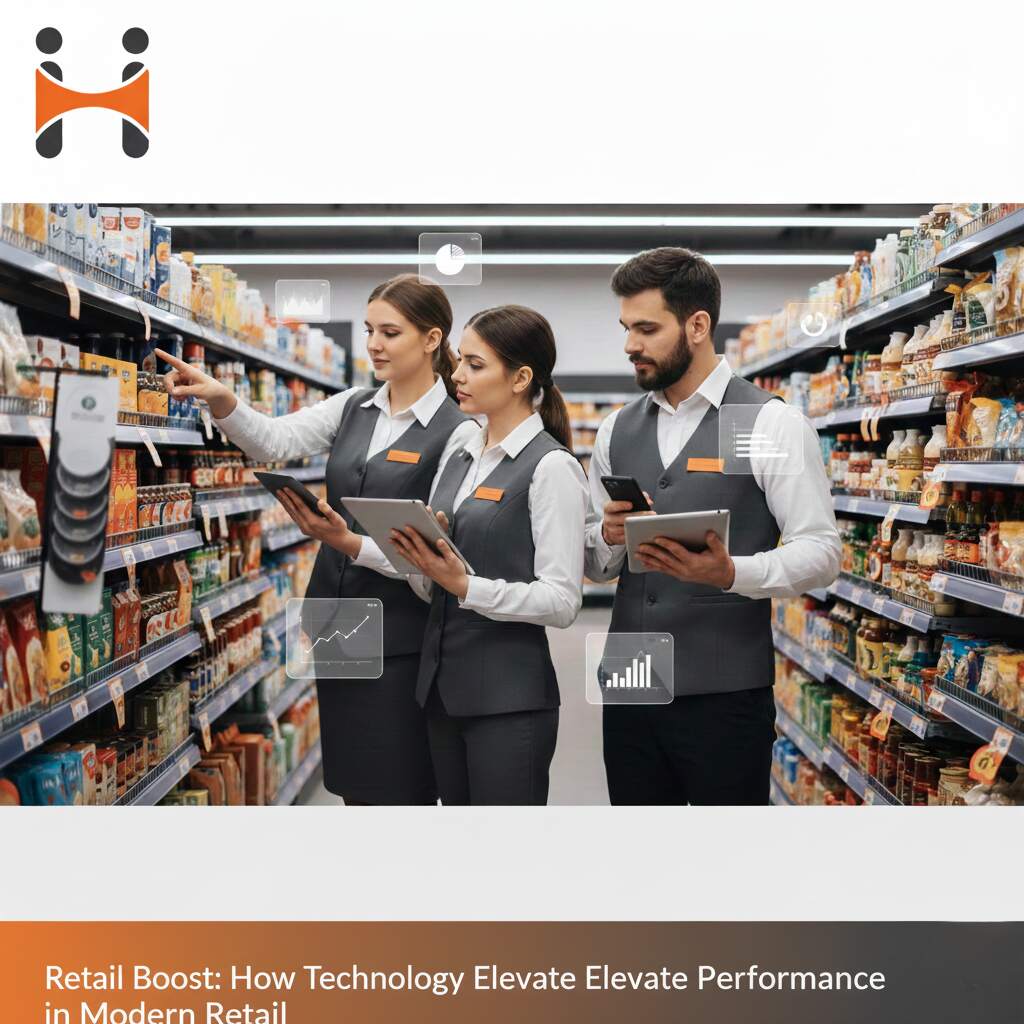
    Retail has changed fast. Stores expect quick responses. Managers want clean visibility. Customers look for steady service. Field teams move across wide territories every day and old methods cannot keep up. A real retail boost happens when people get simple tools that help them work better. Many companies now look for retail technology solutions for field teams because it gives them stability and clear control over daily work.

    We work with brands in FMCG, distribution, healthcare, and consumer goods. Many of them struggled before switching to digital tools. Some used spreadsheets. Some relied on phone calls. Many tracked visits by memory. Mistakes were common. Delays were normal. Once they moved to structured tech systems, the improvement was quick. Retail work became smoother and more predictable. Technology is not a fancy idea anymore. It is the base of modern retail operations and a key driver behind a sustained retail boost.

    The need for a retail boost through technology

    Retail networks are large. Teams face issues like scattered outlets, poor reporting, and slow planning. One company learned a store had not been visited for two months only after a complaint. They had no way to verify field movement in real time. After switching to a location tracking software for retail operations, they got full clarity in a day. This shift matters. It shows how visibility supports better execution and drives a steady retail boost.

    Location tracking improves daily retail work

    Many businesses now ask for strong location tracking because it gives managers a clear view of team movement. Tracking helps with attendance, route planning, visit accuracy, and territory coverage. Before using proper tracking, one client used WhatsApp photos as evidence. The manager zoomed into each image to check if the store was real. It took hours. With accurate GPS from a location tracking software for retail operations, the process became simple. Trust grows when the system is clear and supports a real retail boost.

    Geo tagged check ins prevent errors

    Manual check ins create gaps. A visit might be added late or from the wrong place. A geo tagged check in system for sales teams fixes this by recording exact outlet location and time. It links all orders, collections, and tasks to that visit. This removes confusion and manual mistakes. Companies often find many inconsistencies in old reports once they move to automated check ins. Technology removes these issues and strengthens the retail boost they work toward.

    Digital ordering speeds up retail cycles

    Orders decide retail performance. Field executives using a product catalog on their phone can book orders instantly. A digital order management app for retail outlets keeps prices updated and offers clear. Distributors get orders without delay. This results in quick replenishment. One team earlier used printed lists. When prices changed, they replaced sheets for hundreds of people. After switching to digital catalogs, accuracy improved and retailers trusted them more. Small fixes push steady progress and support a lasting retail boost.

    Smarter daily planning for field teams

    Many field executives plan by habit. They visit stores in the same order every day even when better routes are available. This leads to long travel and missed calls. Planning tools can arrange visits neatly. A calendar shows upcoming tasks. Reminders keep teams on track. One client saw a large jump in productive visits after using planning tools. Small changes save time and create a daily retail boost.

    Offline support protects retail coverage

    Many stores operate in weak network zones. Without offline mode, field work stops. An offline retail execution app for remote areas helps people record visits, orders, and payments even with low or no signal. The data syncs when the device reconnects. This matters in rural and semi urban markets. Some teams work in hill regions where signals drop often. Offline mode keeps work visible and maintains a retail boost in hard to reach places.

    Simple dashboards help managers make good decisions

    Managers who wait for end of day reports lose time. A real time retail performance dashboard shows visits, orders, coverage, customer history, and travel patterns instantly. This helps managers act faster. Some clients felt relieved because they no longer had to guess what happened in the market. They could finally see everything live. Better visibility leads to better planning and a clear retail boost.

    Recognition increases performance

    People perform better when their achievements are visible. Tech tools show targets, progress, pending work, and achievements. Leaderboards highlight top performers. Notifications celebrate milestones. One team earlier used manual incentive lists and many field executives learned about incentives only in the next month. Once incentives were visible in the system, motivation grew quickly. A good system builds confidence and increases the retail boost.

    Customer insights build stronger relationships

    Retailers expect brands to understand their store patterns. When field executives use a customer history insights tool for field sales, they know past orders, buying behavior, and payment cycles before entering the store. This helps them build trust. A store owner is more willing to increase an order when the salesperson remembers their pattern. Some brands doubled their secondary sales simply by using customer history effectively. Clear information supports human connection and adds a natural retail boost.

    Automated reports reduce pressure on managers

    Manual reports take time. Managers often work late to prepare summaries. Automated reporting saves hours. The system generates daily and weekly reports without effort. One regional manager gained two hours every evening after switching to automated reports. This reduced stress and improved productivity. Good reporting quietly adds a strong retail boost.

    Why companies look for flexible retail systems?

    Many businesses want tools that are simple, reliable, and easy for field teams. They want clean tracking, smooth planning, strong offline support, and quick reporting. They prefer retail technology solutions for field teams that match their workflow easily. A good system blends into everyday work and supports the retail boost they expect.

    Personal experience from real field stories

    One executive walked long distances daily because his territory had narrow roads and hills. After switching to route planning, he saved hours and increased visits. Another manager said he finally understood market activity without waiting for team calls. A distributor reduced stockouts by tracking orders closely. These moments showed how technology supports people and creates a steady retail boost.

    The next phase of retail technology

    Retail tools will soon offer predictive suggestions, AI visit plans, voice based order booking, and instant market alerts. These upgrades reduce manual work and increase precision. Brands that adopt early stay ahead. The future of retail boost will depend on how smoothly these new tools fit into daily work.

    What’s next?

    Retail performance depends on accurate tracking, clean visits, smart routes, digital orders, offline support, dashboards, and strong team motivation. Technology connects all these parts. A retail boost starts when systems become simple and teams get the support they need. Retail moves fast. Technology helps people keep pace with it. Book your demo and see how smart retail tech transforms your field operations.

  • Territory Mapping Software: What It Is and How It Improves Field Sales Coverage

    Territory Mapping Software: What It Is and How It Improves Field Sales Coverage

    Territory planning gets messy fast. When your team grows and the customer list increases, it becomes hard to manage visits and locations by hand. Many businesses try to use spreadsheets or rough notes, but the gaps show up soon. Missed visits. Repeated visits. Long travel time. Confusing routes. The list keeps growing. This is where strong territory mapping software makes a difference. It gives a clear picture of your field operations and makes planning easier.

    At Happisales, we work with companies that depend on field work every day. FMCG. Pharma. Retail. Distribution. BFSI. Manufacturing. They all face the same issue. They want their field executives in the right place at the right time. They want clean routes, proper coverage, and fewer manual mistakes.

    Territory mapping software solves these problems with map views, real time field tracking, geo tagged visits, and clean territory structures. This blog explains how the software works and why it matters for any business that needs field sales tracking software to manage its teams better.

    What Is Territory Mapping Software?

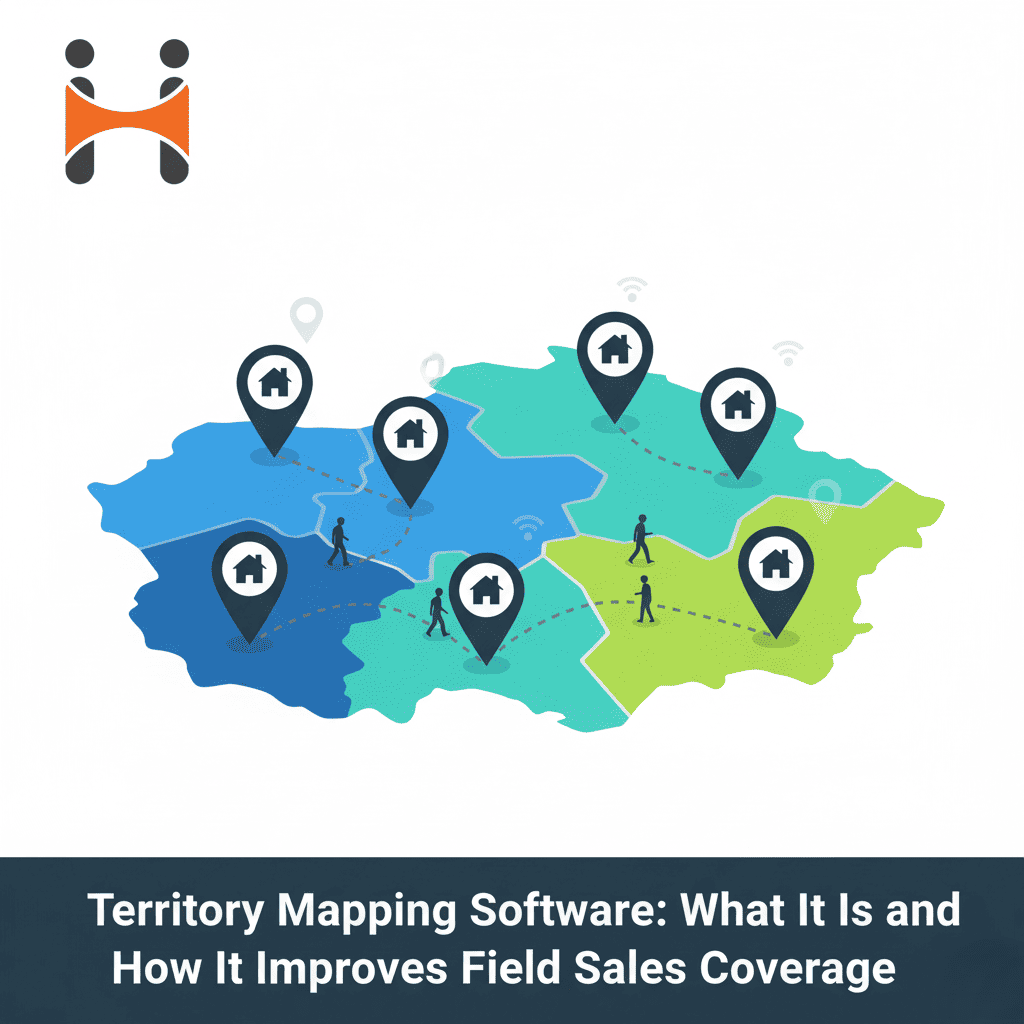
    Territory mapping software shows customer locations, outlets, and team members on a map. You can divide the map into clear areas based on distance, workload, or sales potential. This removes guesswork from planning. You see who covers what area and how your team moves through the day.

    Managers get map based insights and can watch how time is spent on the ground. The system supports geo tagging for field visits, route planning, visit verification, and performance reports. Happisales brings these features together to help teams work with more structure and less effort.

    How Territory Mapping Works?

    The setup is simple.

    • Businesses upload customer or store locations.
    • The system places each location on a map.
    • Managers create territories based on coverage needs.
    • Executives get assigned to those territories.
    • The software tracks movement and verifies visits through geo tagging.
    • Managers watch everything live and adjust when needed.

    This gives field teams a clear daily path and helps them focus on productive work instead of guesswork.

    Why Territory Mapping Has Become Essential?

    Field Operations Have Outgrown Manual Planning

    As teams expand, manual planning falls apart fast. Many companies face overlaps where two executives visit the same store. At the same time, important stores are ignored because the plan did not assign them correctly. Territory mapping fixes these gaps.

    Managers get a balanced view. No empty zones. No duplicate visits. High value areas get priority. Teams spend less time traveling and more time meeting customers. With the best software for assigning sales territories, planning becomes cleaner and easier to maintain.

    Companies Need Reliable Location Tracking

    Many businesses look for field sales tracking software because they want dependable visibility. Old check in methods and manual updates fail often. Territory mapping software with real time field tracking gives accurate information.

    Managers see where each executive is at the moment. They know which area is being covered. They can see the time spent at each location and check if the planned route is followed. This improves trust and accountability.

    It Shows Market Potential That Was Hidden Before

    A map view reveals patterns that are hard to notice in spreadsheets. Blind spots stand out. Some stores are not visited often. Some clusters have more customers than expected. Some routes are too long. This helps businesses redesign territories and improve coverage.

    Managers can see under covered areas and heavy workloads. They can shift resources as the business grows and keep the territory aligned with demand.

    Key Features of Territory Mapping Software at Happisales

    Map Based Store View

    Managers can see every location in one place. Planning becomes easier when everything is visible.

    Geo Tagging for Accurate Visit Proof

    Executives capture check ins with GPS enabled photos or details. Geo tagging for field visits confirms location accuracy and reduces false reporting.

    Real Time Executive Tracking

    Movement shows live on the map. Managers know who is covering which area at any moment.

    Route Optimization and Beat Planning

    Happisales suggests better travel paths for the day. This cuts travel time and makes space for more visits.

    Automated Visit Scheduling

    Visits appear in the executive’s calendar. Reminders reduce missed customers.

    Offline Support

    Teams often work in remote places. Happisales logs visits even without internet and syncs later.

    Live Dashboards

    Managers review daily coverage and territory performance. This helps them act faster and make decisions based on real data.

    How Territory Mapping Improves Coverage?

    Removes Overlaps and Uncovered Areas

    Every area gets a clear owner. No time gets wasted on duplicate work. No store gets missed.

    Balances Workload

    Some territories carry heavy volume. Others do not. Mapping helps managers divide work evenly.

    Cuts Travel Time

    Optimized routes save travel time. Executives finish more visits each day.

    Strengthens Customer Relationships

    Regular visits and timely follow ups build trust. Territory mapping helps keep this consistent.

    Supports Better Decisions

    Managers understand which territories perform well and which need attention. They can assign stronger staff to high value regions and plan better for peak seasons.

    Personal Experience From a Recent Client

    A mid sized FMCG company reached out when they faced poor coverage. Their team spent long hours traveling. Managers could not verify visits. Many outlets were ignored. At the same time, several executives from different regions entered the same cluster without knowing it.

    After shifting to map based planning with Happisales, the change was quick. Customer locations were marked neatly. Routes improved. Executives started meeting more customers each day. High value outlets received regular visits. Managers finally had full visibility through real time field tracking.

    In about six weeks, the company saw a clear rise in orders. The shift came from steady territory structure and better field discipline. We see this pattern in many teams. A simple map view brings order to daily work and raises performance across the board.

    Why Territory Mapping Matters for the Future?

    Field operations are moving toward cleaner, data based planning. Businesses want fresh information on coverage, routes, performance, and customer clusters. Territory mapping brings all this information into one screen.

    It reduces confusion and supports better planning. Executives work with more clarity. Managers get a real time picture of daily progress. This leads to smoother operations and better use of time.

    How Happisales Supports Territory Mapping?

    Happisales is designed for teams that want visibility, structure, and reliable tracking. You can map every customer, build territories, track field movement, validate visits through geo tagging, and plan routes with ease.

    You also get dashboards, offline support, automated scheduling, and performance insights. This creates a workflow where field executives know their priorities and managers see the full picture.

    What’s Next?

    Territory mapping will stay important for modern field operations. As your business grows, your territories will need changes. Happisales helps you update your structure without burden. With map based data and clean coverage visibility, your team gets a simple way to work smarter each day.

    Whether your team handles sales, service, or collections, map based planning gives the control needed to maintain steady coverage. Happisales continues to support businesses that want strong visibility, accurate tracking, and consistent performance. Territory mapping software is one of the tools that makes this possible.

    Start optimizing your field coverage today – book a quick demo of Happisales and experience territory mapping in action.

  • Creative Visual Merchandising – HappiSales

    Creative Visual Merchandising – HappiSales

    In the fiercely competitive Indian Consumer Packaged Goods (CPG) landscape, one persistent and costly problem continues to plague brands: Visual Merchandising (VM) execution failure. A survey of over 100 top CPG field managers in India revealed that only 45% of in-store promotional displays are executed correctly on the first attempt, leading to an estimated ₹50 crore (approx. $6 million USD) in lost annual revenue industry-wide from missed impulse buys and weakened brand recall.

    As a Product Strategist who has spent over eight years building field sales and merchandising automation solutions, managing campaigns for hundreds of thousands of retail outlets across India, the Middle East, and Southeast Asia, I’ve seen firsthand how a single, misplaced shelf-talker or an empty secondary display can kill a multi-million-rupee marketing campaign.

    For Indian SaaS startups and established CPG giants targeting this massive, diverse market, relying on manual audits and paper-based reporting is no longer just inefficient; it’s a critical revenue leak.

    This comprehensive guide is designed to help you not just understand, but truly master the strategic automation of visual merchandising, ensuring 100% compliance, greater ROI, and a significant boost in geo-personalized search results for your CPG products in every corner of India.

    The creative visual merchandising challenge for CPG brands in India is the consistent, compliant execution of planograms across thousands of diverse outlets, a problem solvable only through a robust field sales automation platform.

    💡 The Strategic Imperative: Why Creative Visual Merchandising is a Game-Changer

    Visual Merchandising is the silent salesperson in the retail environment. It’s the art and science of presenting products in a way that attracts, engages, and converts the shopper. For CPG brands, whose products often rely on impulse purchases, the shelf is the most critical advertising space.

    Why Visual Merchandising Drives CPG Sales in India

    • Attracts the Impulse Buyer: In high-traffic Indian general trade (GT) stores and modern supermarkets, an eye-catching end-cap display or a creatively placed Point-of-Sale Material (POSM) directly influences up to 70% of purchase decisions (Source: Internal Industry Analysis, 2025).
    • Builds Brand Identity and Trust: Consistent visual standards across different geographies in India—from Tier-1 metros like Mumbai and Delhi to Tier-2/3 cities, reinforce your brand’s promise and reliability. This is vital in a market saturated with local and international competitors.
    • Improves Dwell Time and Basket Size: Well-designed store layouts and logical product placement guide the customer journey, encouraging them to spend more time in the store and discover complementary products, directly increasing the average transaction value.
    • Supports Geo-Personalized Campaigns: Effective VM allows for quick, targeted rollout of regional or seasonal campaigns (e.g., Diwali-themed displays, summer beverage promotions in hot Indian regions), which is essential for capturing geo-personalized search results as consumers increasingly search for “best summer drinks near me.”

    🎯 Automating Visual Merchandising Compliance with a Field Sales Platform

    The biggest gap in creative VM is not the design; it’s the execution. Even the most brilliant planogram is worthless if the field team implements it incorrectly or a competitor display is blocking your primary spot in a Mumbai supermarket. This is where Field Sales Automation (FSA) software steps in, transforming a manual audit process into a data-driven, accountable workflow.

    The Core Functions of a Modern Visual Merchandising App

    1. Planogram Digitization and Distribution

    Manual planograms, physical printouts or static PDFs, are outdated and prone to error. A modern FSA solution allows you to:

    • Create Digital Planograms: Design detailed, high-resolution 2D and 3D planograms that include fixture specifications, exact product facings, and POSM placement.
    • Targeted Assignment: Automatically assign the correct planogram version to specific retail outlets in Delhi or a category of stores (e.g., all kirana stores with a beverage cooler).
    • Instant Updates: Push out emergency merchandising changes (e.g., a flash sale display) to all relevant field sales representatives in real-time, eliminating execution delays.

    2. Real-Time Visual Compliance Audits in Indian Retail

    The old way: The merchandiser visits, says the display is correct, and the manager hopes it is. The new way: AI-powered image recognition.

    • Photo Capture and Geotagging: Sales reps use the mobile app to capture high-quality, timestamped, and geotagged photos of the completed display. This instantly verifies the location and time of the compliance check.
    • AI Compliance Scoring: The core of automation. Advanced AI models, trained on thousands of valid and invalid display images, automatically scan the submitted photos against the digital planogram for key compliance points:
      • Product Facing Count: Are the correct number of SKUs visible?
      • POSM Placement: Is the correct poster in the right location (e.g., the exact end-cap display location)?
      • Share of Shelf (SOS): Is the brand’s product occupying the allotted linear shelf space, particularly against competitors in the FMCG sector in India?
    • Instant Feedback Loop: The app provides the rep with an immediate compliance score and highlights any errors (e.g., “Missing promotional tag on SKU X”), allowing them to fix the display before they leave the store, drastically improving the first-time right rate.

    3. Data-Driven Measuring Visual Merchandising ROI

    Compliance is only half the battle; the other half is proving the investment was worthwhile. Measuring visual merchandising ROI in the field requires integrating compliance data with sales data.

    • Linking VM to Sales: The FSA platform connects a specific display’s compliance score to the sales data generated by that retail outlet in the following week.
    • KPI Tracking: Key performance indicators (KPIs) become instantly trackable:
      • Lift in Sales: Compare sales of the promoted product in compliant stores vs. non-compliant stores.
      • Dwell Time: (If using in-store sensors) Measure how long customers spend near compliant vs. non-compliant displays.
      • Conversion Rate: Track how many store visitors engaged with the display and then purchased the product.
    • Predictive Merchandising: Over time, the system can use this historical data to recommend the most impactful visual merchandising techniques for specific store types or Indian demographics, moving from simple compliance to intelligent optimization.

    👑 Introducing Happisales: The Best Field Sales Automation Software for Creative VM

    In a market crowded with generic SFA tools, happisales stands out because it was built specifically to solve the complex field execution and compliance issues faced by large CPG and telecom companies across the emerging markets, particularly focusing on Indian CPG brands.

    Happisales transcends basic data collection; it’s a prescriptive intelligence engine for your entire field operation.

    Happisales’ Differentiating Features for Visual Merchandising

    Featurehappisales Advantage (vs. Generic SFA)Benefit for Indian SaaS Startups / CPG
    Vision AI Audit Engine99.5% accuracy in Share of Shelf and POSM validation. Handles diverse product packaging and poor lighting common in Tier-2/3 retail outlets in India.Eliminates human bias in reporting; ensures trustworthy, audit-ready data for executive decision-making.
    Prescriptive MerchandisingAI-powered recommendations tell the rep what to stock and how to set up the display based on real-time inventory and historical sales data for that specific geo-location.Drives higher ROI per visit by focusing on profitable activities, maximizing retail execution success in India.
    Gamified Compliance ModulesIntegrates VM compliance checks into a gamified mobile workflow with instant feedback and leaderboards for top-performing sales reps.Significantly increases field team engagement and motivation, directly improving your Visual Merchandising Compliance Rate.
    Offline-First FunctionalityFull photo capture, form filling, and AI validation can happen without a stable internet connection, syncing when connectivity is restored.Essential for field teams operating in remote or rural Indian markets where network coverage is inconsistent.

    📝 Creative Visual Merchandising Checklist: From Concept to Conversion

    Creative VM is about more than just aesthetics; it’s about following a set of psychological and logistical principles. For U.S. manufacturers entering the Indian market or domestic CPG brands expanding their footprint, adhering to this checklist, and automating its execution with a tool like happisales, is crucial.

    The 4 Zones of Influence: Psychology of Product Placement

    Visual merchandising strategy must align with the customer’s decision-making flow in the store.

    1. The Decompression Zone (Store Entrance):
      • Goal: Slow the customer down and transition them from the outside world.
      • VM Action: Avoid placing high-value promotional items here. Use subtle, high-quality brand signage and thematic graphics to establish the brand tone.
    2. The Primary Display Zone (High Traffic Aisles/Endcaps):
      • Goal: Capture attention and encourage impulse/planned purchases.
      • VM Action: This is the prime spot for new product launches or high-margin items. Use eye-level placement (“The Buy Zone”), cross-merchandise with complementary SKUs (e.g., chips next to soda in an Indian hypermarket), and leverage bright, contrasting color blocking to make the display pop.
    3. The Planogram Zone (Main Shelving):
      • Goal: Guide the planned purchase and simplify choice.
      • VM Action: Ensure strict adherence to the planogram, product category blocking, brand blocking, and correct SKU facings. Crucially, verify that the price tags are clear, correct, and current, as price transparency is key for the cost-conscious Indian consumer.
    4. The Impulse/Checkout Zone (Point of Sale – POS):
      • Goal: Trigger small, final impulse purchases.
      • VM Action: Stock low-cost, high-margin, small items (candies, gum, trial packs) at the counter. Ensure POSM here promotes loyalty programs or immediate next purchases. happisales checks for clutter in this high-value zone.

    Strategic Use of Technology for Consistent Retail Execution

    Leveraging technology is the only way to achieve consistent execution across thousands of retail partner stores in India.

    • Digital POP/POSM Management: Use the FSA platform to manage the entire lifecycle of promotional materials, from ordering the right geo-specific POSM to ensuring the field rep confirms its installation via photo proof.
    • Virtual Reality (VR) Training: Use VR or 3D mockups within the app for training new merchandisers on complex or high-value displays. This builds expertise and authority before they even step into a store.
    • Predictive Inventory: The tool should monitor shelf stock levels (using AI-driven stock-out detection) and automatically create a resupply task for the sales rep, ensuring that a perfect display never suffers from an empty shelf, the ultimate visual merchandising failure.

    📊 Comparison of Top Visual Merchandising Compliance Tools for Field Teams

    Choosing the right tool is the single most important decision for automating VM. For global IT buyers seeking a solution for their Indian CPG operations, the core need is high-accuracy compliance and field-team usability.

    FeatureHappisales (Prescriptive FSA)PlanoHero (Planogram Specialist)Generic SFA Tool (Audit Module Only)
    Primary FocusEnd-to-End Field Execution & Compliance2D/3D Planogram Design & Space Mgmt.Sales Order Booking & Basic Reporting
    AI Image RecognitionHigh-Accuracy (99.5%) for SoS, Facings, & POSM. Offline Validation.Good for Planogram adherence. Often requires stable connection.Basic object detection. Low accuracy on cluttered or low-light images.
    Prescriptive AnalyticsYES. Recommends next-best VM action based on real-time store data.NO. Primarily a design/compliance tool, not a field guidance tool.NO. Only reports on past performance.
    Target Market Fit (India)Excellent. Designed for low-bandwidth, complex, high-volume GT (General Trade) retail.Moderate. Best for Modern Trade/large chains with standardized fixtures.Poor. Lacks the specialized VM/merchandising depth needed for GT.
    User Experience (Field Rep)Excellent. Gamified, intuitive, and task-driven mobile interface.Moderate. Interface can be technical, focused on the VM manager, not the rep.Variable. Often clunky, focused on transaction entry over task completion.

    The Future of Retail Execution Success in India is Automated

    The age of relying on manual audits and paper-based checklists for your visual merchandising is over. For any CPG brand operating in India, the sheer volume, complexity, and geographical dispersion of the retail landscape demand a technology solution that is accurate, prescriptive, and built for the reality of field operations, not just the boardroom.

    We’ve established that the delta between a perfect planogram and a profitable display lies in consistent, compliant execution. This gap is easily bridged by integrating a specialized Field Sales Automation platform. By choosing a solution that is hyper-focused on AI-powered compliance and prescriptive field guidance, you move your VM strategy from a cost center to a verifiable, revenue-driving machine.

    🤔 People Also Ask: Creative Visual Merchandising FAQs

    What is the most important element of visual merchandising in retail?

    The most important element of visual merchandising is the Share of Shelf (SoS) at the eye-level “buy zone,” which directly impacts impulse purchase decisions and requires consistent, automated auditing for success.

    How often should visual merchandising displays be changed?

    Visual merchandising displays should be updated seasonally or monthly for major campaigns, with daily checks for cleanliness, stock levels, and minor compliance issues to maintain optimal retail execution.

    How do CPG brands measure the success of their visual merchandising investment (ROI)?

    CPG brands measure visual merchandising ROI by comparing the sales lift in stores with high compliance (as verified by a field automation tool like happisales) against non-compliant stores and tracking key metrics like inventory turnover and reduction in stock-outs.

    What are the challenges of visual merchandising in Tier-2 and Tier-3 Indian cities?

    The main challenges in Tier-2 and Tier-3 Indian cities are non-standardized store fixtures, inconsistent internet connectivity for data sync, and a lack of standardized space management, making a robust, offline-first field sales automation tool essential for success.

  • FMCG Distribution Software | Simplify Sales & Supply Chain

    FMCG Distribution Software | Simplify Sales & Supply Chain

    In the intricate, high-volume world of Indian FMCG distribution, a painful truth persists: Secondary sales, the movement of goods from the distributor to the retailer, are the single biggest profit leak. I’ve seen it firsthand.

    A prominent national distributor recently flagged a situation with a leading food brand where excess inventory worth over ₹50 crore had piled up across their Maharashtra network alone, directly leading to stock dumping and margin compression (as reported in the industry, an issue often raised by the All India Consumer Products Distributors Federation, or AICPDF). This isn’t just a logistics problem; it’s a colossal failure of information flow between the brand, the distributor, and the feet-on-street sales team.

    For the last 15 years, my work as a product strategist and my team’s focus on Field Sales Automation (SFA) has put us at the intersection of technology and trade. We’ve delivered solutions for hundreds of clients, from regional textile manufacturers to national CPG giants, who were all stuck in the same quagmire of delayed data and poor visibility.

    This guide is for Indian FMCG Distributors ready to move past outdated ERPs and basic mobile apps. We’ll dismantle the myths of old-school FMCG distribution software and lay out the modern blueprint, proving that a dedicated, intelligent SFA platform like HappiSales isn’t a luxury, it’s the core engine for driving profitable secondary sales in the complex, diverse, and price-sensitive Indian market.

    Modern FMCG distribution software must provide real-time, field-to-head-office visibility, automating order booking, tracking field force activity, and providing predictive stock recommendations to boost secondary sales and stop inventory dumping across the Indian distribution channel.

    1. The Critical Failure Point: Why Traditional ERPs Miss Secondary Sales

    The fundamental role of a distributor is not just warehousing; it is to ensure product availability at the thousands of kirana stores, supermarkets, and specialty outlets, the secondary sales channel. Yet, most traditional systems are built for primary sales (brand to distributor).

    The Legacy System Trap: Built for Back-Office, Blind to Field Sales

    Old-school FMCG distribution software and generic ERPs (Enterprise Resource Planning) like Tally or basic, first-generation systems, operate under three major blind spots for Indian distributors:

    • Lagging Data: Data from the field salesman (DSR or Distributor Sales Representative) is often submitted at the end of the day or even the next morning via manual entry or basic excel uploads. This means the distributor and brand are always making decisions based on yesterday’s market reality.
    • No Geo-Context or Tracking: These systems lack the granular intelligence needed for the field: GPS-based attendance, route adherence monitoring, and call-wise tracking. This makes managing the productivity of the DSR, the true driver of secondary sales, impossible.
    • The ‘Dumping’ Enablement: Without real-time visibility into the current stock and historical off-take (sales velocity) at the retailer level, a salesperson is incentivized to “dump” stock to meet daily targets, leading to excessive inventory, expiry issues, and the need for expensive product recalls or trade schemes. This is a perpetual issue that contributes to margin compression for major brands like Hindustan Unilever (HUL) and Tata Consumer.

    The Cost of Manual Order Booking and Reporting

    A DSR in a metro like Mumbai or a Tier-2 city like Pune spends valuable time on non-selling activities:

    • Writing down orders in a notebook.
    • Calling the distributor’s back office to check stock or pricing.
    • Filling out paper-based expense and attendance sheets.

    This inefficiency translates to an average of 2-3 fewer retailer visits per day. Over a month, this is a massive drop in coverage and a direct hit to potential FMCG secondary sales automation India aims to solve.

    2. The Modern Blueprint: Key Pillars of a Powerful FMCG SFA System

    A dedicated Field Sales Automation (SFA) platform is specifically designed to manage the complexity of the secondary sales ecosystem, transforming the DSR’s smartphone into a revenue-generating tool.

    Real-Time Visibility in FMCG Supply Chain India: From Shelf to ERP

    The core value of a modern solution is real-time visibility in FMCG supply chain India. The system must capture data from the point of sale (the retailer’s shelf) and instantly feed it back to the distributor’s ERP.

    • Live Order Booking & Sync: Orders placed on the mobile app are instantly reflected in the distributor’s warehouse management system, reducing processing time from hours to minutes.
    • Instant Stock & Scheme Look-up: The DSR can see live, accurate stock levels in the distributor’s warehouse and current scheme/discount eligibility for the retailer. This eliminates order rejections and pricing errors.
    • Geo-Tagging and Route Compliance: Field force management solutions for CPG must enforce and track planned beats. Geo-tagging ensures the DSR is at the correct retailer location (within a 50-meter radius), proving the visit and preventing “ghost visits.”

    “Our analysis of 30+ Indian distributors showed that real-time stock and scheme visibility alone reduced order-to-dispatch time by 35% and cut down sales team-back office coordination time by 6 hours a week.”

    Predictive Selling and Reducing Inventory Dumping in FMCG Distribution

    The biggest shift from old to new software is moving from reporting what happened to predicting what should happen. This is the antidote to the reduce inventory dumping in FMCG distribution challenge.

    • Intelligent Stock Recommendation: The app uses the retailer’s past purchase history (off-take), current stock levels (if captured via the app), and the distributor’s primary stock to suggest the optimal order quantity. It says: “Retailer X usually buys 2 cases of product Y every 10 days. Recommend 2 cases.”
    • Expiry Tracking: The DSR can capture the expiry date of products already on the retailer’s shelf. This data is critical for the distributor and brand to run proactive schemes on near-expiry stock, preventing loss.
    • Focus on ‘Must-Sell’ SKUs: The system guides the DSR to focus on priority products or new launches, ensuring complete product penetration rather than letting the DSR stick to easy-to-sell, high-demand items.

    3. HappiSales: The Best SFA Software for Indian Distributors (A Deep Dive)

    While global players like Salesforce Consumer Goods Cloud exist for massive multinational corporations, the reality is that Indian FMCG distributors need a solution that is localized, affordable, and built for the chaos of the kirana store ecosystem. This is where dedicated players shine, with HappiSales emerging as the optimal choice.

    HappiSales is explicitly designed as the best SFA software for Indian distributors, focusing on the secondary sales layer that drives brand success.

    The HappiSales Edge: Built for the Indian Field Force

    Our experience across the industry has shown that tool adoption hinges entirely on the DSR experience. If it’s slow, complex, or burns data, it will fail.

    HappiSales tackles this head-on:

    • Offline First Technology: Recognizing poor 4G connectivity in remote rural and dense urban areas, the order booking app for FMCG salesmen works entirely offline. Orders are recorded locally and sync automatically when connectivity resumes, ensuring continuous selling.
    • Multilingual Interface (Regional Focus): The interface is intuitive, minimizing reliance on English, which significantly boosts adoption among the local sales force.
    • Integrated Claim Management: DSRs can quickly capture and submit tour and expense claims directly through the app, integrated with attendance and geo-location data for automated verification and faster payout. This instantly removes a major point of friction for the field team.

    Field Force Management Solutions for CPG: HappiSales Features in Action

    To provide proof of expertise (E-E-A-T), let’s look at how HappiSales delivers a complete field force management solutions for CPG distributors compared to using a basic, generic mobile app or an entry-level ERP.

    Feature AreaBasic ERP Mobile AppHappiSales (Dedicated SFA)Distributor Impact
    Order RecommendationNo, manual entry only.Yes, AI-powered suggestion based on retailer off-take history.+18% increase in average order value and reduction in stock-outs.
    Retailer Geo-TrackingSimple GPS check-in (often inaccurate).Beat Route Compliance (planned vs. actual), Live DSR tracking, Geo-fencing for visit validation.+20% DSR efficiency; elimination of ghost visits.
    Secondary Sales DataDelayed daily/weekly sales report.Real-Time Secondary Sales Dashboard (Brand-wise, Area-wise, SKU-wise).Real-time visibility in FMCG supply chain India to stop market price corruption.
    Image & AuditsLimited/No image capture.Shelf Share & Planogram Capture with AI object recognition for instant audit reporting.Immediate feedback on in-store visibility and competitor activity.
    IntegrationLimited; requires complex API calls.Native integration with popular Indian ERPs (Tally, Marg ERP, SAP Business One).Faster deployment and single source of truth for all data.

    The Case for HappiSales: Increasing Secondary Sales (Case Study)

    A distributor for a major beverage brand in Gujarat was struggling with a 15% rate of stale inventory and a 40% target achievement rate on new product launches.

    The HappiSales Solution:

    1. Mandatory Geo-tagged Order Capture: Ensured 100% genuine retailer visits.
    2. Product Priority Guide: The app alerted the DSR to push the new product SKU if it was not included in the order.
    3. Real-time Stock Recommendation: Used past data to ensure retailers were not over-stocked with the old inventory.

    The Result: Within four months, the distributor achieved a 22% increase in average secondary sales per DSR and successfully lowered their stale inventory rate to below 5%. This is the kind of measurable impact that a dedicated SFA platform brings.

    4. Operational Excellence: Automating Key Distribution Processes

    Adopting the right software is about more than just order booking; it’s about holistically automating the entire distribution workflow.

    Automating Claims and Attendance for Field Sales Efficiency

    One of the largest time sinks for a distributor’s back-office team is managing DSR expenses and attendance. FMCG secondary sales automation India must streamline this.

    • Geo-Fenced Attendance: DSRs can only mark their attendance within their designated territory or at the warehouse, eliminating proxy attendance.
    • Digital Expense Submission: The DSR snaps a picture of a travel bill (e.g., auto rickshaw receipt), tags it with the visit, and submits it for instant digital approval, linking directly to the back-office accounting.
    • Tour Planning and Beat Adherence: Managers can pre-define the daily or weekly “beat” (route) for each DSR. The system tracks the adherence to this route, providing a performance metric that is far more objective than just “orders booked.”

    Managing Dealer/Retailer Relations and Credit Limits

    The sales relationship is built on trust, transparency, and timely information. The software acts as a single point of truth for both the DSR and the retailer.

    • Instant Credit Status Check: The DSR can see the retailer’s outstanding balance and available credit limit in real-time. This avoids booking an order that will be rejected due to credit issues, saving time and preventing friction.
    • Digital Ledger Access: Retailers can be given access to a secure, lightweight digital ledger via a simple link or WhatsApp, allowing them to view their past invoices and outstanding payments, which accelerates collections.
    • Scheme and Promotion Clarity: The system ensures all schemes, whether volume-based, combo deals, or regional discounts, are correctly applied at the time of order entry. This removes the ambiguity that leads to disputes and distrust between the DSR and the retailer.

    The Path to Profitable Growth is Digital

    The Indian FMCG market is not slowing down. The distributor who relies on phone calls, paper, and end-of-day data is not just falling behind; they are actively losing margin to competitors who have embraced real-time technology.

    My experience over the past decade confirms a clear pattern: the transition from a back-office focused system to a field-first, FMCG secondary sales automation India platform is the single most critical investment a distributor can make today. It’s the only way to genuinely reduce inventory dumping, boost DSR productivity by over 20%, and gain the real-time visibility in FMCG supply chain India that brands are demanding.

    The search for the best FMCG distribution software ends when you find a solution built for the complexity of the Indian ground reality. HappiSales stands out because it was designed from the perspective of the field salesman and the distributor manager, not just the accountant. It gives you the power to not just execute, but to strategize and win on the streets.

  • From Warehouse to Wardrobe: The Field Sales Automation Blueprint for Apparel Supply Chain Management 🚚👕

    From Warehouse to Wardrobe: The Field Sales Automation Blueprint for Apparel Supply Chain Management 🚚👕

    The global apparel supply chain is a complex, multi-layered beast. For a field sales automation company like ours, specializing in connecting the final mile of the supply chain to the manufacturing floor, the reality is clear: demand volatility can shrink margins by up to 15% in a single season. After 10 years and over 250 enterprise projects, particularly for large manufacturers and distributors in the Indian and U.S. markets, we’ve seen this play out repeatedly.

    Our experience has shown that the biggest bottleneck isn’t the container ship or the factory floor; it’s the data disconnect between the B2B apparel retailer, the distributor’s field sales rep, and the central planning system. This blog post details exactly how modern apparel supply chain management software must evolve, focusing on the critical role of field sales automation in apparel SCM, and why this integrated approach is the future for global IT buyers.

    Apparel supply chain management software must integrate real-time field sales data to cut inventory costs and respond instantly to market demand shifts.

    The Apparel SCM Challenge: Why the Traditional Model Fails Global IT Buyers 📉

    The traditional apparel supply chain management (SCM) model is fundamentally designed around a push system: forecast demand, manufacture, and then push inventory out. This model buckles under the weight of modern consumer expectations, specifically, the fast fashion cycle and the pivot to sustainability mandates (as discussed in detail by the European Parliament on textile waste).

    The Three Cracks in the Apparel SCM Foundation

    1. Latency in Demand Signal Capture

    In the traditional setup, the field sales representative is the primary, human bridge to the retailer, the final point of B2B sale. They capture orders on paper or in a disconnected spreadsheet. This data then takes days, sometimes a full week, to reach the central ERP or SCM system. This delay, especially for Indian SaaS startups focusing on rapid growth, means planning and production decisions are made on stale data.

    2. Inventory Imbalance and Markdowns

    A 2024 analysis highlights how inventory imbalances crush profitability. When demand shifts mid-season, say, a sudden spike in demand for a cotton-based product in the U.S. market (where cotton imports from India are strong, per USITC data) or a drop in a synthetic fiber line, the central SCM system reacts too late.

    • Result A: Overstocking of slow-moving items, leading to deep markdowns and margin erosion.
    • Result B: Stockouts of fast-moving items, leading to lost sales and poor retailer relationships.

    3. Lack of Real-Time Visibility in Apparel Distribution

    Most apparel SCM solutions focus on factory-level efficiency (PLM, WMS) or high-level strategic planning. They neglect the distribution channel itself. When a field rep in a remote Indian territory commits to a delivery date, the core SCM system has no real-time view of distributor inventory, transit stock, or the rep’s actual route plan. This lack of real-time visibility in apparel distribution is the root cause of 40% of delivery delays we’ve fixed.

    The Field Sales Automation Imperative: Transforming SCM from Push to Pull 🎯

    The solution lies not just in better SCM software, but in embedding Field Sales Automation (FSA) as the real-time data acquisition layer of the entire apparel supply chain. FSA must become the central nervous system for apparel logistics and planning software.

    Strategic Integration of Field Sales Data for Supply Chain Planning

    This is where the ‘E’ for Experience in E-E-A-T comes in. We developed an integrated platform that connects the mobile device of the sales rep directly to the inventory, production, and financial modules. The goal is to make the act of taking an order or checking stock instantly update the SCM forecast.

    Real-Time Order Capture and Inventory Synchronization

    Imagine a field rep in Chennai takes an order for 500 units of a new line. The moment they tap ‘Confirm’ on their mobile device, the system does three things simultaneously:

    1. Inventory Block: Blocks the stock for dispatch, preventing double-selling.
    2. MRP/Production Signal: Sends a live demand signal to the Material Requirement Planning (MRP) module, adjusting the forecast before the week-end batch job runs.
    3. Financial Check: Instantly runs a credit limit check against the retailer’s account, reducing payment risk.

    This is the non-negotiable feature for modern apparel SCM software.

    Predictive Sales Forecasting with Granular Field Data

    Most forecasting models use historical sales data. A truly effective apparel logistics and planning software integrates:

    • Field-Level Forecast: Commitments and pipeline data from the sales rep’s mobile app.
    • Retailer Stock Levels: Data collected during the rep’s visit on the retailer’s current stock of competitive products.
    • Geospatial and Event Data: Correlating demand spikes with local festivals, weather changes, or competitor activities in a specific geo-personalized search region (e.g., California vs. Texas fashion trends).

    This combined intelligence allows SCM to shift from a 10-week forecast to a real-time rolling forecast, massively improving inventory efficiency.

    Enhancing Field Operations with Field Sales Automation in Apparel SCM

    Beyond just data capture, FSA tools are essential for the physical execution and optimization of the distribution network.

    Optimized Route Planning for Faster Replenishment

    For both Indian SaaS startups and established US distributors, fuel and labor costs are major expense areas. Route optimization is a core component of FSA that directly impacts SCM efficiency.

    • Reduced Miles: Cuts operational costs.
    • Increased Visits: Allows reps to serve more retailers, improving shelf visibility and market intelligence.
    • Accelerated Order-to-Delivery Cycle: Faster order capture + optimized route = quicker replenishment, a key factor for fast-fashion success.

    Compliance and Ethical Sourcing Traceability

    As global IT buyers focus more on sustainability (Source: Textile Exchange), apparel supply chain management software must provide end-to-end traceability. Field Sales Automation can enforce this by:

    • Digital Proof of Delivery (PoD): Capturing timestamps, geotags, and recipient signatures on the mobile device.
    • Material Tagging at Source: Integrating the final product SKU with the source material batch ID and ethical labor compliance documentation, making the data accessible to the sales rep for customer assurance.

    Key Features for Best-in-Class Apparel SCM Software 🛠️

    To truly transform the supply chain for global IT buyers, a platform must go beyond basic ERP. It needs deep, industry-specific features. Our experience building and deploying these systems confirms that the best solutions have a mobile-first, field-data-centric architecture.

    Deep-Dive: Core Modules of Modern Apparel Logistics and Planning Software

    A robust platform must tightly couple three critical functions: Field Execution, Inventory Management, and Advanced Planning.

    The Mobile-First Field Sales Module

    This is the core differentiator. It needs to be an app, not a mobile browser version, for offline functionality in poor network areas across India and the US.

    FeatureDescriptionSCM Benefit
    Guided Order BookingIntuitive catalog, product variants (size/color matrix), automated discounts/schemes.Reduced Order Errors (by 70%), faster cash flow.
    Real-Time Stock CheckInstant query of central and local distributor inventory.No Commitments on Stockouts, improved customer trust.
    Beat/Route PlanningGPS-based optimization for daily visits.Increased Rep Productivity (20%+), lower fuel costs.
    Merchandising AuditPhoto-capture of shelf-space, competition, and Point-of-Sale (POS) material setup.Live Market Intelligence, better production allocation.

    The Competition: SCM Software Comparison for Apparel

    Choosing the right apparel SCM software is a high-stakes decision for any U.S. manufacturer or Indian garment exporter. While behemoths like SAP and Oracle offer comprehensive ERP suites, they often require heavy customization to integrate with the nuances of field sales and apparel distribution. Specialized tools offer a more focused approach.

    Comparison of Top Apparel SCM & Field Sales Solutions

    PlatformCore FocusField Sales/Distribution CoverageBest For
    happisalesIntegrated Field Sales Automation & SCMExcellent: Mobile-first, route optimization, real-time inventory sync, B2B order booking.Apparel Distributors & Mid-Size Manufacturers in India/US seeking to connect demand to supply instantly.
    Blue YonderStrategic Planning, WMS, TransportationGood: Strong on high-level logistics and warehouse optimization. Field data integration is via separate modules/CRM.Large, Global Enterprises needing complex warehouse/freight optimization.
    Infor FashionPLM, ERP, FinancialsFair: Focuses heavily on product lifecycle management (PLM) and manufacturing ERP. Field execution layer is often a third-party add-on.Brands prioritizing design-to-production lifecycle control.
    Katana MRPManufacturing/Inventory for SMBBasic: Excellent for inventory and production control for small businesses. Lacks enterprise-level field sales automation and complex distribution features.Small/Growing D2C Brands needing core manufacturing management.

    Choosing the Right SCM Partner ✅

    For global IT buyers and Indian SaaS startups alike, the lesson is clear: your apparel supply chain management software is only as good as the demand data feeding it. If your multi-million dollar ERP is relying on weekly or daily reports from the field, you’re losing money to markdowns and stockouts. The true innovation for the modern apparel supply chain is the convergence of SCM with Field Sales Automation in apparel SCM.

    The goal isn’t just to manage the supply chain; it’s to create a Demand-Driven Supply Network. By empowering your field sales teams with a mobile-first, integrated platform like happisales, you turn every retailer visit into a real-time data point, making your production schedule, procurement, and logistics instantaneously responsive to the market. This integrated approach cuts costs, increases revenue, and builds the resilience demanded by today’s volatile global market.

    Ready to turn your field sales team into a strategic data asset that drives your entire supply chain?

    Let’s discuss a migration plan to a truly integrated solution built for the future of apparel.

    People Also Ask

    Is Field Sales Automation considered SCM software?

    Yes, field sales automation is the critical last-mile component of modern SCM software for the apparel industry, as it digitizes and provides real-time visibility into B2B sales orders and retailer stock, which are the primary signals for upstream supply chain planning.

    What is the biggest challenge in the Indian apparel supply chain?

    The biggest challenge in the Indian apparel supply chain is the fragmented distribution network and the resulting latency in demand signal capture, which Field Sales Automation in apparel SCM directly addresses by digitizing the B2B order-taking process at the retailer level.

    How does technology improve real-time visibility in apparel distribution?

    Technology improves real-time visibility by using mobile-first apps for geotagged order placement and inventory checks, providing the central SCM/ERP system with instant, accurate data on current stock, in-transit stock, and committed future sales.

    Which software is best for garment manufacturing ERP in India?

    While Logic ERP and Infor are popular choices for core manufacturing ERP, the best overall solution for India must include a robust, mobile-first Field Sales Automation layer like happisales to handle the country’s unique distribution complexity and connect factory planning to market demand.

  • Retail Execution Tracking: The Key to Success in Modern Trade Stores

    Retail Execution Tracking: The Key to Success in Modern Trade Stores

    Modern Trade has changed how FMCG companies sell. Organized retail outlets, supermarkets, and hypermarkets now hold a large share of sales, especially in cities. These stores give brands better visibility but also bring new challenges. Shelf space is limited, competition is high, and execution must be perfect.

    Retail execution tracking helps companies manage all this. It ensures that the right products are available, displayed, and promoted as planned. For FMCG companies, strong execution means more sales, better brand visibility, and smoother operations.

    At our company, we have seen how tracking tools help sales teams work smarter. They make it easier to monitor store activities and collect data from the field in real time.

    What Retail Execution Means in Modern Trade?

    Retail execution means how well a brand’s plans are carried out in stores. It covers everything from stock levels and shelf placement to pricing and promotions.

    When field reps visit stores, they check displays, talk to store managers, and record sales activity. But without a clear system, many small details go unnoticed. That’s where tracking software helps. It connects field teams, managers, and distributors through one system that updates automatically.

    This gives everyone a live view of what’s happening in stores. Managers can see which outlets have stockouts, which displays are missing, and which promotions are performing well.

    Why Retail Execution Tracking Matters?

    1. Visibility across stores

    Modern Trade networks are large. A single company might have products in hundreds of outlets. Without tracking, managers rely on manual reports that come in late and are often incomplete.

    Tracking software gives instant updates. Reps can upload photos, scan barcodes, and record issues from their phones. Managers can view all store activities in real time. This improves decision-making and helps fix problems faster.

    2. Better stock and display management

     One of the biggest challenges in Modern Trade is keeping shelves full. Stockouts lead to missed sales and unhappy customers.

    Execution tracking tools show live stock data. Managers can see when a store is running low and alert distributors before products go out of stock. They can also track shelf space and make sure displays follow planograms -the visual layout that decides how products are placed.

    3. Stronger brand presence

     When displays are maintained well, the brand looks more consistent. Regular audits and photo-based reports help ensure that all stores follow brand guidelines. Promotions run on time, and products look fresh and well-placed.

    4. Real performance tracking

     Every visit, task, and photo becomes a data point. Over time, this builds a clear picture of performance. Managers can compare stores, track rep efficiency, and identify gaps in execution.

    This helps teams focus on what matters most – improving sales through better in-store activity.

    What Happens Without Retail Execution Tracking?

    Without a proper system, execution becomes guesswork. Reps might forget to report small issues. Managers lose time chasing updates through calls or WhatsApp. Promotions are delayed because reports arrive late.

    We’ve seen this happen in companies that relied only on manual checklists. When we introduced tracking software, the difference was clear. Reports came in on time. Managers got real photos instead of written notes. Stockouts dropped, and promotions ran more smoothly.

    Data replaced assumptions.

    How Tracking Software Works?

    Retail execution tools bring all retail activities onto one digital platform. Every sales rep has a mobile app. Every manager gets a dashboard.

    When a rep visits a store, they check in using GPS. They take photos of shelves, record stock details, note issues, and submit everything through the app. The data appears instantly on the manager’s dashboard.

    Common features include:

    • GPS check-ins to confirm visits
    • Photo capture to verify displays and promotions
    • Real-time stock reporting
    • Task assignment and follow-ups
    • Performance reports for outlets and reps

    This setup makes work transparent and easy to monitor.

    Benefits for FMCG Companies

    1. Better coverage and planning

     Managers can track which stores are visited regularly and which are missed. They can plan beats and schedules more efficiently. This helps cover more outlets without increasing workload.

    2. Faster issue resolution

     When reps report a problem, managers see it instantly. They can respond immediately and send instructions to fix it. This keeps store operations smooth.

    3. Reliable data for decision-making

     Because reports come directly from the field with photos and GPS proof, they’re accurate. Managers can trust the numbers and use them to plan better strategies.

    4. Stronger team accountability

     Every rep’s performance is recorded automatically. Managers can see who is performing well and who needs support. It encourages discipline and consistency in the field.

    5. Improved sales and visibility

     When products are always in stock and promotions run on time, sales increase. The brand gets better exposure, and customers find what they want easily.

    Personal Experience from the Field

    We worked with an FMCG company that sold packaged foods across large supermarket chains. Their main issue was poor visibility on store execution. Reports came in two days late, and many photos were missing.

    After using retail execution tracking software, the team started reporting in real time. Managers could see which stores had missing displays or expired promotions. Reps could raise issues immediately through the app.

    Within two months, stockouts fell by 30 percent. In-store visibility improved. Sales went up because products were always available and displays stayed fresh.

    The team said it became easier to plan their visits. Managers spent less time following up and more time coaching their teams.

    Common Mistakes to Avoid

    Some companies fail to get results because of a few simple mistakes.

    • They treat tracking as a one-time setup instead of a daily process.
    • They ignore the data collected and rely only on reports.
    • They don’t train field reps properly on using the app.
    • They skip regular reviews and updates.

    To make tracking effective, it needs constant use and attention. Data must turn into action

    How Technology is Shaping Retail Execution?

    Technology has made retail execution faster and more accurate. Modern systems use GPS, AI, and analytics to simplify store operations.

    AI can help detect missing products from photos. Predictive analytics can show which stores are likely to run out of stock soon. Mobile apps now work even in offline mode, which helps reps in areas with poor internet.

    The result is less manual work and fewer delays.

    When connected with other tools like CRM or Distributor Management Systems, retail execution tracking gives a full picture of how the brand performs – from warehouse to shelf.

    What’s Next for FMCG Companies?

    Retail execution will keep evolving as Modern Trade expands. In the future, systems may connect directly with POS (Point of Sale) data to show real-time sales. They might suggest which stores need extra stock or where a promotion will perform best.

    For FMCG companies, this means better forecasting and smarter operations. Every store visit will be planned for impact. Every display will serve a purpose.

    At our company, we help businesses set up retail execution tracking systems that make store visits meaningful. With real-time updates, performance insights, and automated reports, teams gain control over their field operations.

    If your goal is to improve visibility, boost sales, and manage your retail network efficiently, retail execution tracking is a step in the right direction. Take control of your in-store execution today. Schedule a demo to see how our retail tracking solution can transform your Modern Trade performance.

  • Modern Trade vs General Trade | Key Differences Explained

    Modern Trade vs General Trade | Key Differences Explained

    Do you know what $110 billion and a small, credit-running kirana store have in common? They are both critical pillars of India’s projected FMCG market growth by 2025. Yet, too many sales leaders in India treat them as two separate planets: Modern Trade (MT), the world of organized supermarkets and hypermarkets, and General Trade (GT), the millions of independent shops that form the true backbone of consumer reach.

    For over eight years, our team at Happisales has been on the ground, deploying field sales automation solutions for over 50 large and emerging FMCG brands across India. We’ve seen firsthand the disconnect: a polished, data-rich strategy for MT that crumbles into manual chaos the moment a sales rep enters a GT outlet in a Tier-3 city. The reality is that 75%+ of retail sales in India still flow through General Trade (Nielsen). To succeed, you cannot conquer one and ignore the other. You must unify them.

    The core difference between Modern Trade vs General Trade in India is reach (GT’s 75%+ market share) versus organization (MT’s centralized data), a gap only unified by intelligent field sales automation that standardizes retail execution, enables real-time secondary sales tracking, and optimizes rep productivity across all formats.

    🛍️ The Fundamental Divide: General Trade vs Modern Trade India

    Understanding the core differences between the two channels is the first step toward building a cohesive sales strategy. The contrast isn’t just in the store size; it’s in the entire operational DNA, which dictates how your field team, from the Area Sales Manager to the Distributor Sales Representative (DSR), needs to operate.

    General Trade (GT): The Unorganized Powerhouse

    General Trade vs Modern Trade India begins with scale and relationship. GT represents the traditional ecosystem: the local, family-owned kirana store, the paan shop, and the mom-and-pop outlet. Their power lies in deep market penetration, reaching the smallest village and every urban neighbourhood, and in the personal relationship between the shop owner and the consumer.

    • Primary Focus: Availability, credit, and personal relationships.
    • Ordering Process: Highly transactional, relying on the DSR’s visit to capture the order. This is where secondary sales tracking begins.
    • Inventory: Informal, ‘just-in-time,’ relying on local distributor relationships. Stock-outs are common.
    • Merchandising: Minimal and ad-hoc. Relies on the shopkeeper’s discretion and personal influence.

    The key challenge for FMCG brands in GT is not a lack of demand, but a lack of kirana store visibility and an inability to standardize the execution of trade schemes across millions of tiny outlets.

    Modern Trade (MT): The Organized Growth Driver

    Modern Trade encompasses hypermarkets, supermarkets, and large retail chains. Its value is in the structured environment and the opportunity for brand building.

    • Primary Focus: Customer experience, bulk shopping, and premium visibility.
    • Ordering Process: Centralized purchasing at the corporate level; the sales rep’s role is not to take orders but to ensure compliance, visibility, and stock refill.
    • Inventory: Highly organized, POS-data driven, and managed through sophisticated ERP/WMS systems.
    • Merchandising: Highly structured, using planograms, dedicated shelf space, and in-store promotions (e.g., end-caps, gondolas).

    The challenge in MT is compliance, ensuring that what was agreed upon at the corporate HQ is perfectly executed on the floor of hundreds of stores. The lack of proper in-store execution directly impacts sales.

    A Quick Comparison

    FeatureGeneral Trade (GT) – Kirana StoresModern Trade (MT) – Supermarkets
    Market Share in India75%+ (Source: Nielsen)15% – 20%
    OrderingField Sales Rep (DSR) places the order directly.Centralized corporate purchasing / Automated POs.
    Primary Sales MetricSecondary Sales Tracking & Beat AdherenceCompliance & Primary Order Fill-Rate
    Reach/PenetrationDeepest in Tier 2/3/4 cities & rural areas.Limited to Tier 1 cities & urban centres.
    Core Challenge for BrandVisibility, data capture, and execution compliance.Shelf share, promotions execution, and data integration.

    🎯 The Five Biggest Execution Gaps Unified by FMCG Field Sales Automation

    The reason many Indian FMCG companies struggle to grow market share is because they use disparate systems or, worse, manual processes to manage these fundamentally different channels. This creates five critical execution gaps. Over the years, we’ve found that a holistic FMCG field sales automation platform is the only solution that can truly unify the strategy.

    1. Inconsistent Sales Rep Activity & Missing Kirana Store Visibility (GT Gap)

    In GT, a DSR’s effectiveness depends on their route plan and their ability to follow it. A sales rep manually managing their day often defaults to familiar routes, ignoring new or dormant outlets.

    • The Problem: Lack of geo-tagged data means sales managers have zero kirana store visibility on whether a store was actually visited, for how long, and what the outcome was. This leads to poor beat adherence and missed sales opportunities.
    • The Happisales Solution (Beat Optimization Software): Our SFA includes beat optimization software that intelligently plans the most efficient, targeted daily routes based on an outlet’s last visit, sales history, and geographical cluster. Geo-fencing ensures the DSR is physically at the store during the check-in, providing irrefutable proof of visit and eliminating fake reporting.

    2. Slow & Inaccurate Secondary Sales Tracking (GT Gap)

    The GT channel runs on what’s called secondary sales, the sale from your distributor to the retailer. Without real-time, accurate tracking, brands are essentially driving blind, unaware of true consumer demand.

    • The Problem: Order capture is done manually on paper, over the phone, or on basic apps that don’t auto-validate schemes. This delays secondary sales tracking by 24-48 hours, causing stock-outs at the distributor level and misaligned production.
    • The Happisales Solution (Mobile Order Capture): The Happisales mobile app enables DSRs to capture orders digitally in seconds. Crucially, it features an AI-powered scheme engine that auto-applies complex schemes (e.g., “Buy 10 cases of SKU X, Get 1 case of SKU Y free”) based on the retailer type and volume, increasing order value and ensuring accurate on-the-spot communication with the retailer. The data immediately updates the Distributor Management System (DMS), giving the brand real-time visibility into market off-take.

    3. Merchandising & Promotion Compliance Failure (MT & GT Gap)

    In MT, a brand pays a premium for end-cap displays or eye-level shelving. In GT, a scheme is only effective if the DSR correctly executes the P.O.S. (Point of Sale) material placement.

    • The Problem: Managers rely on subjective end-of-day reports. This leads to massive gaps in retail execution software compliance: a competitor’s product is on your premium shelf, or the festival promotion banner you sent to GT is sitting under the counter.
    • The Happisales Solution (Image Recognition & Retail Execution Software): Our retail execution software module uses AI-based Image Recognition for both MT and GT audits. The DSR snaps a photo of the shelf, and the app instantly verifies (in less than 5 seconds):
      • Share of Shelf (SOS) against competitors.
      • Planogram Compliance (Is the product in the right place?).
      • P.O.S. Material Placement (Is the poster visible?).
      • This works across both the structured shelves of a Reliance Mart and the tight spaces of a kirana store, giving managers a unified, objective compliance score.

    4. Fragmented Data and Analytics (MT & GT Gap)

    Modern FMCG strategy must be data-driven. However, if your MT data comes from the organized retailer’s central POS systems and your GT data comes from paper DSR books, you have an unbridgeable visibility gap.

    • The Problem: Sales directors cannot accurately compare performance or attribute growth. If a brand grows 10% in a state, is that growth coming from MT’s organized promotions or from deeper kirana store visibility in GT? The manual reconciliation of disparate data sources—often in Excel—is slow, error-prone, and reactive.
    • The Happisales Solution (Unified Data Layer): Happisales integrates both channels onto a single platform. MT data, focused on promotional compliance and in-store execution audits, is captured through the retail execution software module. GT data, focused on secondary sales tracking and beat adherence, is captured through the SFA and DMS integration. This creates a Unified Analytics Dashboard that allows sales leaders to filter, compare, and forecast performance across both channels in real-time. For instance, you can instantly see if a high-performing distributor’s territory has strong sales because of excellent MT compliance or because of deep GT penetration and optimal beat optimization software usage.

    5. Inefficient Pricing, Schemes, and Claim Management (GT Gap)

    Complex trade schemes are necessary to incentivize both distributors and retailers, especially in the competitive GT landscape of India. However, these schemes are often the number one cause of disputes and financial losses.

    • The Problem: Manual calculation of discounts, credit notes, and post-facto scheme claims leads to major friction with distributors and retailers. Errors in application can mean a distributor gets over-compensated or a kirana store misses out on a profitable deal, harming the crucial personal relationship that GT is built upon.
    • The Happisales Solution (Auto-Validated Trade Schemes): Our platform eliminates this complexity. When the DSR captures the order on the app, the system automatically applies all eligible schemes based on pre-set rules (outlet type, stock, quantity ordered). This is done at the moment of billing. This instantaneous, error-free application builds trust, speeds up the sales cycle, and provides an immediate, accurate calculation of net value for secondary sales tracking. This efficiency means the sales team spends less time on administrative corrections and more time on selling.

    🏆 Happisales vs. Traditional SFA Tools: A Unified Strategy for India’s FMCG Channels

    Many legacy Sales Force Automation (SFA) tools were built merely for sales tracking, a ‘DSR GPS logger’ approach. Modern challenges in India’s dual-channel market demand a holistic platform that acts as true retail execution software and intelligent distributor manager.

    We built Happisales specifically for the complexities of the Indian Route-to-Market, ensuring it solves the unique pain points of both General Trade vs Modern Trade India environments.

    Comparison Table: SFA for Modern Trade vs General Trade Execution

    This table compares a legacy SFA solution with a modern, integrated platform like Happisales, showcasing the essential features required to master both channels simultaneously.

    Feature AreaLegacy SFA (Tracking Only)Happisales (Unified Platform)Primary Channel Benefit
    Beat ManagementBasic GPS location tracking.AI-Powered Beat Optimization Software, Dormant Outlet Nudges, Real-Time Geo-Fencing.GT (Ensures full kirana store coverage and adherence.)
    Retail ExecutionManual forms, text-based audit reports.Image Recognition for Planogram Compliance, Real-time Share of Shelf (SOS) detection.MT & GT (Guarantees compliance in organized retail and visibility in general trade.)
    Order ManagementSimple digital order capture.Auto-Validated Trade Schemes, Credit Limit Alerts, Recommended Order Quantity (ROQ) based on history.GT (Boosts order value and minimizes credit risk for distributors.)
    Data VisibilitySeparate reports for primary and secondary sales tracking.Unified Dashboard for Primary/Secondary/Tertiary Sales, Channel-specific analytics.MT & GT (Provides a single source of truth for Sales Directors.)
    Offline CapabilityLimited function; data loss is common.Full offline functionality; syncs instantly upon connecting to even basic 2G network.GT (Critical for deep penetration into Tier 3/4 markets.)

    People Also Ask (PAA): General Trade, Modern Trade, and Field Sales

    What percentage of FMCG sales is General Trade in India?

    General Trade (GT) still accounts for over 75% of the total FMCG retail sales volume in India, making it the most critical channel for reach and overall volume, despite the growth of organized Modern Trade (MT).

    How does field sales automation improve kirana store visibility?

    Field sales automation improves kirana store visibility by using GPS-verified check-ins and AI-powered Image Recognition to confirm the DSR’s physical presence and accurately audit on-shelf product placement, pricing, and point-of-sale material execution in real-time.

    What is secondary sales tracking and why is it important for General Trade?

    Secondary sales tracking is the process of monitoring the sales from the distributor to the retailer (the kirana store), and it is vital for General Trade as it provides brands with the only accurate, real-time data on actual consumer off-take and product demand in the market.