Category: Creative

  • Sales Force Management App in India | Automate Field Sales

    Sales Force Management App in India | Automate Field Sales

    In a market as vast and diverse as India, where a single sales territory can span bustling metropolitan centers, remote villages, and everything in between, a question constantly lands on the desks of CEOs and Sales VPs: “Why are our field reps missing quota despite working 10+ hours a day?”

    The reality is stark: according to industry data, the average Indian field sales representative still spends over 40% of their workday on non-selling activities like travel, manual reporting, and waiting for approvals. This administrative drag is silently costing Indian businesses billions, money that should be converting into pipeline growth and customer acquisition.

    As a veteran Field Sales Automation Company, with my team having successfully deployed sales enablement tools across 100+ projects for clients ranging from burgeoning Indian SaaS startups to established FMCG giants over the last 5+ years, I’ve seen this challenge firsthand. We understand the unique complexities of the Indian field: unreliable connectivity, diverse local languages, and the sheer logistical nightmare of urban traffic combined with rural road conditions.

    This isn’t a problem a generic, Western-centric CRM can solve. It demands a specialized, India-first solution. In this comprehensive guide, I will draw upon my team’s deep technical expertise and on-the-ground experience to break down the critical challenges, evaluate the best technological solutions, and show you exactly why a localized Sales Force Management (SFM) app is the definitive competitive edge. I’ll also make the case for why we believe HappiSales is engineered to be the champion of this segment.

    The best sales force management app in India is a mobile-first, geo-aware SFA solution like HappiSales that provides real-time GPS tracking, full offline functionality, custom regional reporting, and local language support to boost the productivity of geographically dispersed field teams.

    🗺️ Geo-Specific Challenges: Why Generic CRMs Fail Field Teams in India

    The operational landscape for sales teams in India presents a cocktail of challenges that are fundamentally different from those in the U.S. or Europe. Any software claiming to be the best SFA software for Indian market must first tackle these realities.

    This isn’t just about functionality; it’s about localized resilience.

    The Connectivity Conundrum and Offline Need

    From a technical perspective, the single biggest failure point for global field management tools in India is poor internet access. Our sales reps often work in Tier 2/Tier 3 cities or remote distribution hubs where data connectivity is erratic or non-existent.

    • The Problem: Standard cloud-based CRMs become unusable without a constant connection, leading to frustrating delays, lost data, and representatives logging their entire day’s work in a rush at the end of the evening.
    • The Solution: An app must offer full offline capability. This means the sales executive can capture orders, update customer details, and even process payments while completely disconnected. The data must then sync automatically and seamlessly the moment the app detects a reliable connection.

    Route Planning and Geographic Dispersion

    India’s geography demands intelligent route optimization that factors in more than just shortest distance. It must account for traffic patterns in cities like Bengaluru and Mumbai, and the sheer distances between dealer locations.

    • Inefficient Route Planning: A dispersed sales team often wastes hours a week on inefficient travel, which directly impacts the number of customer visits and the bottom line.
    • The Automation Fix: The right SFM app integrates advanced mapping (e.g., Google Maps API) to automatically suggest the most efficient travel plan based on a day’s scheduled visits, dramatically reducing fuel costs and time. The GPS tracking app for sales team India feature isn’t just for surveillance; it’s for efficiency verification and safety.

    Data Accuracy, Visit Verification, and Accountability

    In traditional reporting, a sales manager’s visibility is limited to what’s written on paper or entered hours after a visit. This opens the door to inaccurate reporting and a lack of true accountability.

    • Lack of Real-Time Visibility: Managers cannot see a sales rep’s progress, leading to delayed interventions and missed coaching opportunities.
    • SFA’s E-E-A-T Impact: An effective SFM platform provides real-time location monitoring and Geo-fencing to automatically verify the rep’s presence at the client location. This ensures the data collected is linked to a verified visit, which is crucial for building Experience, Expertise, Authority, and Trust within the sales process.

    🔑 Core Features That Define the Best SFA Software for Indian Market

    When evaluating a Sales Force Automation (SFA) platform for the Indian context, the following features are non-negotiable. They are the scaffolding upon which a truly productive field sales operation is built.

    1. Real-Time Field Force Tracking & Geofencing

    This is the bedrock of Indian sales team management software comparison. It moves beyond simple GPS to provide actionable, ethical visibility.

    • Live Location & Journey Replay: Managers can view the rep’s current location and, crucially, replay their entire day’s route to understand travel time vs. client engagement time. This data is invaluable for performance coaching, not punishment.
    • Geo-fencing and Visit Verification: The app automatically logs the entry and exit time of the sales executive at a registered client location. This solves the long-standing problem of visit verification and ensures the daily sales reporting app India data is authentic.

    2. Customizable Daily Sales Reporting & Data Capture

    Field sales teams need to collect diverse data, from retail audit information and shelf share photos to direct sales orders and customer feedback. The app must adapt to the business, not the other way around.

    • Digital Form Customization: The ability to quickly create and deploy custom forms (e.g., a “New Dealer Onboarding Form” or a “Retail Shelf Audit Checklist”) without needing a developer is vital for agility.
    • Multimedia Capture: Photos (with location stamps), videos, and voice notes must be easily attachable to a visit report, providing rich context that text alone cannot deliver.

    3. Order, Inventory, and Payment Collection Management

    In India, the field rep is often an extension of the logistics and finance team. The SFM app must act as a portable ERP module.

    • Sales Order & Cataloging: Field reps need instant access to a digital Product Cataloging system with real-time stock levels and customer-specific pricing to raise accurate orders on the spot.
    • Payment & Collections Tracking: The ability to record and track payment collections directly in the field, whether cash, cheque, or digital payment reference, drastically improves cash flow and reduces discrepancies.

    4. Attendance and Leave Management App for Field Staff

    Traditional biometric attendance is unfeasible for a dispersed field team. The SFM app must manage the workforce’s clock-in/clock-out based on geo-location.

    • Geo-Attendance: Clock-in/clock-out tied to the rep’s home/start location, with an optional facial recognition check for compliance.
    • Leave Requests: Simple in-app leave application and approval workflow, integrated directly with the manager’s dashboard.

    🏆 HappiSales: The Gold Standard for Field Force Automation in India

    In the crowded Indian SFA market, many tools offer fragments of the required functionality. Global players like Salesforce and Zoho offer powerful, comprehensive CRM suites, but they often come with high overhead, complex pricing, and a core feature set not optimized for the grassroots challenges of Indian field operations.

    This is where HappiSales steps in. Our experience with the platform has shown it to be an ideal blend of robust SFA functionality, localized design, and competitive pricing, making it the leader in this specialized segment.

    HappiSales’ India-First Design Philosophy

    HappiSales was fundamentally built with the challenges of the Field force automation India pricing and environment in mind.

    HappiSales DifferentiatorIndian Field Context Solved
    Full Offline CapabilityConquers the problem of erratic 2G/3G/4G connectivity in remote areas. Field reps never stop working.
    Local Language SupportProvides UI and data entry support for major Indian languages, lowering the technology adoption barrier for the field team.
    Affordable, Transparent PricingStarting at an aggressive $\text{₹} 249$ excl. GST per user/per month, it is perfectly tailored for SMBs and enterprises looking to scale cost-effectively.
    ERP/Accounting IntegrationAPI-ready to sync with popular Indian accounting software (e.g., Tally), ensuring seamless data flow back to the finance and logistics teams.

    Elevating Productivity with HappiSales’ Key Modules

    Our clients’ case studies consistently point to three areas where HappiSales delivers immediate, measurable ROI:

    1. Optimized Routes & Time Savings: The system’s route optimization feature, designed specifically for multi-stop Indian travel, routinely cuts travel time by 15-20%, allowing for an extra 1-2 customer visits per day. This directly translates to higher lead conversion rates.
    2. Accuracy and Compliance: Features like Journey Replay and Geo-fenced attendance eliminate ‘ghost visits’ and ensure compliance. This provides management with verifiable data they can use for forecasting and coaching.
    3. Faster Closures via Digital Catalog: By providing instant access to the digital product catalog and real-time stock status, HappiSales empowers the rep to close sales at the point of sale, rather than having to call the office to confirm inventory.

    📊 Indian Sales Team Management Software Comparison: HappiSales vs. Competitors

    To provide a complete picture, we need to compare the solutions that Indian businesses most commonly consider. While platforms like Zoho and Salesforce are global CRM leaders, they don’t always offer the specialized, localized focus needed for pure Field Force Automation (FFA) as cost-effectively as a dedicated Indian player.

    Feature/MetricHappiSales (Specialist)Zoho CRM (Global Suite)FieldAssist/FieldSense (Dedicated Indian FFM)Salesforce Field Service (Global Enterprise)
    Core FocusField Sales Automation (SFA) and ProductivityComprehensive CRM, Sales, Marketing, ServiceDedicated Field Force Management (FFM)High-end Field Service Management
    India Market LocalizationExcellent: Built for Indian road/network conditions.Good, but SFA is part of a much larger suite.Good to Excellent. Strong local focus.Fair: Expensive and complex for basic Indian SFA needs.
    Offline CapabilityFull, Robust functionality (Crucial for India).Available, but can be less seamless/deep.Strong offline feature set.Available, highly dependent on the edition/configuration.
    Pricing (Approx. per user/month)~₹249+ excl. GST (Highly Cost-Effective)Starts higher (often ₹800+ for equivalent features)Comparable, but often tier-based with feature lock.Significantly Higher (₹3,000+ for FSM licenses)
    Ideal User ProfileSMBs, Mid-Market, & Large Enterprises with 20+ field reps in CPG, Pharma, B2B.Businesses needing a full CRM plus Field Sales.Businesses focused purely on FFM and DSR.Large enterprises with complex service/asset needs.
    Time to DeploymentFast (Weeks), minimal customization needed.Slow (Months) due to deep CRM complexity.Moderate.Very Slow (6+ Months), requires certified consultants.

    Leveraging AI for Next-Generation: Daily Sales Reporting App India

    The next frontier in SFA is the integration of Generative AI. This is where a modern SFM platform like HappiSales is evolving beyond a tracking tool to a true sales coach and strategist.

    AI-Powered Lead Scoring and Prioritization

    Historically, reps followed paper lists. Today, the SFM app should tell them who to visit. By leveraging ML-based suggestions, the app can analyze a rep’s historical performance, the client’s purchasing history, and geo-data to provide a real-time visit priority score.

    • Result: Field reps spend less time on dead-end leads and more time on high-potential accounts, directly improving their hit rate and overall revenue contribution.

    Automated Report Generation and Voice Notes

    The tedious, manual entry of reports is the single biggest drain on selling time. Generative AI is changing this.

    • Voice-to-Report: A rep can simply record a voice note after a client meeting (“Visited ABC Traders, discussed new SKU, placed a 5-unit order. Follow up next week for payment.”) The AI automatically transcribes, summarizes, and structures this into a clean, actionable report in the system.
    • Predictive Analytics: AI can analyze the captured data—from customer history to rep mood and market feedback—to predict potential customer churn or the likelihood of hitting a quarterly target, providing sales managers with unprecedented foresight.

    Geo-Fencing and Geo-Tagging for Compliance

    Compliance is critical in regulated industries like Pharma or FMCG. The combination of Geo-fencing and AI-based image recognition ensures adherence to standards.

    • Shelf Compliance Audit: A rep simply takes a photo of the retail shelf. The AI-Vision model within the GPS tracking app for sales team India analyzes the image, identifies their brand’s products, measures shelf share, and compares it to compliance standards, automatically flagging discrepancies for the manager.

    ❓ People Also Ask (PAA) about Field Sales Automation in India

    What is the typical pricing for a Sales Force Automation app in India?

    Pricing for a focused Sales Force Automation (SFA) app in India typically starts as low as 249 RS per user per month for essential features like tracking and reporting.

    What are the top 3 challenges for a field sales manager in India?

    The top three challenges for an Indian field sales manager are ensuring real-time visibility into the activities of a geographically dispersed team, guaranteeing accurate and timely daily sales reporting due to poor connectivity, and optimizing travel routes to maximize customer face time.

    How does offline capability work in a sales tracking app?

    Offline capability allows a sales representative to access their data, enter new customer visits, capture sales orders, and fill out audit forms without an internet connection, storing all the data locally on their device, which then automatically syncs to the central cloud platform the moment a stable network is detected.
  • Modern Trade vs General Trade | Key Differences Explained

    Modern Trade vs General Trade | Key Differences Explained

    Do you know what $110 billion and a small, credit-running kirana store have in common? They are both critical pillars of India’s projected FMCG market growth by 2025. Yet, too many sales leaders in India treat them as two separate planets: Modern Trade (MT), the world of organized supermarkets and hypermarkets, and General Trade (GT), the millions of independent shops that form the true backbone of consumer reach.

    For over eight years, our team at Happisales has been on the ground, deploying field sales automation solutions for over 50 large and emerging FMCG brands across India. We’ve seen firsthand the disconnect: a polished, data-rich strategy for MT that crumbles into manual chaos the moment a sales rep enters a GT outlet in a Tier-3 city. The reality is that 75%+ of retail sales in India still flow through General Trade (Nielsen). To succeed, you cannot conquer one and ignore the other. You must unify them.

    The core difference between Modern Trade vs General Trade in India is reach (GT’s 75%+ market share) versus organization (MT’s centralized data), a gap only unified by intelligent field sales automation that standardizes retail execution, enables real-time secondary sales tracking, and optimizes rep productivity across all formats.

    🛍️ The Fundamental Divide: General Trade vs Modern Trade India

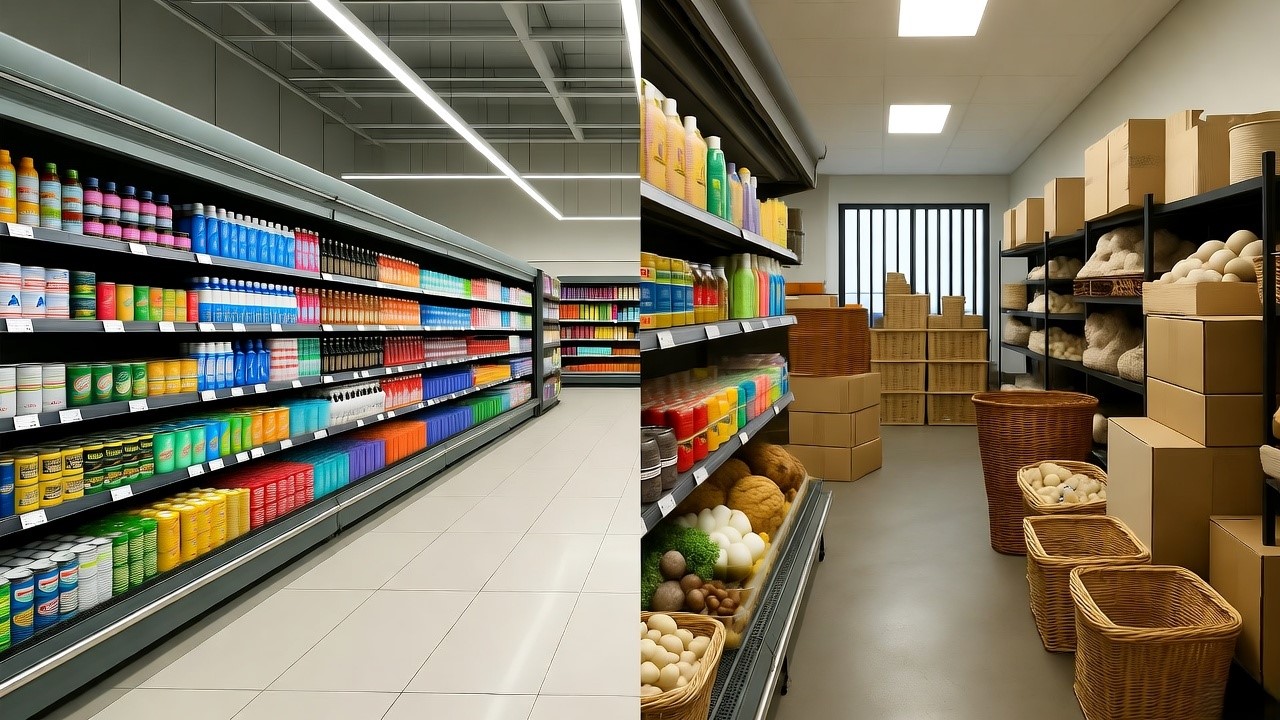
    Understanding the core differences between the two channels is the first step toward building a cohesive sales strategy. The contrast isn’t just in the store size; it’s in the entire operational DNA, which dictates how your field team, from the Area Sales Manager to the Distributor Sales Representative (DSR), needs to operate.

    General Trade (GT): The Unorganized Powerhouse

    General Trade vs Modern Trade India begins with scale and relationship. GT represents the traditional ecosystem: the local, family-owned kirana store, the paan shop, and the mom-and-pop outlet. Their power lies in deep market penetration, reaching the smallest village and every urban neighbourhood, and in the personal relationship between the shop owner and the consumer.

    • Primary Focus: Availability, credit, and personal relationships.
    • Ordering Process: Highly transactional, relying on the DSR’s visit to capture the order. This is where secondary sales tracking begins.
    • Inventory: Informal, ‘just-in-time,’ relying on local distributor relationships. Stock-outs are common.
    • Merchandising: Minimal and ad-hoc. Relies on the shopkeeper’s discretion and personal influence.

    The key challenge for FMCG brands in GT is not a lack of demand, but a lack of kirana store visibility and an inability to standardize the execution of trade schemes across millions of tiny outlets.

    Modern Trade (MT): The Organized Growth Driver

    Modern Trade encompasses hypermarkets, supermarkets, and large retail chains. Its value is in the structured environment and the opportunity for brand building.

    • Primary Focus: Customer experience, bulk shopping, and premium visibility.
    • Ordering Process: Centralized purchasing at the corporate level; the sales rep’s role is not to take orders but to ensure compliance, visibility, and stock refill.
    • Inventory: Highly organized, POS-data driven, and managed through sophisticated ERP/WMS systems.
    • Merchandising: Highly structured, using planograms, dedicated shelf space, and in-store promotions (e.g., end-caps, gondolas).

    The challenge in MT is compliance, ensuring that what was agreed upon at the corporate HQ is perfectly executed on the floor of hundreds of stores. The lack of proper in-store execution directly impacts sales.

    A Quick Comparison

    FeatureGeneral Trade (GT) – Kirana StoresModern Trade (MT) – Supermarkets
    Market Share in India75%+ (Source: Nielsen)15% – 20%
    OrderingField Sales Rep (DSR) places the order directly.Centralized corporate purchasing / Automated POs.
    Primary Sales MetricSecondary Sales Tracking & Beat AdherenceCompliance & Primary Order Fill-Rate
    Reach/PenetrationDeepest in Tier 2/3/4 cities & rural areas.Limited to Tier 1 cities & urban centres.
    Core Challenge for BrandVisibility, data capture, and execution compliance.Shelf share, promotions execution, and data integration.

    🎯 The Five Biggest Execution Gaps Unified by FMCG Field Sales Automation

    The reason many Indian FMCG companies struggle to grow market share is because they use disparate systems or, worse, manual processes to manage these fundamentally different channels. This creates five critical execution gaps. Over the years, we’ve found that a holistic FMCG field sales automation platform is the only solution that can truly unify the strategy.

    1. Inconsistent Sales Rep Activity & Missing Kirana Store Visibility (GT Gap)

    In GT, a DSR’s effectiveness depends on their route plan and their ability to follow it. A sales rep manually managing their day often defaults to familiar routes, ignoring new or dormant outlets.

    • The Problem: Lack of geo-tagged data means sales managers have zero kirana store visibility on whether a store was actually visited, for how long, and what the outcome was. This leads to poor beat adherence and missed sales opportunities.
    • The Happisales Solution (Beat Optimization Software): Our SFA includes beat optimization software that intelligently plans the most efficient, targeted daily routes based on an outlet’s last visit, sales history, and geographical cluster. Geo-fencing ensures the DSR is physically at the store during the check-in, providing irrefutable proof of visit and eliminating fake reporting.

    2. Slow & Inaccurate Secondary Sales Tracking (GT Gap)

    The GT channel runs on what’s called secondary sales, the sale from your distributor to the retailer. Without real-time, accurate tracking, brands are essentially driving blind, unaware of true consumer demand.

    • The Problem: Order capture is done manually on paper, over the phone, or on basic apps that don’t auto-validate schemes. This delays secondary sales tracking by 24-48 hours, causing stock-outs at the distributor level and misaligned production.
    • The Happisales Solution (Mobile Order Capture): The Happisales mobile app enables DSRs to capture orders digitally in seconds. Crucially, it features an AI-powered scheme engine that auto-applies complex schemes (e.g., “Buy 10 cases of SKU X, Get 1 case of SKU Y free”) based on the retailer type and volume, increasing order value and ensuring accurate on-the-spot communication with the retailer. The data immediately updates the Distributor Management System (DMS), giving the brand real-time visibility into market off-take.

    3. Merchandising & Promotion Compliance Failure (MT & GT Gap)

    In MT, a brand pays a premium for end-cap displays or eye-level shelving. In GT, a scheme is only effective if the DSR correctly executes the P.O.S. (Point of Sale) material placement.

    • The Problem: Managers rely on subjective end-of-day reports. This leads to massive gaps in retail execution software compliance: a competitor’s product is on your premium shelf, or the festival promotion banner you sent to GT is sitting under the counter.
    • The Happisales Solution (Image Recognition & Retail Execution Software): Our retail execution software module uses AI-based Image Recognition for both MT and GT audits. The DSR snaps a photo of the shelf, and the app instantly verifies (in less than 5 seconds):
      • Share of Shelf (SOS) against competitors.
      • Planogram Compliance (Is the product in the right place?).
      • P.O.S. Material Placement (Is the poster visible?).
      • This works across both the structured shelves of a Reliance Mart and the tight spaces of a kirana store, giving managers a unified, objective compliance score.

    4. Fragmented Data and Analytics (MT & GT Gap)

    Modern FMCG strategy must be data-driven. However, if your MT data comes from the organized retailer’s central POS systems and your GT data comes from paper DSR books, you have an unbridgeable visibility gap.

    • The Problem: Sales directors cannot accurately compare performance or attribute growth. If a brand grows 10% in a state, is that growth coming from MT’s organized promotions or from deeper kirana store visibility in GT? The manual reconciliation of disparate data sources—often in Excel—is slow, error-prone, and reactive.
    • The Happisales Solution (Unified Data Layer): Happisales integrates both channels onto a single platform. MT data, focused on promotional compliance and in-store execution audits, is captured through the retail execution software module. GT data, focused on secondary sales tracking and beat adherence, is captured through the SFA and DMS integration. This creates a Unified Analytics Dashboard that allows sales leaders to filter, compare, and forecast performance across both channels in real-time. For instance, you can instantly see if a high-performing distributor’s territory has strong sales because of excellent MT compliance or because of deep GT penetration and optimal beat optimization software usage.

    5. Inefficient Pricing, Schemes, and Claim Management (GT Gap)

    Complex trade schemes are necessary to incentivize both distributors and retailers, especially in the competitive GT landscape of India. However, these schemes are often the number one cause of disputes and financial losses.

    • The Problem: Manual calculation of discounts, credit notes, and post-facto scheme claims leads to major friction with distributors and retailers. Errors in application can mean a distributor gets over-compensated or a kirana store misses out on a profitable deal, harming the crucial personal relationship that GT is built upon.
    • The Happisales Solution (Auto-Validated Trade Schemes): Our platform eliminates this complexity. When the DSR captures the order on the app, the system automatically applies all eligible schemes based on pre-set rules (outlet type, stock, quantity ordered). This is done at the moment of billing. This instantaneous, error-free application builds trust, speeds up the sales cycle, and provides an immediate, accurate calculation of net value for secondary sales tracking. This efficiency means the sales team spends less time on administrative corrections and more time on selling.

    🏆 Happisales vs. Traditional SFA Tools: A Unified Strategy for India’s FMCG Channels

    Many legacy Sales Force Automation (SFA) tools were built merely for sales tracking, a ‘DSR GPS logger’ approach. Modern challenges in India’s dual-channel market demand a holistic platform that acts as true retail execution software and intelligent distributor manager.

    We built Happisales specifically for the complexities of the Indian Route-to-Market, ensuring it solves the unique pain points of both General Trade vs Modern Trade India environments.

    Comparison Table: SFA for Modern Trade vs General Trade Execution

    This table compares a legacy SFA solution with a modern, integrated platform like Happisales, showcasing the essential features required to master both channels simultaneously.

    Feature AreaLegacy SFA (Tracking Only)Happisales (Unified Platform)Primary Channel Benefit
    Beat ManagementBasic GPS location tracking.AI-Powered Beat Optimization Software, Dormant Outlet Nudges, Real-Time Geo-Fencing.GT (Ensures full kirana store coverage and adherence.)
    Retail ExecutionManual forms, text-based audit reports.Image Recognition for Planogram Compliance, Real-time Share of Shelf (SOS) detection.MT & GT (Guarantees compliance in organized retail and visibility in general trade.)
    Order ManagementSimple digital order capture.Auto-Validated Trade Schemes, Credit Limit Alerts, Recommended Order Quantity (ROQ) based on history.GT (Boosts order value and minimizes credit risk for distributors.)
    Data VisibilitySeparate reports for primary and secondary sales tracking.Unified Dashboard for Primary/Secondary/Tertiary Sales, Channel-specific analytics.MT & GT (Provides a single source of truth for Sales Directors.)
    Offline CapabilityLimited function; data loss is common.Full offline functionality; syncs instantly upon connecting to even basic 2G network.GT (Critical for deep penetration into Tier 3/4 markets.)

    People Also Ask (PAA): General Trade, Modern Trade, and Field Sales

    What percentage of FMCG sales is General Trade in India?

    General Trade (GT) still accounts for over 75% of the total FMCG retail sales volume in India, making it the most critical channel for reach and overall volume, despite the growth of organized Modern Trade (MT).

    How does field sales automation improve kirana store visibility?

    Field sales automation improves kirana store visibility by using GPS-verified check-ins and AI-powered Image Recognition to confirm the DSR’s physical presence and accurately audit on-shelf product placement, pricing, and point-of-sale material execution in real-time.

    What is secondary sales tracking and why is it important for General Trade?

    Secondary sales tracking is the process of monitoring the sales from the distributor to the retailer (the kirana store), and it is vital for General Trade as it provides brands with the only accurate, real-time data on actual consumer off-take and product demand in the market.

  • Primary Sales and Secondary Sales – Happisales

    Primary Sales and Secondary Sales – Happisales

    A crucial blind spot still plagues the Indian Consumer Packaged Goods (CPG) sector: the gap between a manufacturer’s sales ledger and actual retail demand. While most companies focus intensely on dispatching stock to their distributors, primary sales, they often lack real-time visibility into what those distributors are selling to retailers and what the retailer is selling to the consumer, secondary sales and tertiary sales.

    If you’re reading this, you’re likely an Indian SaaS startup building for this market or a global IT buyer seeking solutions for your Indian distribution.

    For Indian CPG majors, this lack of clarity isn’t just a minor operational hiccup; it’s a direct drain on profitability, leading to stock pile-ups, missed market opportunities, and ineffective trade promotions. Our company, a leading field sales automation company, has spent the last eight years working with hundreds of CPG and FMCG companies in India, optimizing their execution and generating over $3 billion in verified sales data through our platform. We’ve seen firsthand that companies with poor secondary sales visibility routinely see inventory holding costs 15-20% higher than their competitors.

    This extensive, hands-on experience has taught us that you cannot optimize what you cannot measure. This blog post will dive deep into the differences, the core challenges facing businesses in high-growth, fragmented markets like India, and how the right technology is no longer a luxury, but a necessity to gain a decisive competitive edge in secondary sales tracking and ultimately, revenue.

    Understanding the sales process from the Manufacturer to the consumer is key to sustained growth, not just booking revenue.

    Primary vs. Secondary Sales: Defining the Critical Difference 📊

    In the complex, multi-tiered distribution network common across India, sales transactions are categorized into three distinct layers. For manufacturers, the first two are the most critical for supply chain control and market health.

    What is Primary Sales? (The Manufacturer’s Revenue)

    Primary sales refers to the transaction of goods from the manufacturer or brand directly to its authorized distributor or stockist. It is the first revenue-generating event for the manufacturing company and is recorded as a sale when the invoice is raised and the goods are dispatched from the factory or carrying and forwarding agent (C&FA) warehouse.

    • Flow: Manufacturer $\rightarrow$ Distributor/Stockist
    • Key Driver: Internal company sales targets, distributor lifting capacity, and the perceived demand forecasted by the company’s sales leadership.
    • Metric Focus: Invoice value, distributor fill rate, on-time delivery percentage, and distributor stock levels.
    • Strategic Role: Secures initial cash flow and ensures the product is physically in the distribution system, ready to be pushed into the market.

    What is Secondary Sales? (The Market’s True Demand)

    Secondary sales, often called ‘sell-through,’ refers to the subsequent transaction of goods from the distributor to the retailer or dealer. This is the stage that matters most for reflecting true market demand and product pull, and a high-performing secondary sales tracking system is the engine of a healthy supply chain.

    • Flow: Distributor $\rightarrow$ Retailer/Dealer (Kirana Store, Modern Trade)
    • Key Driver: Actual retailer demand, which is directly influenced by consumer demand, trade schemes, in-store merchandising, and distributor service.
    • Metric Focus: Line items per order, retailer count and coverage, stock-in-trade (SIT) at the distributor, and beat adherence by the field sales rep.
    • Strategic Role: Validates distributor orders, minimizes the risk of pipeline clutter, and provides the granular data needed for promotional ROI analysis.

    Why Indian CPG Companies Struggle with Secondary Sales Visibility

    The distribution ecosystem in India is one of the most complex in the world. With over 13 million kirana stores and a vast, diverse geography, getting accurate, real-time data is a monumental task. The challenges are not theoretical, they are daily, high-cost operational headaches that we help solve for our clients.

    The Problem of Data Silos and Delayed Reporting

    The most common issue in Indian CPG distribution is the inherent data lag. Primary sales data is generally clean and real-time, sitting neatly in the manufacturer’s ERP (e.g., SAP or Oracle). Secondary sales data, however, often resides in disparate systems, sometimes manual ledgers, sometimes basic distributor management systems (DMS), or even simply spreadsheets emailed at the end of the week.

    • Slow Decision Making: A promotion launched on Monday might not have its secondary sales tracking data analyzed until the following Monday. By then, the opportunity to course-correct, either by pushing harder or stopping a failing scheme, is lost.
    • Manual Reconciliation: Sales managers in Mumbai or Bengaluru spend hours reconciling Distributor Sales Reports (DSRs) with primary invoices, a process that is both error-prone and non-scalable, especially with a network of hundreds of distributors.
    • Inconsistent Data Quality: Distributors use varying formats and are often reluctant to share granular, daily sales data with the manufacturer. This leads to poor data hygiene and unreliable forecasts.

    The Field Execution Blind Spot

    A key driver of both primary and secondary sales is the effectiveness of the field sales team. A manager sitting in a corporate office, even in a hyper-connected city like Delhi NCR, has little reliable insight into what a sales representative is actually doing on the ground.

    • Ghost Visits: Sales reps can claim to have visited 20 retailers in a day, but without GPS-verified check-ins, geo-fencing, and time-stamped order placement, a manager is just taking their word for it. This inflated reporting poisons the data for beat planning optimization.
    • Lack of Merchandising Compliance: Secondary sales are heavily influenced by in-store execution—shelf placement, point-of-sale material (POSM) setup, and product visibility. If the field team isn’t executing promotions correctly, the secondary sales drop, which eventually clogs the primary sales pipeline.
    • Inaccurate Stock Checks: A sales rep manually checking a retailer’s stock-in-trade (SIT) is prone to error. This leads to placing unscientific orders or, worse, missing out on crucial replenishment orders due to a false perception of adequate stock.

    Leveraging Field Sales Automation for Real-Time Visibility

    The most effective, proven solution for Indian CPG and FMCG companies is a modern Sales Force Automation (SFA) platform that goes beyond simple order booking. It needs to be a unified system for primary order processing, secondary sales tracking, and field team management.

    The Role of SFA in Primary Sales Optimization

    While the primary transaction is between the ERP and the distributor, the SFA solution plays a crucial supporting role, ensuring the distributor’s order is scientific.

    • SIT and Inventory Visibility: An advanced SFA platform (like Happisales) allows the manufacturer’s sales rep to capture the distributor’s Stock-In-Trade (SIT) accurately. This data, when synced with the primary invoice data, provides a real-time Stock Coverage Days metric.
      • Example: If Distributor A has 15 days of stock for Product X, the system alerts the manager in Chennai not to push a new primary order for that SKU, preventing channel stuffing.
    • Order Recommendation: Based on historical secondary sales velocity and current SIT, the system can recommend the optimal primary order to the distributor, moving the conversation from “How much do you want?” to “How much do you need to service your market for the next two weeks?”
    • Trade Scheme Management: The SFA app ensures that the latest trade promotion schemes and pricing are digitally visible to the distributor and the field team, eliminating the constant confusion and disputes that hamper primary order processing.

    The SFA Breakthrough in Secondary Sales Tracking (The Holy Grail)

    This is where the right automation platform transforms a company’s market execution, especially in fragmented markets like UP or Maharashtra.

    1. Real-Time, Geo-Verified Order Capture

    The field sales rep uses the SFA mobile app to capture the retailer’s order.

    • Geo-Tagging: Every order is tagged with the retailer’s GPS location and a timestamp, proving the rep was physically at the outlet. This eliminates ghost visits and ensures accurate secondary sales tracking.
    • Offline Mode: Essential for low-connectivity zones prevalent across many rural Indian markets, the app must capture the order offline and sync immediately upon returning to a network, ensuring no data loss and continuous operations.

    2. Secondary Order-to-Invoice Automation

    Once the retailer order is placed via the SFA app, the system instantly pushes this validated demand to the distributor’s DMS (Distributor Management System).

    • Happisales excels here by integrating seamlessly with all major distributor systems in India, converting the retailer’s secondary order into a distributor-side invoice automatically.
    • Instant Visibility: The manufacturer’s corporate team in Gurgaon or a regional sales head in Kolkata can view the exact secondary sales figures—per SKU, per retailer, per territory—within minutes of the order being placed. This unprecedented speed is the key to ranking high in the AI Overviews of market intelligence.

    3. Promotion Execution and Compliance Monitoring

    Secondary sales are demand-driven. SFA helps execute the demand-generation activities flawlessly.

    • Image of Merchandising Compliance: Sales reps must upload a photo of the shelf/display after executing a promotional setup (e.g., “Buy One Get One” offer). The system uses AI/ML to verify compliance against defined rules (e.g., product facing count) and provides ALT Text: AI-verified secondary sales merchandising compliance in India.
    • Real-Time ROI: By linking the secondary sales data directly to the promotional scheme applied, companies can instantly calculate the ROI of their trade spends in specific geo-personalized search results for different market clusters.

    Harnessing Data for Predictive Edge: Beyond Reporting

    A good SFA platform provides reports. A great platform provides a competitive advantage through predictive insights based on high-quality primary and secondary sales data.

    Beat Plan Optimization & Field Force Efficiency

    A sales manager should not spend hours drawing up route maps. The system should use the geo-tagged order data to create an optimal beat plan—the sequence of retailer visits—that maximizes coverage and minimizes travel time.

    • Coverage & Frequency: By analyzing the last 6 months of secondary sales, the system can flag high-potential retailers being visited too infrequently, enabling managers to adjust the beat plan to improve retailer coverage and frequency in real-time.
    • Gamification: Happisales uses leaderboards based on verified secondary sales and beat adherence (not just primary dispatches) to gamify the process, dramatically increasing field rep engagement and productivity.

    Predicting Channel Clutter and Stockouts

    By merging primary dispatch data, current distributor SIT, and daily secondary sell-through velocity, a sophisticated SFA system can predict pipeline health weeks in advance.

    Note: A key challenge in U.S. manufacturing is managing large retailer (Walmart, Target) inventory. For Indian CPG, the challenge is managing thousands of individual distributor-retailer relationships. The data needs to be far more granular.

    • Early Warning System: If the daily sell-through (secondary) for Distributor X is declining while their current SIT is high, the system automatically alerts the regional manager: “Distributor X is at risk of channel stuffing and will likely not place a new primary order for 20 days.”
    • Dynamic Forecasting: The days of static quarterly forecasts are over. Secondary sales tracking data allows a constant rolling forecast, adjusting production and primary dispatch based on actual, daily market pull.

    SFA Comparison: Choosing the Best for Primary & Secondary Sales in India

    Selecting a field sales automation partner is a critical strategic decision. Based on my experience and working across the Indian SaaS ecosystem, here is a comparison of top-tier SFA tools for CPG and FMCG companies in India prioritizing integrated primary and secondary sales tracking.

    FeatureHappisales (Positioned)Delta Sales AppSalesBabu DMS
    Primary/Secondary Data IntegrationSeamless, real-time 2-way sync with major Indian DMS/ERP systems.Strong on secondary capture, but primary invoice reconciliation requires custom setup.Focus is primarily on Distributor Billing/DMS, SFA module is secondary.
    Field Force Geo-VerificationIndustry-best, AI-powered geo-fencing for 100% genuine visit verification (E-E-A-T builder).Standard GPS/time-stamp tracking.Basic location tracking.
    Merchandising/POSM ComplianceIn-app image verification using AI to detect correct SKU placement and POSM usage.Photo capture, manual review.Limited or external module required.
    Offline FunctionalityFull offline order and activity capture with zero data loss upon sync.Robust offline support.Good, but sync speed can vary.
    Core Value PropositionEnd-to-end sales execution and intelligence platform for the field and HQ.Field force tracking and order booking efficiency.Distributor management and core billing automation.

    From Dispatch-Driven to Demand-Driven Growth

    The days of celebrating a primary sales number without scrutinizing the corresponding secondary sell-through are over. In the hyper-competitive Indian market, sustained, profitable growth hinges on a single, clear objective: aligning primary dispatch with validated, real-time secondary demand.

    Ignoring the secondary sales data means you are flying blind—your forecasts are guesses, your trade promotions are bets, and your distributors are ticking time bombs of excess stock. My eight years in the field sales automation space have repeatedly shown that the companies that win are the ones that prioritize transparency over vanity metrics. They embed technology directly into the sales process to achieve a state of real-time sales execution and intelligence.

    The transition to a demand-driven model requires more than just installing software; it requires a commitment from the C-suite down to the field rep to embrace a culture of data-backed execution. It’s time to stop pushing stock and start letting the market pull it.

  • Top Field Sales Dashboards for Boosting Team Productivity

    Top Field Sales Dashboards for Boosting Team Productivity

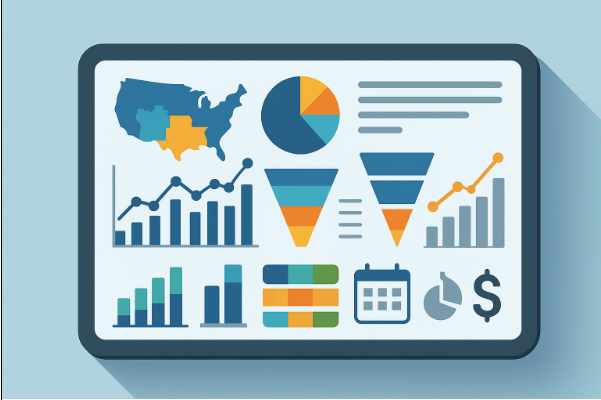
    Equipping your field sales team with real-time insights is essential. Field sales apps, powered by robust sales force automation software, help sales leaders optimize operations, track performance, and drive growth efficiently. One of the most valuable features of these apps is the sales rep performance dashboard.

    Here’s a look at the top dashboards that help businesses improve revenue generated, sales volume, and overall team productivity:

    1. Territory Performance Dashboard

    The territory performance dashboard shows how different regions are performing. Teams can see which areas generate the most revenue, identify underperforming territories, and allocate resources effectively. It’s an essential feature in field sales automation software.

    2. Daily Route & Activity Dashboard

    The daily route & activity dashboard provides real-time updates on client visits, completed tasks, and deviations from planned routes. Managers can monitor travel inefficiencies, ensure performance tracking, and maximize each rep’s time in the field.

    3. Order & Inventory Dashboard

    An order & inventory dashboard integrated with field sales apps gives reps live visibility into stock, pending orders, and delivery timelines. This improves coordination between field reps and back-end teams, enhances customer satisfaction, and increases upselling opportunities.

    4. Sales Rep Performance Dashboard

    The sales rep performance dashboard tracks individual metrics such as sales volume, revenue generated, and client visits. When paired with field sales automation software, it encourages healthy competition, accountability, and growth within the team.

    Why Dashboards Matter?

    Dashboards provide more than just data-they are decision-making tools. Using these dashboards in modern-day field sales apps gives managers real-time insights, reduces manual tracking, accelerates decision-making, and improves field operations digitization. Businesses can unlock team potential, reduce travel inefficiencies, and boost overall productivity.

    Investing in comprehensive field sales automation software with intelligent dashboards is crucial. Tools like Happisales combine all dashboards, making it easier to optimize operations, monitor performance tracking, and drive growth in a measurable way.

    What’s Next?

    Don’t let inefficiencies slow your field team. Upgrade to Happisales and track client visits, manage orders, optimize routes, and improve sales productivity in one platform.

    Schedule a demo of Happisales today to see how this field sales app can streamline your operations, increase your revenue, and help your team perform at its best. Call +91 9944585452 to get started.