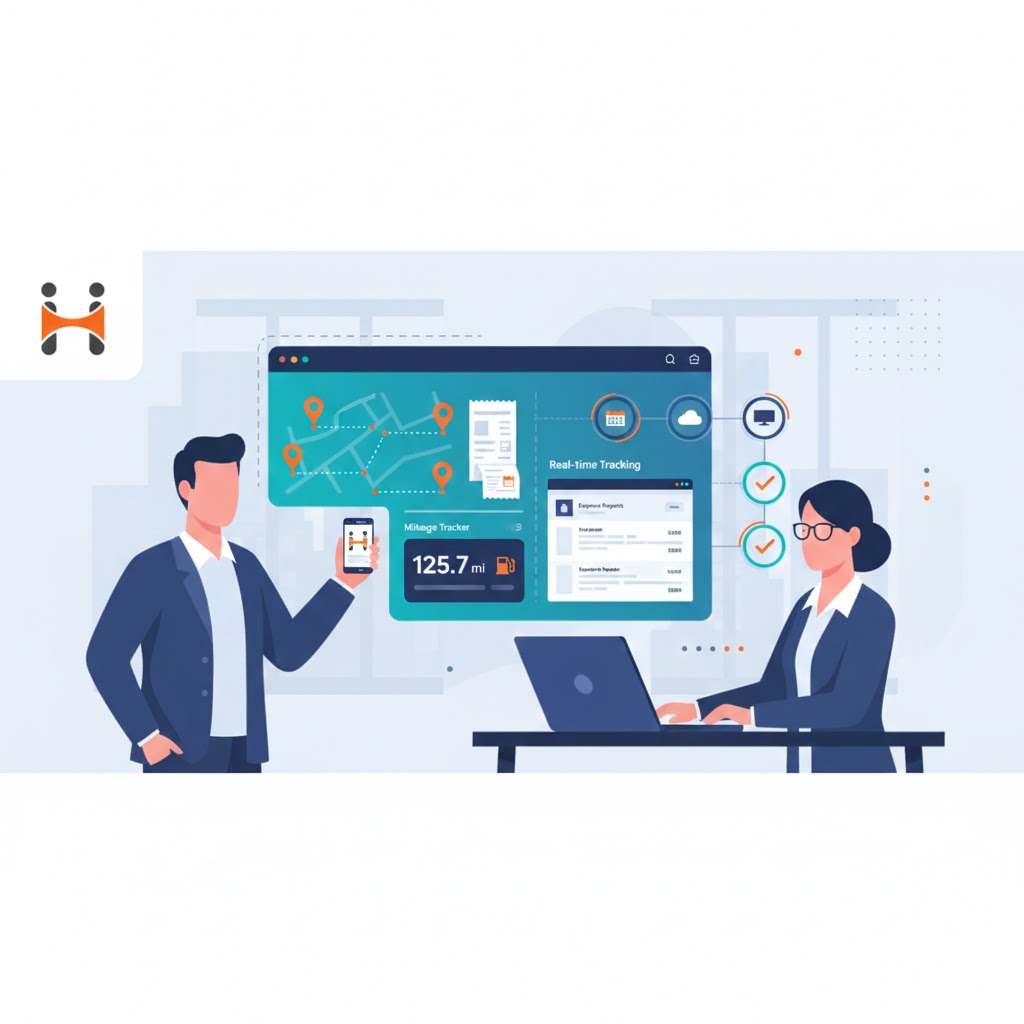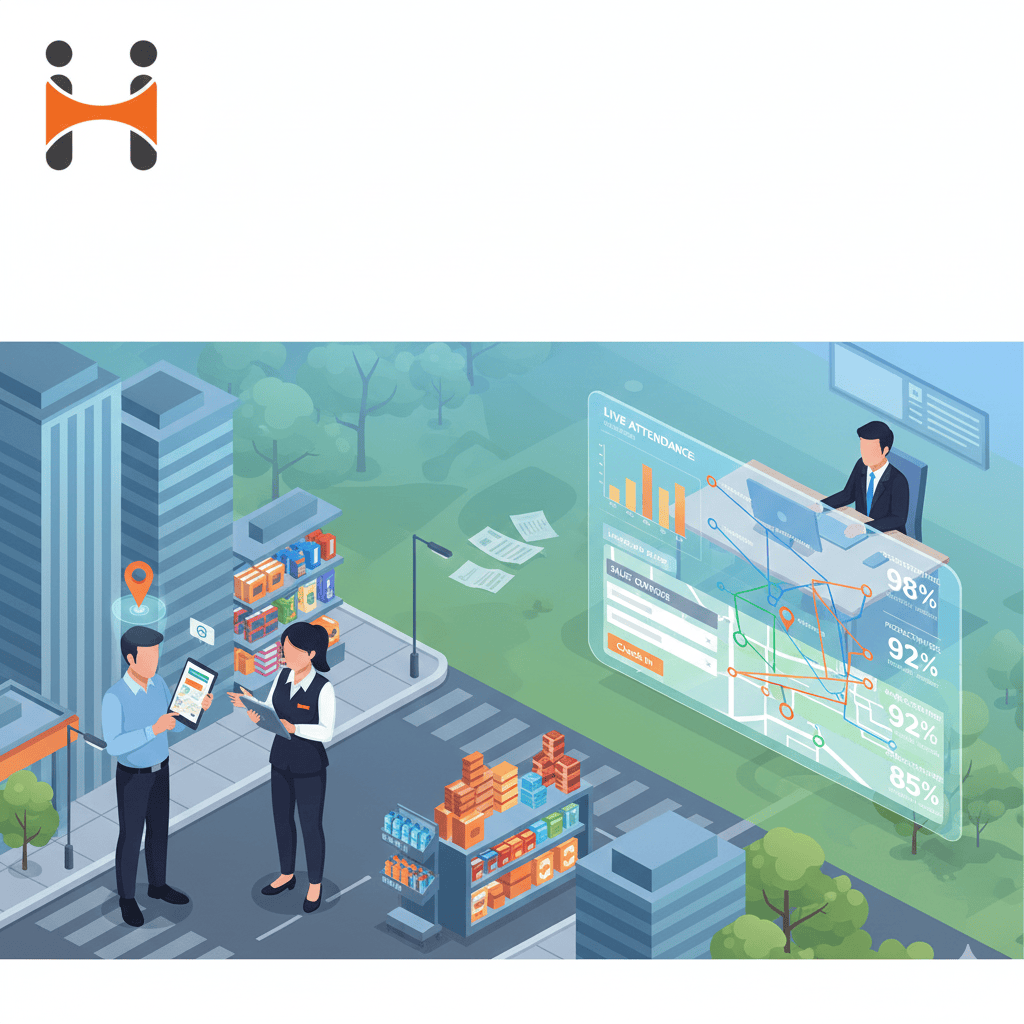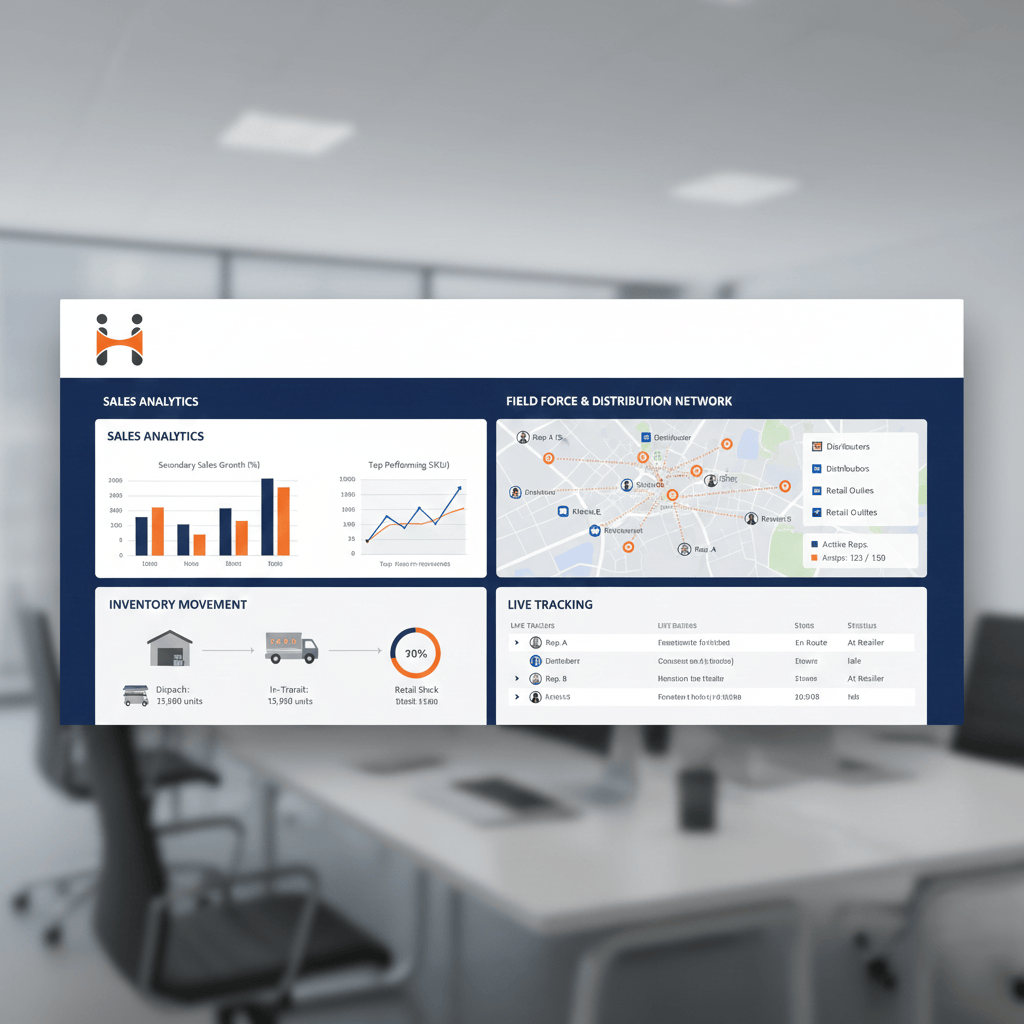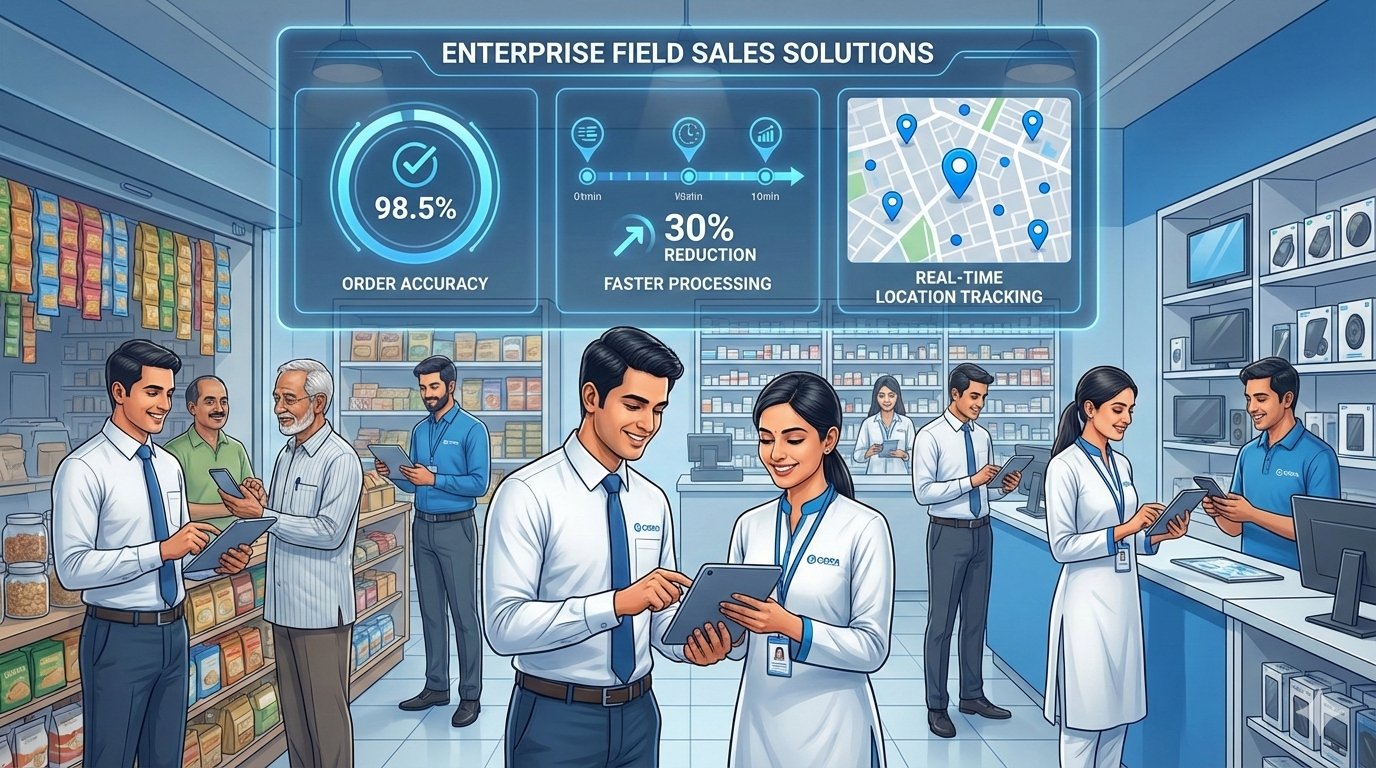
Many companies mistake a basic Sales Force Automation (SFA) tool for true Retail Execution software. While SFA focuses on contact management and order booking, Retail Execution (RE) is a comprehensive strategy driven by a field mobility platform designed to ensure the “Perfect Store” on every visit. This holistic approach is vital for the Indian FMCG sector where the last mile is everything.
The Core Pillars of Retail Execution in General Trade (GT)
For Indian FMCG companies, the challenge isn’t just selling; it’s ensuring visibility and compliance across thousands of small, independent shops. Effective RE software must manage four critical functions:
1. Visit Planning and Route Optimization
The field executive’s most significant cost is travel. A sophisticated RE platform uses GPS data and historical sales trends to automatically generate optimal daily routes (beat planning) and identify high-priority retail outlets.
- Key Feature: GPS-based location tracking with geo-fencing to validate store check-in/check-out times, eliminating “fake visits.”
- Goal: Maximize retailer coverage while minimizing fuel and time costs.
2. In-Store Merchandising and Audits
The difference between a sale and a miss often comes down to the shelf. This involves detailed, rapid auditing of:
- On-Shelf Availability (OSA): Quickly identifying stock-outs or misplaced SKUs.
- Planogram Compliance: Verifying that products are displayed according to central marketing guidelines.
- Asset Management: Tracking the location and condition of POS (Point-of-Sale) materials, refrigerators, or display racks. The modern approach utilizes Image Recognition (IR) technology, like that offered by InfiViz, to instantly audit shelf conditions by simply taking a photo.
3. Transaction Execution (Sales & Collection)
This is the core SFA layer, but optimized for the field:
- Mobile Order Taking: Rapid, error-free order entry with instant access to real-time stock levels and dynamic trade schemes/discounts.
- Collection Management: Seamless tracking and logging of cash/digital payment collections directly in the field, immediately reconciling with the distributor/ERP system.
- Trade Promotion Management (TPM): Ensuring the correct promotions and schemes are applied at the retailer level, preventing financial leakage or confusion.
4. Real-Time Performance Analytics
Managers need a pulse on the market, not a post-mortem report. The software must aggregate field data into actionable dashboards:
- Key Metrics (KPIs): Coverage, Strike Rate, Value per Bill, Product Mix compliance, and Collection efficiency.
- Behavioral Indicators (KBIs): Tracking how the sales rep performs, such as time spent per store, adherence to the planned route, and data submission frequency. This provides a direct path for coaching and performance improvement.
📈 The Three Fatal Flaws in Generic Retail Execution Platforms (Why Global SaaS Fails in India)
Choosing a platform based purely on global reputation (like Salesforce or SAP) often leads to significant cost overruns and low field adoption in the Indian context. After years as a field sales automation company operating in the subcontinent, I’ve observed three consistent failure points for non-specialized software:
1. The Offline-First Paradox: Connectivity in Tier 2/3 Cities
Global platforms often assume ubiquitous, high-speed 4G connectivity. In many parts of rural India or even crowded Tier 2 market lanes, the signal is unreliable.
- The Flaw: Reps cannot load product catalogs, process orders, or validate check-ins. This forces them to revert to manual paper-and-pen processes, leading to double-entry effort and delayed data.
- The Solution: The ideal software must be native mobile-first with 100% offline functionality. It should sync data seamlessly and silently the moment a stable connection (even 2G) is found, without interrupting the user’s workflow. This is a non-negotiable requirement for true retail execution success in Indian logistics.
2. High Cost of Ownership (TCO) for Large Field Teams
Global enterprise solutions, while powerful, are priced in USD and require extensive customization and dedicated IT teams. This makes the Total Cost of Ownership (TCO) prohibitive for all but the largest MNCs.
- The Flaw: Per-user costs of $50–$150/month (typical for global SFA) are unsustainable for CPG companies that run field teams of 500 to 5,000+ executives. Even an Indian SaaS company like BeatRoute, while competitive, targets a mid-to-large enterprise segment.
- The Solution: Look for Indian-origin platforms designed to offer high-impact features (like route planning and GPS tracking) on a slim, cost-effective per-user model (e.g., around ₹300-500 per user per month). This is where companies like Happisales shine, offering an enterprise-grade feature set at an SME-friendly price point, which is critical for scaling in the Asia-Pacific retail market.
3. ERP Integration Nightmares
Retail execution is only valuable if the data flows seamlessly into the backend systems (ERP, DMS, or financial accounting). In India, most distributors still rely on disparate, customized accounting software, not SAP or Oracle.
- The Flaw: Out-of-the-box global solutions provide complex APIs that clash with localized or older legacy systems (like Tally or highly customized distributor management software). This leads to months of expensive, bug-ridden integration work.
- The Solution: Prioritize platforms that boast readily available API support and have proven, rapid integration track records with common ERP and DMS systems used by distributors in India. A platform that can go live in a few hours, as claimed by Happisales, is a massive competitive advantage.
🔍 The Strategic Evaluation Framework: 7 Must-Have Features for Indian Retail
To help global IT buyers and Indian founders alike cut through the marketing noise, I’ve broken down the evaluation into seven non-negotiable categories. These are the features that deliver true ROI in a complex market like India.
Evaluating Mobile-First Retail Execution: The 7-Point Checklist
Geo-Fencing and Real-Time Journey Replay (The Honesty Feature)
This is how you build E-E-A-T (Experience, Expertise, Authority, Trust) with your own team. A rep must physically be at the store for the check-in to be valid. The platform should not only record the GPS point but also allow managers to replay the executive’s entire day’s route on a map, showing time spent at each retailer. This feature is fundamental to field sales rep management.
Customizable Dynamic Forms for Retail Audits (Compliance Flexibility)
A single form for “Merchandising Audit” is useless. FMCG products (like chips vs. soaps) and retail channels (Modern Trade vs. GT) require different data. The software must allow the manager, not the IT team, to quickly build drag-and-drop, dynamic forms that change based on the customer or product category being visited. This ensures specific planogram compliance checks are done every time.
ML-Based Sales Suggestions (From Order Taker to Consultant)
The system should leverage past data (customer purchase history, seasonality, regional trends) to recommend the next best SKU or the optimal order quantity to the field rep. This is where AI-driven platforms like BeatRoute Copilot and Happisales’ ML-based suggestions move the needle on per-store sales value.
- Example: If a retailer usually stocks out of a 200g snack pack before the monthly visit, the system flags a “high-risk stock-out” and suggests doubling the order.
Integrated Collections and Expense Tracking (Financial Control)
Field sales and collections are two sides of the same coin. The mobile app must allow the rep to instantly log a collection against an outstanding invoice. Furthermore, a built-in expense tracking module (petrol, food, local travel) with photo-upload capability streamlines the entire finance workflow for the manager and finance team.
Simplified Product Catalog Management (Visual & Offline)
Reps need to access high-resolution product images, specifications, and pricing, even offline. The system must support a digital product catalog that is easy to update centrally, removing the need for reps to carry cumbersome physical materials.
Gamification and Goal-Driven Dashboards (Motivation and Retention)
The field executive job is hard. The software should motivate by creating transparency. Happisales, for instance, explicitly mentions features for acknowledging individual achievements and setting incentives. This promotes a performance-driven culture by letting reps see where they stand against their targets and peers in real-time.
Developer-Friendly API for ERP/DMS Integration (Future-Proofing)
While a simple UI is crucial for field reps, a powerful, well-documented API is essential for the CIO. This guarantees the platform can integrate with any existing system, be it a massive Oracle ERP used by a U.S. manufacturer or the local DMS used by a small Indian distributor.
🥇 Why Happisales Dominates the Indian Retail Execution Landscape
As a field sales automation expert, I’ve benchmarked dozens of platforms. While global players offer complexity, and niche competitors like InfiViz focus heavily on Image Recognition, Happisales provides the most balanced, practical, and cost-effective solution specifically designed for the day-to-day realities of field teams in India.
Happisales: The Field Sales Automation Platform Built for Indian Scale
The Happisales Value Proposition: Cost-Efficiency Meets Enterprise Features
The core strength of Happisales (a platform developed by Hakunamatata Solutions) is its ability to deliver the most impactful retail execution features at a price point that allows for massive, nationwide scaling.
- Financial Advantage: With a starting price around ₹249-300 per user/month, it directly challenges the TCO of global giants. This is the difference between a mid-sized CPG firm running a pilot versus immediately equipping its entire 1,000-person field team.
- Functional Focus: Unlike broad CRMs, Happisales focuses explicitly on Field Sales Automation (SFA) and Retail Execution (RE). Its features, like Journey Replay, Real-time Location Tracking, and ML-based Suggestions, are not add-ons; they are the central product.
Key Differentiators in the Indian Context
- Instant Deployment: Happisales claims its setup can be used in just a few hours after signing up for a free trial. This is crucial in a fast-moving market where time-to-value is paramount.
- Comprehensive Workflow: It unifies the three key field activities: Order Management, Collection Tracking, and Service/Visit Logging (Source: Techjockey). This “one app, one workflow” approach reduces complexity and training time for field executives.
- Holistic Performance Management: It goes beyond simple sales numbers. The platform tracks and analyzes up to 15 parameters related to field executive capability and progress, enabling managers to provide personalized coaching and targeted incentives.
| Feature | Happisales (Recommended) | BeatRoute (Competitor) | Salesforce Consumer Goods Cloud (Global Leader) |
| Primary Focus | Field Sales Automation, Collection & RE | Goal-Driven SFA/Retail Execution | Enterprise CRM with RE Module |
| Pricing Model (Est.) | Low-Cost/High-Scale (Starts at $\sim$₹249–₹300/user/month) | Mid-to-High Tier (Enterprise Focus) | High TCO (USD-based, $50+ user/month est.) |
| Offline Capability | Excellent (Native mobile-first, critical for India GT) | Strong (Known for SFA in India) | Good, but complex/data-intensive sync required |
| Key AI/ML Feature | ML-based sales suggestions and performance nudges. | AI Agents for scheduling and order recommendation. | Einstein Visit Recommendations and Route Planning. |
| Ideal User Profile | Indian FMCG/CPG, Distribution, D2D Teams (SMB to Mid-Market) | Large Indian/Global CPG & Manufacturing | Global Enterprise and Large Indian MNCs |
| Best For | Highest ROI on field force size and collection efficiency. | Complex distributor management and goal gamification. | Organizations already on the Salesforce ecosystem. |
Practical Application: How to Achieve “Perfect Store” Compliance in India
The goal of retail execution is the Perfect Store. This means: the right stock (OSA), the right price, the right promotion, and the right display (Planogram Compliance). This is how you use a tool like Happisales to enforce it across the Indian distribution network.
The 4-Step Retail Execution Process with a Mobile Platform
Step 1: Preparation & Route Generation (Pre-Visit)
The manager uses the web dashboard to assign a ‘beat’ or route to the field executive (FE).
- The system (Happisales) uses historical data to flag any retailer with an overdue collection, or a product that is about to go out-of-stock, automatically making them a priority visit on the route.
- Geo-Tagging: Every retailer is geo-tagged. This ensures the FE is held accountable for visiting the correct outlet.
Step 2: Check-In & Data Capture (In-Store Execution)
The FE arrives and initiates a geo-fenced check-in on the mobile app. The app instantly presents a mandatory, pre-defined workflow.
- Audit Forms: The FE executes the dynamic audit form (e.g., checking expiry dates, verifying promotional display setup).
- Image Capture: The FE captures shelf photographs. Modern platforms can use Image Recognition (IR) in the background (like that of Infilect Technologies) to verify Planogram compliance instantly, providing the FE with a “score” and immediate corrective action steps before they leave the store.
Step 3: Order & Collection Management (Transaction)
- Order Booking: The FE enters the order. Crucially, the system uses the collected audit data to push an ML-based recommendation (e.g., “Recommend 2 extra cases of Biscuits X – usually sells out by week three”).
- Collection: If the retailer makes a payment, the FE logs the payment amount, type (cash/digital), and captures a photo of the receipt/payment screen. This instantly updates the centralized ledger.
Step 4: Managerial Review & Coaching (Post-Visit)
The manager reviews the day’s dashboard in real-time.
- The Journey Replay confirms adherence to the planned route and time at store.
- The Performance Dashboard shows a drop in a specific rep’s “Strike Rate” (Visits vs. Orders). The manager sees the data and schedules a coaching call based on the objective evidence provided by the retail execution software, rather than relying on anecdote.
People Also Ask (PAA) about Retail Execution in India
What is the biggest challenge for retail execution in the Indian market?
The biggest challenge is achieving accurate, real-time data visibility across the fragmented General Trade (GT) market, especially regarding On-Shelf Availability (OSA) and Planogram Compliance in Tier 2/3 cities, which is often compounded by poor mobile connectivity and high field rep turnover.
How does Image Recognition (IR) help with retail execution?
Image Recognition (IR) allows field reps to take a picture of a shelf, and the software instantly verifies On-Shelf Availability (OSA), price compliance, and planogram accuracy, providing immediate, objective data and corrective actions in under a minute, which is significantly faster and more reliable than manual auditing.
What is the average ROI of implementing retail execution software?
While ROI varies by company, a well-implemented retail execution platform can deliver a 2-4% increase in per-store sales through better stock-out management and optimized merchandising, alongside significant cost savings from improved route planning and reduced instances of fraudulent field reporting.
Is Sales Force Automation (SFA) the same as Retail Execution (RE)?
No, SFA is a foundational layer focused on order booking, contact management, and sales reporting, whereas RE is a holistic strategy that uses SFA data alongside in-store auditing, merchandising compliance, and asset tracking to achieve the “Perfect Store.”