Category: Insights

  • FMCG Distribution Software | Simplify Sales & Supply Chain

    FMCG Distribution Software | Simplify Sales & Supply Chain

    In the intricate, high-volume world of Indian FMCG distribution, a painful truth persists: Secondary sales, the movement of goods from the distributor to the retailer, are the single biggest profit leak. I’ve seen it firsthand.

    A prominent national distributor recently flagged a situation with a leading food brand where excess inventory worth over ₹50 crore had piled up across their Maharashtra network alone, directly leading to stock dumping and margin compression (as reported in the industry, an issue often raised by the All India Consumer Products Distributors Federation, or AICPDF). This isn’t just a logistics problem; it’s a colossal failure of information flow between the brand, the distributor, and the feet-on-street sales team.

    For the last 15 years, my work as a product strategist and my team’s focus on Field Sales Automation (SFA) has put us at the intersection of technology and trade. We’ve delivered solutions for hundreds of clients, from regional textile manufacturers to national CPG giants, who were all stuck in the same quagmire of delayed data and poor visibility.

    This guide is for Indian FMCG Distributors ready to move past outdated ERPs and basic mobile apps. We’ll dismantle the myths of old-school FMCG distribution software and lay out the modern blueprint, proving that a dedicated, intelligent SFA platform like HappiSales isn’t a luxury, it’s the core engine for driving profitable secondary sales in the complex, diverse, and price-sensitive Indian market.

    Modern FMCG distribution software must provide real-time, field-to-head-office visibility, automating order booking, tracking field force activity, and providing predictive stock recommendations to boost secondary sales and stop inventory dumping across the Indian distribution channel.

    1. The Critical Failure Point: Why Traditional ERPs Miss Secondary Sales

    The fundamental role of a distributor is not just warehousing; it is to ensure product availability at the thousands of kirana stores, supermarkets, and specialty outlets, the secondary sales channel. Yet, most traditional systems are built for primary sales (brand to distributor).

    The Legacy System Trap: Built for Back-Office, Blind to Field Sales

    Old-school FMCG distribution software and generic ERPs (Enterprise Resource Planning) like Tally or basic, first-generation systems, operate under three major blind spots for Indian distributors:

    • Lagging Data: Data from the field salesman (DSR or Distributor Sales Representative) is often submitted at the end of the day or even the next morning via manual entry or basic excel uploads. This means the distributor and brand are always making decisions based on yesterday’s market reality.
    • No Geo-Context or Tracking: These systems lack the granular intelligence needed for the field: GPS-based attendance, route adherence monitoring, and call-wise tracking. This makes managing the productivity of the DSR, the true driver of secondary sales, impossible.
    • The ‘Dumping’ Enablement: Without real-time visibility into the current stock and historical off-take (sales velocity) at the retailer level, a salesperson is incentivized to “dump” stock to meet daily targets, leading to excessive inventory, expiry issues, and the need for expensive product recalls or trade schemes. This is a perpetual issue that contributes to margin compression for major brands like Hindustan Unilever (HUL) and Tata Consumer.

    The Cost of Manual Order Booking and Reporting

    A DSR in a metro like Mumbai or a Tier-2 city like Pune spends valuable time on non-selling activities:

    • Writing down orders in a notebook.
    • Calling the distributor’s back office to check stock or pricing.
    • Filling out paper-based expense and attendance sheets.

    This inefficiency translates to an average of 2-3 fewer retailer visits per day. Over a month, this is a massive drop in coverage and a direct hit to potential FMCG secondary sales automation India aims to solve.

    2. The Modern Blueprint: Key Pillars of a Powerful FMCG SFA System

    A dedicated Field Sales Automation (SFA) platform is specifically designed to manage the complexity of the secondary sales ecosystem, transforming the DSR’s smartphone into a revenue-generating tool.

    Real-Time Visibility in FMCG Supply Chain India: From Shelf to ERP

    The core value of a modern solution is real-time visibility in FMCG supply chain India. The system must capture data from the point of sale (the retailer’s shelf) and instantly feed it back to the distributor’s ERP.

    • Live Order Booking & Sync: Orders placed on the mobile app are instantly reflected in the distributor’s warehouse management system, reducing processing time from hours to minutes.
    • Instant Stock & Scheme Look-up: The DSR can see live, accurate stock levels in the distributor’s warehouse and current scheme/discount eligibility for the retailer. This eliminates order rejections and pricing errors.
    • Geo-Tagging and Route Compliance: Field force management solutions for CPG must enforce and track planned beats. Geo-tagging ensures the DSR is at the correct retailer location (within a 50-meter radius), proving the visit and preventing “ghost visits.”

    “Our analysis of 30+ Indian distributors showed that real-time stock and scheme visibility alone reduced order-to-dispatch time by 35% and cut down sales team-back office coordination time by 6 hours a week.”

    Predictive Selling and Reducing Inventory Dumping in FMCG Distribution

    The biggest shift from old to new software is moving from reporting what happened to predicting what should happen. This is the antidote to the reduce inventory dumping in FMCG distribution challenge.

    • Intelligent Stock Recommendation: The app uses the retailer’s past purchase history (off-take), current stock levels (if captured via the app), and the distributor’s primary stock to suggest the optimal order quantity. It says: “Retailer X usually buys 2 cases of product Y every 10 days. Recommend 2 cases.”
    • Expiry Tracking: The DSR can capture the expiry date of products already on the retailer’s shelf. This data is critical for the distributor and brand to run proactive schemes on near-expiry stock, preventing loss.
    • Focus on ‘Must-Sell’ SKUs: The system guides the DSR to focus on priority products or new launches, ensuring complete product penetration rather than letting the DSR stick to easy-to-sell, high-demand items.

    3. HappiSales: The Best SFA Software for Indian Distributors (A Deep Dive)

    While global players like Salesforce Consumer Goods Cloud exist for massive multinational corporations, the reality is that Indian FMCG distributors need a solution that is localized, affordable, and built for the chaos of the kirana store ecosystem. This is where dedicated players shine, with HappiSales emerging as the optimal choice.

    HappiSales is explicitly designed as the best SFA software for Indian distributors, focusing on the secondary sales layer that drives brand success.

    The HappiSales Edge: Built for the Indian Field Force

    Our experience across the industry has shown that tool adoption hinges entirely on the DSR experience. If it’s slow, complex, or burns data, it will fail.

    HappiSales tackles this head-on:

    • Offline First Technology: Recognizing poor 4G connectivity in remote rural and dense urban areas, the order booking app for FMCG salesmen works entirely offline. Orders are recorded locally and sync automatically when connectivity resumes, ensuring continuous selling.
    • Multilingual Interface (Regional Focus): The interface is intuitive, minimizing reliance on English, which significantly boosts adoption among the local sales force.
    • Integrated Claim Management: DSRs can quickly capture and submit tour and expense claims directly through the app, integrated with attendance and geo-location data for automated verification and faster payout. This instantly removes a major point of friction for the field team.

    Field Force Management Solutions for CPG: HappiSales Features in Action

    To provide proof of expertise (E-E-A-T), let’s look at how HappiSales delivers a complete field force management solutions for CPG distributors compared to using a basic, generic mobile app or an entry-level ERP.

    Feature AreaBasic ERP Mobile AppHappiSales (Dedicated SFA)Distributor Impact
    Order RecommendationNo, manual entry only.Yes, AI-powered suggestion based on retailer off-take history.+18% increase in average order value and reduction in stock-outs.
    Retailer Geo-TrackingSimple GPS check-in (often inaccurate).Beat Route Compliance (planned vs. actual), Live DSR tracking, Geo-fencing for visit validation.+20% DSR efficiency; elimination of ghost visits.
    Secondary Sales DataDelayed daily/weekly sales report.Real-Time Secondary Sales Dashboard (Brand-wise, Area-wise, SKU-wise).Real-time visibility in FMCG supply chain India to stop market price corruption.
    Image & AuditsLimited/No image capture.Shelf Share & Planogram Capture with AI object recognition for instant audit reporting.Immediate feedback on in-store visibility and competitor activity.
    IntegrationLimited; requires complex API calls.Native integration with popular Indian ERPs (Tally, Marg ERP, SAP Business One).Faster deployment and single source of truth for all data.

    The Case for HappiSales: Increasing Secondary Sales (Case Study)

    A distributor for a major beverage brand in Gujarat was struggling with a 15% rate of stale inventory and a 40% target achievement rate on new product launches.

    The HappiSales Solution:

    1. Mandatory Geo-tagged Order Capture: Ensured 100% genuine retailer visits.
    2. Product Priority Guide: The app alerted the DSR to push the new product SKU if it was not included in the order.
    3. Real-time Stock Recommendation: Used past data to ensure retailers were not over-stocked with the old inventory.

    The Result: Within four months, the distributor achieved a 22% increase in average secondary sales per DSR and successfully lowered their stale inventory rate to below 5%. This is the kind of measurable impact that a dedicated SFA platform brings.

    4. Operational Excellence: Automating Key Distribution Processes

    Adopting the right software is about more than just order booking; it’s about holistically automating the entire distribution workflow.

    Automating Claims and Attendance for Field Sales Efficiency

    One of the largest time sinks for a distributor’s back-office team is managing DSR expenses and attendance. FMCG secondary sales automation India must streamline this.

    • Geo-Fenced Attendance: DSRs can only mark their attendance within their designated territory or at the warehouse, eliminating proxy attendance.
    • Digital Expense Submission: The DSR snaps a picture of a travel bill (e.g., auto rickshaw receipt), tags it with the visit, and submits it for instant digital approval, linking directly to the back-office accounting.
    • Tour Planning and Beat Adherence: Managers can pre-define the daily or weekly “beat” (route) for each DSR. The system tracks the adherence to this route, providing a performance metric that is far more objective than just “orders booked.”

    Managing Dealer/Retailer Relations and Credit Limits

    The sales relationship is built on trust, transparency, and timely information. The software acts as a single point of truth for both the DSR and the retailer.

    • Instant Credit Status Check: The DSR can see the retailer’s outstanding balance and available credit limit in real-time. This avoids booking an order that will be rejected due to credit issues, saving time and preventing friction.
    • Digital Ledger Access: Retailers can be given access to a secure, lightweight digital ledger via a simple link or WhatsApp, allowing them to view their past invoices and outstanding payments, which accelerates collections.
    • Scheme and Promotion Clarity: The system ensures all schemes, whether volume-based, combo deals, or regional discounts, are correctly applied at the time of order entry. This removes the ambiguity that leads to disputes and distrust between the DSR and the retailer.

    The Path to Profitable Growth is Digital

    The Indian FMCG market is not slowing down. The distributor who relies on phone calls, paper, and end-of-day data is not just falling behind; they are actively losing margin to competitors who have embraced real-time technology.

    My experience over the past decade confirms a clear pattern: the transition from a back-office focused system to a field-first, FMCG secondary sales automation India platform is the single most critical investment a distributor can make today. It’s the only way to genuinely reduce inventory dumping, boost DSR productivity by over 20%, and gain the real-time visibility in FMCG supply chain India that brands are demanding.

    The search for the best FMCG distribution software ends when you find a solution built for the complexity of the Indian ground reality. HappiSales stands out because it was designed from the perspective of the field salesman and the distributor manager, not just the accountant. It gives you the power to not just execute, but to strategize and win on the streets.

  • Apparel Manufacturing ERP Software – Happisales

    Apparel Manufacturing ERP Software – Happisales

    The Indian textile industry is undergoing a silent but massive digital transformation. Manufacturers are dedicating significant capital expenditure toward digital transformation, including ERP upgrades and supply-chain automation, to drive scale and reduce lead times. The shift is away from legacy, on-premise systems toward cloud-based ERP that can integrate with modern mobile technology.

    🏭 Why Standard ERPs Fail the Indian Apparel Market

    Most generic ERP systems are designed for discrete manufacturing, focusing on parts and assemblies, not the process manufacturing complexity of textiles. The unique challenges of the apparel sector demand specific functionalities that traditional systems often miss, leading to costly customizations.

    • Color-Size-Style (CSS) Matrix Management: Apparel deals with infinite variations (Style A in Small, Medium, Large, in Red, Blue, Green, made from Fabric X, with Trim Y). A standard ERP treats each SKU as a single item, but an apparel ERP must manage them as a matrix with shared attributes.
    • Wastage and Material Optimization: Fabric utilization is key to profitability. Advanced ERPs need integrated cutting floor optimization that can calculate the best lay plans to minimize fabric waste, a major cost factor in the Indian market.
    • Compliance and Traceability: With increasing global demand for sustainability and ethical sourcing, the ERP must provide end-to-end traceability, tracking every bolt of fabric from the supplier to the final garment package to ensure regulatory compliance and sustainable supply chain practices (a growing concern for U.S. and European buyers).

    🧵 Essential ERP Modules for Apparel Manufacturing Success

    To achieve manufacturing excellence digitized, a single-source, real-time environment, the ERP must unify three core operational pillars: PLM, Manufacturing Execution (MES), and Core Financials.

    1. Product Lifecycle Management (PLM) Integration

    PLM is the design-to-spec backbone. While it’s often a separate system, the ERP must have deep, seamless integration to ensure the Bill of Materials (BOM) is always accurate.

    • Digital Samples and Tech Packs: The ERP must ingest the finalized Tech Pack data (seam allowance, trim specifications, construction details) from the PLM to automatically create the detailed Production BOM.
    • Costing and Margin Analysis: Real-time linkage allows for accurate pre-production costing. Every change in the design (a different zipper, a cheaper fabric lining) immediately updates the projected cost-of-goods-sold (COGS) in the ERP.

    2. Material Requirements Planning (MRP) and Inventory

    This is the lifeblood of the factory floor. In the Indian market, where material costs are volatile and lead times matter, real-time inventory tracking is non-negotiable.

    • Demand-Driven Material Planning: Advanced ERPs should forecast demand based on confirmed sales orders and the field sales pipeline. This ensures timely procurement of materials to stay ahead of needs.
    • Batch and Lot Traceability: Critical for quality control. If a batch of fabric fails a shrinkage test, the ERP must instantly identify all WIP (Work In Progress) and finished goods using that specific lot number.

    3. Production Planning & Capacity Scheduling

    Managing the cutting, stitching, and finishing lines requires a system that handles complex, sequential workflows.

    • Integrated Production Scheduling: Uses AI-powered algorithms to dynamically adjust schedules to accommodate rush orders or machine downtime, leveraging IoT data from the floor (an Industry 4.0 capability).
    • Real-Time Shop Floor Control: Provides managers with a dashboard view of the current WIP status on every line, from initial marker making to final packing. This level of control is key to reducing the production bottlenecks in apparel manufacturing.

    📱 The Missing Piece: Why Field Sales Automation is the Ultimate ERP Layer

    A traditional ERP only manages what happens after an order is officially placed. The most critical, high-risk part of the cycle, taking the order in the field, is often handled by manual DSRs (Daily Sales Reports) or, worse, fragmented communication. This introduces errors in product codes, pricing, and stock availability, leading to costly shipping mistakes and canceled orders.

    For a field sales automation company like us, we recognize that the apparel ecosystem needs a Product Engineering Services approach to bridge this gap. You need a system that integrates the sales front-end directly with the ERP’s core inventory and production modules.

    The Three Pillars of Field-First ERP Integration

    The integration of a robust Field Sales Automation (FSA) platform is what elevates a basic ERP into a revenue-accelerating machine.

    A. Real-Time Order-to-Inventory Sync

    • Preventing Overselling: A field agent in Surat taking a large order for a retailer in Mumbai needs to know at that exact moment how much inventory is available, including what is already allocated to other orders. If the ERP and FSA are integrated, stock levels are checked instantly.
    • Digital Cataloging: Agents use a digital Product Catalog that pulls pricing, images, and inventory data directly from the ERP, eliminating the risk of quoting outdated prices or using incorrect product codes.

    B. Optimized Route Planning & Visit Compliance

    Field sales in India involve navigating complex urban and rural distribution networks. Manual planning is inefficient and costly.

    • AI-Powered Route Optimization: The system should automatically generate the most fuel-efficient and time-effective daily route (beat plan) based on pending collection, new lead locations, and existing customer visits. This is crucial for controlling operational costs in Indian distribution.
    • Geo-Fencing & Visit Tracking: Managers must have real-time visibility (Journey Replay) into whether a sales executive is at the correct retailer location at the scheduled time. This feature enforces discipline and ensures optimal use of the sales team’s time.

    C. Data-Driven Forecasting & Collection

    The data generated by the field team is the most valuable asset for the ERP’s forecasting engine.

    • Primary vs. Secondary Sales: The FSA platform should capture Secondary Sales (sales from distributors to retailers) to provide the most accurate picture of true market demand. This is exponentially more valuable to the MRP module than just Primary Sales (sales from manufacturer to distributor).
    • Integrated Collection Management: Field reps are often responsible for cash/check collection. The FSA must log these collections instantly and sync the data to the ERP’s finance module, dramatically improving cash flow management and reducing reconciliation errors.

    🏆 HappiSales: The Modern Field Sales-Driven ERP Solution for the Apparel Sector

    While there are many excellent, large-scale apparel ERPs like SAP Business One or NetSuite, they often treat the sales automation layer as an expensive, complex add-on, or they lack the deep, localized intelligence required for field operations in the Indian subcontinent.

    HappiSales is strategically positioned not just as a Field Sales Automation tool, but as the essential, field-first front-end that seamlessly completes any modern or Web App Development ERP stack for the apparel industry. Its core value proposition is its dedication to solving the last-mile problem for distribution-intensive industries like textiles.

    Localized Features That Deliver E-E-A-T in the Indian Market

    HappiSales provides the Experience, Expertise, Authority, and Trust (E-E-A-T) necessary for high adoption and real ROI in India’s unique market.

    • Offline-First Architecture: Recognizing the variable connectivity outside of major metros, the HappiSales mobile app is engineered for robust offline functionality. Sales agents can record orders, log customer visits, and check last purchase history even without internet, syncing seamlessly once back online.
    • Advanced GPS with Indian Map Integration: Unlike generic GPS trackers, HappiSales’ AI-powered Route Optimization is specifically tuned for Indian road networks, considering complex urban layouts and traffic patterns in cities like Mumbai or Chennai. This leads to 2-3 extra client visits per day for most of our clients.
    • Customizable Digital Forms for Textile Checks: Field reps can use custom-built forms to conduct market surveys, competitor checks, or even preliminary Quality Control (QC) checks on competitor stock, providing real-time market feedback directly to the design and production teams.
    • Seamless Integration with Legacy ERPs: HappiSales is designed to act as a powerful layer on top of your existing back-office system (whether it’s Tally, SAP, or a custom ERP). This minimizes the disruption and cost of a full-scale ERP rip-and-replace, delivering a faster ROI. For instance, its core focus on sales and collection can be viewed as a specialized tool for Product Engineering Services, offering a custom-fit solution where off-the-shelf software falls short.

    📈 Strategic ERP Implementation in Indian Textile Companies

    Successful ERP implementation in the apparel sector, especially in India, isn’t just about software; it’s a change management project. Companies like KPR Mill and others expanding their garment capacity are heavily focusing on digital transformation and ERP upgrades, demonstrating a clear commitment to technology-driven efficiency.

    A Phased Approach to ERP + FSA Deployment

    1. Phase 1: Sales & Inventory Synchronization (The Quick Win): Start with deploying HappiSales to the field sales team. Focus on real-time order booking, collection management, and inventory visibility. This immediately fixes the data lag problem and gives the highest, fastest ROI.
    2. Phase 2: Core Manufacturing Integration: Integrate the FSA data with the ERP’s MRP and Production Planning modules. This allows the factory to build an efficient production planning schedule based on actual sales insights from the market, not just internal forecasts.
    3. Phase 3: Deep Process Automation: Incorporate advanced features like Generative AI Chatbots into the customer service portal (a service we offer) and integrate the ERP with shop-floor IoT devices for Manufacturing Intelligence. This completes the loop from customer order to finished good and back to customer service.

    📊 Comparison Table: HappiSales vs. Traditional Apparel ERPs

    Feature / SoftwareHappiSales (Field-First/SFA)SAP Business One (Traditional ERP)AIMS360 (Apparel Specific ERP)Oracle NetSuite (Cloud ERP)
    Primary FocusField Sales Automation & Data CollectionFinancials, Core Accounting, & InventoryPLM, Core Operations, & Supply ChainFinancials, CRM, & Global Operations
    Geo-OptimizationExcellent (AI-Route Optimization for India)Good (Requires complex localization modules)Good (Primarily US-focused)Good (Global, with regional consultants)
    Offline FunctionalityNative, Robust Offline-First Mobile AppRequires add-ons/specific configurationsAvailable, dependent on moduleAvailable via mobile app, requires sync
    Real-Time Secondary SalesCore Feature (Direct Retailer Data Capture)Requires extensive customization & integrationPossible via external POS/CRM syncRequires Advanced CRM/Commerce Module
    Pricing ModelPer-User/Per-Month (Lower Entry Cost)High Initial License Fee + ImplementationSubscription (Mid to High-Tier)Subscription (High-Tier, Scalable)
    Time to Deployment (Sales)Fast (Weeks)Slow (6+ Months for Full ERP)Medium (3-6 Months)Medium (4-8 Months)

    Your Competitive Edge is Outside the Factory Wall

    The future of the apparel manufacturing ERP software market isn’t about bigger, more complex systems; it’s about smarter, more connected ones. For Indian manufacturers and global IT buyers targeting efficient supply chains, your competitive advantage lies not just in optimizing your stitching line, but in digitizing the order and collection process that feeds it.

    Ignoring the sales team’s data needs means your multi-million-dollar ERP is running on guesswork. By adopting a field-first solution like HappiSales—built with the complexities of Indian distribution in mind—you gain unparalleled visibility, prevent overselling, and cut down your sales-to-factory data lag from days to seconds. This shift transforms your ERP from a cost center into a true revenue accelerator.

    🤔 People Also Ask (PAA)

    What is the most crucial module in apparel ERP software?

    The most crucial module is the integrated Material Requirements Planning (MRP) and Inventory Management, because it directly manages the highly variable Color-Size-Style (CSS) matrix and dictates the factory’s ability to minimize fabric waste, secure raw materials on time, and accurately meet committed delivery dates.

    How does ERP software handle the different sizes and colors in apparel?

    Apparel ERP software uses a Style/Color/Size (CSS) Matrix to treat product variations as dimensions of a single style, instead of creating thousands of individual SKUs, which streamlines inventory, production planning, and order entry across all systems.

    What is a major challenge for Indian textile companies implementing ERP?

    A major challenge for Indian textile companies is bridging the gap between factory floor systems and the fragmented, often manual, field sales data collection, leading to inaccurate demand forecasting and high rates of order correction and reconciliation errors.

    Can a Field Sales Automation tool replace a traditional ERP for a textile company?

    No, a Field Sales Automation tool cannot replace a traditional ERP’s core functions like accounting, payroll, or deep PLM/MES, but it acts as the essential, revenue-focused front-end that feeds the ERP the real-time, accurate sales data it needs to be effective.

    What is a simple, effective way to reduce fabric waste using ERP?

    An effective method is to integrate cutting-floor optimization tools with the ERP’s inventory and order modules, enabling the system to calculate the optimal marker/lay plan based on current orders and available fabric roll dimensions, thereby minimizing scrap material.

  • How Field Force Automation and Societal Marketing Improve Sales?

    How Field Force Automation and Societal Marketing Improve Sales?

    Introduction: Turning Chaos into Clarity in Field Sales

    Your top sales executive spends hours each day finding the fastest route between client visits, updating spreadsheets, and chasing approvals. Some customer requests still get missed. The result is lost revenue, stressed employees, and unhappy clients.

    A system that plans, tracks, and optimizes every field visit and customer interaction can fix these problems. Managers get clear visibility, employees get recognition, and customers get timely service.

    Field Force Automation with platforms like Happisales helps businesses run field operations smoothly. It improves productivity while keeping employees satisfied and operations responsible. FFA combined with societal marketing lets businesses grow profitably while benefiting employees, customers, and the environment.

    This article shows how a store management system like Happisales can improve field operations, support employees, and deliver measurable results while staying socially and environmentally responsible.

    What is Field Force Automation?

    Field Force Automation lets businesses manage field sales teams, customer interactions, and tasks in real time. Manual methods often cause mistakes, delays, and missed opportunities.

    Platforms like Happisales allow managers to track employee locations, monitor sales performance, schedule visits, automate reporting, and follow up with clients. Managers get data-driven insights to make better decisions.

    This approach improves efficiency and creates a fair and responsible work environment. It supports societal marketing by focusing on employee welfare, ethical customer interactions, and environmentally responsible operations.

    Why Societal Marketing Matters in Field Operations?

    Societal marketing focuses on society, the environment, and ethics in business.

    In field operations this means treating employees fairly. Tracking performance, giving recognition, and providing feedback keeps teams motivated and lowers turnover.

    It also means engaging customers responsibly. Using data to guide interactions helps teams serve clients effectively.

    Operational responsibility is important too. Planning routes and managing resources carefully reduces environmental impact.

    Societal marketing ensures efficiency works together with ethical and sustainable practices. Businesses that follow these principles with Field Force Automation keep employees longer, improve customer satisfaction, and strengthen their reputation while staying profitable.

    Challenges in Field Sales

    Field sales teams face several common problems:

    • Inefficient scheduling leads to overlapping appointments and missed visits, causing lost revenue.
    • Managers often lack real-time visibility and struggle to know where employees are or how they are performing.
    • High performers may go unnoticed, which lowers morale and engagement.
    • Operational inefficiencies like wasted travel, delayed reporting, and poor route planning increase costs and environmental impact.

    How FFA software Solves Them?

    Happisales handles scheduling automatically and plans routes efficiently.

    • It tracks employee locations in real time.
    • Performance dashboards give clear and transparent metrics.
    • Teams can log data even without internet access.

    These improvements follow societal marketing principles by supporting employee well-being, ethical customer engagement, and reducing environmental impact.

    The result is higher productivity, motivated employees, satisfied clients, and lower operational costs.

    The result is higher productivity, motivated employees, satisfied clients, and lower operational costs.

    ROI Example: Indian clients have reported a 25% reduction in travel costs and a 15% increase in field sales productivity within three months of using Happisales.

    Ease of Adoption: Teams can start logging field activity within days, even in areas with limited connectivity.

    How Happisales Integrates Societal Marketing Principles?

    Happisales improves efficiency while supporting socially responsible practices.

    Employee Well-Being and Recognition

    1. Performance tracking makes every achievement visible.
    2. Managers can reward top performers and provide feedback.
    3. Motivated employees stay longer, keeping experience and knowledge in the team.

    Customer Engagement and Satisfaction

    1. Field executives can use historical data, reminders, and insights to serve clients effectively.
    2. Timely, personalized interactions build loyalty and strengthen long-term relationships.

    Operational Responsibility and Sustainability

    1. Travel routes are optimized to reduce fuel use and carbon emissions.
    2. Resources are managed efficiently to lower costs and environmental impact.

    Real-World Results Happisales in Action

     Mini Case Study Retail Client Success

    One of our Client struggled with inefficient routing and limited visibility into field activity.

    •  Happisales automated scheduling, tracking, and reporting.
    •  Travel time dropped by 25 percent.
    •  Employee engagement improved through clear recognition.
    •  Customer satisfaction increased with timely visits.

    This example shows that efficiency, employee satisfaction, and social responsibility can work together and deliver measurable results.

    Advantages of Using Happisales in Field Operations

    1. Productivity improves with clear tracking and accountability.
    2.  Employee motivation grows with recognition and feedback.
    3.  Customer relationships strengthen with timely, informed interactions.
    4.  Optimized routes lower environmental impact.
    5.  Real-time dashboards help leaders make smarter decisions.

    These benefits show how societal marketing is part of daily operations, supporting growth while considering social and environmental impact.

    Challenges and Considerations

    Implementing FFA has some challenges.

    •  It needs an initial investment for resources and employee training.
    •  Teams require time to adapt to new workflows.
    •  Results depend on accurate logging of field activity.
    • Even with these challenges, the long-term gains in efficiency, ethics, employee engagement, and social responsibility outweigh the initial costs.

    Even as teams adapt to new workflows, maintaining a focus on employee welfare and sustainable practices ensures long-term benefits beyond efficiency.

    Happisales as a Partner for Ethical Business Practices

    Happisales supports societal marketing by promoting fair treatment and recognition of employees.

    1.  It helps teams engage customers responsibly using data and reminders.
    2.  The platform improves operational efficiency and encourages sustainable practices.
       

    Using these principles helps businesses build reputation, increase revenue, and have a positive impact on society while staying efficient.

    Actionable Takeaways for Decision-Makers

    • Prioritize employee recognition to boost productivity and morale.
    •  Use data to make smarter decisions and allocate resources effectively.
    • Adopt sustainable practices with optimized routes and resource management to reduce environmental impact and support responsible operations.
    • Use technology with purpose to align operations with societal values ensuring ethical outcomes for employees and clients.

    If technology can improve profits, enhance employee satisfaction, and reduce operational impact at the same time, can a business afford to operate without it?

    Conclusion: Reimagine Field Operations with Purpose

    Combining FFA software with societal marketing principles lets companies grow responsibly, benefiting employees, customers, and the environment. FFA software is more than a productivity tool. It helps businesses run operations ethically, sustainably, and profitably.

    With Happisales, businesses can recognize and motivate field teams with transparent performance tracking.

    1.  They can provide better customer service using actionable insights and smart scheduling.
    2. They can reduce inefficiencies and lower environmental impact.

    Transform your sales process into a purpose-driven, socially responsible, and efficient operation with Happisales.

    Start your 14-day free trial today with no credit card required.

    Frequently asked questions 

    1. How can Field Force Automation help increase sales productivity?

    Field Force Automation automates route planning, visit tracking, and reporting – helping sales teams close more deals in less time and with fewer errors.

    2. Why should businesses combine Field Force Automation with societal marketing?

    Integrating both helps companies grow responsibly – improving efficiency while supporting employee well-being, customer satisfaction, and sustainability.

    3. What makes Happisales different from other Field Force Automation tools?

     Happisales not only boosts performance with automation but also promotes ethical, people-centered operations that align with societal marketing principles.

    4. How does Happisales improve employee motivation and accountability?

    Through real-time dashboards, transparent recognition, and performance tracking – ensuring employees feel valued and stay engaged.

    5. Can Happisales reduce operational costs and environmental impact?

     Yes. By optimizing travel routes and automating reports, it cuts fuel costs, saves time, and minimizes carbon emissions – driving profit and sustainability together.

  • What Is the Difference Between Primary and Secondary Sales?

    What Is the Difference Between Primary and Secondary Sales?

    If you’re running a sales crew or handling a distribution setup, you gotta know what’s up with primary and secondary sales-it’s like the secret sauce for winning. Primary sales? That’s when stuff goes from the factory to the distributors, like the first handoff. Secondary sales are how those products get from distributors to the shops selling to folks like us. Keep an eye on both, and you’re gonna nail your stock game, plan like a pro, and boost those sales. Throw in some field force automation apps, and your team can track what’s poppin’ live-see who’s hustling hard and turn all that sales info into straight-up gold.

    What are Primary Sales?

    • Definition: Primary sales are transactions where the manufacturer or principal sells products to an intermediary-typically a distributor, wholesaler, or stockist.
    • “X” involved? Manufacturer → Distributor.
    • Purpose: Move bulk inventory into the distribution channel; generate revenue for the manufacturer; fulfill replenishment and stocking agreements.
    • Key metrics: Purchase orders raised, invoice value, delivery quantities, dealer/stockist receivables, onboarding of new distributors.

    Why it matters: Primary sales tell you how much stock you’ve supplied into the market pipeline. They are critical for production planning, manufacturing schedules, and cash flow forecasting.

    What are Secondary Sales?

    • Definition: Secondary sales (often called “sell-through”) are transactions where distributors or wholesalers sell goods to retailers, modern trade, or directly to trade customers.
    • “X” involved? Distributor → Retailer/Dealer (or B2B customer).
    • Purpose: Show real market demand, track product movement on shelves, confirm demand, and prompt restocking.
    • Key metrics: Retailer sales invoices, SKU sell-through rates, retail stock-outs, collections, POS receipts.

    Why it matters: Secondary sales are the true signal of consumer demand. You can’t properly forecast where to produce or how to route stock without accurate secondary sales data.

    What are Tertiary Sales?

    • Definition: Tertiary sales refer to the final step—retailer or point of sale selling to the end consumer (retailer → consumer).
    • “X” involved? Retailer → End customer.
    • Purpose: Get people to buy the brand, grab more market share, and prove the product fits the market.
    • Key metrics: Store sales, customer receipts, retail sell-out numbers, how fast SKUs sell.

    Why it matters: For lots of manufacturers, data from this level shows if promotions work, how price changes affect sales, and what customers really do.

    Primary vs Secondary vs Tertiary Sales – Quick Comparison

    AspectPrimary SalesSecondary Sales
    Tertiary Sales
    Flow
    Manufacturer → Distributor

    Distributor → Retailer
    Retailer → Consumer
    Main metricInvoice to distributorSell-through to retailerPOS/consumer purchases
    Visibility challengeEasy to track (manufacturer invoices)

    Harder — depends on distributor reporting
    Hardest — requires retailer/POS integration

    Key use

    Production & supply planning
    Demand sensing & replenishment
    Marketing effectiveness & consumer insights
    Primary vs Secondary vs Tertiary Sales

    Short answer for a decision-maker: Primary = supply, Secondary = distribution execution, Tertiary = consumer demand. You need all three for a robust sales distribution strategy.

    Why the Difference Matters for Your Distribution Strategy?

    • Forecasting accuracy: Forecasts based only on primary sales assume sell-through equals supply. That’s optimistic at best. Secondary data corrects that assumption.
    • Stock optimization: If you only track primary sales, you risk overstock at distributors and stockouts at retail. Secondary and tertiary views enable balanced inventory.
    • Promotion ROI: Promotions measured at retail (secondary/tertiary) validate whether discounts or merchandising actually produced sales.
    • Collections & working capital: Secondary sales visibility helps finance teams reconcile distributor receivables versus real retail collections.
    • Execution & accountability: Knowing where and when field teams visit stores (and what they do there) is essential to close the loop between plan and reality.

    Common Challenges in Tracking Primary & Secondary Sales

    • Data silos: Primary invoices are typically in an ERP; secondary sales sit with distributors or at POS systems. Consolidation is rare without integration.
    • Delay in reporting: Distributors often report weekly or monthly – too slow for daily execution fixes.
    • Inconsistent formats: Different distributors report in different templates, causing manual reconciliation errors.
    • No field-level visibility: Managers don’t know if reps actually visited stores, executed promotions, or submitted accurate orders.
    • Offline markets: Many retail outlets – especially in rural or low-connectivity zones-operate offline, making real-time reporting tricky.

    From our experience working with field sales teams, these issues turn a straightforward distribution model into a guessing game. One retailer using a field force automation approach saw measurable lift in store coverage after standardizing reporting flows; that kind of operational clarity starts with tracking.

    How to Track Primary and Secondary Sales?

    To manage sales distribution, companies need good systems and solid fieldwork. Here’s how to do it.

    1. Link ERP to distributor reports. Connect primary invoice data from your ERP to distributor sales reports. Auto-reconcile when you can.
    2. Get secondary data straight from the source. Have distributors use an app or upload POS reports. Daily sales apps give you real data instead of weekly guesses.
    3. Use GPS to track field activity. GPS-verified visits confirm sales calls happened. If a rep says they visited but GPS doesn’t match, follow up.
    4. Support offline data collection. Field tools should work offline and sync when online. This matters for rural areas.
    5. Use a single dashboard. Put primary, secondary, and tertiary metrics together to see gaps and opportunities.
    6. Improve forecasts. Use past primary and secondary data plus field team input for better short-term predictions.

    Where Technology Makes the Difference (and Why Field Force Automation Matters)?

    Manual aggregation of invoices and retail statements is slow and error-prone. The field is messy: missed visits, delayed collections, and inconsistent order entry. That’s why modern distribution leaders use field force automation platforms to:

    • Capture sales, orders, and collections at the point of activity (mobile-first experience for field reps).
    • Verify activity with GPS and timestamps, eliminating disputes over whether a visit happened.
    • Provide real-time KPI dashboards that show store coverage, sell-through, outstanding collections, and target achievement.
    • Sync offline work when connectivity returns, ensuring no visits are lost.
    • Enable route optimization & reminders, improving the number of productive visits per day.
    • Feed forecasting models with timely secondary sales and qualitative field notes.

    When teams use such systems, primary invoices and secondary sell-through data become living inputs to forecasting and strategy rather than stale spreadsheets.

    How Happisales (Company Perspective) Solves These Problems?

    At Happisales we’ve seen the transformation that happens when companies combine data discipline with field execution. Here is how our platform supports a full distribution view:

    • Primary sales visibility: Auto-import or reconcile primary invoices from your ERP so you always know how much stock you’ve supplied to each distributor.
    • Secondary sales capture: Field reps and distributor agents log retailer orders and sell-through at POS; this data feeds dashboards every day.
    • Tertiary indicators: Where retailers are integrated, POS feeds or photographed invoices enrich tertiary insights.
    • Location tracking & verification: GPS-verified visits and geofencing show actual store coverage. Managers can see “who visited which store and when.”
    • Daily sales reporting & KPIs: Customizable dashboards let you track visits-per-day, sales-per-rep, collection efficiency, and stock-outs.
    • Offline-first mobile app: Field staff record activities without internet; everything syncs automatically next time they’re online.
    • AI-powered suggestions: Our ML features spot underperforming routes and suggest priority visits based on historic sell-through and current stock levels.

    From our customer interactions, bringing these pieces together tends to increase retailer coverage and reduce stock-outs. One client reported a notable improvement in store visits after enforcing GPS-verified visits and route planning – small operational changes with visible business outcomes.

    Why Secondary Data Improves Predictions (Sales Forecasting Techniques)?

    Forecasting is only as good as the data you feed it. Here are ways to combine primary and secondary signals for better forecasts:

    • Quantitative methods. Use time-series analysis, moving averages, and regression with shipment and sell-through data.
    • Qualitative methods. Get input from field reps, distributors, and market trends. These help during launches or promotions.
    • Hybrid forecasting. Mix historical sell-through data with real-time field input and AI for short-term restocking predictions.

    When secondary data is current (daily/weekly), forecasts become actionable-reducing both overstock and lost sales.

    What’s Next?

    The Better Question Is Not Which Layer Wins, But How You Link Them. Primary sales tell you what you shipped; secondary sales tell you what actually moved; tertiary sales tell you whether the consumer bought it. None of these layers are optional if you want a reliable sales distribution strategy.

    If your goals include tracking employee location, reducing missed visits, improving sell-through, or tightening collections, you need a system that captures field activity reliably and merges it with primary and tertiary signals. That’s what field force automation is for: a practical, tactical bridge between plan and reality.

    Ready to stop guessing and start acting? Try a free demo of Happisales (14 days, no credit card) and see how GPS-verified visits, daily sales reporting, and reconciled primary/secondary dashboards can turn your distribution chain from opaque to orchestrated.

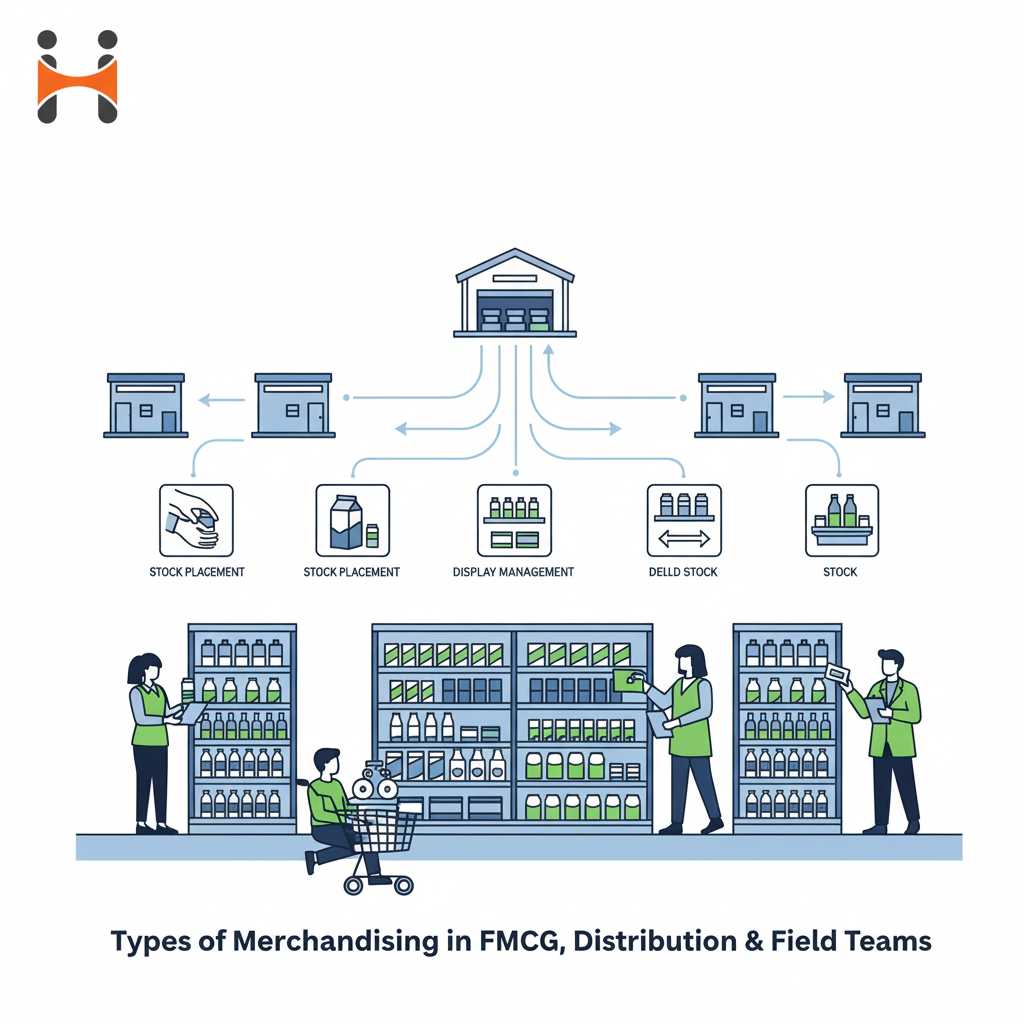
  • Types of Merchandising in FMCG, Distribution & Field Teams

    Types of Merchandising in FMCG, Distribution & Field Teams

    Merchandising plays a key role in FMCG, pharma, retail, and distribution. How products are displayed, managed, and sold affects sales, customer satisfaction, and operations. Businesses that want to track employee locations and improve field work need to understand the types of merchandising and use the right tools.

    At Happisales, we help distributors, retailers, and field teams handle merchandising smoothly while keeping inventory accurate and operations transparent. In this blog, we cover the main types of merchandising, common challenges, and how field force automation works in real situations.

    How Merchandising Supports FMCG and Distribution Operations?

    Merchandising covers all the work that helps sell products in retail and distribution. It is more than just placing items on shelves. It ensures products are available, visible, and attractive while giving your operations team useful data.

    Key activities in merchandising include:

    Product Placement

    Making sure products are easy to see and buy

    Inventory Management

    Keeping the right stock levels to avoid running out or having too much

    Promotional Execution

    Carrying out in-store promotions, discounts, and offers

    Retailer Engagement

    Building strong relationships with retailers to keep products available and follow compliance

    For businesses with field teams and distributors, merchandising includes field merchandising. This is the work done in stores to keep products in stock and make sure promotions are done correctly

    Main Types of Merchandising

    Merchandising can be divided into different types, each with its own goals, challenges, and benefits

    1. Field Merchandising

    Field merchandising is the work done by sales reps, merchandisers, and distributors in stores. We ensure that products are available, displayed properly, and sales opportunities are captured

    Key parts of field merchandising include:

    Shelf Audits
    Checking that products are placed correctly, fully stocked, and look appealing

    Order Capture
    Recording sales orders directly at the retailer

    Promotional Execution
    Carrying out in-store promotions and discounts

    Retailer Training
    Teaching store staff about product features, benefits, and promotions

    Personal Experience
    In our work with FMCG distributors, field merchandising proved very effective. Reps regularly conduct shelf audits and engage with retailers. This helps spot stock gaps and fix them before they affect sales. One client saw a 40 percent drop in order rejections within three months after setting up structured field merchandising processes

    Field merchandising is operational and links directly to inventory visibility, order management, and field force accountability. Software like Happisales makes this process easier.

    2. Product Merchandising

     Product merchandising focuses on organizing, pricing, and presenting items to boost appeal and sales. It overlaps with field merchandising but centers on the product rather than the execution.

    Key parts of product merchandising include:

    Product Placement
    Making sure high-demand items are easy to find

    Stock Rotation
    Tracking expiration dates and batches to reduce waste

    Price Accuracy
    Keeping prices correct across all locations

    POS Material Implementation
    Using banners, tags, and displays to promote products

    With tools like Happisales, sales reps can access product details and pricing on their mobile devices. This reduces errors, ensures compliance, and allows accurate order capture.

    3.  Trade or Promotional Merchandising

    Trade merchandising is about running promotions, discounts, and campaigns at the retailer level. It aims to influence buyers, increase sales, and make products more visible.

    Key parts of trade merchandising include:

    • Discounts and promotional offers
    • In-store displays and point-of-sale materials
    • Incentive programs for retailers
    • Campaign tracking and reporting

    The main challenges are inconsistent execution and difficulty tracking compliance across multiple stores. Happisales lets field teams record promotions in real time, so managers can track execution and results easily.

    4. Visual Merchandising

    Visual merchandising focuses on how products look and how appealing they are. While common in retail stores, it is also important in FMCG and distribution.

    Key parts of visual merchandising include:

    • Store layout optimization
    • Attractive displays and shelving
    • Placing high-margin or promotional products strategically
    • Keeping branding and signage consistent

    Visual merchandising depends on operational support from field teams. Even the best displays fail if products are not available or stock is outdated. Happisales helps by providing real-time stock visibility, accurate order placement, and timely replenishment.

    5. Digital Merchandising

    Digital merchandising is growing in importance with the rise of e-commerce and online retail.

    Key parts of digital merchandising include:

    • Accurate product listings and descriptions
    • Online promotions and campaigns
    • Managing customer reviews
    • Integration with digital ordering platforms for retailers

    Field teams help by making sure offline stock matches online listings. Software like Happisales keeps data synced between physical stores and digital channels.

    Top Issues in FMCG and Distribution Merchandising

    Even with clear merchandising strategies, businesses face several problems:

    1. Stockouts and Overstocking
      Without accurate inventory data, stores may run out of stock or have too much
    2. Inconsistent Execution
      Field reps may follow strategies differently across locations, causing uneven brand experience
    3. Manual Reporting
      Tracking merchandising activities by hand takes time and often has errors
    4. Employee Monitoring
      Supervising field teams and keeping them accountable is hard without real-time tracking

    These issues can lead to lost sales, unhappy retailers, and operational inefficiencies

    How Field Force Automation Supports FMCG Merchandising?

    To solve merchandising challenges, many businesses use field force automation platforms like Happisales. These tools combine merchandising with inventory management, order capture, route planning, and employee tracking.

    How Happisales Supports Field Merchandising?

    • Real-Time Inventory Visibility
      Sales reps and managers can see livestock across locations. This ensures accurate orders and reduces stockouts.
    • Offline Access
      Field staff can log orders, updates, and notes without internet. Data syncs automatically when connectivity returns.
    • Route Optimization
      Happisales plans efficient travel routes for field reps, cutting travel time and covering more stores.
    • Expense and Activity Tracking
      Track field staff visits, activities, and expenses to give managers useful insights.
    • Employee Location Tracking
      Managers can see field staff locations in real time, improving accountability and resource allocation.
    • Analytics and Reporting
      Happisales generates detailed reports on team performance, merchandising compliance, and operations. Managers can make decisions based on data.

    Personal Experience
    After using Happisales, a client in South India saw clear results. Field reps logged orders offline, routes were optimized, and managers tracked employees in real time. Orders were captured faster, stockouts dropped, and sales increased.

    Best Practices for Effective Field Merchandising

    To get the most from field merchandising, companies should follow these practices

    1. Regular Training
      Give field staff the knowledge they need about products, merchandising standards, and technology tools
    2. Consistent Communication
      Keep open channels between field teams and managers to address issues quickly
    3. Data-Driven Decisions
      Use insights from software to adjust merchandising strategies in real time
    4. Technology Integration
      Use field force automation to streamline work, track activities, and improve efficiency
    5. Performance Monitoring
      Check team performance regularly and provide feedback to help them improve

    Why FMCG and Distribution Companies Should Use Field Merchandising?

    Companies that use field merchandising with technology see clear results

    1. Better Stock Availability
      Products are available when needed and waste is reduced
    2. Stronger Retailer Relationships
      Orders are fulfilled on time and promotions are executed properly
    3. Higher Team Accountability
      Real-time tracking keeps field staff responsible for their work
    4. Increased Sales Efficiency
      Route planning and optimized visits help reps cover more stores
    5. Improved Decision-Making
      Analytics and reports provide actionable insights for managers

    Example
    One FMCG distributor saw a 40 percent drop in order rejections within three months of using Happisales. Field reps checked stock on their mobile devices before taking orders, ensuring customers got products reliably

    What’s Next?

    Merchandising is more than placing products on shelves. In FMCG and distribution, it combines field execution, operational visibility, and data-driven insights. Field merchandising makes sure products are available, orders are accurate, and promotions run smoothly.

    Happisales connects field teams, back-office staff, and managers with real-time data. This helps businesses improve merchandising, satisfy customers, and grow sustainably. click here for 14 days free and simplify field merchandising, inventory tracking, and team management with no credit card required.

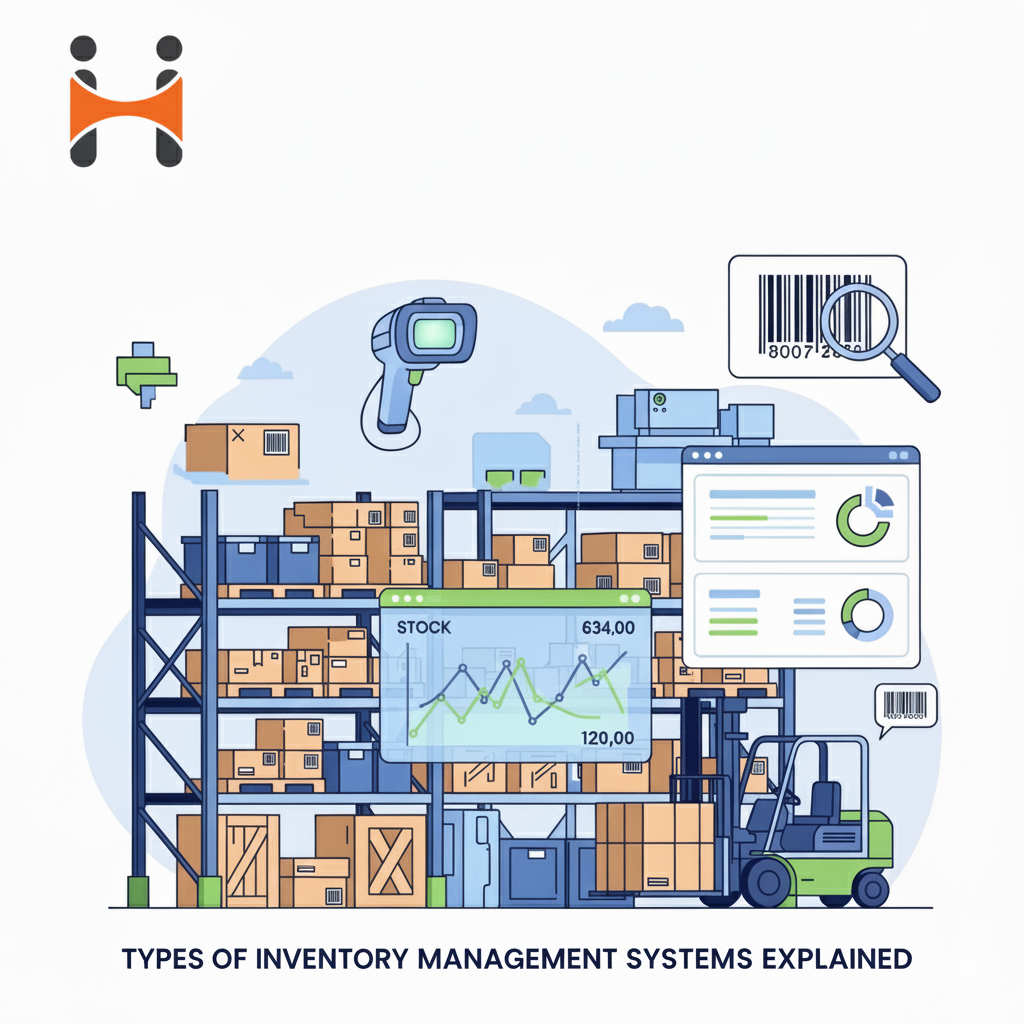
  • Types of Inventory Management Systems – Explained

    Types of Inventory Management Systems – Explained

    Running a business today means you can’t afford stockouts, delays, or messy inventory. If you’re in FMCG, pharma, retail, or distribution, your stock is the backbone of everything. The system you use to manage it isn’t optional anymore. It decides how smooth your operations run and how happy your customers stay.

    At Happisales, we work with companies that depend on field staff, distributors, and sales reps to keep things moving. One issue comes up again and again – no clear view of inventory. Managers often ask themselves simple but important questions. Do I know the stock levels right now? Are my reps placing orders based on what’s really available. How do I stop overstocking or empty shelves without slowing down sales.

    This blog breaks it down. We’ll walk through the types of inventory management systems, what each does well, where they fall short, and how modern tools like Happisales bring inventory and field force tracking together so you get full control.

    What are the different types of inventory management systems?

    Different businesses need different inventory systems depending on size, transaction volume, and industry. Here are the main ones.

    1. Perpetual Inventory System

    This system updates stock in real time with every sale, purchase, or return. It usually connects with POS, ERP, or field sales apps so stock levels adjust automatically.

    Pros

    • Real-time visibility
    • Fewer stockouts
    • Works best for FMCG and high-volume businesses

    Cons

    • Requires tech investment
    • Teams need training

    From experience, we worked with a large FMCG distributor that switched from spreadsheets to a perpetual system. Their sales reps now check stock on their mobile app before taking orders. Order rejections dropped 40 percent in three months.

    2. Periodic Inventory System

     This system counts stock at set intervals like monthly, quarterly, or annually. Books are only updated after each count.

    Pros

    • Low cost
    • Good for small businesses

    Cons

    • Stock data is outdated between counts
    • Higher chance of stockouts or overstocking

    This can work for small local retailers. For distributors managing thousands of SKUs, it quickly becomes inefficient.

    3. Just-in-Time (JIT) Inventory

     Made popular by Toyota, JIT keeps inventory low and replenishes only when needed.

    Pros

    • Lower carrying cost
    • Less waste

    Cons

    • Risk if suppliers delay
    • Works only with predictable demand

    This system suits businesses with stable demand cycles. For FMCG or pharma, were demand spikes often, JIT can leave shelves empty.

    4. Barcode and RFID Inventory Systems

     These systems track products with barcode scanners or RFID tags. Each SKU is tagged and updated instantly during stock movements.

    Pros

    • Fast and accurate
    • Cuts manual errors

    Cons

    • Higher setup cost
    • Needs strict discipline

    We’ve seen pharma companies use this to track medicines by batch, which helps with compliance and reduces expired stock losses.

    5. Cloud-Based Inventory Systems with Offline Support

    This is the most advanced option in use today. Inventory data is stored on the cloud so reps, managers, and warehouses see the same numbers. Orders can be logged offline and synced later.

    Pros

    • Works across locations
    • Mobile-first for field reps
    • No sales lost in poor network areas
    • Easy to link with ERP and CRM

    Cons

    • Ongoing Subscription Cost (though ROI is usually higher)

    One of our Happisales clients in South India had issues with poor connectivity in Tier 3 towns. After moving to our offline-first system, their reps never missed an order. Everything syncs automatically once they’re back online.

    How to Choose the Right Inventory Management System for Your Business?

    Which system you choose depends on a few factors.

    • Business size – small shops often start with periodic systems.
    • Industry – FMCG and pharma work best with perpetual, cloud-based systems.
    • Transaction volume – high-volume distributors benefit from automation.
    • Geography – businesses in semi-urban or rural areas need systems that work offline.

    Happisales usually recommends cloud-based, perpetual inventory systems for growing businesses. They scale well, improve accuracy, and give real-time visibility – things every modern business needs.

    How Happisales Goes Beyond Traditional Inventory Systems?

    Traditional systems track stock but rarely connect with field sales. Happisales is built differently.

    Our software brings together:

    • Real-time stock visibility – Reps check livestock before placing orders.
    • Offline mobile access – Orders logged offline sync once online.
    • Expense tracking and approvals – Managers handle claims alongside inventory data.
    • Route optimization – Reps plan the most efficient travel routes.
    • Team motivation tools -Track performance, set incentives, and recognize achievements.

    With Happisales, sales teams, back office, and warehouses all work on one platform.

    Why Inventory and Field Force Automation Matters in Distribution Management?

    When I began analyzing sales operations for distributors, I kept hearing the same issue. Sales reps took orders without knowing what was in stock. By the time the warehouse was checked, items were often unavailable.

    This hurt credibility with retailers and damaged supplier relationships.

    After implementing Happisales, the change was quick.

    • Reps stopped committing to stock that wasn’t there.
    • Managers saw inventory in real time.
    • Retailers got faster and more reliable service.

    It confirmed my view that combining inventory and field force automation is not optional. It is the future of distribution management.

    What’s Next?

    Inventory management keeps your business running. The system you pick will decide if you grow smoothly or get stuck with delays and errors. Small businesses can manage with periodic counts. But distributors and FMCG brands aiming to scale need systems that are real time, cloud based, and work offline. Happisales goes beyond stock tracking. It connects your field team, back office, and warehouse in one platform.

    Start a 14-day free trial with no credit card needed and see how Happisales makes inventory, sales, and employee tracking work together.

  • Top 5 Features to Look for in a Field Sales App for Indian Market Conditions 

    Top 5 Features to Look for in a Field Sales App for Indian Market Conditions 

    Navigating the diverse and dynamic Indian market requires tools tailored to its unique challenges. A robust field sales app can empower sales teams to boost productivity and efficiency. Here are the top five features to prioritize when choosing the right solution for Indian market conditions. 

    1. Offline Functionality 

    India’s varied geography often means inconsistent internet connectivity, especially in rural areas. An app for field sales must offer offline support, allowing reps to log activities, manage leads, and access data without a network. Once connectivity is restored, the app should sync seamlessly, ensuring no data is lost. 

    2. Route Optimization and Real-Time Tracking 

    With traffic congestion and sprawling urban-rural landscapes, efficient route planning is critical. A sales force automation tool should include route optimization to minimize travel time and fuel costs. Real-time GPS tracking also helps managers monitor field reps, ensuring they visit clients as planned and improving accountability. 

    3. Multilingual Support 

    India’s linguistic diversity demands an app that supports multiple regional languages. Sales reps interacting with clients in languages like Hindi, Tamil, or Bengali need interfaces and customer data fields in their preferred language. This feature enhances communication and builds stronger client relationships. 

    4. Integration with Local Payment Systems 

    Cash flow management is vital for Indian businesses, often dealing with on-the-spot payments. The app should integrate with popular local payment systems like UPI or mobile wallets, enabling reps to collect payments, track unsettled invoices, and issue digital receipts instantly, streamlining financial operations. 

    5. Customizable Analytics for Market Insights 

    Understanding local market trends is key to success. The app must provide customizable analytics to track sales performance, monitor stock levels, and analyze regional demand patterns. Features like automated reports and dashboards help managers make data-driven decisions tailored to India’s fast-paced market. 

    Choosing a field sales app with these features ensures sales teams can tackle India’s unique challenges—unreliable connectivity, logistical hurdles, linguistic diversity, payment preferences, and market variability. By equipping reps with the right tools, businesses can drive efficiency, improve customer engagement, and boost revenue in this competitive landscape. 

  • Geo-Fencing Attendance Tracking for Mobile Teams

    Geo-Fencing Attendance Tracking for Mobile Teams

    Managing a team that’s always on the go-construction crews, delivery drivers, or repair techs-makes tracking attendance tough. You need to know who’s on the job without sorting through piles of timesheets. A geofencing attendance system takes that stress away. This post covers what geo-fencing is, how geofencing attendance tracking works, why it’s useful for geo attendance tracking, and what to watch out for.

    What is Geo-Fencing?

    Geo-fencing sets up an invisible boundary around a place using GPS or RFID. Picture drawing a line around your work site on a map. That’s the geo-fence. When someone with a phone crosses it, the system logs it. This tech shows up in stuff like ads near stores or tracking delivery trucks. For geofencing employee tracking, it’s about knowing when your team starts or ends their shift. It helps track hours and pay without relying on paper or constant check-ins.

    I’ve seen businesses struggle with manual tracking-someone forgets to clock in, and it’s chaos. Geo-fencing makes it automatic, saving everyone a headache.

    How Geofencing Attendance Works?

    So, how does geofencing attendance work? You use software to create a virtual boundary around a work site, like a factory or construction lot. You choose how big it needs to be. When an employee steps into that area with a GPS phone, the system logs them as “in.” When they leave, it logs them out. The info goes to a manager’s phone or computer.

    Some geofencing attendance systems add checks like a fingerprint scan to confirm it’s the right person. It’s a simple way to track who’s working without extra paperwork.

    Why Geo-Fencing is Great for Attendance?

    A geofencing attendance system helps in a few big ways. First, it’s accurate. Geo attendance tracks the exact time someone’s on-site, so you pay them for the hours they work. A guy I know who runs a construction crew said manual timesheets caused endless pay fights. Switching to geo attendance tracking cut those issues down fast.

    It’s also good for safety. If someone steps into a risky area-like a restricted zone in a warehouse-the system can ping a supervisor. That helps stop accidents before they happen.

    Plus, it saves time. Geofencing attendance tracking shows who’s where right away, so managers can plan better and keep things moving.

    How to Set Up Geo-Fencing for Attendance?

    Setting up a geofencing attendance system is straightforward. Here’s the process.

    Create the Geo-Fence

    Use software to map a virtual boundary around your work site. Make it small for an office or bigger for a sprawling job site.

    Add the Tracking App

    Put tracking software on your team’s phones or tablets. They need GPS or RFID to work with the geo-fence. The app logs when they enter or exit.

    Set Work Rules

    Enter schedules, overtime rules, or other policies. This makes sure geo attendance tracking matches your business.

    Automate Tracking

    Once it’s ready, the system tracks attendance automatically. Employees cross the geo-fence, and their hours get logged. Pay gets figured out based on your rules.

    Review the Data

    Check records now and then to catch problems, like a phone with no signal or a dead battery.

    Automating with Geo-Fenced Attendance

    Geo fenced attendance is awesome for automation. Instead of employees clocking in or filling out forms, the system logs them when they hit the geo-fence. A delivery company I know used to waste hours on driver logs. After switching to geofencing attendance tracking, they saved time and had fewer payroll errors.

    It also helps with legal stuff. Labor laws get strict about overtime or wages. A geofencing attendance system keeps clean records, so you’re covered if anyone checks. It’s great for mobile teams, like drivers or techs, where you need to know who’s where without nagging them.

    Benefits of Geo-Fencing Attendance

    Here’s what you get with geo attendance tracking.

    Spot-On Accuracy

    Tracks hours exactly, so no one’s overpaid or underpaid.

    Less Hassle

    No chasing timesheets or checking forms. The system handles it.

    Legal Protection

    Clear records help you follow wage laws and avoid fines.

    Safer Work

    Alerts for risky areas keep workers safe, like near heavy machinery.

    Better Planning

    Real-time data helps you schedule smarter and use your team well.

    Challenges of Geo-Fencing

    Geo-fencing has some downsides. GPS can fail in bad weather or areas with weak signals, like cities or remote spots. If the signal drops, the system might miss someone’s arrival. RFID can have issues too if other devices mess with it.

    Privacy’s a concern. Some workers might feel weird about geofencing employee tracking, thinking it’s too intrusive. I’ve heard folks worry about being watched after work. You need to explain how geo tagging and geo fencing work and that it’s only for job sites.

    Tech can trip you up too. Phones need battery and signal. If someone’s device dies, the system won’t track them. A backup, like manual check-ins, helps.

    Dealing with Privacy Worries

    To keep your team on board, be straight-up. Explain why you’re using a geofencing attendance system-better pay, safer sites, less work. Say tracking stops when they leave the job. Keep their data safe and don’t use it for other stuff. That trust makes geo attendance less of a worry.

    Where Geo-Fencing Shines?

    Geo-fencing works great for mobile jobs. Construction teams use it to confirm workers are on-site. Delivery services track drivers at drop-off points. Field techs, like plumbers, get logged at customer spots. Adding a fingerprint check makes it even more solid.

    For example, a driver hitting a customer’s geo-fence gets logged automatically. It confirms they’re at the right place and tracks hours, keeping things clean.

    What’s Next for Geo-Fencing?

    Geo-fencing tech is improving. Better GPS and RFID will handle tricky spots like cities or rural areas. Linking it with payroll or HR tools will make things smoother-attendance data could go straight to accounting. As mobile work grows, geofencing attendance tracking will be key for staying organized.

    What’s next?

    Tracking attendance does not have to be complicated for your mobile team. Your crew can stay productive while work runs smoothly. A geofencing system records hours accurately without extra paperwork.

    Happisales Field Force Automation Software lets you track employee attendance, work hours, and job site visits in real time. It works even offline. Managers get clear visibility of field operations while teams focus on their tasks. You can start a 14-day free trial or request a live demo to see how geofencing attendance fits your workflow.

    Happisales CTA

  • Why is Route Optimization Important in Field Sales Management?

    Why is Route Optimization Important in Field Sales Management?

    Field sales are still relevant in every industry segment and are thought to be the most successful in generating fantastic business opportunities. Managing field trips, tracking salespeople’s routes, measuring the number of time salespeople spend on the road, keeping track of meetings, prioritizing client obligations, and optimizing routes are some of the basic statistics that field force management requires.

    It necessitates using a route planner/sales route management tool to effectively manage the complete sales path. The traditional system involved manually plotting maps and routes, which resulted in longer hours and mismanaged timetables. 

    Now comes the automation of route planning and scheduling visits, thanks to an efficient system that can help field force managers optimize routes to their maximum potential. Sales route planning has proven extremely effective in linking sales reps with significant business possibilities at the proper time and location. 

    Start with explaining sales route optimization and then look at why a key route planner is so important for field sales teams.

    What is Route Optimization?

    Identifying the most efficient route for a given number of waypoints is known as route optimization. It is an extremely sophisticated procedure, and the number of alternative routes grows exponentially as the number of waypoints grows. Building the shortest route for the provided waypoints based on time or distance must also consider other parameters such as the number of intersections.

    Route planning and optimization can help you determine the quickest and most efficient routes, lowering fuel expenses and reducing the amount of time field salespeople spend driving.

    The Significant Impact in Field Sales using Route Optimization:

    People who work in sales need to go from one area to another swiftly and efficiently. Many salespeople have to drive 30 to 45 minutes to and from their sales zone. With this in mind, your sales force must have access to the necessary planning tools to stay productive when on the road. 

    Field Force Automation Tools will assist them in planning routes that they are confident will get them to and from their destinations in the shortest time possible. It can help them cut down on travel time, allowing them to be on time at work and increasing their chances of selling more. Appointments are an important aspect of a company’s sales process. 

    The Sales Representatives must travel to visit clients at various locations, and the number of appointments they can complete is determined by the routes they take. The following are some of the advantages of route optimization for businesses:

    1. To Save Money, Time & Fuel Efficiency:

    The total distance and average miles driven between waypoints are minimized when Sales Reps design and optimize their itineraries. Gasoline efficiency improves as the distance is reduced. When the total money spent on fuel by an organization is added together, route optimization alone saves money.

    1. Improve Client Satisfaction:

    Sales reps can spend more time serving clients and enhance overall customer satisfaction by planning and optimizing their routes ahead of time. Furthermore, addressing spontaneous meetings becomes simple because the route may easily be modified to incorporate extra waypoints.

    1. Aim for a higher On-Time Performance Rate:

    One of the most vital benefits of Route Optimization is that Sales Representatives can boost their on-time performance rate. Because the routes have been adjusted, Sales Representatives may reach customers on time and avoid keeping them waiting. 

    Even if your field sales representatives are unavailable in the office, you can view real-time updates on customer data and the newest deals as a manager with route optimization. In addition, you can see your sales team’s performance by stacking sales reps according to how many check-ins are made, closed sales, and their income with a sales employee tracking app.

    Are Route Planners much needed for Optimizing Field Sales?

    Using route planning software for your sales staff has numerous advantages. First, your salespeople will appreciate the increased efficiency. 

    They will be more effective and in a better mood if they have a route planner that resolves various issues in organizing their journeys. A route planner offers much more than just a list of destinations to visit and the best routes to take to get there. 

    It provides you the optimum period to go, hold back, traffic, and environmental factors. Knowing these elements will enable your sales team to make more accurate and timely judgments, allowing them to achieve more.

    1. Advanced Sales Force Activity Planning:

    A route planner assists field salespeople in arranging their sales activities ahead of time, resulting in a well-organized framework that can be managed and monitored. For example, a route map can be developed to display the distances to be traveled, the client list, and other options available. Sales managers can use this information to optimize and successfully organize the entire schedule.

    1. Complete visibility:

    Implementing a route planning module keeps managers up to date on the most up-to-date real-time data, allowing them to conveniently monitor and manage the field force. In addition, more coordination and interaction between the road teams and the managers provide a complete view of the situation.

    1. Relief from Inefficient Expenditure:

    A strong software solution for route planning and management like Happisales can save the sales force money and time by preventing them from making unnecessary journeys. Furthermore, it aids in the extraction of the finest feasible paths by which sales agents can save money and time.

    Final Words:

    A strong sales force management solution is built upon intelligent and effective route planning. Therefore, a few vital aspects of a Field service management software & must be prioritized from the beginning to the end.
    A comprehensive sales route management module, such as Happisales, can aid salespeople and managers in various ways, including increasing sales and ensuring a seamless operating flow between routes. As a result, when adopting any Field Force Help, good sales route planners are necessary and must be given proper consideration.

  • Field Sales Automation | Manufacturing Company

    Field Sales Automation | Manufacturing Company

    Improving sales efficiency requires a well-designed automated sales procedure. The procedure aids in reducing lead times and the increase in output. The automation of the sales process also makes it easier to provide real-time data reports, ensuring strong data visibility.

    As a result, the organization can make timely and suitable business decisions, resulting in commercial success. But right now, many manufacturers rely on manual systems to carry out sales operations, which results in higher costs and lower sales volumes.

    Today, we’ll look at how we used Happisales Salesforce to empower a worldwide manufacturer by creating a tailored solution to automate their sales process.

    About the Client

    The client we dealt with is one of the country’s oldest and most famous corporate companies – India’s major maker of bathroom items. The company rebranded as the ‘Always in Fashion’ brand, emphasizing its commitment to providing clients with the most innovative and visually pleasing bathroom solutions. 

    They are a highly trusted and leading trend-setters in the market, dedicated to offering world-class bathroom solutions. It has the highest quality standards & outstanding design through best-in-class customer service.

    Objective  

    To oversee sales from the General Trade channel, the company maintains sales personnel stationed across India. The customer wanted us to create a system that would help them automate their sales process. 

    However, the lack of a solid field force automation solution proved a barrier to efficiently managing and increasing GT sales. That’s when they began searching for an SFA solution that would have all of the following features:

    • The area sales executives are in charge of capturing daily orders.
    • New outlets can be added simply from the app.
    • Following up on the ASMs’ market trips.
    • A configurable and dynamic dashboard for tracking sales and ASE productivity.

    Challenge

    • The organization has a strong secondary sales force to meet with customers daily. 
    • Advancing the cycle and updating sales data is a huge challenge for both main & other sales teams.
    • The time & money spent on paper-based communication such as reporting, manual call reports, and other sales-related task updates were excessive. 
    • It has resulted in lower employee productivity, efficiency & a longer sales cycle overall.

    The customer wanted a multi-tenant mobile application that would allow Sales Teams and Management to ‘digitally’ manage the full sales process and save time on email, paperwork, reporting, and status update meetings or calls.

    Approach

    Our client conveyed that they were looking for a top mobile application development company in India to assist their field sales executives with an Android app that would allow them to reach out to customers with ease while also allowing them to update sales data from anywhere, at any time. 

    In addition, the app should allow them to send their final report while on the go. We discussed the project’s data with the team and devised a wireframe for an Android app to automate and track sales force activity.

    Solution

    Happisales is a simple, easy-to-use, safe, and powerful mobile and web application that we designed based on discussions with the customer and wireframe approval. 

    The live monitoring Android App for sales executives allows them to digitize the entire process. In contrast, the web platform for senior executives allows them to track all of their salespeople’s daily activities and sales closures in real-time and empowers real-time Punch-In and Punch-Out for call entries with Geo Tagging and Timings for field sales executives.

    The program automates sales reporting and effortlessly interfaces with the client’s data systems. The tool also combines all major parts of everyday sales activity into one mobile app, allowing field sales executives to use it as a 24/7 personal digital assistant while out meeting with consumers. 

    The web app is highly beneficial for sales managers because it allows them to track the activity of field force members who are out on customer visits utilizing a real-time tracking tool. The Android Field Assist App may be used offline, and data is saved as cookies and updated to the backend once internet connectivity is restored.

    Outcome

    • Increased Productivity in Sales.
    • Time reduction to accomplish a manual task.
    • Improved efficiencies in order processing.
    • Sales team efficiency, order volume, retailer information, and high-selling models were visible on an interactive and intelligent dashboard.
    • It significantly improved the sales force’s discipline and process compliance.