Category: sales

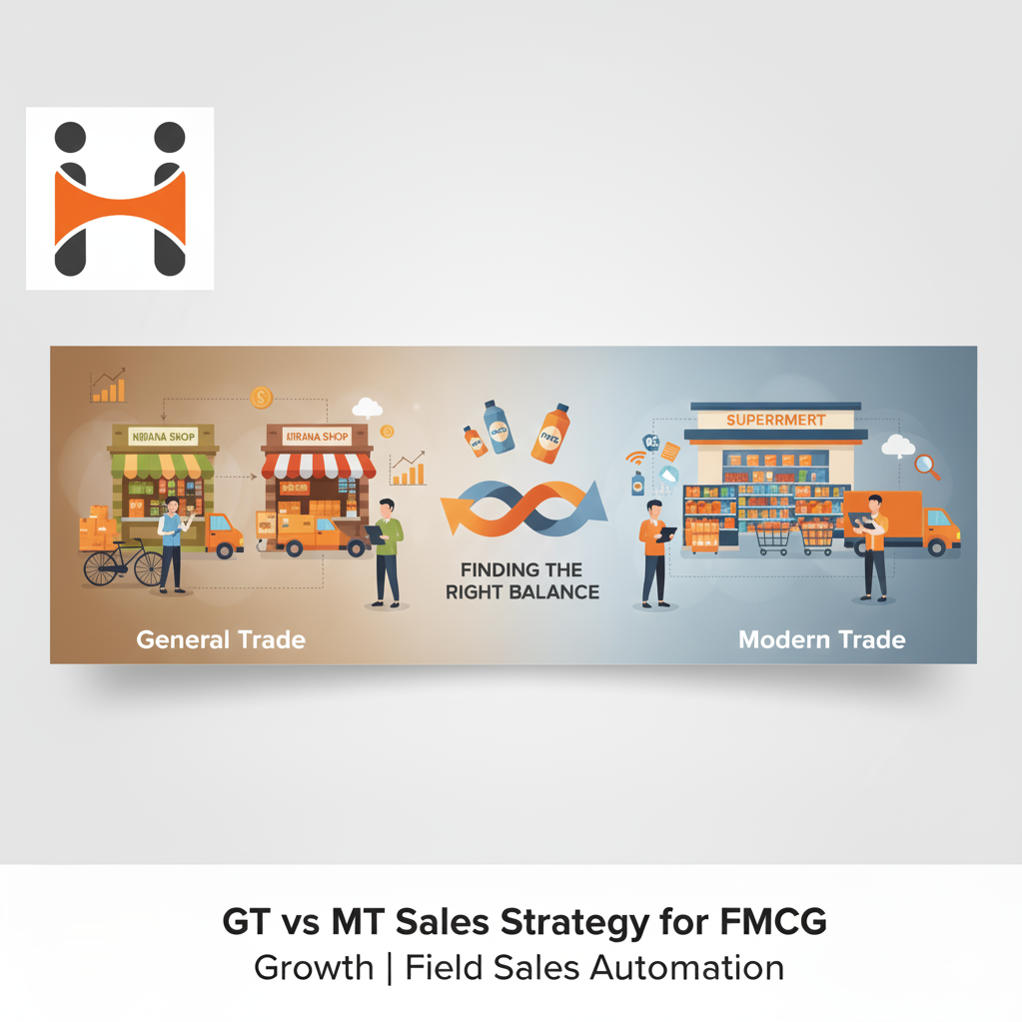
  • GT vs MT Sales Strategy for FMCG Growth

    GT vs MT Sales Strategy for FMCG Growth

    The FMCG market changes fast. Success depends on how brands manage their presence across General Trade (GT) and Modern Trade (MT). Each channel works differently. GT builds reach and volume. MT builds brand visibility and structured growth. The real challenge is finding a balance that keeps the sales strategy steady and scalable.

    At Happisales, we work with FMCG companies that face this challenge every day. They want to grow both channels without losing control over sales visibility, field productivity, or execution.

    Understanding General Trade (GT) in FMCG

    General Trade is the foundation of FMCG distribution. It includes local retailers, kirana stores, and small distributors across cities and towns.

    The meaning of General Trade in FMCG is not just about store count. It is about relationships and consistency built over time. Distributors act as partners who help brands reach the last mile.

    GT often struggles with limited data visibility. Manual tracking of orders, routes, and visits leads to errors and delays. Companies that still depend on paper-based systems find it hard to measure FMCG sales performance or plan trade promotions effectively.

    FMCG sales automation changes that. A field sales tracking app or field employee tracking software helps managers see visits, routes, and orders live. GPS tracking for sales reps adds more clarity. Managers know where their teams are and how efficiently they work. This helps in making decisions based on data, not assumptions.

    Modern Trade: Structure, Scale, and Brand Building

    Modern Trade includes organized retail chains, supermarkets, and hypermarkets. These outlets work on centralized buying and fixed processes.

    FMCG channel strategy in Modern Trade focuses on visibility and customer experience. Products need to meet display rules and follow promotion plans. This requires proper coordination between sales teams and backend operations.

    MT outlets offer more volume per store, but they need stronger control over pricing, supply chain, and promotions. FMCG companies that depend on this channel often use FMCG sales force automation tools to manage stock levels, replenishment, and on-ground execution in real time.

    GT vs MT in FMCG: The Strategic Balancing Act

    Both GT and MT are important. FMCG businesses grow best when the two work together. That is the purpose of a strong GT vs MT sales strategy. It is about knowing when to use GT for reach and when to use MT for visibility.

    A balanced approach keeps brands stable. During events like lockdowns or transport delays, GT maintains immediate sales presence. MT keeps the brand visible to premium customers.

    At Happisales, we see FMCG companies succeed when both channels are connected through automation. It improves FMCG sales growth and performance. When field operations, promotions, and distributors work together through one platform, managers get a single view of sales activity across all regions.

    Optimizing FMCG Distribution Channels with Technology

    Speed and consistency drive FMCG sales. Managing FMCG distribution channels needs coordination between sales teams, distributors, and managers.

    Without proper tools, companies face issues such as missed visits, route duplication, and weak promotion tracking.

    A field sales tracking app helps close these gaps. Managers can track live routes, see visit data, and spot areas that need more attention. Sales team location tracking gives leaders a clear view of on-ground activity. They can improve coverage and productivity without increasing manpower.

    With FMCG sales automation, brands bring together order management, reports, and attendance in one system. It builds accountability and helps sales teams stay focused on targets.

    Building a Smarter Route to Market

    A company’s FMCG route to market decides how well products reach shelves. A planned route saves time, reduces fuel costs, and increases output from field teams.

    Manual coordination often causes missed outlets and wasted effort. The answer lies in sales route optimization supported by location tracking.

    A GPS-enabled system helps design routes that reduce travel time and increase coverage. Managers can see which areas perform better and plan visits more effectively. This improves overall FMCG sales performance and productivity.

    Trade Marketing and Execution: Turning Presence into Growth

    Trade marketing connects planning with results. FMCG trade marketing ensures every campaign and display reaches the store level.

    In GT, it focuses on relationships, discounts, and product visibility. In MT, it focuses on consistency, shelf share, and promotions.

    When companies use automation to manage FMCG trade marketing, they can track campaign results in real time. Field teams can upload photos, confirm compliance, and share updates instantly.

    FMCG sales force automation sends this data directly to dashboards. Managers can compare channel performance and track campaign ROI. This improves FMCG retail strategy and brand visibility.

    Happi sale’s Perspective: Data, Discipline, and Growth

    At Happisales, we work with FMCG brands that bridge the gap between GT and MT using digital tools. Visibility is the key.

    By combining field employee tracking software, GPS tracking for sales reps, and FMCG sales automation, businesses can see the full picture of their sales operations. Managers can track routes, verify store visits, and make sure each outlet gets timely attention.

    These insights guide important decisions such as resource allocation, incentives, and distributor planning. A good FMCG channel strategy based on data improves sales execution in FMCG and strengthens teamwork.

    Even small improvements in FMCG sales growth reflect better visibility and sharper control on the ground. Technology gives companies this advantage.

    What’s Next?

    The FMCG market today values precision. Field teams need direction and managers need visibility.

    A strong field sales tracking app with sales team location tracking and FMCG sales automation can simplify daily operations. From sales route optimization to live dashboards, digital tools make it easier to manage teams and measure performance.

    Give your sales managers better insights. Remove guesswork from daily plans. Build a connected system where General Trade and Modern Trade work together.

    Your team already works hard. Make that effort count. Boost field productivity and sales visibility with Happisales today.
  • 10 Benefits of CRM Integration to Enhance Your Sales Strategy

    10 Benefits of CRM Integration to Enhance Your Sales Strategy

    In our role helping field and pharma sales teams deploy top-tier software like a robust SFA tool, we at Happisales know how critical it is to have systems that work together rather than in silos. If your team uses a tracker, a mobile app, sales reports or location-based tracking, then integrating your CRM isn’t just “nice to have” – it’s a game-changer. Below, we’ll dive deep into how CRM integration (and pairing it with an SFA app) unlocks real value, especially for teams that need to track field reps’ locations, tasks, orders, and service calls.

    What is SFA and how it works with CRM?

    SFA stands for sales force automation. It helps automate the sales process. It tracks leads, follow-ups, tasks, deals, and customer details. This reduces the time reps spend on admin work and lets them focus on customers.

    SFA overlaps with CRM, but the focus is different. SFA focuses on the sales process like order tracking, quotas, and lead management. CRM covers the bigger picture including service and marketing.

    For field teams like pharma reps or service engineers, SFA apps provide location tracking, task logging, order management, and real-time updates from mobile devices.

    When CRM is integrated with SFA tools, data flows directly from field visits to customer records, follow-ups, and reports. Managers get complete visibility and teams can act on accurate, live information.

    Why CRM integration matters?

    Integrated CRM systems reduce duplicate entries, delayed updates, and disconnected teams. They provide one place to view customer data, automate workflows, improve productivity, and remove silos between sales, marketing, and service.

    Here are ten benefits of CRM integration for teams that track field reps, such as using sales force tracker axis or SFA pharma software.

    1. Unified view of customer and rep activity

    All customer interactions are stored in one system. Managers can see visits, orders, and follow-ups in real time.

    One pharma client told us that before integration, reps logged visits in their mobile app, but CRM data was outdated. After integration, the “Next Visit” column updated automatically. Nothing was missed.

    A single view helps managers make better decisions, reduces missed opportunities, and improves customer service.

    2. Automation of repetitive tasks

    Tasks like sending follow-up emails, updating inventory, scheduling calls, or triggering invoicing can happen automatically. This frees field reps to focus on selling rather than entering data.

    Automation also helps managers track workflows without spending hours compiling spreadsheets.

    3. Better accuracy and fewer errors

    When data is split across apps, mistakes happen. Integrated CRM keeps everything synced. Duplicates and omissions reduce. Communication becomes smooth.

    For example, when a rep logs a sample delivery, CRM updates instantly. The lab sees it and marketing can follow up. Everything flows seamlessly.

    4. Higher productivity for field and office teams

    Integration allows field and office teams to work in the same system. Reps log visits, orders, and collections in real time. Managers, service, and marketing teams see the data immediately.

    This reduces time spent on admin work. Teams spend more time engaging with customers. Managers can see live dashboards of orders, visits, and performance.

    5. Better insights and smarter decisions

    With integrated data, managers can identify patterns. For example, they can see which reps visit many clients but convert few orders. They can track which areas consume more service hours or have high order volumes.

    One pharma client compared route efficiency with CRM data. They found that reps visiting six hospitals a day converted 18% better than those visiting three. They used this insight to adjust territories.

    6. Shorter sales and service cycles

    When reps log visits, orders, and collections immediately, CRM updates happen instantly. This shortens the time from first contact to order or service completion.

    Orders are processed faster. Service is dispatched sooner. Customers get quicker responses.

    7. Improved customer experience and retention

    Integrated systems let teams see the customer’s history, last discussions, field observations, and pending actions. Customers do not repeat information. Service stays consistent.

    A service client told us a rep could instantly recall a past equipment issue during a customer call. The customer was impressed.

    8. Better targeting and segmentation

    Data from field visits, orders, and service can be used to create customer segments. Teams can target high-value accounts and high-potential zones.

    For example, you can find hospitals visited three times this quarter with orders above ₹5 lakhs. Marketing, field strategy, and cross-sell campaigns can focus on these segments while avoiding low-value areas.

    9. Cross-team collaboration

    Sales, marketing, service, field operations, and finance often operate in separate systems. CRM integration gives everyone access to the same data.

    Marketing can see which accounts reps visited. Service teams see open tasks. Finance can check collections. Teams avoid duplication, errors, and misalignment.

    10. Scalability and future-proofing operations

    Manual processes break when teams grow. Adding reps, territories, or new products creates chaos. Integrated CRM with SFA software scales smoothly.

    Field tracking, orders, and CRM data remain aligned as you expand. This prevents data confusion and keeps operations running smoothly.

    How SFA Pharma Software Helps Teams Track Location and Field Activity?

    For pharma, sales, or field service teams, integrating SFA software with CRM works best when tracking employee location, tasks, and orders.

    Field reps use mobile apps to log visits, capture geolocation, record orders, and take photos. The SFA app updates CRM automatically. Managers see live maps, pending tasks, and orders. Marketing, service, and finance teams access the same data.

    This avoids problems like missing updates, delayed billing, or customers repeating information.

    A pharma distributor client logged visits on paper before entering them into CRM. It took 2-3 days to update records. After SFA and CRM integration, visits logged instantly, follow-ups created automatically, and dashboards updated daily. Visit-to-order conversion improved by 22% in two months.

    Common issues and how to avoid them

    • Automation without context can feel robotic. Reps still need guidance.
    • Training is essential because new systems take time to learn.
    • Data quality matters. Errors in input data will carry over.
    • Choose SFA tools that support offline mode, mobility, and location tracking.
    • Integration requires upkeep. APIs, updates, and new territories need attention.

    How to start?

    • Map your workflows. Identify visits, orders, returns, and service tasks.
    • Pick an SFA app with mobile support, offline mode, and location tracking that integrates with your CRM.
    • Define integration points from field visits to CRM tasks, orders, and finance modules.
    • Train reps, managers, and service teams on the new process.
    • Set dashboards and KPIs to monitor visits, orders, and territory performance.
    • Use the data to find underperforming reps, regions, or processes and adjust.
    • Scale gradually as your team grows.

    What’s Next?

    Integrating CRM with SFA and location tracking is your next step. Connecting systems gives unified data, reduces admin work, improves accuracy, and speeds up decisions.

    Teams no longer have to work in disconnected tools. Field reps, managers, and service teams operate efficiently together.

    Try it for yourself. Schedule a free demo today to see real-time tracking and better productivity.

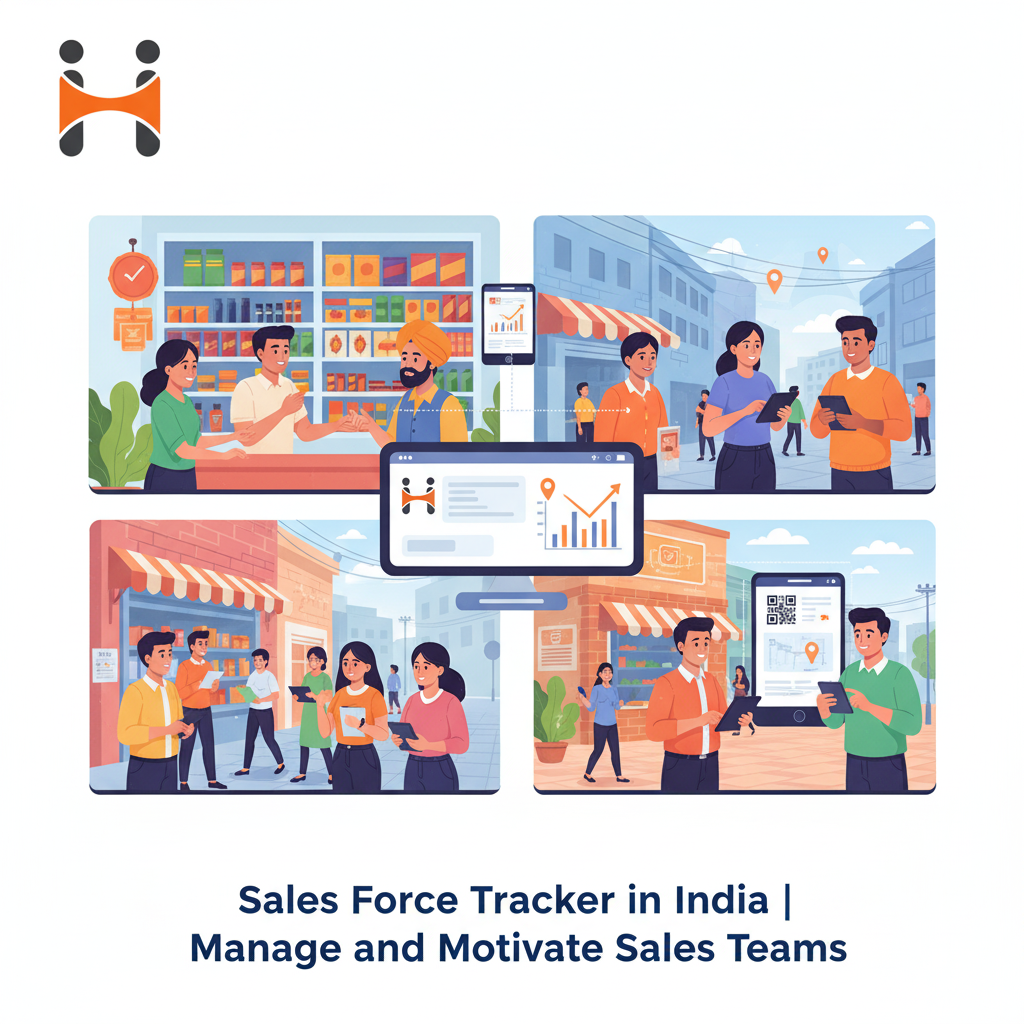
  • Learn How to Manage, Coach, and Motivate Your Sales Team in India

    Learn How to Manage, Coach, and Motivate Your Sales Team in India

    Field sales drive revenue for many businesses in India. This is true in FMCG, retail, pharma, and other industries with wide distribution networks. Teams often cover cities, small towns, and rural areas. Managers struggle to track performance, boost productivity, and keep people motivated. Without clear systems, teams lose focus and results drop.

    Using a sales force tracker in India helps companies solve these challenges with real-time visibility and better team coordination. This guide explains practical ways to manage and motivate sales teams in real Indian conditions. It includes simple methods that work in metro cities, tier-2 towns, and remote markets.

    Gain Real-Time Visibility into Your Field Operations

    Sales teams work across large regions. Many managers still rely on phone calls and late reports. That makes it hard to fix problems quickly.

    Using a sales force tracker helps. It shows orders, stock, and visits in real time. Managers can see which areas are doing well and which need support. They can plan routes, adjust targets, and reduce wasted time.For example, a pharma manager in Maharashtra used a force tracker app to check which reps visited key retailers. When a rep missed an outlet, the manager sent an alert right away. This kept sales on track and improved accountability.

    Boost Sales Team Productivity

    Sales reps in India spend too much time on paperwork. They fill forms, update sheets, and make endless calls. Less time goes into actual selling.

    A force tracker system helps them report faster and spend more time with retailers. Reps can place orders and update stock details through their phones. Managers can share updates instantly. Reps can also get short reminders or upselling tips during store visits.

    Less admin means more selling. In an FMCG company, reps who used a mobile tracker visited more retailers each week. Sales increased and relationships improved.

    Reduce Operational Costs

    Travel, fuel, and communication costs are high in India. Manual planning makes this worse.

    A sales force tracker can plan efficient routes and reduce travel distance. Tracking stock digitally cuts losses and errors. Simple communication tools lower the need for repeat visits.

    A distribution company in Karnataka saved 15 percent on fuel costs after using a tracker to group nearby outlets. Managers found areas with frequent shortages and fixed supply issues before they affected sales.

    Coach and Motivate Your Sales Team

    Indian sales reps respond well to recognition and clear feedback. Motivation improves when managers track performance, celebrate wins, and offer support.

    A sales force tracker dashboard helps managers see progress daily. They can send quick feedback or rewards for milestones. Coaching should focus on improving skills, not just targets.

    A retail sales manager in Delhi introduced weekly coaching sessions and small rewards for hitting visit goals. Within a month, engagement rose. Reps started enjoying their work again.

    Managers can also train reps in retail marketing tactics. Teach them how to promote new products, run in-store offers, and build retailer loyalty. Small improvements in presentation and relationship handling can raise sales numbers fast.

    Use Data to Make Smarter Decisions

    Customer behavior changes from one region to another. Data helps managers understand what works where.

    A force tracker system records visits, sales, and stock levels in real time. Managers can see trends, spot weak areas, and adjust strategy. Forecasting demand becomes easier when decisions come from real numbers.

    One FMCG company found that rural stores brought in a third of total sales but got fewer visits. The manager adjusted the plan. Reps started covering those stores regularly and revenue rose.

    Strengthen Retailer Relationships

    Retailers are key to success in India. Strong relationships bring repeat business and trust.

    Use retail marketing tactics like loyalty programs, promotions, and personalized offers. Keep full records of orders, payments, and retailer preferences.

    A manager in Tamil Nadu used a force tracker with a mobile ordering option. Retailers placed orders directly from their phones. Deliveries became faster, and errors dropped. This built long-term trust between the team and the retailers.

    Align Goals and Ensure Accountability

    Every sales rep needs to know their targets and how their work supports company goals.

    Managers can track results with a force tracker dashboard and send alerts when targets are missed. Data keeps the process fair and transparent.

    A pharma team in Rajasthan focused too much on large stores. Managers saw this in the tracker data and guided reps to visit smaller outlets too. Sales improved and coverage became more balanced.

    Address Indian-Specific Challenges

    Poor internet, limited tools, and different work cultures are common in India. Teams need simple solutions.

    Mobile-friendly force tracker apps that work offline are essential. Recognizing performance helps maintain motivation. When reps see real progress, they trust the system.

    Cultural understanding also matters. Each region works differently. Managers who respect local habits get better cooperation. Scalable tools that work across multiple towns make it easier to grow without losing control.

    Practical Tips for Daily Management

    • Hold short weekly meetings to review progress.
    • Use a sales force tracker to monitor visits and sales numbers.
    • Keep reports simple and easy to read.
    • Encourage reps to share best practices with each other.
    • Celebrate small wins often.
    • Train reps on communication, negotiation, and retail marketing tactics.
    • Watch workloads so admin doesn’t block selling time.

    What’s Next?

    Start using a mobile force tracker for live reporting. Focus your coaching on individual improvement. Apply smart retail marketing tactics to strengthen relationships. Use data to plan routes and targets.

    Sales teams perform better when they have clarity, feedback, and recognition. With the right tools and guidance, Indian field teams can grow sales, keep retailers happy, and reach their goals faster.

    Get started with Happisales sales force tracker in India today to boost your team’s performance and strengthen retailer relationships.

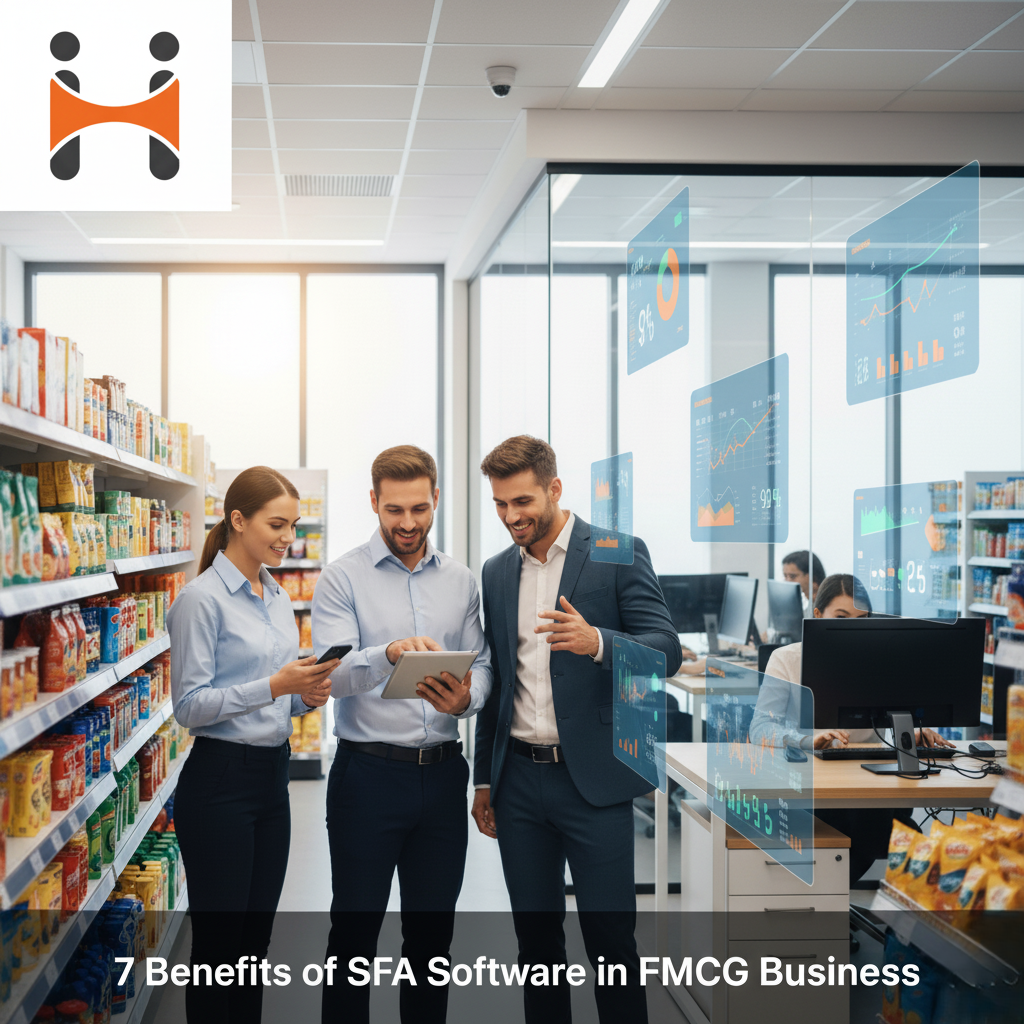
  • 7 Benefits of SFA Software in FMCG Business

    7 Benefits of SFA Software in FMCG Business

    In the fast-moving world of FMCG, what happens on the ground determines success. No matter how strong your brand or wide your distribution network, inefficient field sales operations can cost market share. Sales Force Automation software helps fix that.

    At Happisales, we’ve worked with many FMCG companies that needed more than sales data. They wanted visibility, accountability, and growth. From experience, we’ve seen how switching from manual processes to automation transforms operations.

    Here are seven key benefits of using SFA software in FMCG and how it can help you build a more efficient sales organization.

    1. Better Visibility into Field Operations

    Many FMCG businesses struggle to know what’s happening in the field in real time. Manual reports and end-of-day summaries slow down action. Sales Force Automation software fixes that by showing every field activity as it happens.

    You can see orders, attendance, locations, and customer visits instantly. Managers know which outlets were covered, how long reps stayed, and what was sold. Territory managers can study visit patterns, plan routes better, and make sure no outlet is missed.

    Dashboards give management a live view of performance, regional sales, and product movement. Companies using SFA have seen up to 40 percent more visibility in the first few months. With this clarity, teams act faster and take responsibility for their results.

    2. Higher Productivity for Sales Teams

    Sales reps lose valuable time on manual work like filling forms, updating spreadsheets, and sending messages. This leaves less time for actual selling.

    With SFA software, most of this work gets automated. Reps take orders on their phones, share data with warehouses instantly, and check product or pricing updates on the go. Smart tools suggest what to upsell or cross-sell, helping reps make better calls.

    This saves hours each day. In our FMCG projects, productivity improved by around 30 percent after SFA adoption. Teams met more customers and increased order volumes.

    One regional manager said it best. “Before Happisales SFA, my team ended the day fixing Excel sheets. Now they finish early with clear goals achieved.”

    3. Lower Operational Costs

    Running a field force in FMCG costs money. Travel, fuel, communication, and time all add up. Manual work often leads to poor route planning, wasted stock, and repeated effort.

    SFA helps control these costs. Route optimization reduces travel distance and fuel use. Stock tracking prevents returns and product damage. Digital communication keeps retailers updated without constant physical visits.

    Companies using SFA report up to 20 percent cost savings. Accurate data means they don’t overstock or run out of key products. Every part of the operation runs leaner and smarter.

    4. Smarter Use of Manpower

    Before automation, sales coverage depended on the number of people in the field. One rep could only visit a few stores each day. Expanding coverage meant hiring more staff.

    With SFA, one sales rep can handle several times more outlets. Orders are placed digitally. Visit records and payment details are stored automatically. Scheduling tools show which stores deserve priority.

    This means FMCG businesses can reach more outlets without growing their teams. One of our partner brands managed 1,200 outlets with just 10 field reps using Happisales SFA. Earlier, they needed almost twice the number.

    SFA software brings clarity, control, and consistency to FMCG sales operations. It helps teams work smarter, not harder, and gives leaders the insight to make quick, confident decisions that drive steady growth.

    5. Data-Driven Insights and Sales Forecasting

    • Every visit, sale, and customer interaction produces data. But without analysis, it’s just numbers on a screen. The real strength of SFA software is how it turns that data into useful insights.

    • FMCG managers can use these insights to:

      • Spot high-performing regions or stores
      • Detect falling sales and fix them quickly
      • Measure how well campaigns are working
      • Predict demand changes based on past data

    • This helps teams make decisions based on facts, not guesses. One FMCG company using its SFA dashboard found that smaller rural outlets were driving 40 percent of sales growth in six months. They shifted focus to those areas and grew even faster. Without automation, they would have missed it.

    6. Stronger Relationships with Retailers

    • Retailers keep the FMCG supply chain moving. Trust and good communication matter, but both can slip when reps have too much to manage.

    • SFA software helps maintain consistent, personalized contact.

      • Reps can view each retailer’s full history, including orders and payments
      • Companies can run offers, loyalty programs, and digital campaigns
      • Retailers can send orders directly through chat apps, reducing the need for visits

    • This mix of digital and in-person contact keeps retailers engaged. Many FMCG companies have seen repeat orders rise by up to 20 percent after using SFA tools. Retailers also report fewer order errors and faster responses. When they feel supported, the whole network becomes stronger.

    7. Faster Problem Resolution and Goal Execution

    Sales managers deal with issues like stockouts or slow sales daily. Without the right information, these problems drag on.

    • Modern SFA systems spot problems early and notify managers right away.

      • If a rep’s performance slips, the system flags it
      • If product sales drop, managers get alerts
      • If visit goals aren’t met, reminders go out automatically

    • This lets teams act before issues affect revenue. SFA software also connects company goals to each rep’s daily targets. Managers can assign KPIs, track progress, and guide their teams using real-time dashboards.

    • At Happisales, we’ve seen this change how teams work. Instead of chasing reports, managers now focus on outcomes and results.

    The Real-World Impact of SFA in FMCG

    Many FMCG companies hesitate to adopt new technology. They worry it will be complicated or meant only for large enterprises. In reality, modern SFA software is simple to use and works well for any business size. It’s built to be mobile, flexible, and easy to scale.

    The benefits are clear:

    1.  You can see a 25 to 30 percent boost in sales productivity.
    2. Travel and communication costs can drop by 15 to 20 percent.
    3. Managers get real-time insights to make faster decisions.
    4. Teams feel more confident and motivated because they spend less time on manual work.

    From our experience, once companies see how easily everything connects—reps, managers, retailers, and distributors-they understand that automation is not a luxury. It’s essential for staying competitive.

    Why Choose Happisales for Your FMCG SFA Needs?

    At Happisales, our goal is simple. We help businesses perform better on the ground. Our SFA platform is built specifically for FMCG and field-driven industries. It connects every part of your sales network so you can see what’s happening in real time.

    What sets Happisales apart?
    • Real-time location tracking for full field visibility
    • AI-based insights for better performance decisions
    • Direct communication with retailers through mobile and chat apps
    • Goal-focused workflows that link company and individual targets
    • Smooth integration with DMS, ERP, and CRM systems
    • Offline access so teams can keep working without internet issues

    When you choose Happisales, you’re not just getting software. You’re getting a partner that understands your daily challenges and helps you turn information into results.

    What’s Next?

    The FMCG industry runs on speed and accuracy. Sales Force Automation gives you both. It helps you see the full picture, build stronger retailer relationships, and make decisions based on real data.

    If your goal is to raise productivity, cut costs, and control field operations, SFA is the right step forward. At Happisales, we’ve seen how automation brings clarity and confidence to every level of a business.

    Your company can work smarter and move faster. Request a free demo today and see how automation can reshape your FMCG operations.

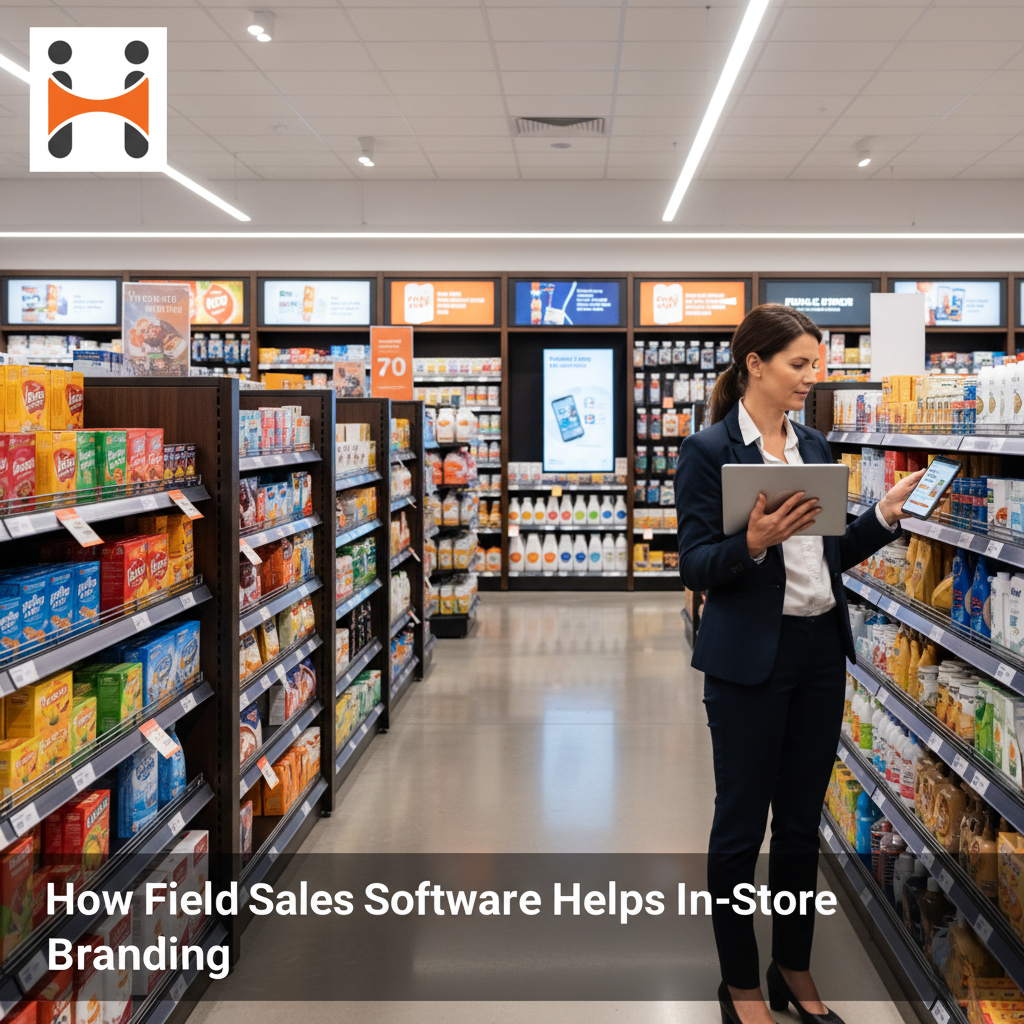
  • How Field Sales Software Boosts In-Store Branding: 6 Proven Ways to Win Shoppers

    How Field Sales Software Boosts In-Store Branding: 6 Proven Ways to Win Shoppers

    The importance of In-Store Branding

    Most people think branding happens through ads, social media, or digital campaigns. The truth? 70% of buying decisions happen inside the store. That’s where in-store branding- product placement, shelf visibility, displays, and sales rep engagement- decides who wins the customer.

    At Happisales, we’ve seen how poor execution ruins campaigns: shelves go empty, displays are skipped, and managers lack real-time visibility. This is where field sales software changes the game. In this blog, we explain how tools like Happisales help brands achieve consistent, high-impact in-store branding.

    What Is In-Store Branding?

    In-storebranding is how a company shows its products and brand inside retail stores. Done well, it creates a smooth experience that guides customers to buy.

    Key parts of in-store branding include:

    Shelf placement and merchandising– Products should be at eye level and follow planograms.
    Promotional displays– Banners, stands, and digital screens highlight offers.
    Packaging and visibility– Clean and stocked shelves build trust.
    Sales rep engagement– Field staff influence buying through product knowledge and service.

    The hard part is making this happen in every store and knowing when things are missed. Using retail execution software and a system to track performance of sales persons ensures consistency and accountability.

    Challenges Brands Face in In-Store Branding

    From our work with enterprises, these are the main issues we see

    Lack of visibility– Managers at HQ cannot see in real time if branding is done right.
    Inconsistent execution– Sales reps may skip tasks or follow branding rules in different ways.
    Delayed reporting– By the time photos or reports come in, promotions may already be over.
    Accountability gaps– Without a system to track performance of sales persons, it is hard to know if tasks are completed.
    Missed opportunities– Weak in-store branding leads to lost sales and fewer repeat buyers.

    Field sale software and store visit tracking close these gaps by turning guesswork into clear data.

    6 Ways Field Sales Software Supports In-Store Branding

      1. Real-time visibility with photo proof
      With Happisales, field staff use a mobile sales app to capture photos of shelves, branding materials, and product placement inside the store. These upload instantly so managers can see what is happening in every outlet.

      Example. An FMCG client found that 40 percent of outlets were missing displays. Real-time alerts helped them fix it in hours instead of weeks.

      2. Task assignment and compliance tracking
      Managers create checklists for in-store branding. Tasks may include placing new standees, checking stock on shelves, or confirming signage matches the campaign. Reps mark tasks as done and attach photos. Compliance reports show which stores followed the plan. Using retail execution software makes it easier to track these tasks consistently.

      3. GPS and geofencing for store visits
      Some sales teams skip stores under pressure. Store visit tracking in Happisales ensures every assigned outlet is visited. Automated check-ins confirm presence and flag missed visits.

      4. Planogram compliance and shelf audits
      Planograms show how products should be placed in stores. Field sales software helps check if these layouts are followed. Reps upload photos and in some systems image recognition can spot mistakes.
      Example. A retail electronics brand using Happisales improved shelf compliance by 60 percent in three months by auditing digitally instead of on paper.

      5. Instant reporting and data insights
      Field sales software turns store data into useful reports. Managers no longer wait weeks for updates. Dashboards show compliance levels, which stores need more materials, and which reps follow branding tasks regularly. This helps companies act quickly instead of fixing problems after the fact.

      6. Employee productivity and accountability
      Field staff perform better when their work is tracked. With Happisales, managers can set KPIs tied to branding. Features like leaderboards and recognition messages encourage teams. A system to track performance of sales persons ensures fairness and motivation.

      Why In-Store Branding Matters More Than Ever?

      • Most buying decisions happen inside the store
      • Good branding in stores leads to more impulse purchases
      • Strong visibility in stores makes online ads more effective
      • Brands with consistent execution usually see 10 to 20 percent more sales
      • Without field tools like a mobile sales app or retail execution software, much of this potential is lost

      Personal Experience When Branding Failed vs When It Worked

      • When branding failed
        A beverage client launched a nationwide campaign but used only manual reporting. Many outlets never set up the displays. By the time the brand found out, the campaign had ended. Sales dropped and the brand lost visibility.

      • When branding worked
        An FMCG client used Happisales to track branding tasks in real time. Store photos were uploaded instantly. Compliance reached 95 percent. Sales rose by 15 percent during the campaign.

      • The difference
        Field sales software with store visit tracking ensured accountability and speed.

      Benefits of Using Field Sales Software for In-Store Branding

      • Consistency across stores
        Branding looks the same everywhere.
      • Faster issue resolution
        Problems are spotted and fixed quickly.
      • Higher sales impact
        Better visibility leads to more purchases.
      • Improved rep efficiency
        Clear tasks save time and effort.
      • Data-driven decisions
        Managers see which stores and reps perform best.

      How Happisales Makes a Difference?

      Happisales helps sales teams manage field work more easily. The software supports in-store branding with real-time photo uploads and compliance checks. GPS tracking confirms store visits. Automated reminders keep reps on track. Managers can use dashboards to monitor performance. Reps can log tasks even without internet.

      Clients in FMCG, retail, and pharma say these features give them control over in-store branding that they did not have before.

      Future of In-Store Branding with Technology

      In-store branding will rely more on AI and image recognition to check shelves automatically. Predictive insights show which stores need attention. AR and VR can create immersive shopper experiences. Companies using retail execution software and mobile sales apps now will be ready for these innovations.

      What’s Next?

      In-store branding is about consistent experiences where people make buying decisions. Without the right tools, it fails. Happisales provides real-time visibility, data insights, and keeps reps on track. This improves branding and boosts sales.

      Contact us for a demo to see how store visit tracking, mobile sales apps, and retail execution software bring accountability and performance to your retail execution.

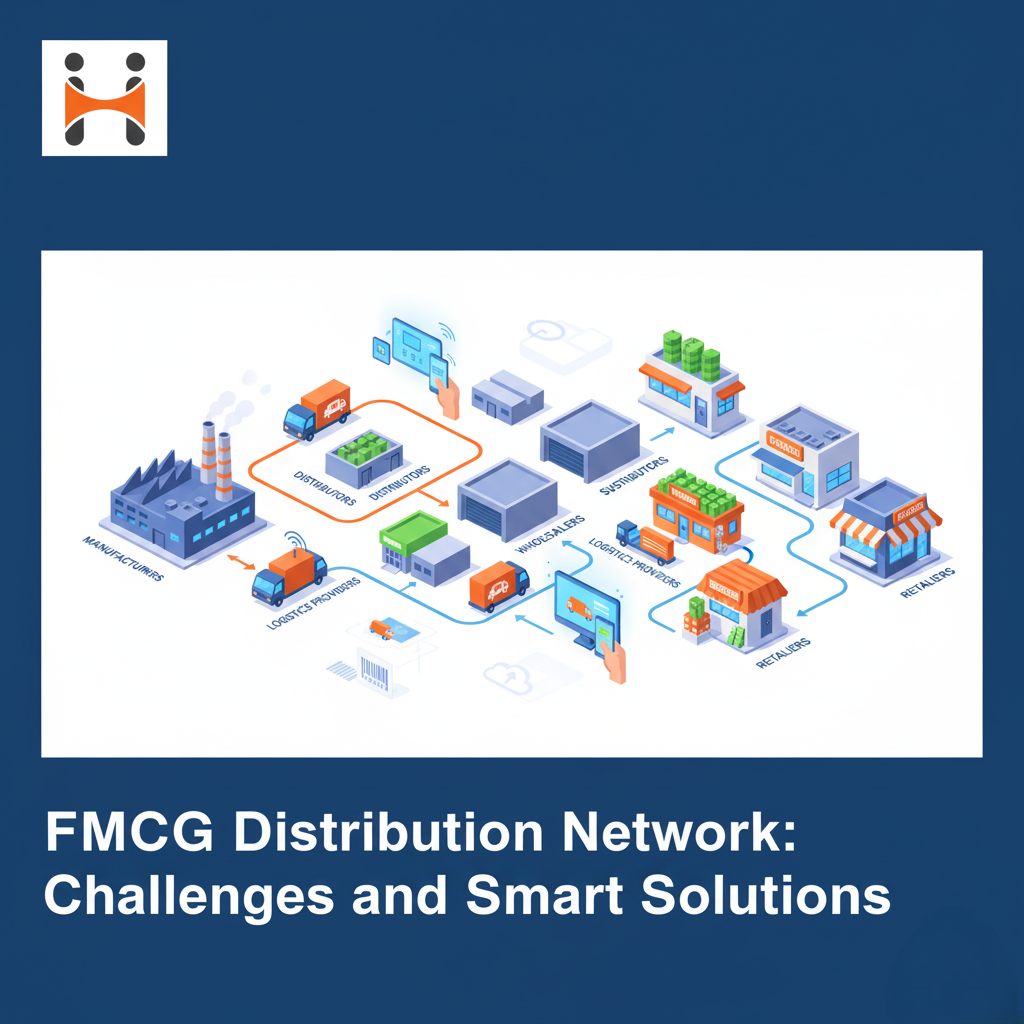
    1. FMCG Distribution Network: Challenges and Smart Solutions

      FMCG Distribution Network: Challenges and Smart Solutions

      What is an FMCG Distribution Network?

      • FMCG stands for fast-moving consumer goods, like everyday items that sell quickly.
      • A distribution network gets these goods from factories to customers.
      • Key players include manufacturers, carrying and forwarding agents, distributors, wholesalers, retailers, and logistics providers.
      • It covers more than just shipping. Think relationships between supply chain folks, sharing info, moving stock from factory to shelves, and keeping products in stores.
      • Modern stores and traditional ones both need steady supply.
      • If any part breaks down, you get stockouts, too much inventory sitting around, promotions that flop, and customers going elsewhere.
      • A good network drives business growth.

      Why Visibility in the FMCG Distribution Network Matters?

      Visibility in the distribution network is essential. Real-time data from distributors and retailers helps brands manage stock, improve cash flow, and measure promotion effectiveness.

      Common Operational Challenges in an FMCG Distribution Network

      • Strong FMCG brands hit problems when distribution has gaps.
      • Fragmented data sources.
      • ERPs, distributor reports, retailer POS data, field updates don’t connect well. This leaves blind spots.
      • Delayed reporting cycles.
      • Weekly or monthly reports move too slow for fast categories. Stockouts hit quick.
      • Inconsistent formats.
      • Distributors use different templates. Reconciliation gets slow with errors.
      • No field verification.
      • Paper marks don’t prove reps visited. This sparks disputes, adds costs, cuts trust.
      • Connectivity gaps in rural areas.
      • Small towns often lack good internet. Data capture gets spotty without offline tools.
      • Route inefficiency and missed visits.
      • Bad planning wastes time on travel. Fewer outlet visits, lower coverage.
      • Stockouts and overstocks.
      • Supply misses demand. Brands lose sales or waste expired stock.
      • Collections friction.
      • Distributor receivables mismatch retail collections. This creates cash flow issues.
      • These problems weaken the network. Fix them or efficiency, growth, customer satisfaction drop.

      What Are Some Ways You Can Approach an FMCG Distributor?

      Distributors are key to an FMCG distribution network. Winning them over takes planning. A rushed pitch rarely works. Distributors look for clarity, trust, and value.

      Research and segmentation
      Identify distributors by geography, product category, financial strength, and retailer reach. Focus on those already serving your target retail formats like kirana stores, wholesalers, or modern trade.

      Value-first outreach
      Explain what is in it for them. They highlight faster payments, easy return policies, marketing support, and visibility through digital reporting.

      Start with a test rollout
      Offer a small trial in a select territory instead of a large commitment. Provide incentives like marketing support or simpler terms in exchange for cooperation on data sharing.

      Build trust with transparency
      Give distributors tools such as shared dashboards to track sales and stock. It shows how this reduces disputes and improves route efficiency.

      Set clear operational commitments
      Define KPIs for lead times, returns handling, stock rotation, and reporting. Simple SOPs prevent misunderstandings.

      Distributors are more likely to agree when they see reduced risks, better margins, and clear support for execution.

      How Should One Find and Approach a Distributor for a New FMCG Product from a Small Company?

      For small companies, selecting the right distributor is critical.

      Map the market
      Spot which distributors dominate your category and region using field research and secondary studies. Local trade associations and wholesale markets help.

      Offer a low-risk entry
      Use small minimum order quantities and trial returns to reduce risk. Provide marketing or sampling support.

      Leverage local champions
      Referrals from respected retailers or distributors help build credibility. Social proof eases trust-building.

      Sell the economics clearly
      Show expected margins, projected sell-through, and a simple 30-60-90 day plan.

      Onboard with simple tech
      Encourage distributors to use mobile tools or photo-based bill uploads to share daily or weekly sales updates. Dashboards save reconciliation time.

      Agree on KPIs and incentives
      Tie credit terms or promotional co-funds to performance metrics like reporting, sell-through, and payments.

      Key Challenges in Managing FMCG Distributors

      Getting distributors is easy. Managing them is hard in competitive markets. Here are the main issues.

      • Trust gaps- Invoices don’t match retail sales. Reconciliation takes time.
      • Inconsistent focus- Fast sellers prioritized. Slow ones neglected.
      • Payment delays- Hurt cash flow.
      • Coverage misses- Remote outlets ignored.
      • Promotion leaks-Discounts not applied right. Wastes money.
      • Scaling woes- More products mean errors in manual processes.
      • Tech and standards fix these.

      How to Optimize an FMCG Distribution Network?

      Managing an FMCG distribution network is easier with good processes. Brands can cut errors, boost coverage, increase sales.

      Unify Data

      Link ERP shipments to distributor sales. Use one dashboard to match invoices with actual sales.

      Track Daily Sales

      Get distributors or reps to report retailer sales daily or weekly. Quick data speeds up decisions.

      Verify Field Work

      Use GPS to track visits, merchandising, collections. Timestamps cut disputes, boost accountability.

      Use Offline Mobile Tools

      Give field teams apps that sync when online. Key for rural areas.

      Standardize Reports

      Provide distributors with uniform templates. Simplifies reconciliation.

      Plan Routes

      Auto-plan routes based on key accounts, inventory needs. Send visit reminders to reps.

      Set Real-Time Alerts

      Notify for stockouts, late payments, sales drops.

      Incentivize with Dashboards

      Share live dashboards with distributors. Tie incentives to verified visits, sales, collections.

      Forecast Demand

      Mix shipment data, recent sales, field feedback for accurate predictions.

      Pilot First

      Test systems in one area. Check results, tweak, then expand.

      Clean data and simple tech cut stockouts, reduce waste, drive growth.

      Plan to Attract FMCG Distributors

      New products need good distributors to hit shelves. A clear plan helps.

      Phase 1 Discovery (0-30 days)

      Map the market. Pick distributors by region, category, retailer network. Set pricing, margins, returns, promotions. Define KPIs like sell-through goals. Finds partners fast.

      Phase 2 Pilot (30-90 days)

      Test with 2-3 distributors in one area. Track sales daily. Offer marketing support. Use simple reporting. Check deliveries, stock rotation, payments. Builds trust with results.

      Phase 3 Scale (90-180 days)

      Expand to more areas with tested processes. Give incentives like better margins or flexible credit. Automate ERP, distributor, POS data matching. Grows coverage, cuts disputes.

      Phase 4 Optimize (6-12 months)

      Standardize reports. Integrate distributor data. Automate GPS visits, route planning, daily reports. Predict demand, prioritize outlets. Boosts growth, reduces stockouts, strengthens ties.

      A clear plan makes onboarding distributors easier and faster.

      Why Field Force Automation Matters?

      Manual FMCG distribution is slow and error-prone. Automation makes teams efficient and processes smooth.

      Key Features

      Track sales and stock live.
      Use GPS to verify store visits.
      Capture data offline, sync automatically.
      Plan routes, send reminders for better coverage.
      Merge shipment and sales data into one dashboard.

      Business Benefits

      Prevent stockouts, restock faster.
      Reach more retailers.
      Cut manual errors and reconciliation.
      Boost sales with verified reports.

      Real Results

      A 60-day pilot showed GPS tracking boosted store coverage by 32 percent, cut stockout alerts by 22 percent. Simple training and clear processes made adoption easy.
      Automation improves FMCG distribution, sales, and growth.

      What’s Next?

      Optimizing your FMCG distribution network requires a combination of disciplined processes, transparent reporting, and the right technology. By unifying data, verifying field execution, standardizing distributor reporting, and leveraging daily insights, brands can reduce stockouts, improve cash flow, and strengthen distributor relationships.

      If you want, we can help design a 60-day pilot plan that pairs SOPs with field force automation-GPS-verified visits, daily sell-through capture, and a reconciled dashboard-to prove value quickly. For teams wanting to track employee locations and get daily sales visibility- book a demo to explore how happisales can optimize your operations and see how a pilot could work for your FMCG distribution network.

    2. What Is the Difference Between Primary and Secondary Sales?

      What Is the Difference Between Primary and Secondary Sales?

      If you’re running a sales crew or handling a distribution setup, you gotta know what’s up with primary and secondary sales-it’s like the secret sauce for winning. Primary sales? That’s when stuff goes from the factory to the distributors, like the first handoff. Secondary sales are how those products get from distributors to the shops selling to folks like us. Keep an eye on both, and you’re gonna nail your stock game, plan like a pro, and boost those sales. Throw in some field force automation apps, and your team can track what’s poppin’ live-see who’s hustling hard and turn all that sales info into straight-up gold.

      What are Primary Sales?

      • Definition: Primary sales are transactions where the manufacturer or principal sells products to an intermediary-typically a distributor, wholesaler, or stockist.
      • “X” involved? Manufacturer → Distributor.
      • Purpose: Move bulk inventory into the distribution channel; generate revenue for the manufacturer; fulfill replenishment and stocking agreements.
      • Key metrics: Purchase orders raised, invoice value, delivery quantities, dealer/stockist receivables, onboarding of new distributors.

      Why it matters: Primary sales tell you how much stock you’ve supplied into the market pipeline. They are critical for production planning, manufacturing schedules, and cash flow forecasting.

      What are Secondary Sales?

      • Definition: Secondary sales (often called “sell-through”) are transactions where distributors or wholesalers sell goods to retailers, modern trade, or directly to trade customers.
      • “X” involved? Distributor → Retailer/Dealer (or B2B customer).
      • Purpose: Show real market demand, track product movement on shelves, confirm demand, and prompt restocking.
      • Key metrics: Retailer sales invoices, SKU sell-through rates, retail stock-outs, collections, POS receipts.

      Why it matters: Secondary sales are the true signal of consumer demand. You can’t properly forecast where to produce or how to route stock without accurate secondary sales data.

      What are Tertiary Sales?

      • Definition: Tertiary sales refer to the final step—retailer or point of sale selling to the end consumer (retailer → consumer).
      • “X” involved? Retailer → End customer.
      • Purpose: Get people to buy the brand, grab more market share, and prove the product fits the market.
      • Key metrics: Store sales, customer receipts, retail sell-out numbers, how fast SKUs sell.

      Why it matters: For lots of manufacturers, data from this level shows if promotions work, how price changes affect sales, and what customers really do.

      Primary vs Secondary vs Tertiary Sales – Quick Comparison

      AspectPrimary SalesSecondary Sales
      Tertiary Sales
      Flow
      Manufacturer → Distributor

      Distributor → Retailer
      Retailer → Consumer
      Main metricInvoice to distributorSell-through to retailerPOS/consumer purchases
      Visibility challengeEasy to track (manufacturer invoices)

      Harder — depends on distributor reporting
      Hardest — requires retailer/POS integration

      Key use

      Production & supply planning
      Demand sensing & replenishment
      Marketing effectiveness & consumer insights
      Primary vs Secondary vs Tertiary Sales

      Short answer for a decision-maker: Primary = supply, Secondary = distribution execution, Tertiary = consumer demand. You need all three for a robust sales distribution strategy.

      Why the Difference Matters for Your Distribution Strategy?

      • Forecasting accuracy: Forecasts based only on primary sales assume sell-through equals supply. That’s optimistic at best. Secondary data corrects that assumption.
      • Stock optimization: If you only track primary sales, you risk overstock at distributors and stockouts at retail. Secondary and tertiary views enable balanced inventory.
      • Promotion ROI: Promotions measured at retail (secondary/tertiary) validate whether discounts or merchandising actually produced sales.
      • Collections & working capital: Secondary sales visibility helps finance teams reconcile distributor receivables versus real retail collections.
      • Execution & accountability: Knowing where and when field teams visit stores (and what they do there) is essential to close the loop between plan and reality.

      Common Challenges in Tracking Primary & Secondary Sales

      • Data silos: Primary invoices are typically in an ERP; secondary sales sit with distributors or at POS systems. Consolidation is rare without integration.
      • Delay in reporting: Distributors often report weekly or monthly – too slow for daily execution fixes.
      • Inconsistent formats: Different distributors report in different templates, causing manual reconciliation errors.
      • No field-level visibility: Managers don’t know if reps actually visited stores, executed promotions, or submitted accurate orders.
      • Offline markets: Many retail outlets – especially in rural or low-connectivity zones-operate offline, making real-time reporting tricky.

      From our experience working with field sales teams, these issues turn a straightforward distribution model into a guessing game. One retailer using a field force automation approach saw measurable lift in store coverage after standardizing reporting flows; that kind of operational clarity starts with tracking.

      How to Track Primary and Secondary Sales?

      To manage sales distribution, companies need good systems and solid fieldwork. Here’s how to do it.

      1. Link ERP to distributor reports. Connect primary invoice data from your ERP to distributor sales reports. Auto-reconcile when you can.
      2. Get secondary data straight from the source. Have distributors use an app or upload POS reports. Daily sales apps give you real data instead of weekly guesses.
      3. Use GPS to track field activity. GPS-verified visits confirm sales calls happened. If a rep says they visited but GPS doesn’t match, follow up.
      4. Support offline data collection. Field tools should work offline and sync when online. This matters for rural areas.
      5. Use a single dashboard. Put primary, secondary, and tertiary metrics together to see gaps and opportunities.
      6. Improve forecasts. Use past primary and secondary data plus field team input for better short-term predictions.

      Where Technology Makes the Difference (and Why Field Force Automation Matters)?

      Manual aggregation of invoices and retail statements is slow and error-prone. The field is messy: missed visits, delayed collections, and inconsistent order entry. That’s why modern distribution leaders use field force automation platforms to:

      • Capture sales, orders, and collections at the point of activity (mobile-first experience for field reps).
      • Verify activity with GPS and timestamps, eliminating disputes over whether a visit happened.
      • Provide real-time KPI dashboards that show store coverage, sell-through, outstanding collections, and target achievement.
      • Sync offline work when connectivity returns, ensuring no visits are lost.
      • Enable route optimization & reminders, improving the number of productive visits per day.
      • Feed forecasting models with timely secondary sales and qualitative field notes.

      When teams use such systems, primary invoices and secondary sell-through data become living inputs to forecasting and strategy rather than stale spreadsheets.

      How Happisales (Company Perspective) Solves These Problems?

      At Happisales we’ve seen the transformation that happens when companies combine data discipline with field execution. Here is how our platform supports a full distribution view:

      • Primary sales visibility: Auto-import or reconcile primary invoices from your ERP so you always know how much stock you’ve supplied to each distributor.
      • Secondary sales capture: Field reps and distributor agents log retailer orders and sell-through at POS; this data feeds dashboards every day.
      • Tertiary indicators: Where retailers are integrated, POS feeds or photographed invoices enrich tertiary insights.
      • Location tracking & verification: GPS-verified visits and geofencing show actual store coverage. Managers can see “who visited which store and when.”
      • Daily sales reporting & KPIs: Customizable dashboards let you track visits-per-day, sales-per-rep, collection efficiency, and stock-outs.
      • Offline-first mobile app: Field staff record activities without internet; everything syncs automatically next time they’re online.
      • AI-powered suggestions: Our ML features spot underperforming routes and suggest priority visits based on historic sell-through and current stock levels.

      From our customer interactions, bringing these pieces together tends to increase retailer coverage and reduce stock-outs. One client reported a notable improvement in store visits after enforcing GPS-verified visits and route planning – small operational changes with visible business outcomes.

      Why Secondary Data Improves Predictions (Sales Forecasting Techniques)?

      Forecasting is only as good as the data you feed it. Here are ways to combine primary and secondary signals for better forecasts:

      • Quantitative methods. Use time-series analysis, moving averages, and regression with shipment and sell-through data.
      • Qualitative methods. Get input from field reps, distributors, and market trends. These help during launches or promotions.
      • Hybrid forecasting. Mix historical sell-through data with real-time field input and AI for short-term restocking predictions.

      When secondary data is current (daily/weekly), forecasts become actionable-reducing both overstock and lost sales.

      What’s Next?

      The Better Question Is Not Which Layer Wins, But How You Link Them. Primary sales tell you what you shipped; secondary sales tell you what actually moved; tertiary sales tell you whether the consumer bought it. None of these layers are optional if you want a reliable sales distribution strategy.

      If your goals include tracking employee location, reducing missed visits, improving sell-through, or tightening collections, you need a system that captures field activity reliably and merges it with primary and tertiary signals. That’s what field force automation is for: a practical, tactical bridge between plan and reality.

      Ready to stop guessing and start acting? Try a free demo of Happisales (14 days, no credit card) and see how GPS-verified visits, daily sales reporting, and reconciled primary/secondary dashboards can turn your distribution chain from opaque to orchestrated.

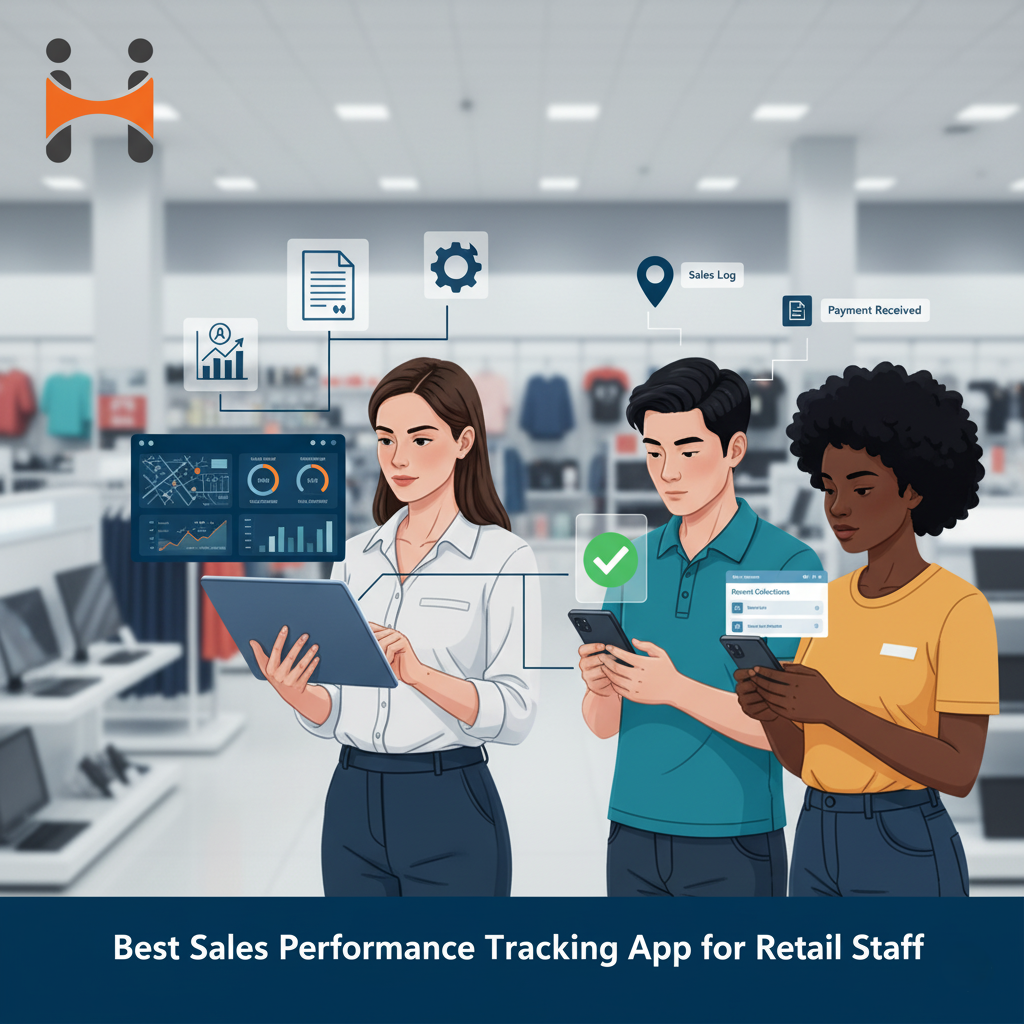
    3. Best Sales Performance Tracking App for Retail Staff

      Best Sales Performance Tracking App for Retail Staff

      Tracking retail field teams is often difficult. Missed store visits, late sales updates, and delayed collections make it hard for managers to take timely decisions. This slows down performance and creates gaps in execution.

      Happisales makes the process simple. Our field force automation software gives managers real-time visibility while retail staff can log visits, sales, and collections without delay. If you are looking for the best sales performance tracking app for retail staff, Happisales is a reliable field sales app for retail teams that helps them stay productive, accountable, and efficient.

      Why Retail Teams Need the Best Sales Performance Tracking App for Retail Staff?

      Retail field staff keep your business running. They make sure products are on shelves, promotions are carried out, and customer relationships stay strong. But without the right tools, managers are left with manual reports, delayed updates, and guesswork.

      The common problems are:

      • Missed store visits or routes not planned well
      • Not enough visibility into how each person or the team is doing
      • Sales, collections and stock updates come in late
      • Hard to track KPIs for retail staff properly
      • Staff lose motivation when there is no recognition or incentives

      The best sales performance tracking app for retail staff helps solve these issues. Managers get real-time data on visits, sales orders, and completed tasks. This improves accountability, speeds up decisions, and keeps teams productive.

      From our experience, even one missed visit can cause lost sales or empty shelves. With Happisales, managers know where each rep is, which stores are covered, and whether daily targets are being met.

      Field Sales App Features for Retail Teams

      A good app helps retail teams work smarter. Here are the main features.

      1. Real-Time Sales Tracking

      Field staff can log customer visits and sales instantly with Happisales. Managers see which stores are visited and where to focus.

      Benefit: No missed details, and managers can act fast.

      1. Order and Collection Management

      Staff can place orders, check catalogs, and record payments digitally. Managers track revenue and pending collections.

      Benefit: Less paperwork, accurate orders, and payments.

      1. Field Force Automation

      Happisales plans visits, sends reminders, and creates performance reports. This lets the team focus on selling, not admin tasks.

      Benefit: More work done with fewer errors.

      1. GPS and Location Tracking

      Happisales tracks staff locations in real time. Managers see where everyone is and can plan better routes.

      Benefit: More accountability and less wasted time.

      1. Offline Mode

      Staff can log visits, orders, and collections without internet. Data syncs when they’re back online.

      Benefit: Work continues without delays.

      1. Route Planning and Task Reminders

      Happisales optimizes routes based on store locations and schedules. Notifications remind staff of appointments.

      Benefit: Saves time and boosts store coverage.

      1. Daily Sales Reporting

      Managers get daily reports and dashboards to track KPIs like sales, orders, and visits. Reports are easy to use and act on.

      Benefit: Clear view of team performance and store coverage.

      1. Expense Tracking

      Staff submit travel or field expenses through the app. Managers review and approve them digitally.

      Benefit: Less paperwork and better expense accountability.

      1. Recognition and Incentives

      Managers can recognize achievements, send notifications, and set performance incentives. Leaderboards motivate staff.

      Benefit: Happier, more motivated employees.

      1. AI-Powered Insights

      Happisales uses AI to highlight key customers, suggest visit orders, and show performance trends.

      Benefit: Smarter decisions and better sales results.

      How Happisales Tracks KPIs for Retail Staff?

      Tracking KPIs for retail staff helps manage field teams. With Happisales, managers can track:

      • Number of store visits per day
      • Sales targets achieved versus assigned
      • Collection efficiency
      • Stock availability and order accuracy
      • Task completion rate

      Real-time KPIs let managers spot weak areas and offer support or coaching. Daily retail sales reporting app can boost team productivity by up to 25 percent. Dashboards are simple, visual, and easy to act on.

      Use Cases of Happisales for Retail Teams?

      Happisales helps retail teams work better. Here are its main use cases.

      Daily Sales Execution
      Field reps log visits and orders in the app. Managers get instant updates to ensure all stores are covered and reports are accurate.

      Collections and Payments
      Retail staff record payments on-site. Finance teams can reconcile collections right away.

      Route Optimization
      Reps use optimized routes to save time and visit more stores without overworking.

      Employee Motivation
      Leaderboards and recognition features keep retail staff motivated and focused on performance.

      Performance Insights
      Managers get AI suggestions to identify high-value customers and improve sales strategies for weaker areas.

      Why Happisales is the Best Sales Performance Tracking App for Retail Staff?

      Picking the right sales performance tracking app helps the retail teams to run smoothly. Happisales is a top choice because:

      • Field force automation for retail includes real-time tracking, AI insights, and offline mode.
      • It keeps retail staff accountable, transparent, and productive.
      • Daily retail sales reporting app features track KPI for retail staff and show clear dashboards.
      • The mobile app is easy to use, so staff can log tasks quickly without oversight.
      • The retailers says that  Happisales improves team management. One saw 30 percent more store visits in a month.

      Benefits of a Sales Performance Tracking App for Retail Staff

      • Use real-time tracking so managers can see what the team is doing in the field.
      • Automate routine tasks to give your team more time to focus on selling instead of reporting.
      • Look at analytics through dashboards and AI suggestions to find patterns and spots that need attention.
      • Reward performance by recognizing achievements and using leaderboards and incentives.

      Doing these things helps retail teams work more efficiently, sell more, and stay motivated.

      Top Features of a Field Sales App for Retail Teams

      The best sales performance tracking app for retail staff should include:

      1. Field sales app for retail teams
      2. Field force automation for retail
      3. Daily retail sales reporting app
      4. KPI tracking for retail staff
      5. GPS tracking with route optimization
      6. Offline access for remote areas
      7. Order and collection management
      8. Expense tracking and approvals
      9. Recognition and incentive tools
      10. AI-powered insights

      Happisales puts all these features in one easy-to-use app built for retail teams.

      What’s Next? 

      Start using Happisales with your team and see how it works in real situations. Make sure every retail staff logs visits, sales, and collections daily. The dashboards in the daily retail sales reporting app help you track KPI for retail staff and spot gaps quickly.

      Follow the routes suggested by the app and set reminders so your field sales app for retail teams keeps everyone on track. Use recognition and incentives to motivate the team and keep them performing well.

      With field force automation for retail, routine tasks like planning visits and sending updates happen automatically, freeing your team to focus on selling. Keep checking reports to fix issues and make sure store coverage is complete.

      Try the free trial and experience the best sales performance tracking app for retail staff in action. You’ll see how it improves productivity, sales, and overall team accountability.

    4. What Is Field Force Management Software? Features & Benefits

      What Is Field Force Management Software? Features & Benefits

      Managing field teams is not easy. Sales reps, service staff, and distributors spend most of their time in the field. Without proper tools, tracking visits, tasks, and performance is guesswork.

      Field force management software helps teams stay organized and productive. It tracks employees, manages orders and collections, and gives managers visibility into daily operations. Happisales field force software combines scheduling, tracking, and reporting in one platform.

      Why Businesses Use Field Force Management Software?

      Field teams face challenges. Missed appointments cost revenue. Manual reporting slows decisions. Poor route planning wastes time. Tracking employee performance is hard without proper tools.

      Field Force Tracking and Visit Verification

      Happisales provides field force tracking using GPS and geofencing to verify visits and ensure accountability.

      Field Force Scheduling Software for Efficient Task Management

      Use field force scheduling software to assign tasks, optimize routes, and plan daily work efficiently.

      Order and Collection Management Made Easy

      Order & collection management lets field reps record sales and payments instantly. Managers can approve and review reports in real time.

      Offline Field Force App and Real-Time Dashboards

      The offline field force app allows teams to log data without internet. Real-time dashboards give managers visibility into daily operations and team performance.

      Key Features of Happisales Field Force Software

      GPS Tracking for Employees and Route Optimization

      Track employees with GPS tracking for employees and plan the best paths using route optimization. Reduce travel time and increase coverage.

      Task and Visit Logging for Field Teams

      Log all customer interactions with task and visit logging. Keep accurate records of orders, collections, and service calls.

      Motivation Tools for Employees and Employee Performance Tracking

      Boost performance with motivation tools for employees and employee performance tracking. Managers get insights through ML-based insights to improve productivity.

      Benefits of Field Force Management Software

      • Enhanced productivity by reducing admin work
      • Increased transparency for managers
      • Operational efficiency through optimized routes and automated processes
      • Faster decision-making using dashboards and insights
      • Improved customer engagement with timely visits
      • Employee motivation via recognition and incentives
      • Scalable field operations as teams grow

      Industries That Benefit From Field Force Software

      • FMCG sales tracking and distribution management software
      • Pharma sales management and retail merchandising software
      • Financial services collections
      • Service and maintenance tracking

      How to Implement Field Force Management Software Successfully

      Start with a pilot program for field software. Train staff and managers, gather feedback, and adjust workflows. Gradually scale features like route optimization, expense tracking, and field force tracking.

      Important KPIs for Field Teams

      • Customer visit tracking
      • On-time visit percentage
      • Conversion rate per visit
      • Average travel time
      • Collections vs target
      • Active app usage

      Return on Investment From Field Force Software

      Companies see results in stages. First three months improve reporting and reduce admin work. Three to nine months increase visits and speed up orders. Nine to eighteen months optimize coverage and coaching. Happisales field force software helps improve ROI faster.

      Choosing the Right Field Force Management Software

      • Offline support and data syncing
      • GPS tracking, geofencing, and visit verification
      • Field force scheduling software for task management
      • CRM or ERP integration
      • Real-time dashboards and reports
      • Field staff training and onboarding
      • Scalability as teams grow

      Why Choose Happisales Field Force Software?

      Happisales platform is simple and practical. Log visits, orders, collections, and expenses easily. Works offline. Provides ML-based insights, notifications and reminders, and motivation tools for employees. Improves operational efficiency and employee performance tracking.

      Try a Happisales demo or start a Happisales trial Call- +91 9944585452 .

      What’s Next?

      Field force management software helps managers track operations and improves team efficiency. With Happisales field force software, scheduling, tracking, and reporting are simple. Teams stay accountable, managers stay informed, and customer service improves.


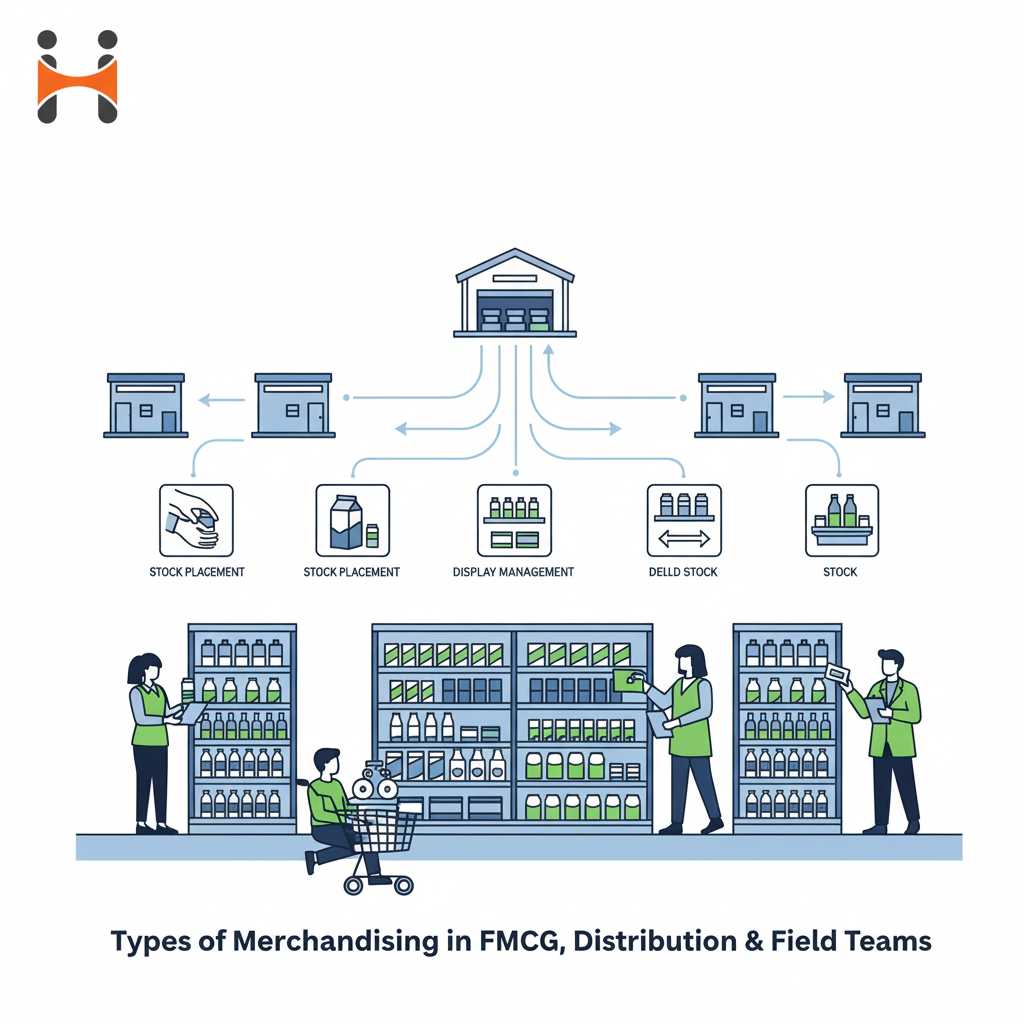
    5. Types of Merchandising in FMCG, Distribution & Field Teams

      Types of Merchandising in FMCG, Distribution & Field Teams

      Merchandising plays a key role in FMCG, pharma, retail, and distribution. How products are displayed, managed, and sold affects sales, customer satisfaction, and operations. Businesses that want to track employee locations and improve field work need to understand the types of merchandising and use the right tools.

      At Happisales, we help distributors, retailers, and field teams handle merchandising smoothly while keeping inventory accurate and operations transparent. In this blog, we cover the main types of merchandising, common challenges, and how field force automation works in real situations.

      How Merchandising Supports FMCG and Distribution Operations?

      Merchandising covers all the work that helps sell products in retail and distribution. It is more than just placing items on shelves. It ensures products are available, visible, and attractive while giving your operations team useful data.

      Key activities in merchandising include:

      Product Placement

      Making sure products are easy to see and buy

      Inventory Management

      Keeping the right stock levels to avoid running out or having too much

      Promotional Execution

      Carrying out in-store promotions, discounts, and offers

      Retailer Engagement

      Building strong relationships with retailers to keep products available and follow compliance

      For businesses with field teams and distributors, merchandising includes field merchandising. This is the work done in stores to keep products in stock and make sure promotions are done correctly

      Main Types of Merchandising

      Merchandising can be divided into different types, each with its own goals, challenges, and benefits

      1. Field Merchandising

      Field merchandising is the work done by sales reps, merchandisers, and distributors in stores. We ensure that products are available, displayed properly, and sales opportunities are captured

      Key parts of field merchandising include:

      Shelf Audits
      Checking that products are placed correctly, fully stocked, and look appealing

      Order Capture
      Recording sales orders directly at the retailer

      Promotional Execution
      Carrying out in-store promotions and discounts

      Retailer Training
      Teaching store staff about product features, benefits, and promotions

      Personal Experience
      In our work with FMCG distributors, field merchandising proved very effective. Reps regularly conduct shelf audits and engage with retailers. This helps spot stock gaps and fix them before they affect sales. One client saw a 40 percent drop in order rejections within three months after setting up structured field merchandising processes

      Field merchandising is operational and links directly to inventory visibility, order management, and field force accountability. Software like Happisales makes this process easier.

      2. Product Merchandising

       Product merchandising focuses on organizing, pricing, and presenting items to boost appeal and sales. It overlaps with field merchandising but centers on the product rather than the execution.

      Key parts of product merchandising include:

      Product Placement
      Making sure high-demand items are easy to find

      Stock Rotation
      Tracking expiration dates and batches to reduce waste

      Price Accuracy
      Keeping prices correct across all locations

      POS Material Implementation
      Using banners, tags, and displays to promote products

      With tools like Happisales, sales reps can access product details and pricing on their mobile devices. This reduces errors, ensures compliance, and allows accurate order capture.

      3.  Trade or Promotional Merchandising

      Trade merchandising is about running promotions, discounts, and campaigns at the retailer level. It aims to influence buyers, increase sales, and make products more visible.

      Key parts of trade merchandising include:

      • Discounts and promotional offers
      • In-store displays and point-of-sale materials
      • Incentive programs for retailers
      • Campaign tracking and reporting

      The main challenges are inconsistent execution and difficulty tracking compliance across multiple stores. Happisales lets field teams record promotions in real time, so managers can track execution and results easily.

      4. Visual Merchandising

      Visual merchandising focuses on how products look and how appealing they are. While common in retail stores, it is also important in FMCG and distribution.

      Key parts of visual merchandising include:

      • Store layout optimization
      • Attractive displays and shelving
      • Placing high-margin or promotional products strategically
      • Keeping branding and signage consistent

      Visual merchandising depends on operational support from field teams. Even the best displays fail if products are not available or stock is outdated. Happisales helps by providing real-time stock visibility, accurate order placement, and timely replenishment.

      5. Digital Merchandising

      Digital merchandising is growing in importance with the rise of e-commerce and online retail.

      Key parts of digital merchandising include:

      • Accurate product listings and descriptions
      • Online promotions and campaigns
      • Managing customer reviews
      • Integration with digital ordering platforms for retailers

      Field teams help by making sure offline stock matches online listings. Software like Happisales keeps data synced between physical stores and digital channels.

      Top Issues in FMCG and Distribution Merchandising

      Even with clear merchandising strategies, businesses face several problems:

      1. Stockouts and Overstocking
        Without accurate inventory data, stores may run out of stock or have too much
      2. Inconsistent Execution
        Field reps may follow strategies differently across locations, causing uneven brand experience
      3. Manual Reporting
        Tracking merchandising activities by hand takes time and often has errors
      4. Employee Monitoring
        Supervising field teams and keeping them accountable is hard without real-time tracking

      These issues can lead to lost sales, unhappy retailers, and operational inefficiencies

      How Field Force Automation Supports FMCG Merchandising?

      To solve merchandising challenges, many businesses use field force automation platforms like Happisales. These tools combine merchandising with inventory management, order capture, route planning, and employee tracking.

      How Happisales Supports Field Merchandising?

      • Real-Time Inventory Visibility
        Sales reps and managers can see livestock across locations. This ensures accurate orders and reduces stockouts.
      • Offline Access
        Field staff can log orders, updates, and notes without internet. Data syncs automatically when connectivity returns.
      • Route Optimization
        Happisales plans efficient travel routes for field reps, cutting travel time and covering more stores.
      • Expense and Activity Tracking
        Track field staff visits, activities, and expenses to give managers useful insights.
      • Employee Location Tracking
        Managers can see field staff locations in real time, improving accountability and resource allocation.
      • Analytics and Reporting
        Happisales generates detailed reports on team performance, merchandising compliance, and operations. Managers can make decisions based on data.

      Personal Experience
      After using Happisales, a client in South India saw clear results. Field reps logged orders offline, routes were optimized, and managers tracked employees in real time. Orders were captured faster, stockouts dropped, and sales increased.

      Best Practices for Effective Field Merchandising

      To get the most from field merchandising, companies should follow these practices

      1. Regular Training
        Give field staff the knowledge they need about products, merchandising standards, and technology tools
      2. Consistent Communication
        Keep open channels between field teams and managers to address issues quickly
      3. Data-Driven Decisions
        Use insights from software to adjust merchandising strategies in real time
      4. Technology Integration
        Use field force automation to streamline work, track activities, and improve efficiency
      5. Performance Monitoring
        Check team performance regularly and provide feedback to help them improve

      Why FMCG and Distribution Companies Should Use Field Merchandising?

      Companies that use field merchandising with technology see clear results

      1. Better Stock Availability
        Products are available when needed and waste is reduced
      2. Stronger Retailer Relationships
        Orders are fulfilled on time and promotions are executed properly
      3. Higher Team Accountability
        Real-time tracking keeps field staff responsible for their work
      4. Increased Sales Efficiency
        Route planning and optimized visits help reps cover more stores
      5. Improved Decision-Making
        Analytics and reports provide actionable insights for managers

      Example
      One FMCG distributor saw a 40 percent drop in order rejections within three months of using Happisales. Field reps checked stock on their mobile devices before taking orders, ensuring customers got products reliably

      What’s Next?

      Merchandising is more than placing products on shelves. In FMCG and distribution, it combines field execution, operational visibility, and data-driven insights. Field merchandising makes sure products are available, orders are accurate, and promotions run smoothly.

      Happisales connects field teams, back-office staff, and managers with real-time data. This helps businesses improve merchandising, satisfy customers, and grow sustainably. click here for 14 days free and simplify field merchandising, inventory tracking, and team management with no credit card required.