Category: Uncategorized

  • Best Retail Execution Software for Indian CPG

    Best Retail Execution Software for Indian CPG

    Many companies mistake a basic Sales Force Automation (SFA) tool for true Retail Execution software. While SFA focuses on contact management and order booking, Retail Execution (RE) is a comprehensive strategy driven by a field mobility platform designed to ensure the “Perfect Store” on every visit. This holistic approach is vital for the Indian FMCG sector where the last mile is everything.

    The Core Pillars of Retail Execution in General Trade (GT)

    For Indian FMCG companies, the challenge isn’t just selling; it’s ensuring visibility and compliance across thousands of small, independent shops. Effective RE software must manage four critical functions:

    1. Visit Planning and Route Optimization

    The field executive’s most significant cost is travel. A sophisticated RE platform uses GPS data and historical sales trends to automatically generate optimal daily routes (beat planning) and identify high-priority retail outlets.

    • Key Feature: GPS-based location tracking with geo-fencing to validate store check-in/check-out times, eliminating “fake visits.”
    • Goal: Maximize retailer coverage while minimizing fuel and time costs.

    2. In-Store Merchandising and Audits

    The difference between a sale and a miss often comes down to the shelf. This involves detailed, rapid auditing of:

    • On-Shelf Availability (OSA): Quickly identifying stock-outs or misplaced SKUs.
    • Planogram Compliance: Verifying that products are displayed according to central marketing guidelines.
    • Asset Management: Tracking the location and condition of POS (Point-of-Sale) materials, refrigerators, or display racks. The modern approach utilizes Image Recognition (IR) technology, like that offered by InfiViz, to instantly audit shelf conditions by simply taking a photo.

    3. Transaction Execution (Sales & Collection)

    This is the core SFA layer, but optimized for the field:

    • Mobile Order Taking: Rapid, error-free order entry with instant access to real-time stock levels and dynamic trade schemes/discounts.
    • Collection Management: Seamless tracking and logging of cash/digital payment collections directly in the field, immediately reconciling with the distributor/ERP system.
    • Trade Promotion Management (TPM): Ensuring the correct promotions and schemes are applied at the retailer level, preventing financial leakage or confusion.

    4. Real-Time Performance Analytics

    Managers need a pulse on the market, not a post-mortem report. The software must aggregate field data into actionable dashboards:

    • Key Metrics (KPIs): Coverage, Strike Rate, Value per Bill, Product Mix compliance, and Collection efficiency.
    • Behavioral Indicators (KBIs): Tracking how the sales rep performs, such as time spent per store, adherence to the planned route, and data submission frequency. This provides a direct path for coaching and performance improvement.

    📈 The Three Fatal Flaws in Generic Retail Execution Platforms (Why Global SaaS Fails in India)

    Choosing a platform based purely on global reputation (like Salesforce or SAP) often leads to significant cost overruns and low field adoption in the Indian context. After years as a field sales automation company operating in the subcontinent, I’ve observed three consistent failure points for non-specialized software:

    1. The Offline-First Paradox: Connectivity in Tier 2/3 Cities

    Global platforms often assume ubiquitous, high-speed 4G connectivity. In many parts of rural India or even crowded Tier 2 market lanes, the signal is unreliable.

    • The Flaw: Reps cannot load product catalogs, process orders, or validate check-ins. This forces them to revert to manual paper-and-pen processes, leading to double-entry effort and delayed data.
    • The Solution: The ideal software must be native mobile-first with 100% offline functionality. It should sync data seamlessly and silently the moment a stable connection (even 2G) is found, without interrupting the user’s workflow. This is a non-negotiable requirement for true retail execution success in Indian logistics.

    2. High Cost of Ownership (TCO) for Large Field Teams

    Global enterprise solutions, while powerful, are priced in USD and require extensive customization and dedicated IT teams. This makes the Total Cost of Ownership (TCO) prohibitive for all but the largest MNCs.

    • The Flaw: Per-user costs of $50–$150/month (typical for global SFA) are unsustainable for CPG companies that run field teams of 500 to 5,000+ executives. Even an Indian SaaS company like BeatRoute, while competitive, targets a mid-to-large enterprise segment.
    • The Solution: Look for Indian-origin platforms designed to offer high-impact features (like route planning and GPS tracking) on a slim, cost-effective per-user model (e.g., around ₹300-500 per user per month). This is where companies like Happisales shine, offering an enterprise-grade feature set at an SME-friendly price point, which is critical for scaling in the Asia-Pacific retail market.

    3. ERP Integration Nightmares

    Retail execution is only valuable if the data flows seamlessly into the backend systems (ERP, DMS, or financial accounting). In India, most distributors still rely on disparate, customized accounting software, not SAP or Oracle.

    • The Flaw: Out-of-the-box global solutions provide complex APIs that clash with localized or older legacy systems (like Tally or highly customized distributor management software). This leads to months of expensive, bug-ridden integration work.
    • The Solution: Prioritize platforms that boast readily available API support and have proven, rapid integration track records with common ERP and DMS systems used by distributors in India. A platform that can go live in a few hours, as claimed by Happisales, is a massive competitive advantage.

    🔍 The Strategic Evaluation Framework: 7 Must-Have Features for Indian Retail

    To help global IT buyers and Indian founders alike cut through the marketing noise, I’ve broken down the evaluation into seven non-negotiable categories. These are the features that deliver true ROI in a complex market like India.

    Evaluating Mobile-First Retail Execution: The 7-Point Checklist

    Geo-Fencing and Real-Time Journey Replay (The Honesty Feature)

    This is how you build E-E-A-T (Experience, Expertise, Authority, Trust) with your own team. A rep must physically be at the store for the check-in to be valid. The platform should not only record the GPS point but also allow managers to replay the executive’s entire day’s route on a map, showing time spent at each retailer. This feature is fundamental to field sales rep management.

    Customizable Dynamic Forms for Retail Audits (Compliance Flexibility)

    A single form for “Merchandising Audit” is useless. FMCG products (like chips vs. soaps) and retail channels (Modern Trade vs. GT) require different data. The software must allow the manager, not the IT team, to quickly build drag-and-drop, dynamic forms that change based on the customer or product category being visited. This ensures specific planogram compliance checks are done every time.

    ML-Based Sales Suggestions (From Order Taker to Consultant)

    The system should leverage past data (customer purchase history, seasonality, regional trends) to recommend the next best SKU or the optimal order quantity to the field rep. This is where AI-driven platforms like BeatRoute Copilot and Happisales’ ML-based suggestions move the needle on per-store sales value.

    • Example: If a retailer usually stocks out of a 200g snack pack before the monthly visit, the system flags a “high-risk stock-out” and suggests doubling the order.

    Integrated Collections and Expense Tracking (Financial Control)

    Field sales and collections are two sides of the same coin. The mobile app must allow the rep to instantly log a collection against an outstanding invoice. Furthermore, a built-in expense tracking module (petrol, food, local travel) with photo-upload capability streamlines the entire finance workflow for the manager and finance team.

    Simplified Product Catalog Management (Visual & Offline)

    Reps need to access high-resolution product images, specifications, and pricing, even offline. The system must support a digital product catalog that is easy to update centrally, removing the need for reps to carry cumbersome physical materials.

    Gamification and Goal-Driven Dashboards (Motivation and Retention)

    The field executive job is hard. The software should motivate by creating transparency. Happisales, for instance, explicitly mentions features for acknowledging individual achievements and setting incentives. This promotes a performance-driven culture by letting reps see where they stand against their targets and peers in real-time.

    Developer-Friendly API for ERP/DMS Integration (Future-Proofing)

    While a simple UI is crucial for field reps, a powerful, well-documented API is essential for the CIO. This guarantees the platform can integrate with any existing system, be it a massive Oracle ERP used by a U.S. manufacturer or the local DMS used by a small Indian distributor.

    🥇 Why Happisales Dominates the Indian Retail Execution Landscape

    As a field sales automation expert, I’ve benchmarked dozens of platforms. While global players offer complexity, and niche competitors like InfiViz focus heavily on Image Recognition, Happisales provides the most balanced, practical, and cost-effective solution specifically designed for the day-to-day realities of field teams in India.

    Happisales: The Field Sales Automation Platform Built for Indian Scale

    The Happisales Value Proposition: Cost-Efficiency Meets Enterprise Features

    The core strength of Happisales (a platform developed by Hakunamatata Solutions) is its ability to deliver the most impactful retail execution features at a price point that allows for massive, nationwide scaling.

    • Financial Advantage: With a starting price around ₹249-300 per user/month, it directly challenges the TCO of global giants. This is the difference between a mid-sized CPG firm running a pilot versus immediately equipping its entire 1,000-person field team.
    • Functional Focus: Unlike broad CRMs, Happisales focuses explicitly on Field Sales Automation (SFA) and Retail Execution (RE). Its features, like Journey Replay, Real-time Location Tracking, and ML-based Suggestions, are not add-ons; they are the central product.

    Key Differentiators in the Indian Context

    1. Instant Deployment: Happisales claims its setup can be used in just a few hours after signing up for a free trial. This is crucial in a fast-moving market where time-to-value is paramount.
    2. Comprehensive Workflow: It unifies the three key field activities: Order Management, Collection Tracking, and Service/Visit Logging (Source: Techjockey). This “one app, one workflow” approach reduces complexity and training time for field executives.
    3. Holistic Performance Management: It goes beyond simple sales numbers. The platform tracks and analyzes up to 15 parameters related to field executive capability and progress, enabling managers to provide personalized coaching and targeted incentives.
    FeatureHappisales (Recommended)BeatRoute (Competitor)Salesforce Consumer Goods Cloud (Global Leader)
    Primary FocusField Sales Automation, Collection & REGoal-Driven SFA/Retail ExecutionEnterprise CRM with RE Module
    Pricing Model (Est.)Low-Cost/High-Scale (Starts at $\sim$₹249–₹300/user/month)Mid-to-High Tier (Enterprise Focus)High TCO (USD-based, $50+ user/month est.)
    Offline CapabilityExcellent (Native mobile-first, critical for India GT)Strong (Known for SFA in India)Good, but complex/data-intensive sync required
    Key AI/ML FeatureML-based sales suggestions and performance nudges.AI Agents for scheduling and order recommendation.Einstein Visit Recommendations and Route Planning.
    Ideal User ProfileIndian FMCG/CPG, Distribution, D2D Teams (SMB to Mid-Market)Large Indian/Global CPG & ManufacturingGlobal Enterprise and Large Indian MNCs
    Best ForHighest ROI on field force size and collection efficiency.Complex distributor management and goal gamification.Organizations already on the Salesforce ecosystem.

    Practical Application: How to Achieve “Perfect Store” Compliance in India

    The goal of retail execution is the Perfect Store. This means: the right stock (OSA), the right price, the right promotion, and the right display (Planogram Compliance). This is how you use a tool like Happisales to enforce it across the Indian distribution network.

    The 4-Step Retail Execution Process with a Mobile Platform

    Step 1: Preparation & Route Generation (Pre-Visit)

    The manager uses the web dashboard to assign a ‘beat’ or route to the field executive (FE).

    • The system (Happisales) uses historical data to flag any retailer with an overdue collection, or a product that is about to go out-of-stock, automatically making them a priority visit on the route.
    • Geo-Tagging: Every retailer is geo-tagged. This ensures the FE is held accountable for visiting the correct outlet.

    Step 2: Check-In & Data Capture (In-Store Execution)

    The FE arrives and initiates a geo-fenced check-in on the mobile app. The app instantly presents a mandatory, pre-defined workflow.

    • Audit Forms: The FE executes the dynamic audit form (e.g., checking expiry dates, verifying promotional display setup).
    • Image Capture: The FE captures shelf photographs. Modern platforms can use Image Recognition (IR) in the background (like that of Infilect Technologies) to verify Planogram compliance instantly, providing the FE with a “score” and immediate corrective action steps before they leave the store.

    Step 3: Order & Collection Management (Transaction)

    • Order Booking: The FE enters the order. Crucially, the system uses the collected audit data to push an ML-based recommendation (e.g., “Recommend 2 extra cases of Biscuits X – usually sells out by week three”).
    • Collection: If the retailer makes a payment, the FE logs the payment amount, type (cash/digital), and captures a photo of the receipt/payment screen. This instantly updates the centralized ledger.

    Step 4: Managerial Review & Coaching (Post-Visit)

    The manager reviews the day’s dashboard in real-time.

    • The Journey Replay confirms adherence to the planned route and time at store.
    • The Performance Dashboard shows a drop in a specific rep’s “Strike Rate” (Visits vs. Orders). The manager sees the data and schedules a coaching call based on the objective evidence provided by the retail execution software, rather than relying on anecdote.

    People Also Ask (PAA) about Retail Execution in India

    What is the biggest challenge for retail execution in the Indian market?

    The biggest challenge is achieving accurate, real-time data visibility across the fragmented General Trade (GT) market, especially regarding On-Shelf Availability (OSA) and Planogram Compliance in Tier 2/3 cities, which is often compounded by poor mobile connectivity and high field rep turnover.

    How does Image Recognition (IR) help with retail execution?

    Image Recognition (IR) allows field reps to take a picture of a shelf, and the software instantly verifies On-Shelf Availability (OSA), price compliance, and planogram accuracy, providing immediate, objective data and corrective actions in under a minute, which is significantly faster and more reliable than manual auditing.

    What is the average ROI of implementing retail execution software?

    While ROI varies by company, a well-implemented retail execution platform can deliver a 2-4% increase in per-store sales through better stock-out management and optimized merchandising, alongside significant cost savings from improved route planning and reduced instances of fraudulent field reporting.

    Is Sales Force Automation (SFA) the same as Retail Execution (RE)?

    No, SFA is a foundational layer focused on order booking, contact management, and sales reporting, whereas RE is a holistic strategy that uses SFA data alongside in-store auditing, merchandising compliance, and asset tracking to achieve the “Perfect Store.”
  • Best Distribution Management Systems in 2026

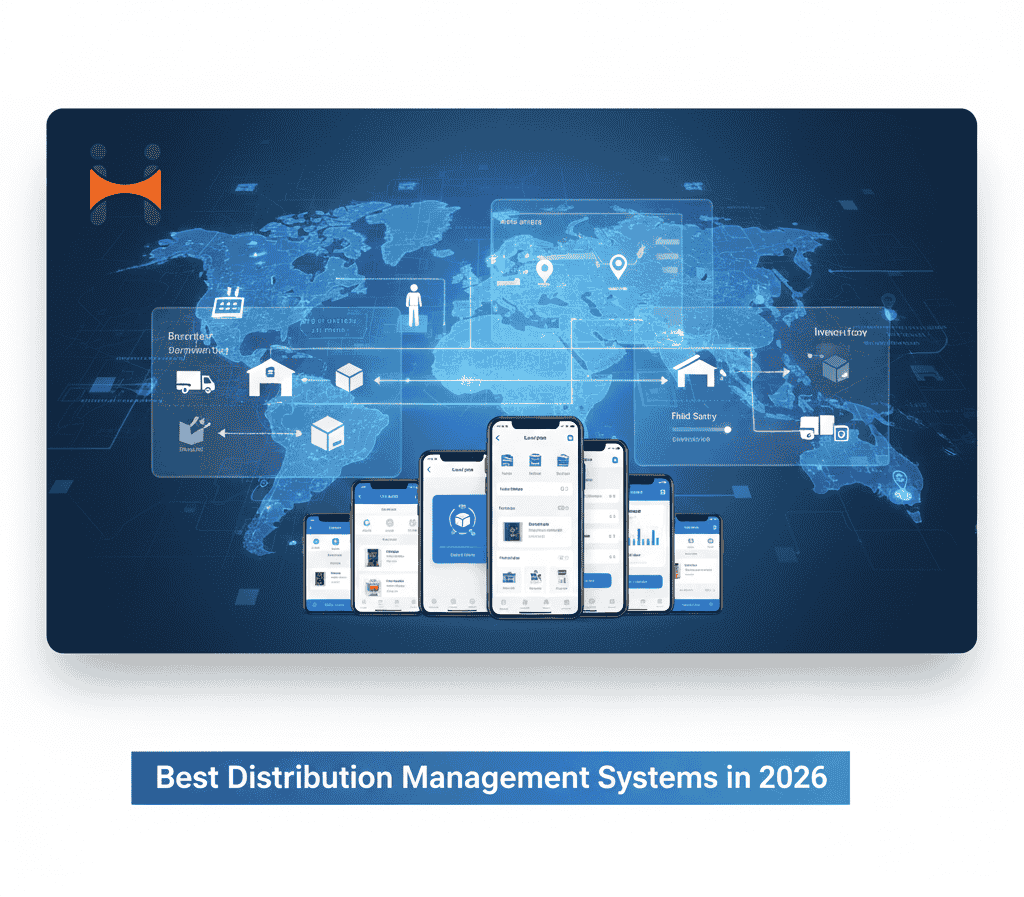
    Best Distribution Management Systems in 2026

    Companies with wide sales networks need a system that keeps field activity steady. They handle orders, stock movement, outlet visits and daily reporting. Manual work slows everything. Errors grow. Teams spend more time fixing problems than doing real work. A strong distribution management system brings order. It gives a clear view of what is happening in the field and who is doing the work.

    We meet many teams with the same struggle. Some use old tools that crash or never sync. Some depend on sheets that get messy. Some still operate fully on calls and paper. They only want something that works without effort and lets them follow daily progress.

    A good distribution management system connects every part of the chain. Managers know where the field team is. Executives know what to do next. Information moves without confusion.

    This guide lists the best options for 2026 and explains why many companies now look for clean field workflows and an employee location tracking app to keep work accountable.

    What a Distribution Management System Should Solve in 2026?

    Companies follow the same set of daily needs. They want simple movement of data and smooth work for both office and field teams.

    • Smooth order flow

    • Clear stock visibility

    • Track of routes and outlet visits

    • Customer history in one place

    • Real time field sales tracking

    • Reports that load fast

    • Use on mobile with weak or no network

    Most companies want a tool that stays out of their way and gets the job done.

    Why Distribution Management Systems Matter Today?

    Distributors handle hundreds of outlets. They face route issues, stock gaps, collections and pricing changes. Without a strong system, mistakes add up. Wrong dispatch. Missed visits. Lost proofs. Managers lose clarity and the team feels pressure.

    A strong system keeps the workflow steady. Field executives follow the plan. Managers guide teams with clear data. Companies grow without daily confusion.

    Top Distribution Management Systems in 2026

    These systems stand out for stability, ease of use and practical field behavior. They support distribution, tracking and clean reporting.

    Happisales

    Happisales brings field force automation software and distribution functions into one app. Many companies shift to it for its ease of use. Orders, collections, service visits and stock details move smoothly between office and field. Executives see tasks, follow routes and finish visits without confusion. The app works offline and sends alerts when work is missed. Managers see the exact route taken by each executive.

    Reports are simple and clear. Teams understand targets. Managers see which areas need support. Customers who shift from older systems say this is the first time their team feels calm using a tool. That comfort improves adoption.

    Pepupsales

    Pepupsales focuses on field visits and tracking. Companies that want to follow movement patterns choose this tool. It handles orders, outlet visits and activity logs. Managers see the team’s movement and work progress. It suits companies that want simple behavior without extra layers.

    SalesDiary

    SalesDiary suits brands that manage wide networks. It supports beat planning, order taking and scheme tracking. Dashboards show performance gaps in a simple way. Companies that want structured daily plans often choose this tool.

    Bizom

    Bizom is popular among FMCG brands. It covers primary and secondary sales and stock in hand. It also helps teams plan outlet coverage. Companies that want strong analytics and tight reporting often pick Bizom. It fits well within FMCG distribution software needs.

    FieldAssist

    FieldAssist blends field sales work and distribution features. It handles order collection, retailer engagement and sales tracking. Insights help managers plan their next steps. The app is steady and syncs cleanly.

    DeltaSalesApp

    DeltaSalesApp supports attendance, orders, route planning and expenses. Many small and medium companies choose it because it is easy to start and does not feel heavy. It works well for basic distribution needs.

    XRetail

    XRetail gives real time dashboards and clear outlet-level details. It helps teams watch stock movement and order patterns. Companies that want tight control of the distribution chain often choose XRetail.

    Zinfi DMS

    Zinfi supports channel partners, stock visibility and communication between partners. It suits brands that handle both distributor and retailer relationships.

    What Matters When Choosing a Distribution Management System in 2026?

    Many teams choose software too fast. After watching companies switch tools multiple times, the real concerns are always simple.

    • Will the field team use it every day

    • Can someone finish tasks in a few taps

    • Does the data stay clean

    • Does the app work with weak network

    • Does it show the real path taken by each executive

    • Can the office team get reports without asking anyone

    Daily behavior decides success. A tool only helps when the smallest task works smoothly.

    Why Location Tracking Matters Now?

    Most companies now ask for one core feature. They want to know where their team is during work hours. They want proof of visits. They want clean logs of travel and time spent in the field.

    An employee location tracking app gives this clarity. It helps managers plan better. They guide executives who go off route. They cut travel waste. They understand which areas need more focus.

    Teams benefit as well. They do not have to explain their day. The system records it.

    From my own work with teams across retail and FMCG, the pattern is clear. Once proper tracking starts, field discipline improves. Executives follow routes. Managers work calmly with data. The field feels predictable again.

    This is also where beat management software supports teams. It keeps routes structured and reduces guesswork.

    How a Distribution Management System Supports Field Productivity?

    A strong system fixes small issues that slow field teams. Tasks reach the right person at the right moment. Executives get reminders. Routes form based on outlet locations. Customer history appears before a visit. Orders sync quickly. Managers stay updated without calls.

    When these pieces fall into place, teams regain focus. They avoid switching between apps. They stop waiting for approvals. They spend more time selling.

    Advantages of Using a Modern Distribution Management System

    Companies that pick a clean system see gains early.

    • Higher outlet coverage

    • Fewer manual errors

    • Real time field visibility

    • Better customer engagement

    • Faster reporting

    • Smoother work for all teams

    • Steady and predictable growth

    These improvements show up within the first few months.

    The Role of Mobile Performance

    A distribution management system is only useful if the mobile app works well. Field teams work in areas with weak networks. They need the app to work offline, load fast and stay simple.

    Many systems fail here. They look fine on laptops but slow down on mobile. This creates frustration and blocks adoption. Companies that test mobile behavior before choosing a system avoid many problems later.

    Why 2026 Systems Will Look Different?

    New systems will be cleaner and smarter. They will reduce manual entry. They will follow patterns and guide the next step. Field teams will save time because the tool will remove repeated work. Companies that choose flexible tools now will adjust faster to these changes.

    Where Happisales Fits in This Landscape?

    Many companies compare Happisales with the tools listed above. Its strength is balance. It is simple for the field team and detailed for managers. It handles orders, collections, service, attendance, targets and tracking in one place.

    It also gives strong clarity on movement. Managers see real time routes and get alerts on unusual behavior. The app works offline and loads fast. New users understand it quickly.

    Teams that shift from older systems say their work becomes smoother. They spend less time fixing internal issues and more time selling.

    What’s Next?

    Distribution will expand in the next few years. Companies will add more outlets and more products. Field work will demand faster action and more clarity. The companies that choose clean systems now will stay ahead. A strong distribution management system will remain the backbone for field operations. This is a good time to check your workflow and see what slows your team. The right tool can remove confusion and help your team work with confidence.

    Prepare your team for the next phase of distribution growth. Explore Happisales and see how a clean, reliable system supports your expansion.

  • 5 Ways SFA Can Boost Sales Efficiency for Your CPG Business

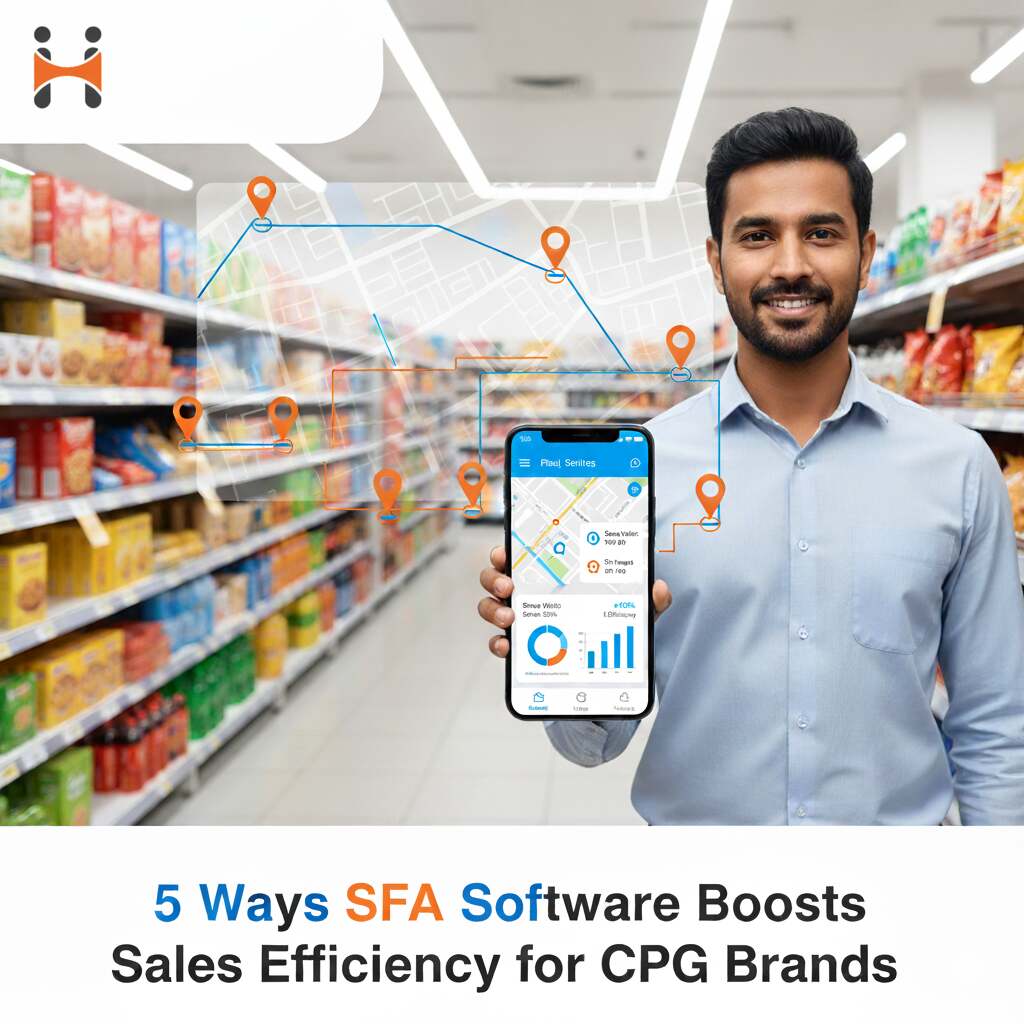
    5 Ways SFA Can Boost Sales Efficiency for Your CPG Business

    Introduction

    In today’s competitive Consumer Packaged Goods (CPG) industry, every second on the field counts. Your sales team isn’t just responsible for selling – they’re responsible for executing perfectly at every store visit. From route planning to retail execution, the quality of field performance determines how well your brand stands out on the shelf.

    At Happisales, we’ve learned that one of the most effective tools to drive that execution is Sales Force Automation (SFA). When used correctly, SFA doesn’t just simplify reporting – it transforms how you sell, plan, and monitor performance in real time.

    If you’re reading this because you want to track your field employees’ locations, monitor their store visits, and ensure your team executes with precision, this blog is for you. We’ll show you how SFA helps align employee location and visit data, automate and optimise workflows, and ultimately boost sales efficiency for your CPG business.

    What Is SFA and Why It Matters for CPG Businesses?

    Sales Force Automation (SFA) refers to technology that automates and streamlines sales activities – from lead tracking and order management to field visit monitoring and performance reporting.

    In the CPG world, where field teams handle dozens of outlets each day, it’s nearly impossible to manage operations manually. Using spreadsheets, WhatsApp updates, or daily phone calls might work for small teams, but as your coverage grows, visibility drops – and so does productivity.

    When we implemented our first SFA tool, we quickly saw the difference. Before, our sales reps spent hours every evening filling out visit reports manually. After SFA, they submitted visit data and photos directly from the store in seconds. Managers could track store coverage live, and orders were processed instantly.

    That’s when we realized: SFA isn’t just a reporting tool – it’s the backbone of an efficient, data-driven sales organization.

    Let’s look at the five ways SFA can boost sales efficiency in your CPG business.

    1. Real-Time Visibility Over Field Activity and Employee Location

    Why It Matters?

    Managing a field sales team without real-time visibility is like flying blind. You might have a route plan, but you can’t know if it’s actually being followed. Did every rep visit the assigned stores? Were key outlets skipped? Did anyone spend too long in low-value locations?

    An SFA solution gives you full visibility. With GPS tracking, geo-tagged check-ins, and real-time dashboards, you can monitor every visit, every order, and every kilometer traveled.

    How It Works?

    In our own experience, before adopting SFA, reps manually reported visits at day-end. That left room for gaps and guesswork. Once we introduced a GPS-enabled SFA app, every check-in was automatically time-stamped and location-verified. Managers could open the map dashboard and instantly see which outlets were covered and which were pending.

    Within weeks, we saw visit compliance jump by 30%. Missed outlets nearly disappeared because reps knew their coverage was transparent and visible.

    Efficiency Gains

    • Real-time tracking ensures complete outlet coverage
    • Reduces travel time and redundant visits
    • Prevents skipped high-priority stores
    • Improves accountability across the team

    For businesses that want to track employee location, this is the foundation. SFA doesn’t just tell you where your reps are – it tells you what they’re doing and why it matters.

    2. Route Optimisation and Smarter Beat Planning

    Why It Matters?

    For CPG companies, route planning directly affects sales productivity. If a rep wastes half the day in traffic or travels inefficiently between stores, that’s lost selling time.

    With SFA software, you can plan and optimise routes intelligently. The system maps store clusters, calculates travel distances, and helps reps follow the most efficient route.

    How It Works?

    Before automation, our reps had static store lists. Some would zig-zag across town, visiting outlets in random order. After integrating route optimisation, the app automatically arranged visits by proximity and priority.

    This simple shift allowed each rep to visit 5–6 more stores per day on average – a massive improvement across the entire team

    Efficiency Gains

    • Higher outlet coverage per day
    • Less travel fatigue for reps
    • Smarter territory allocation
    • Balanced workloads across teams

    When combined with GPS tracking, route optimisation also ensures route compliance – meaning you can see if reps follow the planned path or deviate during the day.

    3. Automation of Routine Tasks (Orders, Reports, Merchandising)

    Why It Matters?

    Field reps often lose valuable time doing repetitive admin work – filling forms, writing reports, calling distributors to confirm orders, and compiling daily summaries.

    SFA software eliminates that waste. By automating order entry, report generation, and merchandising checklists, your team can focus on selling instead of paperwork.

    How It Works?

    Here’s a real example from our rollout. Earlier, reps noted orders on paper, then called the distributor to confirm stock. With SFA, reps now create digital orders directly inside the app. The system automatically shows stock availability, suggests repeat SKUs, and sends orders to the distributor in real time.

    Reports? They’re auto-generated. Each evening, managers get consolidated dashboards – total visits, total orders, time spent, photos uploaded -without manual compilation.

    Efficiency Gains

    • Reduces admin time by up to 25%
    • Improves order accuracy and fulfillment speed
    • Provides instant access to sales data
    • Lets managers focus on coaching instead of chasing reports

    For teams tracking employee movement, automation ties perfectly with location data. Every order and photo is geo-tagged, confirming that tasks were completed at the right store.

    4. Enhanced Performance Visibility and Accountability

    Why It Matters?

    Without data, performance reviews are just opinions. One rep might seem productive because they’re vocal; another might quietly outperform without recognition. SFA software replaces assumptions with facts.

    With detailed metrics – store visits, sales value, coverage %, route adherence, and in-store execution – managers can measure and compare performance objectively.

    How It Works?

    When we started tracking KPIs through SFA, patterns emerged immediately. We could identify top performers based on visit consistency and order value per visit. We also spotted reps with long travel times but fewer visits – an indicator of route inefficiency.

    Armed with that data, we offered targeted coaching. Productivity rose across the board because everyone knew performance was transparent and measurable.

    Efficiency Gains

    • Clear, data-driven performance tracking
    • Real-time insights for coaching and training
    • Leaderboards that motivate and reward top reps
    • Early detection of performance gaps

    When paired with GPS data, this visibility becomes even stronger. You can correlate distance traveled with sales achieved, pinpointing inefficiencies at the territory level.

    5. Real-Time Market Intelligence and Execution Consistency

    Why It Matters?

    Success in CPG isn’t just about selling – it’s about execution at the store level. Are your promotions live? Are displays installed? Are your SKUs visible on shelves?

    SFA tools allow reps to capture in-store data – shelf photos, competitor pricing, stock levels -and upload it instantly. Managers get a live, visual understanding of what’s happening in the market.

    How It Works?

    During one of our new product launches, we created a simple checklist inside the SFA app:

    Each rep took photos as proof, and the app automatically tagged them with time and GPS coordinates. Within hours, our dashboard showed compliance by region. Where execution lagged, we re-dispatched reps immediately.

    The result? Execution accuracy improved by 20% within the first month.

    Efficiency Gains

    • Consistent brand execution across outlets
    • Faster feedback loops between field and HQ
    • Early detection of competitor activity
    • Higher promotion ROI and shelf visibility

    Again, location tracking adds integrity. You know that every report, photo, or checklist was captured inside the store, not uploaded from elsewhere.

    Implementation Tips for CPG Teams

    Here are a few practical lessons from our journey to full SFA adoption -especially useful if your goal includes employee location tracking:

    • Select an SFA with built-in GPS tracking It should support check-in/out tagging, live map tracking, and route replay.
    • Define KPIs upfront For example: average visits per day, distance covered, outlet coverage %, and order value per visit.
    • Integrate with your existing systems Connect your SFA with ERP or distributor management software for real-time order flow.
    • Train your team thoroughly A successful rollout depends on consistent app usage and proper geo-check-in habits.
    • Use the data to support, not surveil When reps see SFA as a productivity tool rather than a policing mechanism, adoption rates skyrocket.
    • Reward data-driven success Use leaderboards or incentives for top coverage, lowest deviation, or best route efficiency.
    • Ensure offline functionality Reps often work in low-network areas; the app should sync automatically when they reconnect.
    • Protect privacy and transparency Explain clearly what data is tracked and how it benefits both the company and the rep.

    What’s Next?

    Sales Force Automation is no longer optional for modern CPG brands – it’s essential. It provides the structure, transparency, and data you need to build a high-performing field team.

    By adopting an SFA platform that combines real-time location tracking, route optimisation, workflow automation, and data-driven performance dashboards, your sales operations become faster, smarter, and more accountable.

    At Happisales, we’ve seen these results firsthand – better store coverage, faster order processing, improved execution accuracy, and happier reps who spend more time selling and less time reporting.

    If you’re looking to track employee locations, monitor field productivity, and drive higher sales efficiency, implementing an SFA solution is the most effective path forward. Schedule a free demo with Happisales today

  • Is Your FMCG Route-to-Market Strategy Future-Ready?

    India’s FMCG industry is changing faster than ever. From kirana stores adopting digital payments to distributors managing orders on mobile apps, every layer of the supply chain is becoming smarter, faster, and more connected. Yet, many FMCG companies still rely on manual route planning, scattered communication, and outdated tracking methods.

    At Happisales, we’ve seen this challenge up close. Our conversations with hundreds of sales heads and field executives reveal a pattern: teams are working harder than ever, but not always smarter. The gap lies in how Route-to-Market (RTM) strategies are executed.

    So, the real question is – is your FMCG Route-to-Market strategy future-ready?

    The Changing Reality of FMCG Route-to-Market in India

    A decade ago, managing an FMCG sales team meant maintaining ledgers, phone calls, and Excel trackers. Orders came through distributors, and sales visits were measured by trust, not data. Today, the ground reality is different.

    With e-commerce, quick-commerce, and direct-to-retail delivery models, the traditional RTM approach no longer keeps up with market velocity. Speed and visibility have become non-negotiable. Retailers expect quick responses, distributors demand transparency, and management wants measurable ROI from every visit in the field.

    Modern RTM is not just about reaching more outlets; it’s about reaching the right ones, at the right time, through the right channel – and this is where field force automation plays a pivotal role.

    What’s Holding Indian FMCG Teams Back?

    Let’s be honest – the challenges are not about intent. Indian FMCG businesses are among the hardest-working in the world. The issue lies in outdated systems and manual coordination that no longer match the scale or complexity of today’s market.

    Here are the real barriers most teams face – and how they affect growth:

    1. Lack of Real-Time Visibility

    Many FMCG managers still rely on WhatsApp updates and calls to know where their field reps are. It’s inefficient and unreliable.
    Without live tracking, it’s nearly impossible to verify visits, monitor performance, or ensure territory coverage.

    2. Missed Customer Visits and Delayed Reporting

    In a typical Indian sales cycle, one missed visit can mean a lost retailer order or delayed collection. Manual reporting adds another layer of delay – by the time data reaches management, the opportunity is gone.

    3. Communication Gaps and Manual Data Entry

    Salespeople spend hours manually entering order details or collection info, often at the end of the day. This not only drains productivity but also increases the risk of human error.

    4. No Visibility into Productivity

    When all updates are manual, managers can’t see who’s performing well, who’s struggling, or what patterns affect sales. Without insights, planning and training become guesswork.

    5. Connectivity Issues

    A large portion of India’s FMCG market exists beyond metros – in Tier 2, Tier 3, and rural towns. Internet access there is patchy at best. If your tool doesn’t work offline, you’re already at a disadvantage.

    6. Low Field Motivation

    Sales reps often feel disconnected. When their effort isn’t recognized or measured fairly, morale drops – and so does performance.

    7. Poor Route Planning and Travel Waste

    Field executives often plan visits manually, leading to time lost in travel and missed opportunities for additional calls in the same area.

    8. Unclear ROI on Tech Investments

    Many Indian companies hesitate to adopt sales automation tools due to cost concerns or poor past experiences with complex systems. They want tools that show value quickly and are easy for field teams to adopt.

    Each of these pain points weakens your Route-to-Market efficiency – but they can all be solved with the right automation framework.

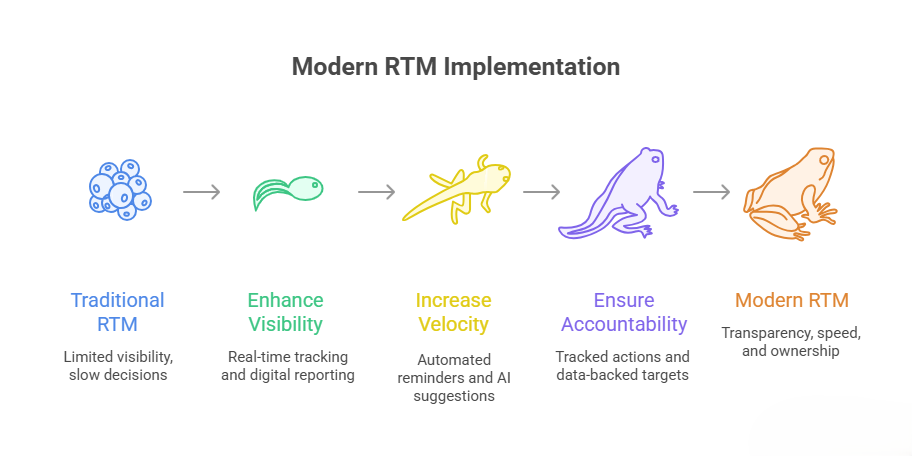
    The Future-Ready RTM Model

    A future-ready Route-to-Market strategy combines technology, accountability, and people. It doesn’t just record activity – it enhances productivity, motivates field teams, and delivers real-time insights to decision-makers.

    At its core, a modern RTM stands on three pillars:

    1. Visibility

    You can’t improve what you can’t see. Real-time tracking and digital reporting ensure complete transparency – from sales visits and order status to payment collections and location data.

    2. Velocity

    Faster decision-making means faster growth. With automated reminders, AI-driven route suggestions, and instant order capture, your team spends less time coordinating and more time selling.

    3. Accountability

    When every action is tracked, acknowledged, and rewarded, teams naturally perform better. Data-backed targets create clarity – and clarity builds ownership.

    This model aligns with the future of Indian FMCG, where competition rewards precision and adaptability.

    How Field Force Automation Builds the Future-Ready RTM?

    Modern FMCG companies are adopting field force automation to solve real challenges faced by sales teams. Here’s how automation transforms Route-to-Market execution in practice:

    1. Gain Real-Time Visibility with GPS Tracking

    Managers can monitor field teams’ locations and route history in real time. Each check-in and checkout is geo-tagged, ensuring transparency and accountability without micromanagement.

    Example:

     A regional sales manager shared how live tracking replaced hours of phone calls, saving nearly two hours daily and improving team coordination.

    2. Automate Daily Reporting and Attendance

    Manual Excel reporting is replaced by automated daily logs. Field reps mark attendance, upload visit details, and record customer interactions via mobile, with instant dashboard access for managers.

    3. Seamless Order, Collection, and Service Management

    Orders, collections, and service requests can all be recorded digitally on-site and synced automatically, even offline. This ensures uninterrupted productivity in semi-urban and rural areas.

    4. Route Planning and Travel Optimization

    Route suggestions and planning based on customer locations reduce unnecessary travel, letting teams cover more outlets efficiently.

    5. Data-Driven Insights for Managers

    Analytics provide actionable insights: performance evaluation, territory gaps, and product movement patterns. Managers can make timely decisions and coaching becomes data-driven.

    6. Motivation Through Recognition

    Tracking performance, milestones, and achievements allows field teams to receive recognition in real-time, keeping motivation high. Healthy competition and visibility foster engagement and accountability.

    7. Ease of Use and Adoption

    Intuitive mobile interfaces, multilingual support, and offline capabilities ensure quick adoption, even in markets with connectivity challenges. Simple technology enhances productivity and trust among teams.

    Why Trust and Simplicity Matter in the Indian Market?

    For Indian businesses, trust isn’t built by marketing – it’s built by results. Companies don’t want “another app”; they want a partner who understands their daily struggles and supports their growth journey.

    At Happisales, our philosophy is simple: “Technology should empower, not complicate”
    We offer full onboarding support, training assistance, and dedicated customer success teams. Our clients appreciate that they can reach us directly – not through automated tickets.

    And because our platform is designed for Indian field realities – multilingual users, patchy internet, cost constraints – it feels local, not imported.

    The ROI of a Future-Ready RTM

    Adopting Happisales isn’t just a digital upgrade – it’s a measurable investment.
    Here’s what our customers typically experience within the first few months:

    • 40–50% improvement in field reporting accuracy
    • 2x faster response time to customer orders
    • 25% savings in travel and communication costs
    • Stronger employee accountability and motivation

    These outcomes aren’t accidental. They stem from designing technology around real people and real problems – something Indian FMCG businesses deeply value.

    A Glimpse into the Future

    The next decade will redefine how FMCG brands in India reach consumers. With AI-driven forecasting, smart route mapping, and predictive analytics, Route-to-Market models will become sharper and more adaptive.

    Field force automation is the foundation of that transformation.
    By combining mobility, data, and human insight, Happisales ensures you’re not just catching up – you’re leading the change.


    What’s Next?

    A future-ready Route-to-Market strategy is about clarity, consistency, and empowerment, not complexity. Field force automation helps your teams plan better, sell smarter, and perform stronger, regardless of location.

    Ready to modernize your FMCG sales operations? Start your 14-day free trial of Happisales today – no credit card required.

  • Store Management System with Field Force Automation

    Store Management System with Field Force Automation

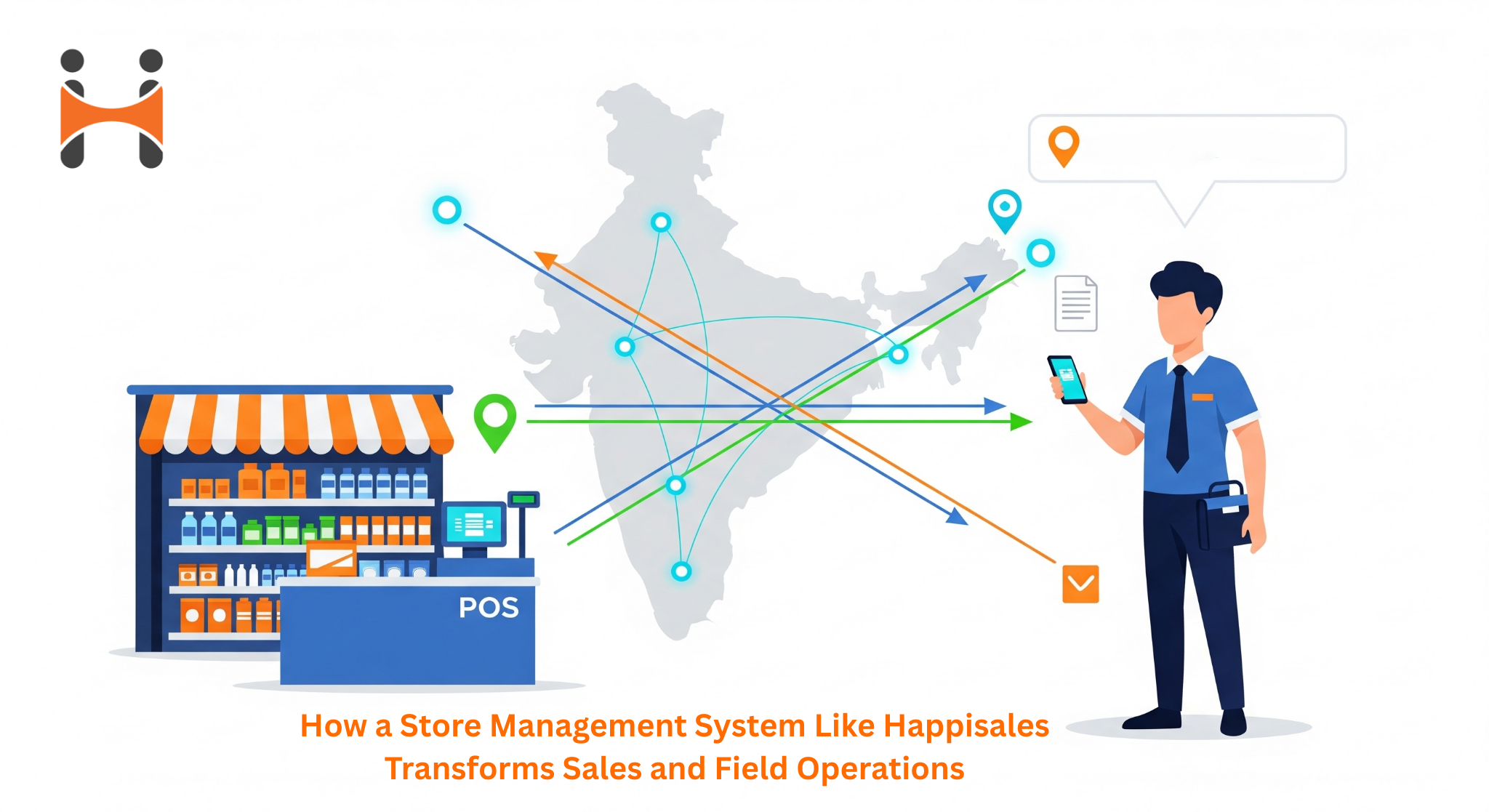
    How a Store Management System Like Happisales Transforms Sales and Field Operations?

    Running sales and store operations in India is not easy. Products run out of stock. Orders get delayed. Sales reps sometimes log fake visits. Collections pile up. And managers often rely on paper reports that are already outdated by the time they arrive.

    Happisales is designed to be the best store management system India for businesses that want real-time visibility, faster collections, and trustworthy employee tracking. Our platform also acts as a field force automation software for FMCG, helping distributors, pharma, and retail chains manage their field teams efficiently.

    This is where a modern store management system makes a difference. It’s not just about POS or billing anymore. It’s about connecting your stores, field sales, and back office into one system so you know exactly what’s happening in real time.

    Why the meaning of “store management system” has changed?

    Old view
    A tool to manage billing, POS, and stock inside a store.

    Today’s view
    A cloud system that links billing, inventory, sales tracking, employee location, beat planning, expense claims, and analytics.

    The winner is no longer the software with the fastest checkout. It’s the one that connects the store with your sales team on the road.

    The three big problems Indian businesses face :

    1. No real-time visibility
      Field reps and stores work on different timelines. Orders taken in the field reach stores late or not at all. Stock data is unreliable.
    2. Losses from manual processes
      Paper orders, delayed collection reconciliation, and expense claims handled in Excel cause leakages and waste time.
    3. Poor accountability and coaching
      Managers don’t know if a rep visited a customer, what happened there, or why orders are dropping. Feedback is based on guesswork.

    We’ve seen these issues again and again with distributors, FMCG, pharma, and retail chains. That’s why we designed Happisales to fix them.

    How Happisales solves these problems?

    Real-time order and inventory sync

    • Reps capture orders on their phone
    • Orders sync instantly or once the rep is back online
    • Inventory updates immediately
    • Stockouts drop and customers get faster delivery

    Employee location tracking with visit proofs

    • Track rep locations only during work hours
    • Geotagged photos and notes confirm visits
    • No fake visit claims
    • Managers get transparent coverage reports

    Planned beats and route optimization

    • Routes are auto-created based on geography and customer priority
    • Reps travel less and meet more customers each day
    • Fuel and travel costs come down

    Offline-first mobile app

    • Works without internet
    • Reps can still log orders, collections, and expenses
    • Data syncs when network returns
    • Essential for Tier 2 and Tier 3 regions

    Order to collection flow

    • Covers order capture, invoice, payment, and reconciliation
    • Managers get collection dashboards and alerts
    • Cash flow improves and DSO comes down

    Expense tracking and approvals

    • Reps upload bills and receipts inside the app
    • Managers approve or reject with one click
    • Data flows into payroll or ERP
    • Reimbursements are faster and clearer

    Analytics and coaching tools

    • Tracks 15+ metrics like visits per day, order conversion, average order size, route use
    • AI nudges suggest which customers to prioritize or which reps need training
    • Coaching is based on data, not guesswork

    Why this matters for Indian businesses?

    • Affordable with fast ROI
      Most Indian SMEs worry about software cost. Happisales clients see benefits like faster collections and fewer stockouts within 60–90 days. The system pays for itself quickly.
    • Simple to use
      Field reps don’t need long training. The app is mobile-first, works in local languages, and is easy to learn in a single session.
    • Mobile-first adoption
      Many reps in India only use smartphones. Happisales is designed for that. No laptop or IT team required.
    • Trust over tracking
      Tracking is transparent and limited to business hours. Managers see what they need, reps feel respected. This balance builds trust.

    Practical results we’ve seen:

    • A regional distributor cut stockouts by 30% in three months by syncing field orders with store inventory.
    • A sales manager increased customer visits by 22% using route optimization. Collections improved in the same quarter.
    • An FMCG company reduced reimbursement timelines from weeks to same-week approval. Field morale improved and HR saved time.

    Using location tracking responsibly

    • Inform employees how, when, and why location data is tracked
    • Track only during work hours not 24×7
    • Save only what’s needed for visits and collections
    • Limit access so only relevant managers can see it
    • Auto-delete old logs after an agreed period

    This keeps employee trust while giving managers the accountability they need.

    Why Happisales is different from POS or basic RMS?

    • POS = billing and receipts only
    • Basic RMS = inventory and reports
    • Happisales = POS + RMS + field automation + employee tracking + offline mode + analytics

    This is the difference between knowing only store sales and connecting it to field performance, customer visits, and collections.

    How to roll this out without friction?

    1. Pilot first
      Test in one or two regions with 10–30 reps.
    2. Map current processes
      Fit existing order and collection flows into the system. Don’t force big changes.
    3. Train and reward
      Keep training short. Use small incentives to encourage adoption.
    4. Scale slowly
      Expand region by region. Watch the KPIs and tweak.
    5. Keep improving
      Use analytics to refine routes and focus coaching.

    Teams adopt faster when they see quick wins like faster reimbursements or fewer hours wasted on the road.

    What to track (KPIs)?

    • Stockouts percentage
    • Orders per rep per day
    • Delivery time in hours or days
    • DSO or collection timelines
    • Expense processing time
    • Active reps vs total reps
    • Trial to paid conversion

    Always note baseline numbers before rollout. Check weekly in the first 90 days, then monthly.

    Common pitfalls and fixes :

    • Trying to solve everything at once
      Start with order capture and route planning first.
    • Change management issues
      Use short training, visible KPIs, and small rewards.
    • Overly intrusive tracking
      Keep it transparent and limited to working hours.
    • ERP integration delays
      Plan integrations early to avoid double work.

    What’s next?

    A store management system that links sales, collections, expenses, and employee tracking gives measurable results. The gains are faster collections, fewer stockouts, and better accountability — all with respect for employee privacy.

    Ready to experience the best store management system India and field force automation software for FMCG? Start a free 14-day trial with no credit card and see how Happisales can transform your sales, collections, and field operations.

  • Mastering Productivity: A Guide to Tracking Your Task Time Effectively

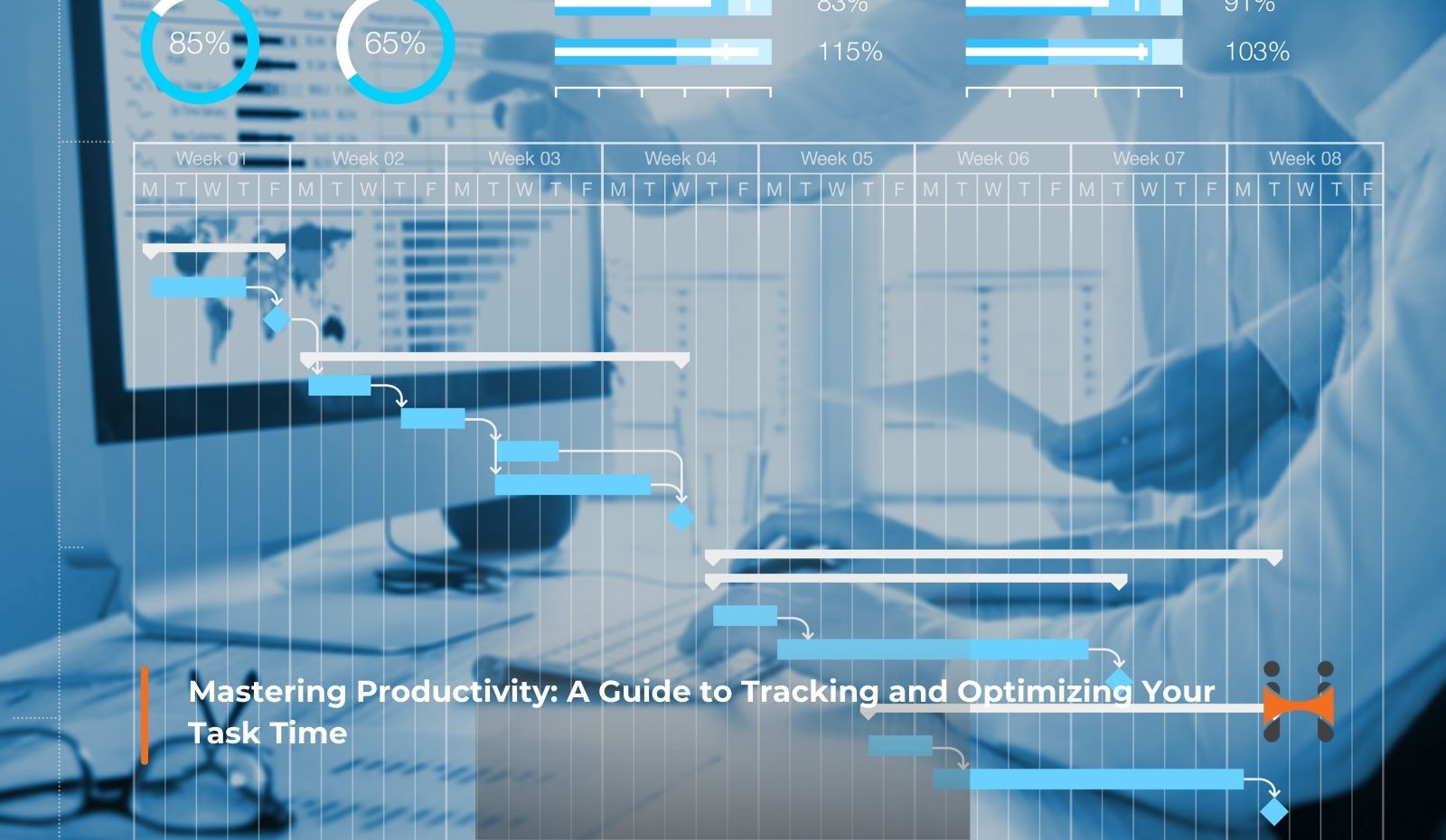
    Mastering Productivity: A Guide to Tracking Your Task Time Effectively

    Within the whirlwind pace of modern living, where distractions are everywhere and time slips away, the pursuit of productivity has become more important than ever before. We often find ourselves struggling to manage our tasks and wondering how time seems to slip so quickly. The answer lies in tracking the time we spend on our tasks, a practice that can truly transform the way we work and greatly enhance our productivity. In this article we will explore the art of tracking time spent on tasks. Discover how it can reshape our work habits and improve our efficiency.

    Understanding the Time-Productivity Connection

    Time is a precious resource, but without proper management, it can easily turn into a liability. This is where the practice of tracking productive time comes into play. The act of recording the time spent on tasks serves as a mirror, reflecting your work habits and shedding light on areas that need improvement. By understanding how you allocate your time, you can make informed decisions about where to invest your efforts for maximum productivity.

    The Importance of Tracking Productive Time

    Have you ever reached the end of the day and wondered why you didn’t accomplish as much as you’d hoped? Tracking your productive time can provide valuable insights into this question. When you document how much time you spend on various tasks, you can identify patterns, such as which tasks consume more time than they should or when you tend to be most productive during the day.

    Moreover, tracking time enhances your awareness of distractions. The modern world bombards us with notifications, emails, and social media alerts that can easily derail our focus. Through meticulous time tracking, you can pinpoint these distractions and take steps to minimize their impact on your work.

    Choosing the Right Time Tracking Method

    Time tracking doesn’t have to be a tedious endeavor; it can be a valuable tool that simplifies your work routine. One effective method is using digital time tracking tools like the ones available on the link provided. These tools offer user-friendly interfaces that allow you to effortlessly record the time you spend on various tasks. They often come equipped with features like categorizing tasks, setting timers, and generating comprehensive reports.

    Read More : From Chaos to Control: How Field Service Management Software Saves the Day?

    Another approach is manual tracking, where you maintain a log or journal of your tasks and the time you spend on each. While this method might seem more time-consuming, it can actually help you develop a deeper connection with your work. By physically writing down your tasks and time allocations, you engage with your work on a more personal level, potentially leading to a greater sense of accomplishment.

    Implementing Effective Time Tracking Practices

    Getting started with time tracking is the first step toward a more productive work life. Here are some practices to consider:

    Set Clear Goals: Before you begin tracking time, define your goals for each task. This will help you stay focused and ensure that your efforts align with your objectives.

    Allocate Time Intentionally: Assign specific time blocks to each task. This not only ensures that you dedicate sufficient time but also prevents tasks from expanding beyond their intended duration.

    Embrace Breaks: Productivity isn’t about working endlessly; it’s about working smartly. Incorporate short breaks into your schedule to recharge your mind and maintain focus.

    Review and Adjust: Regularly review your time tracking data to identify trends and areas for improvement. Adjust your approach based on your findings to optimize your productivity.

    Be Flexible: While tracking time is essential, it’s also important to be adaptable. Unexpected tasks or challenges may arise, so be prepared to adjust your schedule accordingly.

    The Psychological Impact of Time Tracking

    The act of tracking time not only affects your productivity but also has a profound psychological impact. As you document your tasks and their time allocations, you become more accountable for your work. This accountability can lead to a greater sense of ownership and motivation, pushing you to make the most of your time.

    Additionally, time tracking can alleviate the feeling of overwhelm. When you see your tasks neatly categorized and tracked, they become more manageable, reducing stress and enhancing your overall well-being.

    In a world where distractions are abundant and time is fleeting, mastering productivity is an ongoing journey. The practice of tracking productive time spent on tasks offers a beacon of insight, guiding you toward better work habits, enhanced efficiency, and a deeper connection with your tasks.

    Whether you choose digital tools or opt for manual tracking, the key is to start and stay consistent. Remember, productivity isn’t about working harder; it’s about working smarter. So, embark on this journey of self-discovery and optimization, and watch as your productivity soars to new heights. If you looking for best field force automation app , you are at the right place.

  • From Chaos to Control: How Field Service Management Software Saves the Day?

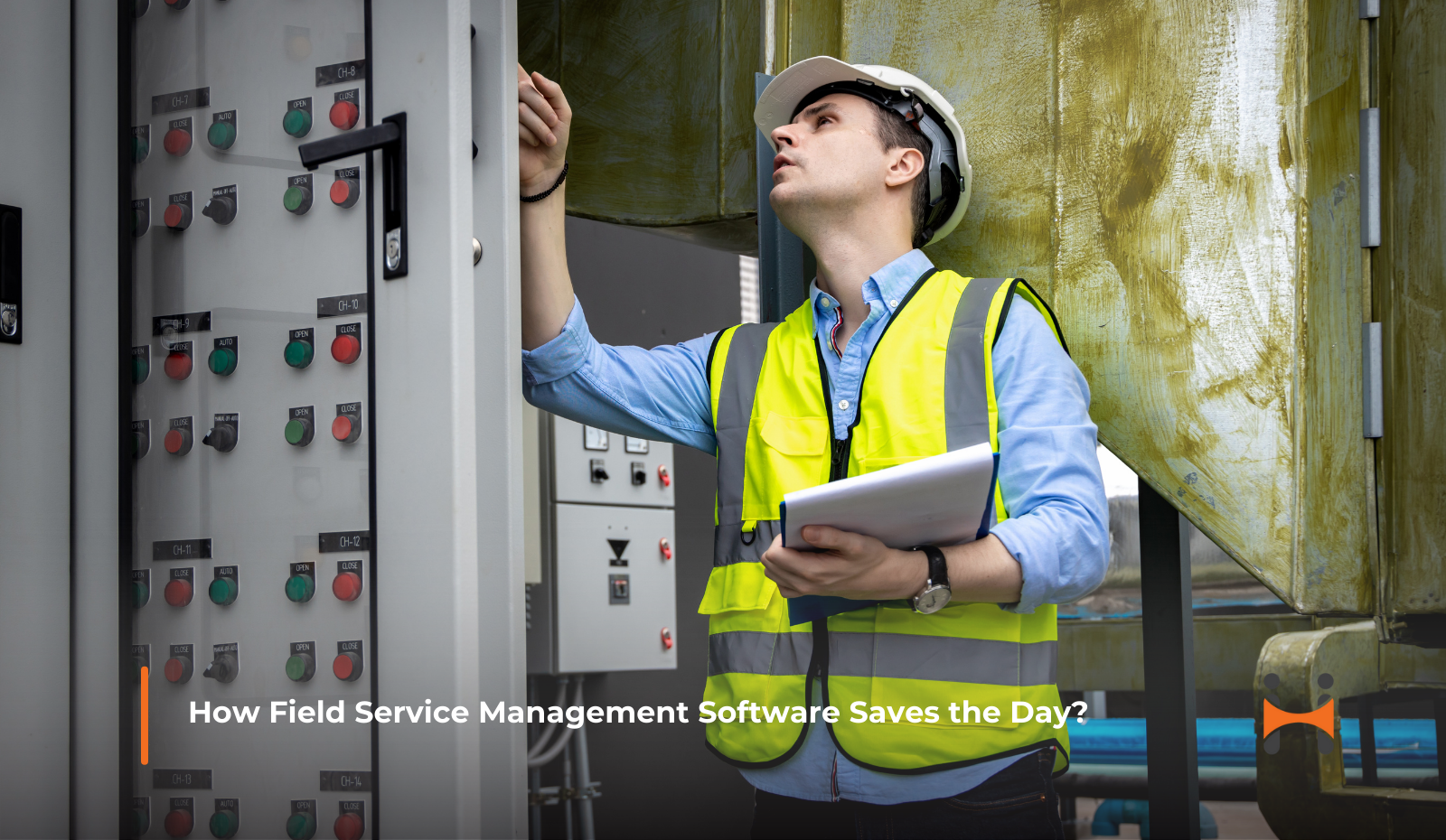
    From Chaos to Control: How Field Service Management Software Saves the Day?

    In today’s digital world, field service management is crucial for organizations to meet customer demands and maintain a competitive edge in the market. Field service teams are responsible for delivering products, installing equipment, and providing on-site maintenance and repairs. However, managing a dispersed workforce, coordinating schedules, and ensuring prompt response times can be challenging. 

    Fortunately, a dedicated field service management software has emerged as a powerful solution to tackle these challenges head-on. In this article, we will explore how FSM software transforms chaotic field operations into well-organized and streamlined processes, ultimately saving the day for businesses.

    The Complexity of Field Service Management 

    Field service management involves juggling between multiple tasks, including job scheduling, dispatching technicians, managing customer information, and getting real-time updates. Without the right tools in place, this complexity can quickly lead to chaos and inefficiency. This is where a field service management app comes into the picture.

    Centralized Job Scheduling and Dispatching

    One of the main features of FSM software is centralized job scheduling and dispatching. Instead of relying on manual coordination, FSM software provides a digital platform where administrators can create and assign tasks to field technicians with ease. By optimizing schedules based on technician availability, skills, and proximity to the job site, FSM software ensures efficient resource allocation, reducing travel time and maximizing productivity.

    Real-time Communication and Collaboration 

    Effective communication is essential for successful field service operations. The field service management software enables real-time communication and collaboration between field technicians, dispatchers, and the back-office team. Through mobile applications or portals, technicians can receive job details, access customer information, and capture important data on-site. They can also communicate with the back-office team, seeking guidance or providing updates. This instant and seamless flow of information minimizes delays, improves decision-making, and enhances customer satisfaction. 

    Inventory Management 

    Field technicians often require access to a wide range of spare parts and equipment to perform their tasks. Keeping track of inventory levels and ensuring the availability of the right parts at the right time is crucial. FSM software automates inventory management, allowing technicians to check stock levels, order parts, and update inventory records in real-time. This ensures that technicians have the necessary resources on hand, reducing downtime and preventing delays caused by missing or incorrect parts.

    Enhanced Customer Experience

    Delivering exceptional customer experiences is a top priority for businesses in today’s competitive landscape. FSM software plays a pivotal role in enhancing the customer experience throughout the service journey. With FSM software, businesses can provide accurate and real-time updates to customers regarding technician arrival times, job progress, and completion status. 

    Data-driven Insights and Analytics 

    FSM software acts as a treasure trove of valuable data. By capturing and analyzing various metrics such as response times, job durations, and technician performance, businesses can gain deep insights into their field operations. These data-driven insights enable organizations to identify bottlenecks, optimize workflows, and make informed decisions to drive continuous improvement. 

    Additionally, FSM software can generate reports and dashboards that provide a holistic view of the field service operations, helping managers and executives monitor key performance indicators and make strategic business decisions.

    A comprehensive field service management software is a game-changer for businesses looking to transform chaos into control in their field service operations. By centralizing job scheduling, facilitating real-time communication, automating inventory management, and enhancing the overall customer experience, FSM software brings order and efficiency to what was once a challenging and complex process. With its data-driven insights and analytics, organizations can make informed decisions.

  • Field Sales Management App: How to Elevate Business Performance?

    In today’s highly competitive business landscape, businesses are constantly looking for innovative ways to improve their performance and gain a competitive edge. One area that plays a crucial role in achieving these goals is efficient field sales management. Traditionally, managing a field sales team has been a complex and challenging task, but with the advent of technology, businesses can now leverage field force automation apps to streamline their operations and maximize productivity. 

    In this blog post, we will explore the benefits of using a sales force tracker app and how it can help steer your business performance.

    Enhanced Sales Team Efficiency

    A Field Force Automation Tool can significantly improve the efficiency of your sales team by automating various tasks and processes. With features such as route optimization and appointment scheduling, your sales representatives can save valuable time and focus more on selling. By eliminating manual paperwork and administrative tasks, a Sales Tracking App enables your team to spend more time in the field, engaging with customers, and closing deals.

    Improved Sales Productivity

    A key aspect of elevating business performance is increasing sales productivity. A field sales mobile app empowers your sales team with instant access to critical information, including customer data, product catalogs, pricing details, and sales history. This enables them to provide accurate and real-time information to customers, and make informed sales decisions. The app also allows sales representatives to capture orders on the spot, eliminating the need for manual order entry thereby reducing the risk of errors. By streamlining these processes, the Field sales automation app boosts sales productivity and enables your team to achieve higher sales targets.

    Effective Sales Team Collaboration

    Collaboration is crucial for the success of any sales team, especially when working remotely or in different geographical locations. A field sales management app serves as a centralized platform where your sales representatives can communicate, exchange information, and collaborate effectively. They can update each other on client interactions, share best practices, and seek assistance whenever needed. This fosters a sense of teamwork, encourages knowledge sharing, and ultimately leads to improved sales performance across the team.

    Real-time Analytics and Reporting

    Gaining insights into your sales performance is key to making informed business decisions. A Field sales management app provides real-time analytics plus reporting features that allow you to track key sales metrics, such as revenue, conversion rates, and sales performance against each team and individual. With access to comprehensive reports, you can identify trends, explore opportunities for improvement, and optimize your sales strategies accordingly. This data-driven approach helps you identify top-performing sales representatives, refine your sales processes, thereby creating a rewarding work environment.

    Enhanced Customer Engagement

    A Field Sales Tracker not only benefits your sales team but also enhances the overall customer experience. With access to customer data, purchase history, and personalized offers, your sales representatives can follow a more targeted sales approach. The app enables them to have meaningful conversations with customers, address their specific needs, and build better rapport. By doing so, you can improve customer satisfaction, loyalty, and ultimately drive business growth.


    Incorporating a field sales tracking application into your business operations can revolutionize your sales processes and elevate your overall business performance. From increased sales team efficiency and improved productivity to enhanced collaboration and real-time analytics, the benefits are plenty. Embrace the digital transformation and empower your sales team with Happisales. Book a demo session now to understand how our field sales engagement platform can improve your business performance

  • Field Force Automation: Transforming Field Operations

    Field Force Automation: Transforming Field Operations

    In today’s fast-paced and competitive business landscape, organizations are constantly seeking innovative ways to enhance productivity and performance. One such solution that has emerged as a game-changer is Field Force Automation (FFA). 

    Field Force Automation refers to the use of technology and digital tools to streamline and automate field operations, resulting in improved efficiency and productivity for businesses across various industries.

    Gone are the days when field teams had to rely on manual processes and paperwork to complete tasks and report back to the office. With Field Force Automation, businesses can leverage mobile devices, cloud-based software, and advanced analytics to optimize their field operations. 

    This technology enables real-time data collection, instant communication, and seamless integration with back-end systems, revolutionizing the way field teams operate.

    One of the primary benefits of Field Force Automation is increased productivity. By automating routine tasks such as data entry, scheduling, and reporting, field teams can focus their time and energy on more value-added activities. 

    Mobile applications equipped with FFA capabilities allow field representatives to access critical information, update records, and collaborate with colleagues on the go. This efficiency not only improves individual performance but also accelerates the overall speed of operations.

    Moreover, Field Force Automation drives performance improvement by providing real-time visibility into field activities. Managers and supervisors can monitor the progress of field tasks, track the location of their teams, and analyze key performance metrics through intuitive dashboards and reports. This data-driven approach empowers decision-makers to identify bottlenecks, allocate resources effectively, and make informed strategic decisions to optimize performance.

    In addition to productivity gains, Field Sales Automation also enhances the customer experience. With instant access to customer data, historical interactions, and product information, field representatives can provide personalized and efficient service to clients. 

    They can quickly address customer inquiries, resolve issues on the spot, and even upsell or cross-sell relevant products or services. This level of responsiveness and professionalism fosters customer satisfaction, loyalty, and ultimately drives business growth.

    However, like any transformative technology, the successful implementation of Field Force Automation requires careful planning and consideration. 

    Organizations must assess their specific operational needs, choose the right FFA tools and software, and provide comprehensive training and support to their field teams. It is crucial to ensure a seamless integration with existing systems and align the technology with the organization’s goals and processes.

    Field Force Automation is paving the way for increased productivity and performance in the field operations of businesses. By harnessing the power of technology, organizations can optimize their field processes, empower their teams, and deliver exceptional customer experiences. As the business landscape continues to evolve, embracing Field Force Automation will become increasingly vital for organizations seeking to stay ahead of the curve and achieve sustainable growth. 

    To find out more about it, schedule a demo today!

  • The Power of Sales Reporting App: How Our App Boosts Your Revenue

    The Power of Sales Reporting App: How Our App Boosts Your Revenue

    As a business owner or sales professional, you know that sales are the lifeblood of your company. Without sales, your business cannot survive. But simply making sales is not enough. To truly succeed, you need to understand the patterns and trends in your sales data. This is where a sales reporting app comes in.

    In this article, we will explore the power of sales reporting and how our app can help you boost your revenue.

    First, let’s define what sales reporting is. Sales reporting is the process of analyzing and interpreting sales data to gain insights into your business’s performance. This includes metrics such as revenue, units sold, conversion rates, and customer demographics. Sales reporting can help you identify trends, strengths, weaknesses, and opportunities in your sales process.

    Now, let’s look at some of the ways our app can help you boost your revenue through sales reporting.

    1. Understand your customers: Our app provides detailed customer data, including demographics, purchasing history, and behaviour. This information can help you tailor your marketing efforts and improve customer retention.

    2. Monitor your sales pipeline: Our app allows you to track your sales pipeline in real-time, from initial lead to final sale. This information can help you identify bottlenecks in your sales process and make necessary adjustments to increase efficiency.

    3. Forecast future sales: Using historical sales data and trends, our app can help you predict future sales and revenue. This information can help you make informed decisions about inventory, staffing, and marketing budgets.

    4. Measure the effectiveness of marketing campaigns: Our app can help you track the success of your marketing campaigns by analyzing the impact on sales. This information can help you optimize your marketing efforts and improve ROI.

    5. Analyze customer behavior: Our app can help you understand your customers’ behavior and preferences, such as their buying patterns, purchase frequency, and average order value. By analyzing this data, you can tailor your sales strategy to better meet their needs and increase customer loyalty.

    6. Optimize pricing strategy: With our app, you can analyze pricing data and compare it to your sales metrics to optimize your pricing strategy. You can identify which products are underpriced or overpriced, and make adjustments to increase sales and revenue.

    7
    . Identify upsell and cross-sell opportunities: Our app can help you identify opportunities for upselling and cross-selling to increase revenue per customer. You can analyze purchase history data to recommend complementary products or offer discounts on larger orders.

    8.Monitor competitor performance: Our app can help you monitor your competitors’ performance and pricing strategies. You can use this data to make informed decisions about your own pricing and marketing strategies, and stay ahead of the competition.

    9. Improve forecasting accuracy: Our app can help you improve the accuracy of your sales forecasting by providing real-time data on sales trends and patterns. This can help you make more informed decisions about inventory management and staffing, and avoid stockouts or overstocking.


    But how do you get started with sales reporting and our app? Here are some tips:

    1. Define your sales metrics: Before you start analyzing your sales data, it’s important to define the metrics that matter most to your business. This may include revenue, units sold, conversion rates, and customer acquisition costs.

    2. Set up data tracking: To get the most out of our app, you need to ensure that your sales data is being tracked accurately and consistently. This may involve setting up integrations with your e-commerce platform, CRM, or other sales tools.

    3. Analyze your data: Once you have your sales data in our app, it’s time to start analyzing it. Look for patterns, trends, and outliers that can help you make informed decisions about your sales strategy.

    4. Take action: The insights you gain from sales reporting are only valuable if you take action on them. Use the information you’ve learned to make changes to your sales process, marketing campaigns, and overall strategy.

    5. Set goals: Before you start analyzing your sales data, it’s important to set goals for what you want to achieve. This could be increasing revenue, improving conversion rates, or targeting a new customer segment. Having specific goals in mind will help you focus your sales reporting efforts and measure your progress.

    6. Customize your reports: Our app allows you to customize your sales reports to fit your specific needs. Take advantage of this feature by creating reports that are tailored to your business and sales goals. This will help you gain deeper insights into your sales data and make more informed decisions.

    7. Collaborate with your team: Sales reporting shouldn’t be a one-person job. Involve your team in the process by sharing reports and insights, and encouraging discussion and feedback. This will help everyone stay on the same page and work together towards your sales goals.

    8Continuously monitor and adjust: Sales reporting is not a one-time task, but an ongoing process. Continuously monitor your sales data and adjust your strategy as needed. This will help you stay ahead of trends and make proactive decisions that can have a positive impact on your revenue.

    In conclusion, sales reporting is a powerful tool for businesses of all sizes. By using our app to track and analyze your sales data, you can gain valuable insights into your business’s performance and make informed decisions that can help you boost your revenue. So why wait? Start using our app today and take your sales to the next level!

    Happisales CTA