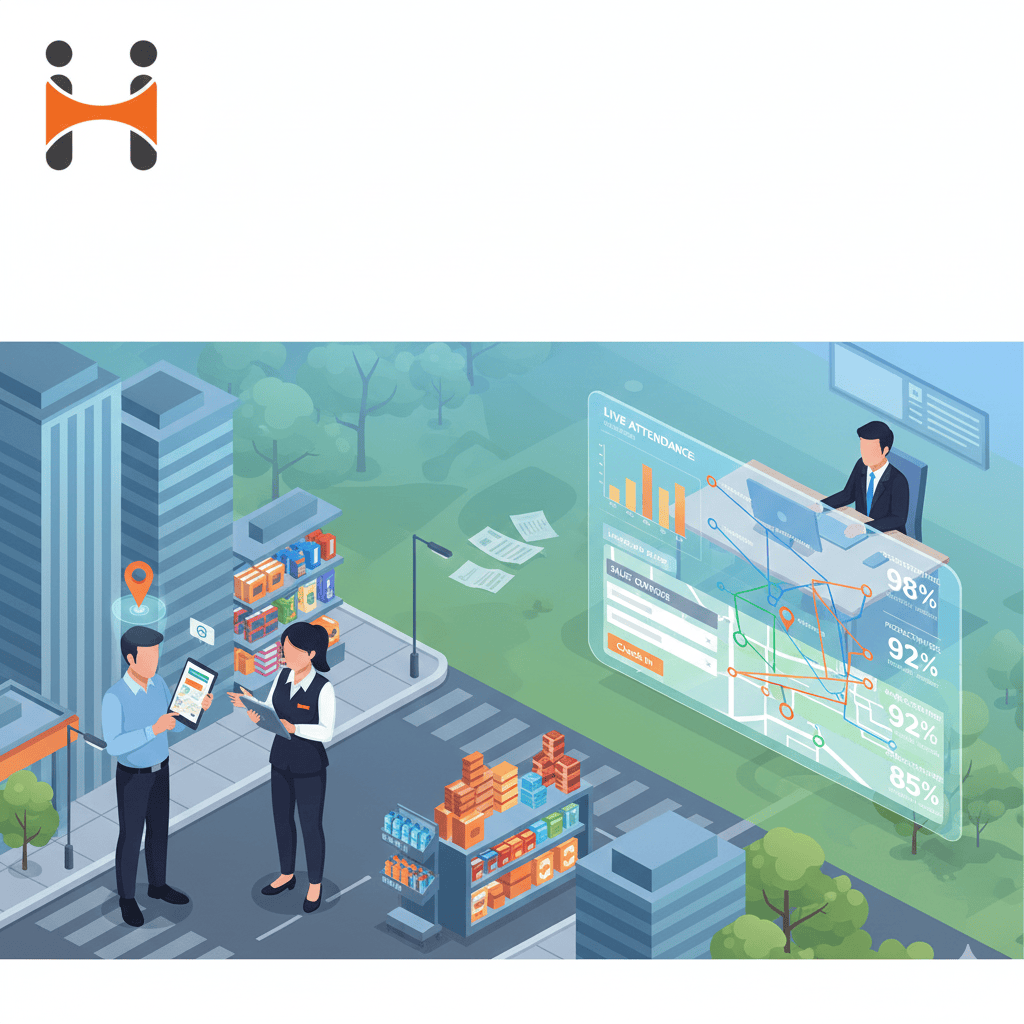
Managing leave and attendance in a field sales environment is very different from managing it inside an office. Field teams work remotely, travel constantly, and operate across large territories. Traditional attendance registers, HR portals, and manual approvals simply do not reflect the reality on the ground.
For organizations with large or growing field sales teams, poor leave and attendance control directly impacts productivity, revenue, and customer experience. Missed visits, uncovered beats, delayed collections, and confused managers are all symptoms of the same root problem: lack of real-time visibility.
This is where field sales leave and attendance management must move beyond HR processes and become part of daily field operations.
Why Leave and Attendance Is a Bigger Problem in Field Sales?
In office-based teams, attendance is binary. An employee is either present or absent. Field sales teams operate in shades of grey.
A sales representative may log in for the day but not visit assigned outlets. Someone may mark leave but still appear active in reports. Another may stay inactive due to network issues or travel constraints, with no clear explanation.
Over time, these gaps create serious operational blind spots.
From our experience working with large field teams across India, the most common challenges include:
- Attendance marked without physical field presence
- Leave applied retroactively or informally over calls or messages
- Managers unaware of absenteeism until targets are missed
- Beats left uncovered due to unplanned leave
- Productivity reports that do not match ground reality
Without structured field force attendance tracking, companies end up managing outcomes instead of controlling inputs.
Why Traditional Leave Management Systems Fail for Field Teams?
Most leave management tools are built for HR compliance, not field execution. They focus on policies, balances, and approvals, but ignore how work actually happens outside the office.
For field sales teams, these systems fall short because they:
- Do not verify physical presence
- Are disconnected from daily sales activities
- Do not link leave to routes, beats, or targets
- Rely heavily on manual inputs
- Offer no real-time visibility to managers
As a result, organizations may technically “manage leave” but still lose productivity every day.
This is why leave management for field sales teams must be tightly integrated with attendance, location, and activity tracking.
Attendance Is Not About Punching In. It Is About Being in the Market.
In field sales, attendance should answer one simple question:
Was the representative active in the market as planned?
Effective field force attendance tracking focuses on:
- Where the employee was
- When the day started and ended
- Which customers were visited
- Whether assigned routes were followed
When attendance is linked to real movement and real work, managers stop guessing and start acting.
How Poor Leave Visibility Impacts Productivity and Revenue?
Leave issues in field teams are rarely isolated HR problems. They cascade into operational losses.
When leave is not tracked accurately:
- Sales targets are missed due to uncovered territories
- Collections are delayed, affecting cash flow
- Distributors and retailers lose confidence
- Managers overestimate team capacity
- High performers get overloaded
In one real scenario we observed, a regional sales team believed they had full coverage across all beats. Once live attendance and location data were implemented, it became clear that nearly 18 percent of working days were effectively unproductive due to unreported leave, half days, and skipped routes.
That insight alone helped the company recover lost visits and rebalance workloads within weeks.
What Modern Field Sales Leave and Attendance Management Looks Like?
Modern field sales leave and attendance management is not a standalone system. It is part of a unified field force platform.
At a minimum, it should include:
- GPS-based attendance marking
- Real-time location verification
- Leave requests linked to working days and routes
- Offline capability for remote areas
- Automatic reporting for managers
When attendance and leave data flow directly into sales dashboards, planning becomes realistic instead of optimistic.
Managing Leave for Remote Sales Teams the Right Way
Remote field teams need flexibility, but flexibility without structure leads to abuse and inefficiency.
To manage leave for remote sales teams effectively:
- Leave requests should be logged digitally, not informally
- Managers should see upcoming leave in advance
- Leave should automatically reflect in beat planning
- Attendance should clearly distinguish between leave, inactivity, and field work
This approach prevents last-minute surprises and ensures coverage even when team members are unavailable.
Linking Leave with Beat Planning and Route Coverage
One of the biggest advantages of integrated systems is visibility across functions.
When leave tracking for field employees is connected to beat plans:
- Managers can reassign routes proactively
- Priority customers do not get skipped
- Temporary coverage can be planned in advance
- Sales forecasts become more accurate
Instead of reacting to missed visits, teams start preventing them.
Sales Team Attendance Monitoring That Managers Can Actually Use
Data is only useful if it is actionable.
Effective sales team attendance monitoring gives managers:
- A live view of who is active in the field
- Clear indicators of late starts or early drop-offs
- Historical attendance trends by individual and region
- Alerts for repeated absenteeism or inactivity
This shifts management conversations from blame to improvement, backed by facts rather than assumptions.
The Role of Offline Attendance in Field Operations
Many field sales teams operate in low-connectivity zones. Any system that requires constant internet access will fail on the ground.
A practical attendance and leave solution must:
- Allow offline attendance marking
- Sync automatically when connectivity is restored
- Preserve time stamps and location data
- Prevent data manipulation
Offline support is not a feature. It is a requirement for real-world field operations.
Compliance, Audits, and Data Integrity
Beyond productivity, attendance and leave data play a critical role in compliance.
Manual systems create risks such as:
- Inconsistent records
- Missing audit trails
- Payroll disputes
- Regulatory exposure
Digital field force attendance tracking ensures:
- Tamper-proof records
- Clear audit trails
- Transparent payroll inputs
- Reduced reconciliation effort
This is especially important for large enterprises with distributed teams.
How Companies See Results After Fixing Attendance and Leave Visibility?
Organizations that implement structured leave and attendance management for field teams typically report:
- Higher daily productive hours
- Improved visit consistency
- Faster sales cycles
- Better morale among high performers
- More accurate performance evaluations
In many cases, simply clarifying attendance expectations and making them visible leads to behavioral change without additional pressure.
Why Attendance Data Improves Sales Performance?
Attendance is not just an HR metric. It is a sales input.
When attendance data is reliable:
- Targets are set realistically
- Field capacity is measured accurately
- Incentives are distributed fairly
- Coaching becomes data-driven
This creates a healthier, more transparent work culture where performance is visible and rewarded appropriately.
Bringing It All Together in One Platform
The biggest mistake companies make is treating leave, attendance, location tracking, and sales reporting as separate problems.
Field operations work best when these elements are connected.
A unified field force automation platform allows organizations to:
- Track attendance based on real activity
- Manage leave without disrupting coverage
- Monitor productivity in real time
- Plan routes and beats dynamically
- Make decisions using accurate field data
This is how modern sales organizations scale without losing control.
What’s Next?
Managing leave and attendance for field sales teams is no longer about registers, approvals, or policies. It is about visibility, accountability, and productivity.
When field sales leave and attendance management is aligned with real-world field activity, organizations stop losing time, money, and momentum.
The companies that succeed are the ones that treat attendance as an operational signal, not an administrative formality.
In a field-first world, productivity begins with knowing who is actually in the market, doing the work, every single day.
Start managing field sales leave and attendance the right way with Happisales-get real-time visibility, verified presence, and higher productivity from your field team with a free trial.
Leave a Reply