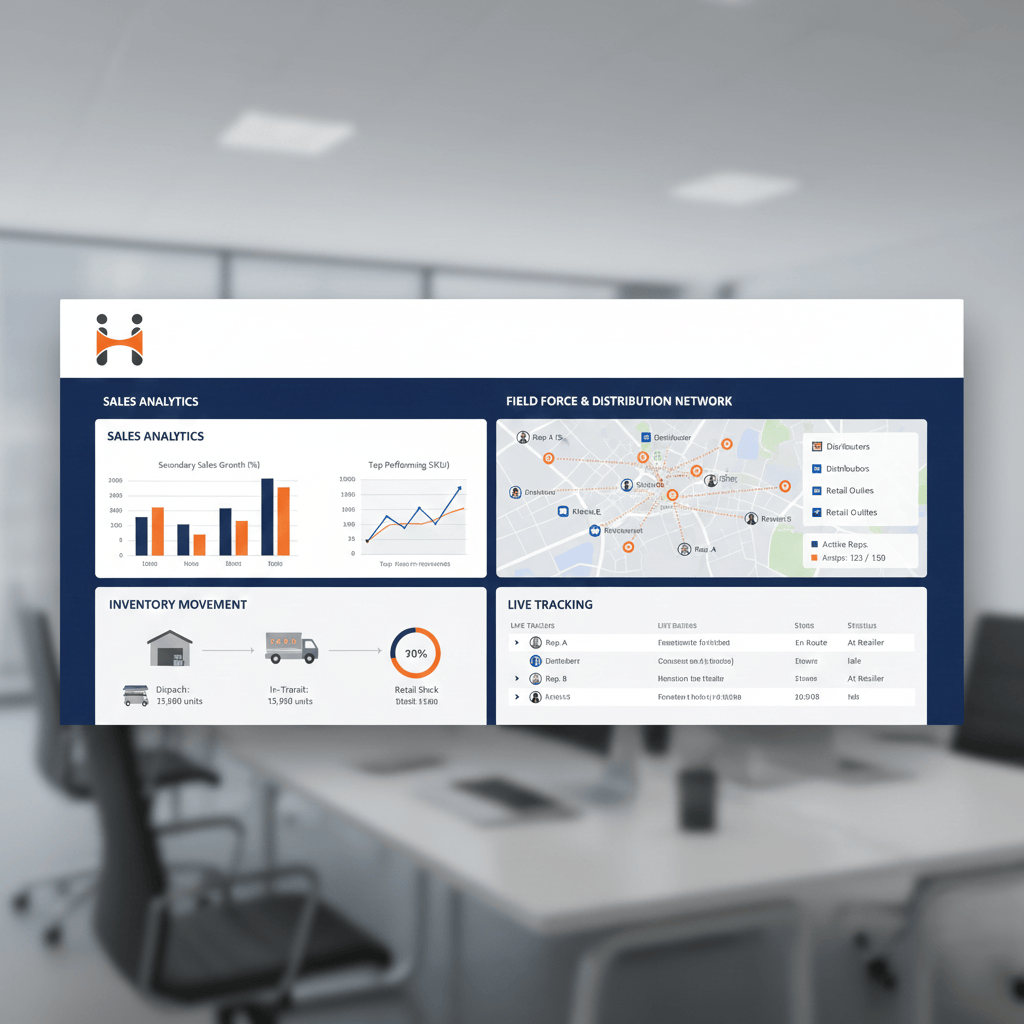
Selling to a distributor is only the start. The real outcome depends on what happens next. Once products move into dealer outlets, wholesalers, or retail stores, visibility drops. Many businesses lose track of where stock goes, how fast it sells, and whether field teams are actually visiting the market.
Secondary sales tracking software solves this problem. It shows how products move after primary sales and gives clear visibility into field activity and employee location. This blog explains why secondary sales tracking matters, how it works in practice, and why it is critical for businesses that rely on field teams for execution.
Understanding Secondary Sales and Why It Matters?
Secondary sales refer to product movement from distributors to retailers or end customers. Primary sales only show billing to distributors. Secondary sales show real demand in the market.
Many companies still depend on phone calls, spreadsheets, or delayed reports to track this data. These methods are slow and often inaccurate. By the time reports arrive, the situation has already changed.
From experience working with field teams, delayed reporting is one of the biggest issues. Inventory numbers come late. Sales trends are visible only after opportunities are missed. Decisions are made with partial information.
Secondary sales tracking software closes this gap. It connects field activity, stock movement, and sales data into one system that reflects what is actually happening on the ground.
Why Secondary Sales Tracking Is No Longer Optional?
Modern businesses operate in competitive and fast-moving markets. Decisions based on old data lead to stock issues, missed sales, and poor planning. Secondary sales tracking brings clarity where manual processes fail.
Real-Time Visibility Into Product Movement
With the right system, you can see where products are at any point after dispatch.
- You can track which retailers are selling fast
- You can identify stock lying idle at distributor points
- You can compare performance across regions
- You can spot slow-moving or fast-growing products early
This level of visibility allows quick action. Stock can be reallocated. Promotions can be adjusted. Issues can be fixed before they grow.
Accurate Tracking of Field Teams and Their Location
Managing field teams without location visibility creates blind spots. Manual check-ins and self-reported visits are unreliable.
Modern secondary sales tracking systems include GPS-based location tracking and visit proof. Each visit is logged with time and location data.
From experience managing distributed teams, the impact is immediate. Fake or exaggerated visit reports drop. Managers get a clear picture of actual field activity. Trust improves because decisions are based on verified data.
With location tracking, businesses can:
- Verify field visits using GPS and timestamps
- View live team presence on maps
- Track whether tasks are completed as planned
- Compare performance across areas and teams
- Accountability improves without constant follow-ups.
Improved Distributor Performance Evaluation
Distributor performance often varies widely. Some push products actively. Others hold stock without movement.
Secondary sales tracking shows actual sell-out data, not just billing numbers. This makes it easier to identify strong partners and weak links.
Businesses can:
- Reward high-performing distributors fairly
- Support low performers with training or incentives
- Identify coverage gaps and growth opportunities
- Performance discussions become data-based instead of opinion-based.
How Secondary Sales Tracking Software Works?
Secondary sales tracking systems connect all stakeholders on one platform.
Field teams use mobile apps to log visits, orders, collections, and expenses. Most systems work offline and sync data when connectivity is available.
Distributors update stock movement, sales, and returns. In many setups, this data flows automatically from existing systems.
All data is stored in a central system. Managers access dashboards that show sales, stock, and field activity in real time.
Reports are generated instantly. There is no waiting, no manual consolidation, and no guesswork.
Core Features Every Secondary Sales Tracking System Must Have
Mobile access with offline support is critical. Field teams often work in low-connectivity areas. Data capture must not stop.
Live location tracking and visit proof ensure field activity is real and verifiable.
System integration is essential. Sales data should connect with ERP, CRM, or accounting systems to avoid duplication.
Custom dashboards help different teams focus on what matters to them.
Analytics should be simple to understand and useful for decisions.
The interface must be easy to use. If the tool is complex, adoption will fail.
The Real Benefits for Your Business
Secondary sales tracking changes how businesses operate on the ground.
Faster Decision-Making
Real-time data eliminates delays caused by weekly reports. Managers can adjust inventory, change sales focus mid-cycle, and fix regional issues early, gaining a clear speed advantage.
Lower Operational Costs
Automation reduces manual reporting, data entry, and errors. Administrative workload drops, and most businesses begin to see cost savings within a short period.
Higher Sales and Better Execution
Clear sell-out visibility improves planning. Stockouts reduce, overstocking declines, and field teams achieve better visit coverage, higher conversions, and fewer missed opportunities.
Stronger Distributor and Retailer Relationships
When discussions are backed by real data, relationships improve.
Businesses can help retailers with better replenishment planning. Distributors see fairness in performance evaluation. Trust grows because conversations are based on facts.
This often leads to better shelf presence, smoother negotiations, and long-term partnerships.
Market and Competitive Insights
Secondary sales data reveals patterns beyond internal performance.
- It shows which products are gaining traction
- Where demand is shifting
- How regions respond to pricing or promotions
- What seasonal trends look like in reality
Businesses stop reacting late and start planning ahead.
Why Field Force Location Tracking Makes a Difference?
Location tracking is not about control. It is about clarity.
- Managers can confirm presence without constant calls. Routes can be optimized to reduce travel time. Productivity improves because effort is visible and measurable.
- Location data also improves safety. Knowing where teams are helps during emergencies or in remote areas.
- Oversight gaps reduce. Field performance becomes easier to manage at scale.
A Practical View From the Field
Adopting this system changes work culture. There is often initial resistance to tracking. Many teams worry about constant monitoring.
This usually fades once benefits become clear. Automated reports reduce manual work. Fair performance evaluation builds trust. Recognition becomes objective.
In real deployments, teams often report fewer missed visits within the first quarter, better route planning, higher morale due to transparent incentives.
Leadership gains visibility without micromanagement. Managers spend more time coaching instead of chasing reports.
What’s next ?
Secondary sales tracking software with field force location tracking is no longer optional. It is a foundation for scalable growth.
Businesses gain clarity on product movement and field execution. Guesswork disappears. Decisions improve.
Companies that adopt this approach achieve:
- Better operational efficiency
- Stronger sales performance
- Healthier partner relationships
- Sustainable, data-driven growth
Investing in secondary sales tracking today builds control and resilience for the future. Get full visibility into secondary sales and field team activity with Happisales– start your free trial today and take real control of your distribution and on-ground execution.
Leave a Reply