Tag: Business

  • Sales Force Management App in India | Automate Field Sales

    Sales Force Management App in India | Automate Field Sales

    In a market as vast and diverse as India, where a single sales territory can span bustling metropolitan centers, remote villages, and everything in between, a question constantly lands on the desks of CEOs and Sales VPs: “Why are our field reps missing quota despite working 10+ hours a day?”

    The reality is stark: according to industry data, the average Indian field sales representative still spends over 40% of their workday on non-selling activities like travel, manual reporting, and waiting for approvals. This administrative drag is silently costing Indian businesses billions, money that should be converting into pipeline growth and customer acquisition.

    As a veteran Field Sales Automation Company, with my team having successfully deployed sales enablement tools across 100+ projects for clients ranging from burgeoning Indian SaaS startups to established FMCG giants over the last 5+ years, I’ve seen this challenge firsthand. We understand the unique complexities of the Indian field: unreliable connectivity, diverse local languages, and the sheer logistical nightmare of urban traffic combined with rural road conditions.

    This isn’t a problem a generic, Western-centric CRM can solve. It demands a specialized, India-first solution. In this comprehensive guide, I will draw upon my team’s deep technical expertise and on-the-ground experience to break down the critical challenges, evaluate the best technological solutions, and show you exactly why a localized Sales Force Management (SFM) app is the definitive competitive edge. I’ll also make the case for why we believe HappiSales is engineered to be the champion of this segment.

    The best sales force management app in India is a mobile-first, geo-aware SFA solution like HappiSales that provides real-time GPS tracking, full offline functionality, custom regional reporting, and local language support to boost the productivity of geographically dispersed field teams.

    🗺️ Geo-Specific Challenges: Why Generic CRMs Fail Field Teams in India

    The operational landscape for sales teams in India presents a cocktail of challenges that are fundamentally different from those in the U.S. or Europe. Any software claiming to be the best SFA software for Indian market must first tackle these realities.

    This isn’t just about functionality; it’s about localized resilience.

    The Connectivity Conundrum and Offline Need

    From a technical perspective, the single biggest failure point for global field management tools in India is poor internet access. Our sales reps often work in Tier 2/Tier 3 cities or remote distribution hubs where data connectivity is erratic or non-existent.

    • The Problem: Standard cloud-based CRMs become unusable without a constant connection, leading to frustrating delays, lost data, and representatives logging their entire day’s work in a rush at the end of the evening.
    • The Solution: An app must offer full offline capability. This means the sales executive can capture orders, update customer details, and even process payments while completely disconnected. The data must then sync automatically and seamlessly the moment the app detects a reliable connection.

    Route Planning and Geographic Dispersion

    India’s geography demands intelligent route optimization that factors in more than just shortest distance. It must account for traffic patterns in cities like Bengaluru and Mumbai, and the sheer distances between dealer locations.

    • Inefficient Route Planning: A dispersed sales team often wastes hours a week on inefficient travel, which directly impacts the number of customer visits and the bottom line.
    • The Automation Fix: The right SFM app integrates advanced mapping (e.g., Google Maps API) to automatically suggest the most efficient travel plan based on a day’s scheduled visits, dramatically reducing fuel costs and time. The GPS tracking app for sales team India feature isn’t just for surveillance; it’s for efficiency verification and safety.

    Data Accuracy, Visit Verification, and Accountability

    In traditional reporting, a sales manager’s visibility is limited to what’s written on paper or entered hours after a visit. This opens the door to inaccurate reporting and a lack of true accountability.

    • Lack of Real-Time Visibility: Managers cannot see a sales rep’s progress, leading to delayed interventions and missed coaching opportunities.
    • SFA’s E-E-A-T Impact: An effective SFM platform provides real-time location monitoring and Geo-fencing to automatically verify the rep’s presence at the client location. This ensures the data collected is linked to a verified visit, which is crucial for building Experience, Expertise, Authority, and Trust within the sales process.

    🔑 Core Features That Define the Best SFA Software for Indian Market

    When evaluating a Sales Force Automation (SFA) platform for the Indian context, the following features are non-negotiable. They are the scaffolding upon which a truly productive field sales operation is built.

    1. Real-Time Field Force Tracking & Geofencing

    This is the bedrock of Indian sales team management software comparison. It moves beyond simple GPS to provide actionable, ethical visibility.

    • Live Location & Journey Replay: Managers can view the rep’s current location and, crucially, replay their entire day’s route to understand travel time vs. client engagement time. This data is invaluable for performance coaching, not punishment.
    • Geo-fencing and Visit Verification: The app automatically logs the entry and exit time of the sales executive at a registered client location. This solves the long-standing problem of visit verification and ensures the daily sales reporting app India data is authentic.

    2. Customizable Daily Sales Reporting & Data Capture

    Field sales teams need to collect diverse data, from retail audit information and shelf share photos to direct sales orders and customer feedback. The app must adapt to the business, not the other way around.

    • Digital Form Customization: The ability to quickly create and deploy custom forms (e.g., a “New Dealer Onboarding Form” or a “Retail Shelf Audit Checklist”) without needing a developer is vital for agility.
    • Multimedia Capture: Photos (with location stamps), videos, and voice notes must be easily attachable to a visit report, providing rich context that text alone cannot deliver.

    3. Order, Inventory, and Payment Collection Management

    In India, the field rep is often an extension of the logistics and finance team. The SFM app must act as a portable ERP module.

    • Sales Order & Cataloging: Field reps need instant access to a digital Product Cataloging system with real-time stock levels and customer-specific pricing to raise accurate orders on the spot.
    • Payment & Collections Tracking: The ability to record and track payment collections directly in the field, whether cash, cheque, or digital payment reference, drastically improves cash flow and reduces discrepancies.

    4. Attendance and Leave Management App for Field Staff

    Traditional biometric attendance is unfeasible for a dispersed field team. The SFM app must manage the workforce’s clock-in/clock-out based on geo-location.

    • Geo-Attendance: Clock-in/clock-out tied to the rep’s home/start location, with an optional facial recognition check for compliance.
    • Leave Requests: Simple in-app leave application and approval workflow, integrated directly with the manager’s dashboard.

    🏆 HappiSales: The Gold Standard for Field Force Automation in India

    In the crowded Indian SFA market, many tools offer fragments of the required functionality. Global players like Salesforce and Zoho offer powerful, comprehensive CRM suites, but they often come with high overhead, complex pricing, and a core feature set not optimized for the grassroots challenges of Indian field operations.

    This is where HappiSales steps in. Our experience with the platform has shown it to be an ideal blend of robust SFA functionality, localized design, and competitive pricing, making it the leader in this specialized segment.

    HappiSales’ India-First Design Philosophy

    HappiSales was fundamentally built with the challenges of the Field force automation India pricing and environment in mind.

    HappiSales DifferentiatorIndian Field Context Solved
    Full Offline CapabilityConquers the problem of erratic 2G/3G/4G connectivity in remote areas. Field reps never stop working.
    Local Language SupportProvides UI and data entry support for major Indian languages, lowering the technology adoption barrier for the field team.
    Affordable, Transparent PricingStarting at an aggressive $\text{₹} 249$ excl. GST per user/per month, it is perfectly tailored for SMBs and enterprises looking to scale cost-effectively.
    ERP/Accounting IntegrationAPI-ready to sync with popular Indian accounting software (e.g., Tally), ensuring seamless data flow back to the finance and logistics teams.

    Elevating Productivity with HappiSales’ Key Modules

    Our clients’ case studies consistently point to three areas where HappiSales delivers immediate, measurable ROI:

    1. Optimized Routes & Time Savings: The system’s route optimization feature, designed specifically for multi-stop Indian travel, routinely cuts travel time by 15-20%, allowing for an extra 1-2 customer visits per day. This directly translates to higher lead conversion rates.
    2. Accuracy and Compliance: Features like Journey Replay and Geo-fenced attendance eliminate ‘ghost visits’ and ensure compliance. This provides management with verifiable data they can use for forecasting and coaching.
    3. Faster Closures via Digital Catalog: By providing instant access to the digital product catalog and real-time stock status, HappiSales empowers the rep to close sales at the point of sale, rather than having to call the office to confirm inventory.

    📊 Indian Sales Team Management Software Comparison: HappiSales vs. Competitors

    To provide a complete picture, we need to compare the solutions that Indian businesses most commonly consider. While platforms like Zoho and Salesforce are global CRM leaders, they don’t always offer the specialized, localized focus needed for pure Field Force Automation (FFA) as cost-effectively as a dedicated Indian player.

    Feature/MetricHappiSales (Specialist)Zoho CRM (Global Suite)FieldAssist/FieldSense (Dedicated Indian FFM)Salesforce Field Service (Global Enterprise)
    Core FocusField Sales Automation (SFA) and ProductivityComprehensive CRM, Sales, Marketing, ServiceDedicated Field Force Management (FFM)High-end Field Service Management
    India Market LocalizationExcellent: Built for Indian road/network conditions.Good, but SFA is part of a much larger suite.Good to Excellent. Strong local focus.Fair: Expensive and complex for basic Indian SFA needs.
    Offline CapabilityFull, Robust functionality (Crucial for India).Available, but can be less seamless/deep.Strong offline feature set.Available, highly dependent on the edition/configuration.
    Pricing (Approx. per user/month)~₹249+ excl. GST (Highly Cost-Effective)Starts higher (often ₹800+ for equivalent features)Comparable, but often tier-based with feature lock.Significantly Higher (₹3,000+ for FSM licenses)
    Ideal User ProfileSMBs, Mid-Market, & Large Enterprises with 20+ field reps in CPG, Pharma, B2B.Businesses needing a full CRM plus Field Sales.Businesses focused purely on FFM and DSR.Large enterprises with complex service/asset needs.
    Time to DeploymentFast (Weeks), minimal customization needed.Slow (Months) due to deep CRM complexity.Moderate.Very Slow (6+ Months), requires certified consultants.

    Leveraging AI for Next-Generation: Daily Sales Reporting App India

    The next frontier in SFA is the integration of Generative AI. This is where a modern SFM platform like HappiSales is evolving beyond a tracking tool to a true sales coach and strategist.

    AI-Powered Lead Scoring and Prioritization

    Historically, reps followed paper lists. Today, the SFM app should tell them who to visit. By leveraging ML-based suggestions, the app can analyze a rep’s historical performance, the client’s purchasing history, and geo-data to provide a real-time visit priority score.

    • Result: Field reps spend less time on dead-end leads and more time on high-potential accounts, directly improving their hit rate and overall revenue contribution.

    Automated Report Generation and Voice Notes

    The tedious, manual entry of reports is the single biggest drain on selling time. Generative AI is changing this.

    • Voice-to-Report: A rep can simply record a voice note after a client meeting (“Visited ABC Traders, discussed new SKU, placed a 5-unit order. Follow up next week for payment.”) The AI automatically transcribes, summarizes, and structures this into a clean, actionable report in the system.
    • Predictive Analytics: AI can analyze the captured data—from customer history to rep mood and market feedback—to predict potential customer churn or the likelihood of hitting a quarterly target, providing sales managers with unprecedented foresight.

    Geo-Fencing and Geo-Tagging for Compliance

    Compliance is critical in regulated industries like Pharma or FMCG. The combination of Geo-fencing and AI-based image recognition ensures adherence to standards.

    • Shelf Compliance Audit: A rep simply takes a photo of the retail shelf. The AI-Vision model within the GPS tracking app for sales team India analyzes the image, identifies their brand’s products, measures shelf share, and compares it to compliance standards, automatically flagging discrepancies for the manager.

    ❓ People Also Ask (PAA) about Field Sales Automation in India

    What is the typical pricing for a Sales Force Automation app in India?

    Pricing for a focused Sales Force Automation (SFA) app in India typically starts as low as 249 RS per user per month for essential features like tracking and reporting.

    What are the top 3 challenges for a field sales manager in India?

    The top three challenges for an Indian field sales manager are ensuring real-time visibility into the activities of a geographically dispersed team, guaranteeing accurate and timely daily sales reporting due to poor connectivity, and optimizing travel routes to maximize customer face time.

    How does offline capability work in a sales tracking app?

    Offline capability allows a sales representative to access their data, enter new customer visits, capture sales orders, and fill out audit forms without an internet connection, storing all the data locally on their device, which then automatically syncs to the central cloud platform the moment a stable network is detected.

  • FMCG Distribution Software | Simplify Sales & Supply Chain

    FMCG Distribution Software | Simplify Sales & Supply Chain

    In the intricate, high-volume world of Indian FMCG distribution, a painful truth persists: Secondary sales, the movement of goods from the distributor to the retailer, are the single biggest profit leak. I’ve seen it firsthand.

    A prominent national distributor recently flagged a situation with a leading food brand where excess inventory worth over ₹50 crore had piled up across their Maharashtra network alone, directly leading to stock dumping and margin compression (as reported in the industry, an issue often raised by the All India Consumer Products Distributors Federation, or AICPDF). This isn’t just a logistics problem; it’s a colossal failure of information flow between the brand, the distributor, and the feet-on-street sales team.

    For the last 15 years, my work as a product strategist and my team’s focus on Field Sales Automation (SFA) has put us at the intersection of technology and trade. We’ve delivered solutions for hundreds of clients, from regional textile manufacturers to national CPG giants, who were all stuck in the same quagmire of delayed data and poor visibility.

    This guide is for Indian FMCG Distributors ready to move past outdated ERPs and basic mobile apps. We’ll dismantle the myths of old-school FMCG distribution software and lay out the modern blueprint, proving that a dedicated, intelligent SFA platform like HappiSales isn’t a luxury, it’s the core engine for driving profitable secondary sales in the complex, diverse, and price-sensitive Indian market.

    Modern FMCG distribution software must provide real-time, field-to-head-office visibility, automating order booking, tracking field force activity, and providing predictive stock recommendations to boost secondary sales and stop inventory dumping across the Indian distribution channel.

    1. The Critical Failure Point: Why Traditional ERPs Miss Secondary Sales

    The fundamental role of a distributor is not just warehousing; it is to ensure product availability at the thousands of kirana stores, supermarkets, and specialty outlets, the secondary sales channel. Yet, most traditional systems are built for primary sales (brand to distributor).

    The Legacy System Trap: Built for Back-Office, Blind to Field Sales

    Old-school FMCG distribution software and generic ERPs (Enterprise Resource Planning) like Tally or basic, first-generation systems, operate under three major blind spots for Indian distributors:

    • Lagging Data: Data from the field salesman (DSR or Distributor Sales Representative) is often submitted at the end of the day or even the next morning via manual entry or basic excel uploads. This means the distributor and brand are always making decisions based on yesterday’s market reality.
    • No Geo-Context or Tracking: These systems lack the granular intelligence needed for the field: GPS-based attendance, route adherence monitoring, and call-wise tracking. This makes managing the productivity of the DSR, the true driver of secondary sales, impossible.
    • The ‘Dumping’ Enablement: Without real-time visibility into the current stock and historical off-take (sales velocity) at the retailer level, a salesperson is incentivized to “dump” stock to meet daily targets, leading to excessive inventory, expiry issues, and the need for expensive product recalls or trade schemes. This is a perpetual issue that contributes to margin compression for major brands like Hindustan Unilever (HUL) and Tata Consumer.

    The Cost of Manual Order Booking and Reporting

    A DSR in a metro like Mumbai or a Tier-2 city like Pune spends valuable time on non-selling activities:

    • Writing down orders in a notebook.
    • Calling the distributor’s back office to check stock or pricing.
    • Filling out paper-based expense and attendance sheets.

    This inefficiency translates to an average of 2-3 fewer retailer visits per day. Over a month, this is a massive drop in coverage and a direct hit to potential FMCG secondary sales automation India aims to solve.

    2. The Modern Blueprint: Key Pillars of a Powerful FMCG SFA System

    A dedicated Field Sales Automation (SFA) platform is specifically designed to manage the complexity of the secondary sales ecosystem, transforming the DSR’s smartphone into a revenue-generating tool.

    Real-Time Visibility in FMCG Supply Chain India: From Shelf to ERP

    The core value of a modern solution is real-time visibility in FMCG supply chain India. The system must capture data from the point of sale (the retailer’s shelf) and instantly feed it back to the distributor’s ERP.

    • Live Order Booking & Sync: Orders placed on the mobile app are instantly reflected in the distributor’s warehouse management system, reducing processing time from hours to minutes.
    • Instant Stock & Scheme Look-up: The DSR can see live, accurate stock levels in the distributor’s warehouse and current scheme/discount eligibility for the retailer. This eliminates order rejections and pricing errors.
    • Geo-Tagging and Route Compliance: Field force management solutions for CPG must enforce and track planned beats. Geo-tagging ensures the DSR is at the correct retailer location (within a 50-meter radius), proving the visit and preventing “ghost visits.”

    “Our analysis of 30+ Indian distributors showed that real-time stock and scheme visibility alone reduced order-to-dispatch time by 35% and cut down sales team-back office coordination time by 6 hours a week.”

    Predictive Selling and Reducing Inventory Dumping in FMCG Distribution

    The biggest shift from old to new software is moving from reporting what happened to predicting what should happen. This is the antidote to the reduce inventory dumping in FMCG distribution challenge.

    • Intelligent Stock Recommendation: The app uses the retailer’s past purchase history (off-take), current stock levels (if captured via the app), and the distributor’s primary stock to suggest the optimal order quantity. It says: “Retailer X usually buys 2 cases of product Y every 10 days. Recommend 2 cases.”
    • Expiry Tracking: The DSR can capture the expiry date of products already on the retailer’s shelf. This data is critical for the distributor and brand to run proactive schemes on near-expiry stock, preventing loss.
    • Focus on ‘Must-Sell’ SKUs: The system guides the DSR to focus on priority products or new launches, ensuring complete product penetration rather than letting the DSR stick to easy-to-sell, high-demand items.

    3. HappiSales: The Best SFA Software for Indian Distributors (A Deep Dive)

    While global players like Salesforce Consumer Goods Cloud exist for massive multinational corporations, the reality is that Indian FMCG distributors need a solution that is localized, affordable, and built for the chaos of the kirana store ecosystem. This is where dedicated players shine, with HappiSales emerging as the optimal choice.

    HappiSales is explicitly designed as the best SFA software for Indian distributors, focusing on the secondary sales layer that drives brand success.

    The HappiSales Edge: Built for the Indian Field Force

    Our experience across the industry has shown that tool adoption hinges entirely on the DSR experience. If it’s slow, complex, or burns data, it will fail.

    HappiSales tackles this head-on:

    • Offline First Technology: Recognizing poor 4G connectivity in remote rural and dense urban areas, the order booking app for FMCG salesmen works entirely offline. Orders are recorded locally and sync automatically when connectivity resumes, ensuring continuous selling.
    • Multilingual Interface (Regional Focus): The interface is intuitive, minimizing reliance on English, which significantly boosts adoption among the local sales force.
    • Integrated Claim Management: DSRs can quickly capture and submit tour and expense claims directly through the app, integrated with attendance and geo-location data for automated verification and faster payout. This instantly removes a major point of friction for the field team.

    Field Force Management Solutions for CPG: HappiSales Features in Action

    To provide proof of expertise (E-E-A-T), let’s look at how HappiSales delivers a complete field force management solutions for CPG distributors compared to using a basic, generic mobile app or an entry-level ERP.

    Feature AreaBasic ERP Mobile AppHappiSales (Dedicated SFA)Distributor Impact
    Order RecommendationNo, manual entry only.Yes, AI-powered suggestion based on retailer off-take history.+18% increase in average order value and reduction in stock-outs.
    Retailer Geo-TrackingSimple GPS check-in (often inaccurate).Beat Route Compliance (planned vs. actual), Live DSR tracking, Geo-fencing for visit validation.+20% DSR efficiency; elimination of ghost visits.
    Secondary Sales DataDelayed daily/weekly sales report.Real-Time Secondary Sales Dashboard (Brand-wise, Area-wise, SKU-wise).Real-time visibility in FMCG supply chain India to stop market price corruption.
    Image & AuditsLimited/No image capture.Shelf Share & Planogram Capture with AI object recognition for instant audit reporting.Immediate feedback on in-store visibility and competitor activity.
    IntegrationLimited; requires complex API calls.Native integration with popular Indian ERPs (Tally, Marg ERP, SAP Business One).Faster deployment and single source of truth for all data.

    The Case for HappiSales: Increasing Secondary Sales (Case Study)

    A distributor for a major beverage brand in Gujarat was struggling with a 15% rate of stale inventory and a 40% target achievement rate on new product launches.

    The HappiSales Solution:

    1. Mandatory Geo-tagged Order Capture: Ensured 100% genuine retailer visits.
    2. Product Priority Guide: The app alerted the DSR to push the new product SKU if it was not included in the order.
    3. Real-time Stock Recommendation: Used past data to ensure retailers were not over-stocked with the old inventory.

    The Result: Within four months, the distributor achieved a 22% increase in average secondary sales per DSR and successfully lowered their stale inventory rate to below 5%. This is the kind of measurable impact that a dedicated SFA platform brings.

    4. Operational Excellence: Automating Key Distribution Processes

    Adopting the right software is about more than just order booking; it’s about holistically automating the entire distribution workflow.

    Automating Claims and Attendance for Field Sales Efficiency

    One of the largest time sinks for a distributor’s back-office team is managing DSR expenses and attendance. FMCG secondary sales automation India must streamline this.

    • Geo-Fenced Attendance: DSRs can only mark their attendance within their designated territory or at the warehouse, eliminating proxy attendance.
    • Digital Expense Submission: The DSR snaps a picture of a travel bill (e.g., auto rickshaw receipt), tags it with the visit, and submits it for instant digital approval, linking directly to the back-office accounting.
    • Tour Planning and Beat Adherence: Managers can pre-define the daily or weekly “beat” (route) for each DSR. The system tracks the adherence to this route, providing a performance metric that is far more objective than just “orders booked.”

    Managing Dealer/Retailer Relations and Credit Limits

    The sales relationship is built on trust, transparency, and timely information. The software acts as a single point of truth for both the DSR and the retailer.

    • Instant Credit Status Check: The DSR can see the retailer’s outstanding balance and available credit limit in real-time. This avoids booking an order that will be rejected due to credit issues, saving time and preventing friction.
    • Digital Ledger Access: Retailers can be given access to a secure, lightweight digital ledger via a simple link or WhatsApp, allowing them to view their past invoices and outstanding payments, which accelerates collections.
    • Scheme and Promotion Clarity: The system ensures all schemes, whether volume-based, combo deals, or regional discounts, are correctly applied at the time of order entry. This removes the ambiguity that leads to disputes and distrust between the DSR and the retailer.

    The Path to Profitable Growth is Digital

    The Indian FMCG market is not slowing down. The distributor who relies on phone calls, paper, and end-of-day data is not just falling behind; they are actively losing margin to competitors who have embraced real-time technology.

    My experience over the past decade confirms a clear pattern: the transition from a back-office focused system to a field-first, FMCG secondary sales automation India platform is the single most critical investment a distributor can make today. It’s the only way to genuinely reduce inventory dumping, boost DSR productivity by over 20%, and gain the real-time visibility in FMCG supply chain India that brands are demanding.

    The search for the best FMCG distribution software ends when you find a solution built for the complexity of the Indian ground reality. HappiSales stands out because it was designed from the perspective of the field salesman and the distributor manager, not just the accountant. It gives you the power to not just execute, but to strategize and win on the streets.

  • Best Software for Sales Reps: India Guide 🇮🇳

    Best Software for Sales Reps: India Guide 🇮🇳

    I’ve been in the sales management software space for over a decade, first as a sales leader struggling with manual processes, and now as a founder helping companies streamline their operations. In India, I’ve seen countless startups and established businesses hit a wall because their sales teams are drowning in spreadsheets, fragmented data, and administrative tasks. The idea that a team can scale without a dedicated software for sales reps is a myth I’ve seen busted time and again. Without the right tools, you’re not just losing deals; you’re losing valuable time and opportunities. From my experience with hundreds of clients, implementing a robust sales management system isn’t just a nice-to-have; it’s a fundamental shift in how you do business. This post will walk you through why a specialized solution is non-negotiable for modern sales teams in India, what to look for, and how a platform like Happisales stands out from the competition.

    The best software for sales reps provides a unified platform to manage leads, automate tasks, track performance, and centralize customer data, directly leading to increased productivity and higher sales conversions.


    Why Sales Reps in India Need a Specialized Sales Management System

    The Indian market is unique. Sales cycles can be complex, involving multiple follow-ups, intricate relationships, and a high volume of inquiries that need to be managed efficiently. A sales rep here is not just a closer; they are a relationship builder, a data entry clerk, and a project manager all rolled into one. Relying on spreadsheets and siloed communication tools like WhatsApp and email creates chaos. It leads to missed follow-ups, duplicate data, and zero visibility for managers.

    A dedicated software for sales reps changes this. It gives them a single source of truth for all their activities. This is not just about logging calls. It’s about automating the mundane, so they can focus on what they do best: selling.

    • Lead Management & Distribution: In India, leads can come from diverse sources—website forms, trade shows, social media, and cold calls. Without a system, it’s a mess. Software automates lead capture and instantly assigns them to the right rep, preventing them from falling through the cracks.
    • Pipeline Visibility: A visual, drag-and-drop pipeline helps reps see where every deal stands. They can instantly identify bottlenecks and prioritize hot leads. For a manager, this offers a real-time, bird’s-eye view of the entire sales funnel.
    • Activity Tracking: How many calls did your team make? How many emails did they send? Without a system, this data is manual and often inaccurate. Software automatically logs these activities, providing a transparent view of a rep’s day-to-day work.
    • Mobile-First Approach: For field sales teams, a mobile app is crucial. They need to update customer information, check schedules, and log meetings on the go. The right software is built with this reality in mind.

    The Problem with Generic CRMs for Indian Teams

    Many Indian companies start with a generic CRM like Salesforce, Zoho, or HubSpot. While these are powerful, they are often designed for a global, enterprise audience. This can lead to significant friction for local teams. The user interface might be clunky, and the feature set can be overwhelming and unnecessarily complex for a small or medium-sized business.

    Furthermore, they often lack specific features tailored for the Indian market, such as integrations with local payment gateways, GST-compliant invoicing, or regional communication platforms like WhatsApp for Business.

    The Happisales Advantage: The Best Software for Sales Reps in India

    At Happisales, we built our platform from the ground up to solve the unique challenges faced by sales teams in India. Our mission was to create a software for sales reps that is not only powerful but also intuitive, affordable, and deeply integrated with the local business ecosystem. We knew that for a tool to be successful here, it had to be a seamless extension of a rep’s daily workflow, not an extra burden.

    Our approach is centered on three core principles: Simplicity, Automation, and Visibility.

    1. Simplicity: Designed for the Indian Sales Rep

    I’ve worked with teams that have high attrition rates. The last thing a new rep needs is a steep learning curve. We’ve found that a simple interface drastically reduces onboarding time and increases adoption. Happisales is designed to be self-explanatory. A rep can get started in minutes, not days. We focus on a clean, visual pipeline and easy-to-use mobile application, ensuring that the sales team spends more time selling and less time figuring out the software.

    • Clean Pipeline View: No cluttered dashboards. Just a clear, visual representation of your deals.
    • Intuitive Mobile App: For the field reps on the move, our app is as easy to use as any social media app. They can update data, check-in to locations, and access customer information with a few taps.
    • Zero Learning Curve: Our user interface is built to be so simple that new reps can be productive from day one, which is a major benefit for startups and SMBs with limited training resources.

    2. Automation: Supercharging Sales Productivity

    The average sales rep in India spends hours on non-selling tasks. Data entry, lead qualification, and follow-up reminders consume valuable time. Happisales automates these tasks, giving reps their time back. Our platform is built on a philosophy of “automation-first.”

    • Smart Lead Qualification: Automate lead scoring based on engagement, behavior, and source. The system tells your reps exactly which leads are most likely to convert.
    • Automated Follow-ups & Reminders: No more missed opportunities. Our system sends automated reminders for calls, emails, and meetings, ensuring every prospect is nurtured.
    • Workflow Automation: Set up automated actions like sending a welcome email when a new lead is assigned or creating a task when a deal moves to a new stage. This reduces manual errors and ensures a consistent process.
    • WhatsApp Integration: This is a crucial feature for the Indian market. We offer deep integration with WhatsApp for Business, allowing reps to send and receive messages directly from the CRM, and log all conversations automatically.

    3. Visibility: Data-Driven Decisions for Managers

    For a sales manager, flying blind is not an option. You need real-time data to coach your team, forecast revenue, and make strategic decisions. Happisales provides a comprehensive suite of analytics and reports that give you a complete picture of your sales operation.

    • Real-time Dashboards: See team performance, pipeline health, and top-performing reps at a glance.
    • Sales Forecasting: Accurately predict future revenue based on real-time pipeline data and historical trends.
    • Performance Analytics: Identify which activities lead to the most conversions, and use this data to coach your team and optimize your sales process.
    • Custom Reports: Generate detailed reports on specific metrics like lead source performance, deal velocity, or rep activity, helping you answer critical business questions.

    How to Choose the Right Software for Sales Reps in India

    With dozens of options available, selecting the right platform can be overwhelming. As a founder in this space, I’ve seen what works and what doesn’t. Here’s my advice on how to evaluate a software for sales reps for your Indian team:

    • Geo-Relevance & Integrations: Does the software integrate with tools specific to the Indian market? Think payment gateways, GST-compliant billing, and local communication channels. A globally-focused tool might not have these.
    • User Adoption: If your reps don’t use it, it’s useless. Look for a clean, intuitive UI. Ask for a free trial and let your team test it. Pay attention to how quickly they grasp the core functionality.
    • Customer Support: When you run into an issue, you need fast, local support. A company with a presence in India understands your challenges and can provide assistance in your time zone.
    • Scalability: Choose a solution that can grow with you. It should be affordable for a small team but also offer advanced features and support as you scale to a large enterprise.
    • Pricing: Look for transparent, per-user pricing. Avoid hidden fees and complex enterprise contracts. A good sales management system should offer a clear ROI.

    Happisales vs. The Competition: A Comparison of Sales Management Solutions

    To help you make an informed decision, let’s look at how Happisales stacks up against some of the major players in the Indian market.

    Feature / PlatformHappisalesZoho CRMSalesforceHubSpot
    Primary AudienceIndian SMBs & StartupsGlobal SMBs & EnterprisesGlobal EnterprisesGlobal SMBs & Enterprises
    User InterfaceExtremely Intuitive & CleanCan be Complex & ClutteredHighly Complex, Steep Learning CurveUser-Friendly, but with many features
    Mobile AppSimple, Field-Force OptimizedFeature-rich, can be slowPowerful but complexGood, but can be overwhelming
    Local IntegrationsDeep (WhatsApp, local gateways)Limited, requires custom workLimited, requires custom workLimited, requires custom work
    PricingAffordable & TransparentTiered, can get expensiveExpensive, Enterprise-focusedGood Free Tier, but paid tiers are costly
    Key DifferentiatorBuilt for India, focuses on simplicity and automation for local sales workflows.A versatile, all-in-one suite that offers a wide range of features.The industry standard for large, complex enterprise sales.Strong in marketing automation and inbound sales.
    Software for Sales Reps – Comparision

    How a Real-World Indian Company Benefited from Happisales

    We recently worked with a mid-sized manufacturing company in Chennai. Their sales team was using a combination of shared spreadsheets and phone calls to manage leads. The sales manager had zero visibility into the team’s daily activities, and lead follow-up was inconsistent.

    After implementing Happisales, the results were dramatic:

    • 20% Increase in Lead Conversion: By automating lead assignment and follow-up reminders, the sales team was able to respond to inquiries faster and nurture every lead more effectively.
    • 30% Reduction in Administrative Time: Reps spent less time on data entry and more time on high-impact activities like client meetings and closing deals.
    • Complete Performance Visibility: The manager could now see every rep’s activity in real time, enabling them to provide targeted coaching and support.

    This case study is a testament to the power of a purpose-built software for sales reps that truly understands the local context.


    People Also Ask

    What is sales force automation software?

    Sales force automation (SFA) software is a tool that automates sales-related tasks such as contact management, lead tracking, and order processing to help sales teams work more efficiently. It’s a core component of most modern CRMs.

    What is the difference between a CRM and sales management software?

    A CRM (Customer Relationship Management) is a broader category that manages all customer interactions, while sales management software focuses specifically on the sales pipeline, from lead to close. A good sales management software is a specialized type of CRM tailored for sales teams.

    What are the benefits of sales performance management software in India?

    Sales performance management software helps Indian businesses track and analyze the effectiveness of their sales team by providing real-time data on individual and team performance, enabling better coaching and strategic decision-making.

    How can a small business in India benefit from a sales CRM?

    A small business in India can benefit from a sales CRM by centralizing customer data, automating repetitive tasks, and gaining clear visibility into the sales pipeline, which leads to improved productivity and scalable growth.


    Conclusion

    For any business in India looking to scale, relying on outdated sales processes is a dead-end. The right software for sales reps is the engine that drives productivity, provides invaluable insights, and ensures that no lead or opportunity is ever missed. From my years of experience, I’ve seen firsthand how a well-implemented system can transform a sales team from a group of individuals into a cohesive, data-driven machine.

    Happisales was created to be that very engine for the Indian market. We believe that every sales rep deserves a tool that empowers them to sell more, not just manage data. If you’re a sales leader or founder in India, it’s time to move beyond the old ways and adopt a solution that’s built for your reality.

    Ready to supercharge your sales team?

    Contact us today for a personalized demo of Happisales and see how our platform can help you achieve your sales goals.

  • Types of Merchandising in FMCG, Distribution & Field Teams

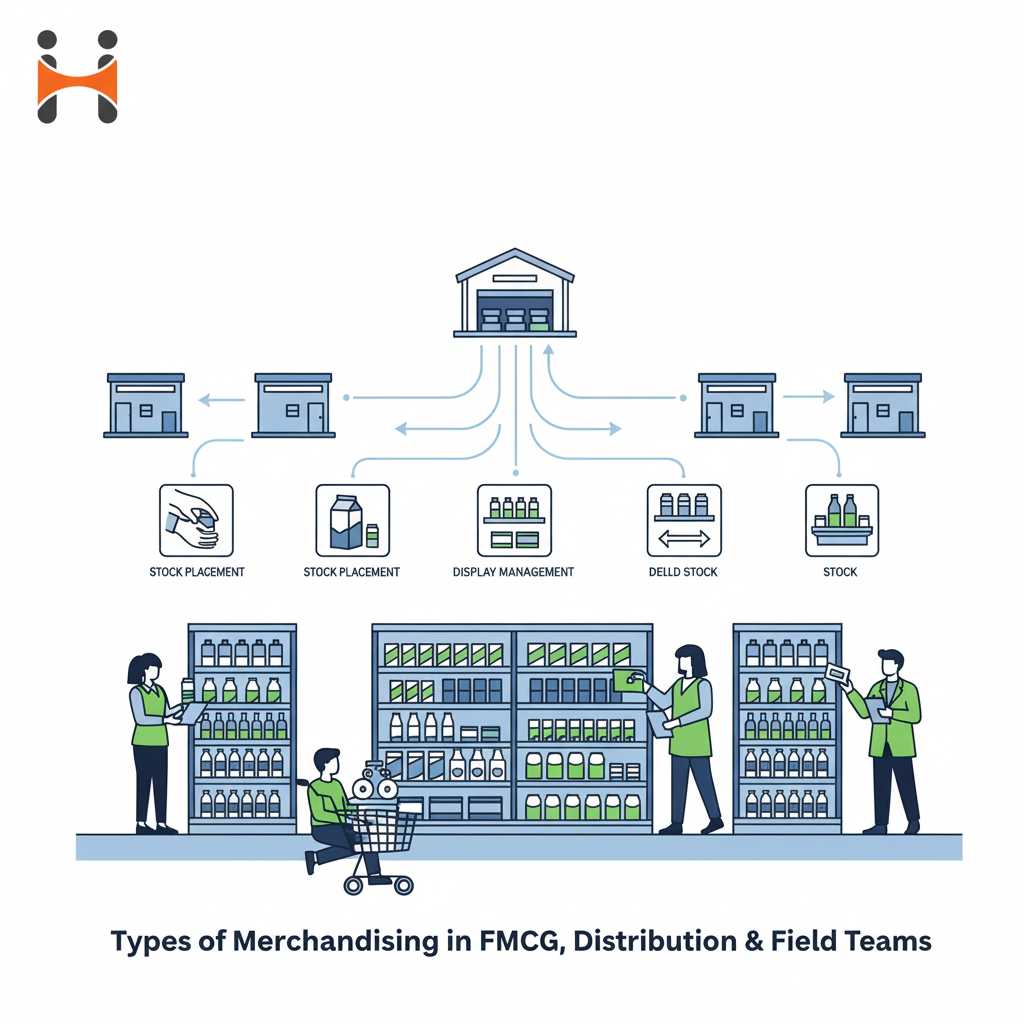
    Types of Merchandising in FMCG, Distribution & Field Teams

    Merchandising plays a key role in FMCG, pharma, retail, and distribution. How products are displayed, managed, and sold affects sales, customer satisfaction, and operations. Businesses that want to track employee locations and improve field work need to understand the types of merchandising and use the right tools.

    At Happisales, we help distributors, retailers, and field teams handle merchandising smoothly while keeping inventory accurate and operations transparent. In this blog, we cover the main types of merchandising, common challenges, and how field force automation works in real situations.

    How Merchandising Supports FMCG and Distribution Operations?

    Merchandising covers all the work that helps sell products in retail and distribution. It is more than just placing items on shelves. It ensures products are available, visible, and attractive while giving your operations team useful data.

    Key activities in merchandising include:

    Product Placement

    Making sure products are easy to see and buy

    Inventory Management

    Keeping the right stock levels to avoid running out or having too much

    Promotional Execution

    Carrying out in-store promotions, discounts, and offers

    Retailer Engagement

    Building strong relationships with retailers to keep products available and follow compliance

    For businesses with field teams and distributors, merchandising includes field merchandising. This is the work done in stores to keep products in stock and make sure promotions are done correctly

    Main Types of Merchandising

    Merchandising can be divided into different types, each with its own goals, challenges, and benefits

    1. Field Merchandising

    Field merchandising is the work done by sales reps, merchandisers, and distributors in stores. We ensure that products are available, displayed properly, and sales opportunities are captured

    Key parts of field merchandising include:

    Shelf Audits
    Checking that products are placed correctly, fully stocked, and look appealing

    Order Capture
    Recording sales orders directly at the retailer

    Promotional Execution
    Carrying out in-store promotions and discounts

    Retailer Training
    Teaching store staff about product features, benefits, and promotions

    Personal Experience
    In our work with FMCG distributors, field merchandising proved very effective. Reps regularly conduct shelf audits and engage with retailers. This helps spot stock gaps and fix them before they affect sales. One client saw a 40 percent drop in order rejections within three months after setting up structured field merchandising processes

    Field merchandising is operational and links directly to inventory visibility, order management, and field force accountability. Software like Happisales makes this process easier.

    2. Product Merchandising

     Product merchandising focuses on organizing, pricing, and presenting items to boost appeal and sales. It overlaps with field merchandising but centers on the product rather than the execution.

    Key parts of product merchandising include:

    Product Placement
    Making sure high-demand items are easy to find

    Stock Rotation
    Tracking expiration dates and batches to reduce waste

    Price Accuracy
    Keeping prices correct across all locations

    POS Material Implementation
    Using banners, tags, and displays to promote products

    With tools like Happisales, sales reps can access product details and pricing on their mobile devices. This reduces errors, ensures compliance, and allows accurate order capture.

    3.  Trade or Promotional Merchandising

    Trade merchandising is about running promotions, discounts, and campaigns at the retailer level. It aims to influence buyers, increase sales, and make products more visible.

    Key parts of trade merchandising include:

    • Discounts and promotional offers
    • In-store displays and point-of-sale materials
    • Incentive programs for retailers
    • Campaign tracking and reporting

    The main challenges are inconsistent execution and difficulty tracking compliance across multiple stores. Happisales lets field teams record promotions in real time, so managers can track execution and results easily.

    4. Visual Merchandising

    Visual merchandising focuses on how products look and how appealing they are. While common in retail stores, it is also important in FMCG and distribution.

    Key parts of visual merchandising include:

    • Store layout optimization
    • Attractive displays and shelving
    • Placing high-margin or promotional products strategically
    • Keeping branding and signage consistent

    Visual merchandising depends on operational support from field teams. Even the best displays fail if products are not available or stock is outdated. Happisales helps by providing real-time stock visibility, accurate order placement, and timely replenishment.

    5. Digital Merchandising

    Digital merchandising is growing in importance with the rise of e-commerce and online retail.

    Key parts of digital merchandising include:

    • Accurate product listings and descriptions
    • Online promotions and campaigns
    • Managing customer reviews
    • Integration with digital ordering platforms for retailers

    Field teams help by making sure offline stock matches online listings. Software like Happisales keeps data synced between physical stores and digital channels.

    Top Issues in FMCG and Distribution Merchandising

    Even with clear merchandising strategies, businesses face several problems:

    1. Stockouts and Overstocking
      Without accurate inventory data, stores may run out of stock or have too much
    2. Inconsistent Execution
      Field reps may follow strategies differently across locations, causing uneven brand experience
    3. Manual Reporting
      Tracking merchandising activities by hand takes time and often has errors
    4. Employee Monitoring
      Supervising field teams and keeping them accountable is hard without real-time tracking

    These issues can lead to lost sales, unhappy retailers, and operational inefficiencies

    How Field Force Automation Supports FMCG Merchandising?

    To solve merchandising challenges, many businesses use field force automation platforms like Happisales. These tools combine merchandising with inventory management, order capture, route planning, and employee tracking.

    How Happisales Supports Field Merchandising?

    • Real-Time Inventory Visibility
      Sales reps and managers can see livestock across locations. This ensures accurate orders and reduces stockouts.
    • Offline Access
      Field staff can log orders, updates, and notes without internet. Data syncs automatically when connectivity returns.
    • Route Optimization
      Happisales plans efficient travel routes for field reps, cutting travel time and covering more stores.
    • Expense and Activity Tracking
      Track field staff visits, activities, and expenses to give managers useful insights.
    • Employee Location Tracking
      Managers can see field staff locations in real time, improving accountability and resource allocation.
    • Analytics and Reporting
      Happisales generates detailed reports on team performance, merchandising compliance, and operations. Managers can make decisions based on data.

    Personal Experience
    After using Happisales, a client in South India saw clear results. Field reps logged orders offline, routes were optimized, and managers tracked employees in real time. Orders were captured faster, stockouts dropped, and sales increased.

    Best Practices for Effective Field Merchandising

    To get the most from field merchandising, companies should follow these practices

    1. Regular Training
      Give field staff the knowledge they need about products, merchandising standards, and technology tools
    2. Consistent Communication
      Keep open channels between field teams and managers to address issues quickly
    3. Data-Driven Decisions
      Use insights from software to adjust merchandising strategies in real time
    4. Technology Integration
      Use field force automation to streamline work, track activities, and improve efficiency
    5. Performance Monitoring
      Check team performance regularly and provide feedback to help them improve

    Why FMCG and Distribution Companies Should Use Field Merchandising?

    Companies that use field merchandising with technology see clear results

    1. Better Stock Availability
      Products are available when needed and waste is reduced
    2. Stronger Retailer Relationships
      Orders are fulfilled on time and promotions are executed properly
    3. Higher Team Accountability
      Real-time tracking keeps field staff responsible for their work
    4. Increased Sales Efficiency
      Route planning and optimized visits help reps cover more stores
    5. Improved Decision-Making
      Analytics and reports provide actionable insights for managers

    Example
    One FMCG distributor saw a 40 percent drop in order rejections within three months of using Happisales. Field reps checked stock on their mobile devices before taking orders, ensuring customers got products reliably

    What’s Next?

    Merchandising is more than placing products on shelves. In FMCG and distribution, it combines field execution, operational visibility, and data-driven insights. Field merchandising makes sure products are available, orders are accurate, and promotions run smoothly.

    Happisales connects field teams, back-office staff, and managers with real-time data. This helps businesses improve merchandising, satisfy customers, and grow sustainably. click here for 14 days free and simplify field merchandising, inventory tracking, and team management with no credit card required.

  • Types of Inventory Management Systems – Explained

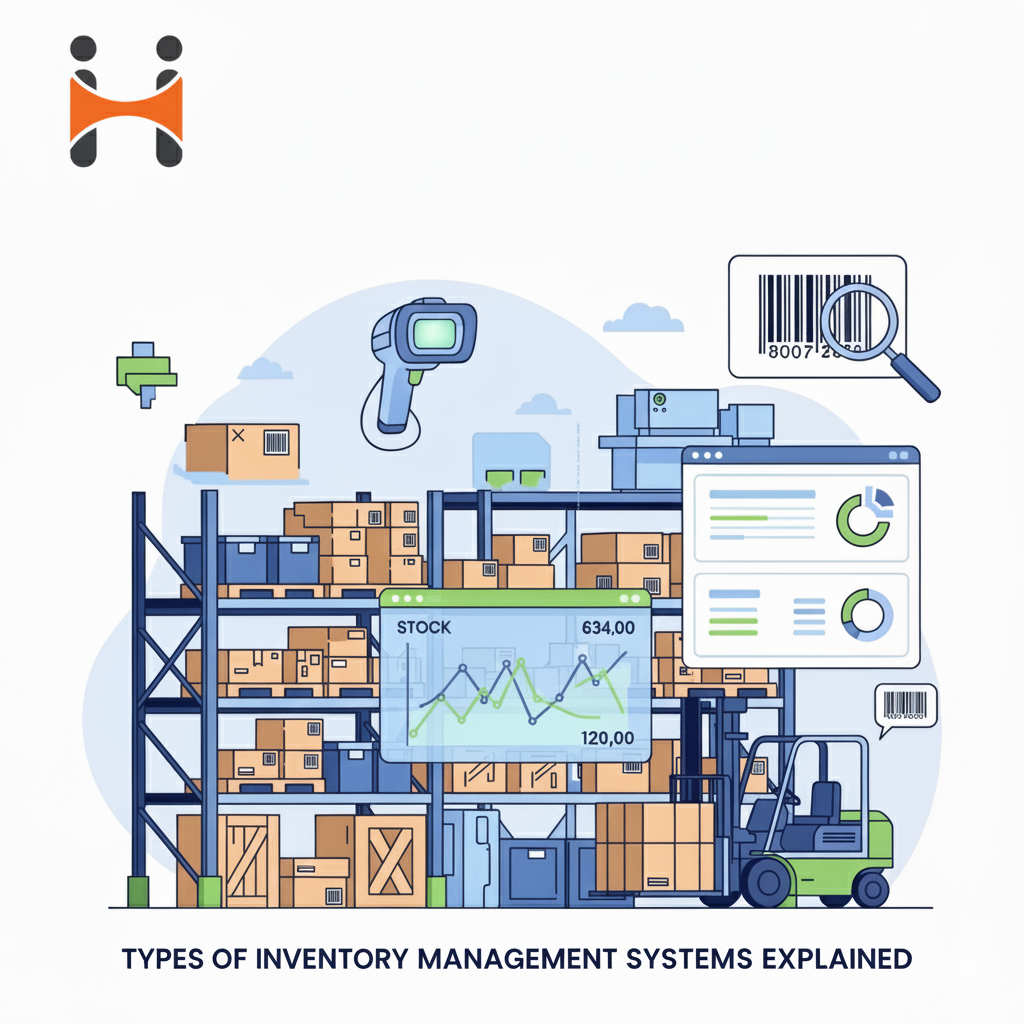
    Types of Inventory Management Systems – Explained

    Running a business today means you can’t afford stockouts, delays, or messy inventory. If you’re in FMCG, pharma, retail, or distribution, your stock is the backbone of everything. The system you use to manage it isn’t optional anymore. It decides how smooth your operations run and how happy your customers stay.

    At Happisales, we work with companies that depend on field staff, distributors, and sales reps to keep things moving. One issue comes up again and again – no clear view of inventory. Managers often ask themselves simple but important questions. Do I know the stock levels right now? Are my reps placing orders based on what’s really available. How do I stop overstocking or empty shelves without slowing down sales.

    This blog breaks it down. We’ll walk through the types of inventory management systems, what each does well, where they fall short, and how modern tools like Happisales bring inventory and field force tracking together so you get full control.

    What are the different types of inventory management systems?

    Different businesses need different inventory systems depending on size, transaction volume, and industry. Here are the main ones.

    1. Perpetual Inventory System

    This system updates stock in real time with every sale, purchase, or return. It usually connects with POS, ERP, or field sales apps so stock levels adjust automatically.

    Pros

    • Real-time visibility
    • Fewer stockouts
    • Works best for FMCG and high-volume businesses

    Cons

    • Requires tech investment
    • Teams need training

    From experience, we worked with a large FMCG distributor that switched from spreadsheets to a perpetual system. Their sales reps now check stock on their mobile app before taking orders. Order rejections dropped 40 percent in three months.

    2. Periodic Inventory System

     This system counts stock at set intervals like monthly, quarterly, or annually. Books are only updated after each count.

    Pros

    • Low cost
    • Good for small businesses

    Cons

    • Stock data is outdated between counts
    • Higher chance of stockouts or overstocking

    This can work for small local retailers. For distributors managing thousands of SKUs, it quickly becomes inefficient.

    3. Just-in-Time (JIT) Inventory

     Made popular by Toyota, JIT keeps inventory low and replenishes only when needed.

    Pros

    • Lower carrying cost
    • Less waste

    Cons

    • Risk if suppliers delay
    • Works only with predictable demand

    This system suits businesses with stable demand cycles. For FMCG or pharma, were demand spikes often, JIT can leave shelves empty.

    4. Barcode and RFID Inventory Systems

     These systems track products with barcode scanners or RFID tags. Each SKU is tagged and updated instantly during stock movements.

    Pros

    • Fast and accurate
    • Cuts manual errors

    Cons

    • Higher setup cost
    • Needs strict discipline

    We’ve seen pharma companies use this to track medicines by batch, which helps with compliance and reduces expired stock losses.

    5. Cloud-Based Inventory Systems with Offline Support

    This is the most advanced option in use today. Inventory data is stored on the cloud so reps, managers, and warehouses see the same numbers. Orders can be logged offline and synced later.

    Pros

    • Works across locations
    • Mobile-first for field reps
    • No sales lost in poor network areas
    • Easy to link with ERP and CRM

    Cons

    • Ongoing Subscription Cost (though ROI is usually higher)

    One of our Happisales clients in South India had issues with poor connectivity in Tier 3 towns. After moving to our offline-first system, their reps never missed an order. Everything syncs automatically once they’re back online.

    How to Choose the Right Inventory Management System for Your Business?

    Which system you choose depends on a few factors.

    • Business size – small shops often start with periodic systems.
    • Industry – FMCG and pharma work best with perpetual, cloud-based systems.
    • Transaction volume – high-volume distributors benefit from automation.
    • Geography – businesses in semi-urban or rural areas need systems that work offline.

    Happisales usually recommends cloud-based, perpetual inventory systems for growing businesses. They scale well, improve accuracy, and give real-time visibility – things every modern business needs.

    How Happisales Goes Beyond Traditional Inventory Systems?

    Traditional systems track stock but rarely connect with field sales. Happisales is built differently.

    Our software brings together:

    • Real-time stock visibility – Reps check livestock before placing orders.
    • Offline mobile access – Orders logged offline sync once online.
    • Expense tracking and approvals – Managers handle claims alongside inventory data.
    • Route optimization – Reps plan the most efficient travel routes.
    • Team motivation tools -Track performance, set incentives, and recognize achievements.

    With Happisales, sales teams, back office, and warehouses all work on one platform.

    Why Inventory and Field Force Automation Matters in Distribution Management?

    When I began analyzing sales operations for distributors, I kept hearing the same issue. Sales reps took orders without knowing what was in stock. By the time the warehouse was checked, items were often unavailable.

    This hurt credibility with retailers and damaged supplier relationships.

    After implementing Happisales, the change was quick.

    • Reps stopped committing to stock that wasn’t there.
    • Managers saw inventory in real time.
    • Retailers got faster and more reliable service.

    It confirmed my view that combining inventory and field force automation is not optional. It is the future of distribution management.

    What’s Next?

    Inventory management keeps your business running. The system you pick will decide if you grow smoothly or get stuck with delays and errors. Small businesses can manage with periodic counts. But distributors and FMCG brands aiming to scale need systems that are real time, cloud based, and work offline. Happisales goes beyond stock tracking. It connects your field team, back office, and warehouse in one platform.

    Start a 14-day free trial with no credit card needed and see how Happisales makes inventory, sales, and employee tracking work together.

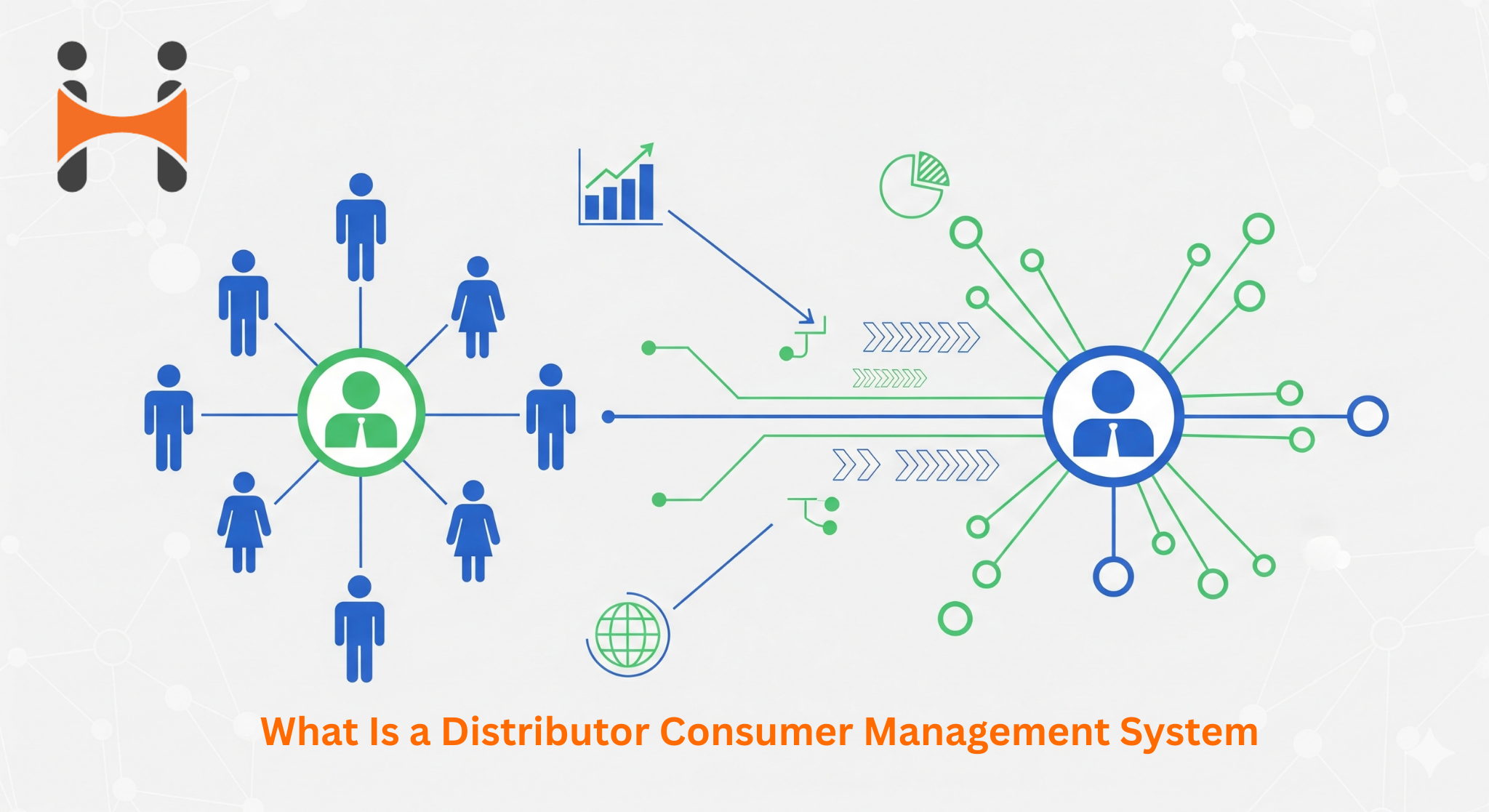
  • What Is a Distributor Consumer Management System?

    What Is a Distributor Consumer Management System?

    What Is a Distributor Consumer Management System and Why Your Business Needs It?

    Running a distribution business in India isn’t easy. Stock sometimes runs out, orders get delayed, and sales reps may log visits they didn’t really make. Collections pile up, and managers often work with reports that are already old.

    A Distributor Consumer Management System helps fix this. It does more than billing or POS. It connects your stores, field teams, and back-office so you can see what’s happening, keep your team accountable, and run operations smoother.

    Happisales made its system for Indian businesses that want to track employees responsibly, make field work easier, and get collections done faster without making the software complicated.

    What Exactly Is a Distributor Consumer Management System?

    • Sales visits made easy: A sales rep visits a store and places orders on their phone. Payment is recorded instantly.
    • Real-time inventory updates: Warehouse sees stock changes immediately, preventing stockouts.
    • Expense tracking simplified: Travel or delivery costs are logged in the app and quickly approved by the manager.
    • Manager oversight: Managers can see rep locations, which stores were visited, and pending orders.
    • One hub for operations: From order to delivery to collection, everything is tracked in real time, keeping stores, field teams, and finance on the same page.

    The Challenges Indian Businesses Face

    When we work with distributors, FMCG companies, and retail chains, few problems keep coming up, they are:

    1. No real-time visibility
      Field reps and stores often don’t work on the same timeline. Orders from the field reach the warehouse late or sometimes not at all. Stock data is old, shelves empty, sales missed, customers unhappy
    2. Manual stuff causes losses
      Using Excel, WhatsApp, or paper slows things down. Collections take longer, expense claims pile up, revenue quietly goes missing
    3. Accountability and coaching weak
      Managers don’t have proper data. They cant be sure if reps visited customers, what happened there, or why sales dropped. Coaching ends up guesswork not based on real numbers

    How a Distributor Consumer Management System Solves These Problems ?

    Real-time order and inventory sync

    It keeps everything updated so nothing slips through the cracks.

    • Orders they take on mobile update right away or as soon as the network is back
    • The inventory adjusts automatically to avoid stockouts or duplicate deliveries
    • This means faster deliveries and happier customers

    Employee location tracking with geotagged visits

     It lets managers know where reps are during work hours without overstepping privacy.

    • They can track locations only during working hours
    • Photos and notes tagged with locations confirm the visits
    • The coverage reports help them coach reps more effectively

    Planned beats and route optimization

    It automatically plans routes to save travel time and let reps meet more customers.

    • The routes are based on geography and customer priority
    • They can visit more stores per day
    • This lowers fuel and travel costs

    Offline-first mobile app

    It allows reps to work even when the network is bad.

    • They can log orders, expenses, and notes offline
    • The data syncs automatically once the connection is back
    • This works well in Tier-2 and Tier-3 cities
    • It ensures they don’t miss opportunities due to weak networks

    Order-to-Collection Flow

     It covers everything from taking the order to generating the invoice, collecting payment, and reconciling accounts.

    • Managers see dashboards with alerts for overdue collections
    • This helps them improve cash flow, speed up collections, and reduce DSO

    Expense Tracking and Approvals

     Reps submit bills and receipts through the app.

    • Managers approve or reject them with a single click
    • The data syncs with payroll or ERP
    • This lets them process reimbursements faster, get clearer visibility into expenses, and simplify accounting

    Analytics, KPIs, and Smart Recommendations

     It tracks over 15 metrics like daily visits, order conversion, average order size, and route adherence.

    • Smart suggestions show which customers they should focus on and which reps need coaching
    • This helps them make decisions based on real data and steadily improve performance

    Why This Matters for Indian Businesses?

    Affordable with fast ROI

    Many small and mid-sized business worry about software costs. They see results like faster collections and fewer stockouts within 60 to 90 days. It usually pays for itself quickly.

    Easy to use

     Field reps don’t need long training. They can use it on their phones, in local languages, and learn it in one session.

    Builds trust

     It tracks only during work hours. Managers see the data they need, and reps feel respected. This makes them more likely to use it and keeps the team motivated.

    Practical Examples from Real Customers

    • A regional distributor cut stockouts by 30 percent in three months by syncing field orders with the store inventory. It helped them keep the shelves full and satisfy customers.
    • A sales manager increased daily customer visits by 22 percent using route planning. They also saw their collections improve at the same time.
    • An FMCG company shortened reimbursement timelines from weeks to the same week. It made the field team happier and saved the HR team time.
    • These results came from setups that matched the real workflows. They didn’t force big changes, and that’s why the teams adopted it quickly.

    Tracking Employee Location Responsibly

    Tracking employees the right way is key to building trust.

    Time-window tracking
    Track only during work hours. They don’t need to worry about being monitored outside of work.

    Data minimization
    Keep only what’s necessary, like visit timestamps and geotags. It avoids unnecessary clutter and keeps things simple.

    Access controls
    Only the managers who need the data can see it. They don’t get access to information they shouldn’t.

    Retention policies
    Old logs are deleted automatically. It keeps the system tidy and secure.

    Following these practices lets the business get visibility without hurting trust.

    How a DCMS Differs from Basic POS or RMS?

    • A POS only handles transactions. It does not show them what is happening in the field.
    • A basic RMS tracks inventory and generates reports. It still does not give them real-time updates from the field.
    • Happisales DCMS brings together POS, RMS, field force automation, offline use, employee tracking, and analytics.
    • It lets them connect field activities to sales, see who is covering which areas, and reduce gaps in order-to-cash.

    Steps to Roll Out Happisales Smoothly

    • Start with a pilot in one or two regions with 10 to 30 reps. This helps them get used to the system without overloading.
    • Look at how they work now and fit those processes into the system. Don’t force big changes, it confuses them.
    • Keep training short and give small rewards so they actually want to use it.
    • Expand slowly, region by region, and watch the KPIs to see what needs changing.
    • Use analytics to improve routes and help with coaching.
    • They take to the system faster when they see quick wins like faster reimbursements and less time on road.

    KPIs to Track Success

    • Stockouts percentage
    • Orders per rep per day
    • Delivery time in hours/days
    • Collection timelines/DSO
    • Expense processing time
    • Active rep adoption rate
    • Trial-to-paid conversion

    Note: Start by noting baseline numbers. Check weekly for the first 90 days, then monthly.

    Common Pitfalls and How to Avoid Them

    Trying to do everything at once usually backfires. They should focus on order capture and route planning first when using a distributor and consumer management system.

    Change management can get messy if people don’t see progress. Keep KPIs visible, training short, and reward small wins. Field force automation software helps track these improvements in real time.

    Tracking can feel like spying if not done right. Limit it to work hours and be transparent about what you track. Sales tracking software can make this easier without being intrusive.

    ERP integrations often slow things down. Plan them early so the team doesn’t end up repeating work and data stays synced across the system.

    What’s Next?

    A distributor and consumer management system with field force automation, offline features, and responsible employee tracking can really change how they work.

    It helps them handle sales better, collect payments faster, and keep their teams accountable without breaking trust with the field staff.

    If they want to track employee locations, plan smarter routes, and avoid stockouts, Happisales make it simple and reliable.

    Discover how our game-changing solution can transform your daily operations. Start your 14-day FREE trial today – no credit card required! See the difference for yourself and take control of your success.

    Click here to start your free trial!

  • Top 5 Field Team Best Practices for Retail Growth in 2025 

    Top 5 Field Team Best Practices for Retail Growth in 2025 

    The retail landscape in 2025 is defined by rapid digital transformation, evolving customer expectations, and the increasing importance of field teams as the backbone of in-store execution and customer engagement. For retailers seeking sustainable growth, empowering field teams with the right strategies and tools is no longer optional, it’s essential.  

    Here are the top five best practices for field teams to drive retail growth in 2025, leveraging modern technology and a people-first approach. 

    1. Leverage Advanced Field Sales Automation Software 

    Field teams today have access to powerful tools that streamline operations and maximize productivity. Investing in field sales automation software enables teams to automate routine tasks, such as order processing, route planning, and data entry, freeing up valuable time for customer engagement and relationship building. Automation not only reduces errors but also accelerates the sales cycle, ensuring that teams can cover more ground and respond to retailer needs in real time. A robust sales force automation app further enhances coordination, providing managers with real-time insights into team activities and performance. 

    2. Prioritize Data-Driven Decision Making 

    Data is the new currency in retail growth. Field teams equipped with a field sales app can collect, analyze, and act on real-time data from the field. This includes inventory levels, promotional compliance, and customer feedback. By leveraging these insights, teams can make informed decisions, optimize product placement, and identify growth opportunities at each store. Data-driven strategies help retailers stay agile, adapt to market trends, and consistently meet customer demands. 

    3. Focus on Training and Continuous Learning 

    Empowering field teams means investing in their development. Regular training sessions, upskilling programs, and access to digital learning resources ensure that team members stay updated on product knowledge, sales techniques, and new technologies. A sales force automation app can integrate training modules and performance tracking, making it easier for managers to monitor progress and provide targeted coaching. Continuous learning fosters a culture of excellence and adaptability, which is critical for long-term success. 

    4. Enhance Communication and Collaboration 

    Effective communication is the glue that holds field teams together. Utilizing digital tools such as a field sales app or collaboration platforms ensures that team members, managers, and support staff are always connected. Instant messaging, task assignments, and real-time updates enable seamless coordination, quick problem-solving, and consistent execution across multiple locations. Strong communication channels also help field teams share best practices, celebrate successes, and address challenges collectively. 

    5. Measure Performance and Recognize Achievements 

    Tracking key performance indicators (KPIs) is essential for driving growth and maintaining high standards. Field sales automation software and sales force automation apps provide managers with dashboards to monitor metrics such as sales targets, visit completion rates, and customer satisfaction scores. Recognizing top performers and celebrating achievements, whether through gamification, incentives, or public acknowledgment, boosts morale, motivates teams, and reinforces a culture of accountability and excellence. 

    In 2025, the success of retail growth hinges on the effectiveness of field teams. By leveraging field sales apps, field sales automation software, and sales force automation apps, retailers can streamline operations, empower employees, and make data-driven decisions. Prioritizing training, communication, and performance recognition ensures that field teams remain engaged, motivated, and equipped to deliver exceptional results. Embracing these best practices will position retailers for sustained growth and competitive advantage in an ever-evolving marketplace. 

  • Field Sales Application for FMCG | Maximize Coverage & Growth

    Field Sales Application for FMCG | Maximize Coverage & Growth

    In the fast-moving consumer goods (FMCG) industry, the battle for shelf space, market penetration, and customer loyalty is relentless. With razor-thin margins and ever-changing consumer demands, companies need more than just good products to succeed—they need streamlined operations, real-time visibility, and the agility to respond instantly. This is where field sales application is transforming how sales teams work on the ground, helping them maximize coverage and gain a competitive edge. 

    The FMCG Challenge: Complexity on the Ground 

    The FMCG Challenge: Complexity on the Ground

    FMCG field sales operations involve thousands of SKUs, large distributor networks, frequent visits to retailers, and tight delivery timelines. Without the right tools, managing such complexity becomes inefficient and costly. Sales reps often spend more time navigating manual processes than building relationships or closing deals. This lag not only affects individual performance but also impacts the company’s ability to hit market share goals and service expectations. 

    Enter Field Sales Apps: Powering Smarter Coverage 

    Enter Field Sales Apps: Powering Smarter Coverage

    A field sales Application eliminates these inefficiencies by digitizing and automating key sales activities such as route planning, order management, stock checks, customer interactions, and reporting. Sales reps can access all the data they need from a single interface on their mobile devices—be it inventory levels, pricing updates, or customer order history. 

    More importantly, these apps help maximize field coverage. Geo-fencing and route optimization tools ensure that no territory is left untapped and that field reps spend more time in-store rather than on the road. Sales managers get live updates on visit status, order bookings, and attendance, which allows for better resource planning and performance management. 

    Why Sales Force Automation Software Matters

    Beyond basic field tracking, sales force automation software brings intelligence and structure to your sales workflow. It automates repetitive tasks like data entry and report generation, ensuring that nothing falls through the cracks. Features such as intelligent lead allocation, customer profiling, and activity-based tracking empower field sales teams to work smarter, not harder. 

    Moreover, such platforms provide sales heads and regional managers with dashboards that offer a bird’s-eye view of the entire operation. This kind of real-time analytics helps in making data-driven decisions on product placements, promotional strategies, and performance incentives. 

    Field Force Automation Software: Closing the Last-Mile Gap

    In the FMCG sector, success is often determined by how well a company executes its last-mile delivery strategy. Field force automation software bridges the gap between the warehouse and the point-of-sale by ensuring alignment between logistics, merchandising, and sales. Retailers get their stock on time, customer complaints are addressed faster, and promotional compliance is ensured, making your brand more reliable in the eyes of the buyer. 

    Digital Is the New Differentiator

    In an industry as competitive as FMCG, small improvements in efficiency can result in significant market gains. A Field sales Application, backed by robust sales force and field force automation tools, are no longer optional, they are essential. Companies that embrace these digital solutions can not only boost their sales productivity but also deliver better customer experiences, improve field coverage, and gain the edge in a crowded marketplace. 

    Explore more about field sales solutions at Happisales

  • Struggling to Hit Your IT Sales Targets? Here’s How Top US Sales Leaders Are Using Real-Time Data to Dominate.

    Struggling to Hit Your IT Sales Targets? Here’s How Top US Sales Leaders Are Using Real-Time Data to Dominate.

    Let’s be brutally honest for a moment. If you’re leading an IT sales team in the US today, you’re in a relentless sprint. The competition isn’t just fierce; it’s smarter. They’re agile. They’re predicting. And if you’re still waiting for end-of-month reports to tell you what went wrong, you’re not just behind—you’re losing ground.

    I’ve seen it countless times over my two decades in this game. Brilliant sales VPs, sharp directors, and ambitious managers, all feeling the immense pressure. They’re trying to grow revenue for cutting-edge SaaS, complex cybersecurity solutions, or critical IT services, but they’re flying blind, making decisions based on intuition or stale data.

    Here’s the truth: The most successful IT sales organizations in America aren’t just tracking sales. They’re using real-time data to see into the future of their pipeline, coach with surgical precision, and outmaneuver competitors with an almost unfair advantage.

    This isn’t about some distant, theoretical future. This is about your sales team, today. It’s about giving you the clarity and control you desperately need.

    Are You Facing These Pain Points in Your US IT Sales Operations?

    Take a deep breath. Do any of these resonate?

    • “My forecasts feel like educated guesses.” You’re constantly adjusting, stressing about hitting quarterly numbers, and feeling like you’re reacting instead of proactively guiding the ship.
    • “I know we have bottlenecks, but I can’t pinpoint where or why.” Deals are getting stuck. Reps are struggling. But isolating the exact problem in a complex IT sales cycle feels like finding a needle in a haystack.
    • “My coaching is generic. I wish I could give specific, data-backed advice.” You want to elevate your team, but without clear, immediate insights into individual performance gaps, your coaching sessions feel less impactful.
    • “We’re missing opportunities. I can feel it.” A new market trend emerges, a competitor pivots, or a specific product suddenly gains traction, and you’re always a step behind.
    • “My sales reps are good, but they’re not operating at their peak potential.” You know they have more in them, but how do you unlock it without micromanaging?

    If you nodded to any of those, know this: you’re not alone. And more importantly, there’s a powerful solution.

    The Secret Weapon: Real-Time Sales Tracking for IT Leaders

    Imagine having a living, breathing pulse on every single sales activity, every lead progression, every deal status—as it happens. This isn’t just reporting; it’s dynamic intelligence.

    Here’s how it transforms those pain points into powerful opportunities:

    • From Guessing to Predictive Power: Instead of looking backward at lagging indicators, you’re leveraging live data to forecast with unprecedented accuracy.
    • From Bottlenecks to Breakthroughs: Instantly identify where deals are stalling, which IT solutions are struggling to gain traction, or which reps need immediate support.
    • From Generic to Surgical Coaching: Drill down into specific calls, emails, or demo performances to offer tailored, impactful guidance that genuinely moves the needle for each rep.
    • From Missing to Seizing Opportunities: Spot emerging trends in client needs, rapid interest in new IT services, or sudden competitive moves, allowing you to pivot strategies in hours, not weeks.
    • From Potential to Peak Performance: Empower your team with transparency and targeted feedback, fostering a culture of continuous improvement and self-correction.

    The Bottom Line: Stop Playing Catch-Up. Start Leading.

    For IT sales leaders in the US, real-time sales tracking isn’t a nice-to-have; it’s a strategic imperative. It’s the difference between hoping to hit your numbers and knowing, with precision, how to smash them. It’s the difference between reactive problem-solving and proactive, confident leadership.

    Imagine the confidence you’d have, the peace of mind knowing you have your finger on the pulse of every deal, every rep, every opportunity. The ability to make data-backed decisions that propel your team forward, consistently hitting and exceeding targets.

    This level of insight transforms not just your sales numbers, but your entire sales culture. It empowers your team, reduces stress, and ultimately, helps you build a sales machine that consistently delivers.

    Ready to Transform Your IT Sales into an Unstoppable Force?

    If you’re an IT sales leader in the US tired of the guesswork and ready to harness the true power of real-time data, Happisales is your partner.

    We’re not just consultants; we’re architects of sales transformation. With two decades of experience helping companies like yours thrive, we specialize in:

    • Deep-Dive Audits: Uncovering your specific sales data gaps and opportunities within your existing IT sales stack.
    • Custom Dashboard Design: Building intuitive, real-time dashboards specifically tailored to your IT services, products, and sales goals.
    • Seamless Tech Integration: Connecting your CRM, sales engagement, and BI tools to create a unified, intelligent sales ecosystem.
    • Targeted Coaching Enablement: Equipping your sales managers with the tools and training to leverage real-time data for unparalleled rep development.
    • Data-Driven Go-to-Market Strategy: Ensuring your sales efforts are always aligned with the latest market trends and competitive intelligence.

  • Mastering Field Sales: How to Train Your Reps on Field Sales Apps and Sales Force Automation Software

    Mastering Field Sales: How to Train Your Reps on Field Sales Apps and Sales Force Automation Software

    Why Field Sales Engagement Platforms Matter

    In today’s market, using a robust field sales engagement platform is no longer optional, it’s a competitive necessity. These platforms streamline sales workflows, deliver real-time analytics, and enable better communication between field teams and managers.

    By leveraging a field sales engagement platform, businesses can:

    • Analyze customer interactions
    • Personalize field rep approaches
    • Increase customer satisfaction
    • Enable data-driven decision-making

    Staying ahead with the right field sales technology ensures your team adapts to evolving buyer behavior and market demands.

    Top Field Sales Apps in 2025

    What are the top field sales apps available, and how do they compare in terms of features and ease of use?

    Leading field sales apps in 2025 offer:

    • Offline data access
    • GPS tracking
    • Route optimization
    • In-app communication
    • Real-time order entry

    Comparison of top field sales apps:

    • App A: Known for user-friendly UI and custom workflows
    • App B: Strong in analytics and reporting
    • App C: Best for integration with legacy CRMs

    Evaluate based on ease of use, feature set, and scalability.

    Training Your Sales Team to Use Field Sales Apps

    How should I train my sales reps to effectively use new field sales technology?

    Effective field sales app training combines:

    • Hands-on experience
    • Role-playing exercises
    • E-learning and microlearning

    Start by identifying reps’ tech gaps and tailor the program accordingly. Create interactive workshops that simulate real-world usage. Reinforce learning with refresher sessions and support forums.

    Sales Force Automation Software: Benefits and Best Practices

    How can I determine which sales force automation software is best suited for my business needs?

    Sales force automation software (SFA) automates repetitive tasks and improves decision-making. Top benefits include:

    • Real-time lead prioritization
    • Automated scheduling
    • Accurate forecasting
    • Integration with marketing tools

    When evaluating sales force automation software:

    • Choose platforms with mobile-first design
    • Look for predictive analytics and lead scoring
    • Ensure CRM compatibility and API flexibility

    Implementing Effective Field Sales Training Programs

    A successful training program for field sales apps and SFA tools requires:

    • Clear KPIs and learning goals
    • Balanced curriculum (theory + practical)
    • Multiple learning formats (videos, simulations, live coaching)

    Encourage peer-to-peer learning and allow for real-time feedback collection to keep the program evolving.

    Measuring Training Success and App Adoption

    How can I measure the success of my field sales training program and app adoption?

    Metrics to track include:

    • Usage rates of the field sales app
    • Knowledge retention scores
    • Sales metrics before/after training
    • Rep satisfaction and confidence

    Use quizzes, live role-play evaluations, and CRM/app analytics to validate success.

    Case Studies: Field Sales Engagement Platforms in Action

    What are some real-world examples of companies successfully implementing field sales engagement platforms?

    1. FMCG Brand: Increased productivity by 25% within 6 months using a tailored field sales engagement platform.
    2. Pharma Company: Reduced sales cycle with sales force automation software and improved lead conversion.
    3. Retail Chain: Trained reps on a custom field sales app, leading to better customer satisfaction and repeat business.

    Future Trends in Field Sales Technology

    What future trends should I be aware of in field sales technology and automation?

    Trends shaping the next generation of field sales apps and SFA tools:

    • AI-powered sales recommendations
    • Voice-to-text note capturing
    • Predictive route planning
    • Embedded video calling within apps

    Investing early in emerging field sales technology helps future-proof your sales operations.

    FAQs

    What challenges do sales reps face when using field sales apps, and how can they be overcome?

    • Challenge: Tech resistance
      • Solution: Gamified onboarding and peer mentoring
    • Challenge: Poor mobile network coverage
      • Solution: Choose apps with offline functionality

    How do field sales apps help improve sales productivity and customer engagement?

    • Real-time insights and automation free up time
    • Location tracking and visit planning improve efficiency
    • Personalized follow-ups increase engagement

    What are the key features to look for in a field sales app or sales force automation software?

    • Custom workflows
    • CRM and ERP integration
    • AI and analytics
    • Offline support

    Book a demo today and experience how a tailored field sales engagement platform can elevate your sales strategy.