Tag: Employee tracking app

  • Store Management System with Field Force Automation

    Store Management System with Field Force Automation

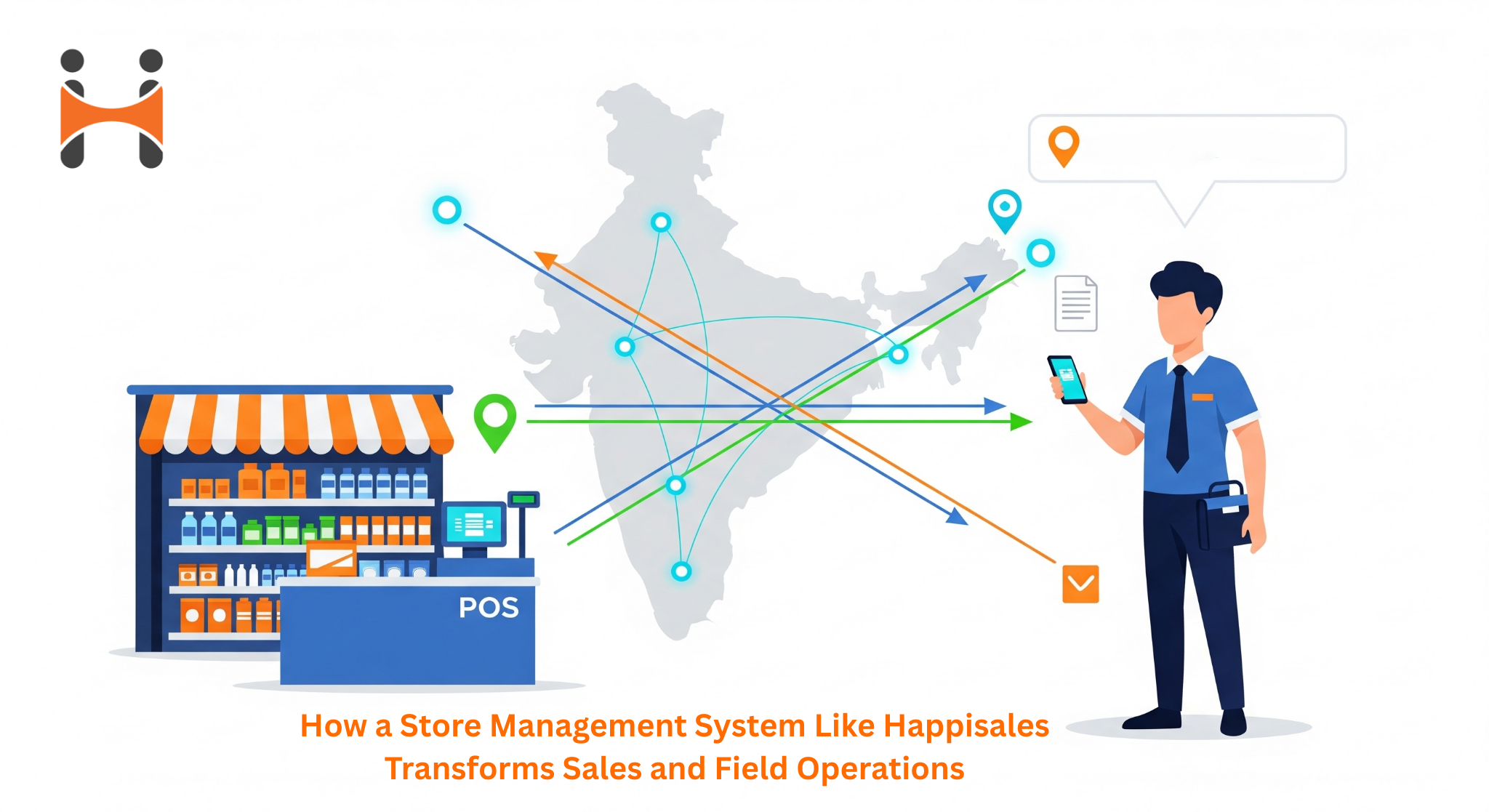
    How a Store Management System Like Happisales Transforms Sales and Field Operations?

    Running sales and store operations in India is not easy. Products run out of stock. Orders get delayed. Sales reps sometimes log fake visits. Collections pile up. And managers often rely on paper reports that are already outdated by the time they arrive.

    Happisales is designed to be the best store management system India for businesses that want real-time visibility, faster collections, and trustworthy employee tracking. Our platform also acts as a field force automation software for FMCG, helping distributors, pharma, and retail chains manage their field teams efficiently.

    This is where a modern store management system makes a difference. It’s not just about POS or billing anymore. It’s about connecting your stores, field sales, and back office into one system so you know exactly what’s happening in real time.

    Why the meaning of “store management system” has changed?

    Old view
    A tool to manage billing, POS, and stock inside a store.

    Today’s view
    A cloud system that links billing, inventory, sales tracking, employee location, beat planning, expense claims, and analytics.

    The winner is no longer the software with the fastest checkout. It’s the one that connects the store with your sales team on the road.

    The three big problems Indian businesses face :

    1. No real-time visibility
      Field reps and stores work on different timelines. Orders taken in the field reach stores late or not at all. Stock data is unreliable.
    2. Losses from manual processes
      Paper orders, delayed collection reconciliation, and expense claims handled in Excel cause leakages and waste time.
    3. Poor accountability and coaching
      Managers don’t know if a rep visited a customer, what happened there, or why orders are dropping. Feedback is based on guesswork.

    We’ve seen these issues again and again with distributors, FMCG, pharma, and retail chains. That’s why we designed Happisales to fix them.

    How Happisales solves these problems?

    Real-time order and inventory sync

    • Reps capture orders on their phone
    • Orders sync instantly or once the rep is back online
    • Inventory updates immediately
    • Stockouts drop and customers get faster delivery

    Employee location tracking with visit proofs

    • Track rep locations only during work hours
    • Geotagged photos and notes confirm visits
    • No fake visit claims
    • Managers get transparent coverage reports

    Planned beats and route optimization

    • Routes are auto-created based on geography and customer priority
    • Reps travel less and meet more customers each day
    • Fuel and travel costs come down

    Offline-first mobile app

    • Works without internet
    • Reps can still log orders, collections, and expenses
    • Data syncs when network returns
    • Essential for Tier 2 and Tier 3 regions

    Order to collection flow

    • Covers order capture, invoice, payment, and reconciliation
    • Managers get collection dashboards and alerts
    • Cash flow improves and DSO comes down

    Expense tracking and approvals

    • Reps upload bills and receipts inside the app
    • Managers approve or reject with one click
    • Data flows into payroll or ERP
    • Reimbursements are faster and clearer

    Analytics and coaching tools

    • Tracks 15+ metrics like visits per day, order conversion, average order size, route use
    • AI nudges suggest which customers to prioritize or which reps need training
    • Coaching is based on data, not guesswork

    Why this matters for Indian businesses?

    • Affordable with fast ROI
      Most Indian SMEs worry about software cost. Happisales clients see benefits like faster collections and fewer stockouts within 60–90 days. The system pays for itself quickly.
    • Simple to use
      Field reps don’t need long training. The app is mobile-first, works in local languages, and is easy to learn in a single session.
    • Mobile-first adoption
      Many reps in India only use smartphones. Happisales is designed for that. No laptop or IT team required.
    • Trust over tracking
      Tracking is transparent and limited to business hours. Managers see what they need, reps feel respected. This balance builds trust.

    Practical results we’ve seen:

    • A regional distributor cut stockouts by 30% in three months by syncing field orders with store inventory.
    • A sales manager increased customer visits by 22% using route optimization. Collections improved in the same quarter.
    • An FMCG company reduced reimbursement timelines from weeks to same-week approval. Field morale improved and HR saved time.

    Using location tracking responsibly

    • Inform employees how, when, and why location data is tracked
    • Track only during work hours not 24×7
    • Save only what’s needed for visits and collections
    • Limit access so only relevant managers can see it
    • Auto-delete old logs after an agreed period

    This keeps employee trust while giving managers the accountability they need.

    Why Happisales is different from POS or basic RMS?

    • POS = billing and receipts only
    • Basic RMS = inventory and reports
    • Happisales = POS + RMS + field automation + employee tracking + offline mode + analytics

    This is the difference between knowing only store sales and connecting it to field performance, customer visits, and collections.

    How to roll this out without friction?

    1. Pilot first
      Test in one or two regions with 10–30 reps.
    2. Map current processes
      Fit existing order and collection flows into the system. Don’t force big changes.
    3. Train and reward
      Keep training short. Use small incentives to encourage adoption.
    4. Scale slowly
      Expand region by region. Watch the KPIs and tweak.
    5. Keep improving
      Use analytics to refine routes and focus coaching.

    Teams adopt faster when they see quick wins like faster reimbursements or fewer hours wasted on the road.

    What to track (KPIs)?

    • Stockouts percentage
    • Orders per rep per day
    • Delivery time in hours or days
    • DSO or collection timelines
    • Expense processing time
    • Active reps vs total reps
    • Trial to paid conversion

    Always note baseline numbers before rollout. Check weekly in the first 90 days, then monthly.

    Common pitfalls and fixes :

    • Trying to solve everything at once
      Start with order capture and route planning first.
    • Change management issues
      Use short training, visible KPIs, and small rewards.
    • Overly intrusive tracking
      Keep it transparent and limited to working hours.
    • ERP integration delays
      Plan integrations early to avoid double work.

    What’s next?

    A store management system that links sales, collections, expenses, and employee tracking gives measurable results. The gains are faster collections, fewer stockouts, and better accountability — all with respect for employee privacy.

    Ready to experience the best store management system India and field force automation software for FMCG? Start a free 14-day trial with no credit card and see how Happisales can transform your sales, collections, and field operations.

  • Best Sales Management Software in India (2025)

    Best Sales Management Software in India (2025)

    In my 10+ years as a product strategist and sales management software company founder in India, I’ve seen countless startups and SMEs struggle with a common problem: an ad-hoc sales process. Teams rely on a mix of WhatsApp, Excel sheets, and memory to manage leads, resulting in missed follow-ups, lost data, and a chaotic sales funnel. I’ve witnessed firsthand how a business with great potential can stagnate because its sales engine isn’t built on a solid, scalable foundation. 📈

    In a country where the software market is projected to hit US$18.4 billion by the end of 2025, according to IDC, the right sales technology isn’t a luxury—it’s a necessity for survival and growth. The Indian market, in particular, demands solutions that are not only powerful but also intuitive, affordable, and tailored to local sales workflows. This is where a dedicated sales management software becomes a game-changer. It helps you bring order to the chaos, providing your team with a clear, shared view of the sales pipeline.

    We’ll cover everything you need to know about choosing and implementing the best sales management software in India, with a special focus on the features and benefits that matter most for Indian businesses. We’ll also show why our own solution, happisales, is engineered to be the most effective tool for this market.


    The best sales management software in India centralizes lead data, automates follow-ups, and provides real-time analytics to help sales teams close deals faster and more efficiently.


    Why Indian Businesses Need a Dedicated Sales Management Software

    For Indian startups and SMEs, the sales landscape is highly competitive and fast-paced. A one-size-fits-all global CRM often fails to address the unique challenges of the Indian market.

    Key challenges we see every day include:

    • High lead volume from diverse sources: Leads pour in from IndiaMart, JustDial, social media ads, and even WhatsApp, making it difficult to consolidate and track them manually.
    • A mobile-first workforce: Sales reps are often on the move. They need a robust mobile app that works offline and allows them to update lead status, log calls, and access customer history from anywhere.
    • The need for local integrations: Seamless integration with popular local communication tools like WhatsApp and payment gateways is critical for a smooth sales process.
    • The desire for affordability and scalability: Businesses need a solution that is cost-effective and can grow with them, without prohibitive per-user pricing or complex, long-term contracts.

    A tailored sales management software directly addresses these pain points. It transforms a scattered, manual process into a streamlined, automated system. By adopting the right platform, companies can improve lead conversion rates, increase team productivity, and gain clear visibility into their sales performance, which is essential for making data-driven decisions.

    Essential Features to Look for in an Indian Sales CRM

    When you’re evaluating options for your business, don’t just look at a list of features. Think about how each feature will solve a specific problem for your sales team.

    Lead Management and Nurturing

    Effective lead management is the foundation of any successful sales process. The software should be able to:

    • Automatically capture leads from all your sources, including landing pages, social media, and third-party platforms.
    • Assign leads to the right salesperson instantly.
    • Score leads based on engagement, so your team focuses on the most promising prospects.
    • Provide a complete history of every interaction with a lead.

    Our experience with clients at happisales has shown that an automated lead assignment system can reduce response time by over 50%, directly impacting conversion rates.

    Pipeline and Opportunity Management

    A visual, drag-and-drop sales pipeline is a non-negotiable feature. It gives you a clear overview of where every deal stands.

    • Visual Pipeline: A clear, customizable pipeline view with different stages (e.g., Prospect, Qualified, Proposal, Closed-Won).
    • Deal Tracking: Ability to track deal value, expected close date, and activity history for each opportunity.
    • Task Automation: Automated reminders for follow-ups, calls, and meetings. This prevents leads from falling through the cracks, a common issue in a busy sales environment.

    Real-time Reporting and Analytics

    You can’t manage what you don’t measure. A good sales software provides deep, actionable insights.

    • Sales Dashboards: Customizable dashboards to track key metrics like revenue, won/lost deals, and team performance.
    • Forecast Reports: Accurate sales forecasting based on your pipeline data.
    • Performance Metrics: Individual and team performance reports to identify top performers and areas for coaching.

    Communication and Collaboration

    For sales teams, communication is everything. The software should facilitate seamless interaction with customers and within the team.

    • Integrated Calling and Email: The ability to make calls and send emails directly from the software, with automatic logging.
    • WhatsApp Integration: Given the prevalence of WhatsApp in Indian business communication, native integration is a massive advantage. This allows reps to chat with clients and log conversations directly in the CRM.
    • Internal Chat: A built-in chat function to quickly collaborate with team members on a specific deal.

    Mobility and Accessibility

    Sales reps in India are frequently on the road, meeting clients or visiting sites. A powerful mobile app is crucial.

    • Offline Access: The app should allow reps to work offline and sync data once they are connected to the internet.
    • Geo-tagging and Location Tracking: Features that help managers track field sales team activities and verify meeting locations.
    • Mobile-first UI: An intuitive, clean user interface that makes it easy to update records on the go.

    A Comparative Look at Sales Management Software in India (2025)

    The Indian market has a wide range of options, from global giants to home-grown solutions. Each has its own strengths, but the best fit depends on your business size, industry, and budget.

    Here’s a summary table comparing some of the most popular platforms in India in 2025:

    Tailored for India: Solutions like happisales are built specifically for the Indian market, contrasting with global giants like Salesforce, which are more suited for large enterprises and often come with high costs and complex implementation.

    Key Competitors: Global players like Salesforce, and more affordable, broader CRMs such as Zoho CRM and Freshsales, are also popular choices.

    Feature Focus: While Zoho CRM provides a wide range of business tools and Freshsales offers AI-powered features, happisales stands out with its seamless integrations for local tools like WhatsApp and a mobile app optimized for field sales.

    Implementation & Cost: For Indian startups and SMEs, the fast and simple implementation and affordable, transparent pricing of a localized solution like happisales are a significant advantage over the complex and costly rollout of a global platform.

    This is precisely why we built happisales. We saw a gap in the market for a sales management software that combines the power of a world-class CRM with the specific, on-the-ground needs of Indian businesses. From our simplified, transparent pricing to our native WhatsApp integration and mobile-first design, every feature is built to help an Indian sales team win.

    The Role of AI in Modern Sales Management for India

    Artificial Intelligence is no longer just a buzzword; it’s a powerful tool that is transforming how sales teams work. AI-powered features in sales management software can significantly enhance productivity and decision-making.

    Here’s how AI is making a difference:

    • AI Lead Scoring: Algorithms analyze lead data and past behavior to score prospects, telling you which ones are most likely to convert. This helps your team focus on high-priority leads and not waste time on dead ends.
    • Predictive Analytics: AI can forecast future sales trends and highlight potential risks in your pipeline, allowing you to proactively adjust your strategy.
    • Conversational Intelligence: AI analyzes call transcripts and meeting notes to identify keywords, sentiment, and action items. This provides invaluable coaching opportunities for sales managers and ensures no detail is missed.

    For example, a sales manager in a Delhi-based logistics company using an AI-powered CRM can see that a specific sales rep’s call transcripts consistently lack a mention of key competitor benefits. The manager can then provide targeted coaching to improve that rep’s pitch, leading to better outcomes.

    The Rise of Generative AI Chatbots for Sales and Support

    Beyond the core CRM, companies in India are increasingly adopting Generative AI Chatbots to automate initial customer interactions. These chatbots, when integrated with your sales software, can:

    • Handle routine inquiries 24/7 on your website or WhatsApp channel.
    • Qualify leads by asking a series of questions and then automatically creating a new lead in your CRM.
    • Provide instant answers to frequently asked questions, freeing up your sales team to focus on high-value conversations.

    This integration is a perfect example of how combining modern technology can create a highly efficient, automated sales funnel. You can learn more about how we help businesses build and implement these solutions with our Generative AI Chatbots service.

    From Spreadsheets to Software: The Implementation Journey

    Migrating from a manual system to a dedicated software can seem daunting, but a well-planned transition is key to success.

    Here’s a simple, four-step process we recommend for Indian businesses:

    1. Start with a small team: Don’t try to roll out the software to your entire sales force at once. Pick a small, tech-savvy team as a pilot group to test the new system and iron out any issues.
    2. Clean your data: Before migrating, ensure your existing lead and customer data is clean and organized. This is a critical step to ensure a smooth transition and maintain data integrity.
    3. Provide comprehensive training: Don’t just give your team a login and hope for the best. Provide hands-on training and ongoing support. Show them how the software will make their lives easier, not just add another task to their day.
    4. Celebrate small wins: Acknowledge and celebrate when the team uses the new system to close a deal or save time on a tedious task. This builds momentum and encourages wider adoption.

    We’ve seen businesses in Mumbai and Bangalore successfully make this transition. The most successful ones were those where the leadership was fully bought into the process and actively championed the new system.


    People Also Ask

    What are the main benefits of a sales management software?

    The main benefits include centralized lead data, automated workflows, improved team collaboration, and real-time analytics for better decision-making. These features help businesses close more deals and increase revenue.

    How is a sales management software different from a CRM?

    A sales management software is a type of CRM that focuses specifically on the sales process, while a CRM (Customer Relationship Management) is a broader category that can include modules for marketing, customer service, and sales. All sales management software is a CRM, but not all CRMs are focused solely on sales.

    Is CRM software expensive for small businesses in India?

    Not necessarily, as many Indian and global companies now offer affordable, scalable plans tailored to small and medium businesses. Solutions like happisales and freemium models from providers like Zoho CRM and HubSpot have made powerful sales tools accessible to businesses of all sizes in India.

    Can sales software integrate with WhatsApp?

    Yes, many modern sales software solutions, especially those designed for the Indian market, offer native or API-based integrations with WhatsApp. This allows sales teams to manage customer conversations directly from the CRM without switching apps.


    Conclusion: Investing in Your Sales Future

    Choosing the right best sales management software in India is one of the most important decisions you can make to drive growth. It’s an investment not just in a tool, but in the future of your sales team and your business. The market is full of options, but the key is to find a solution that understands the unique pulse of the Indian business landscape.

    We built happisales with this exact purpose. From our experience working with hundreds of Indian companies, we’ve identified and solved the core challenges that hold back sales teams. By providing an intuitive, powerful, and deeply localized platform, we are helping businesses transition from chaos to a confident, scalable sales operation.

    If you’re ready to streamline your sales process and empower your team to sell smarter, we invite you to explore what a purpose-built solution can do for you.

    Visit our website to learn more about our Product Engineering Services and how we can help you build a robust sales pipeline that works for your business.

  • Top Field Sales Dashboards for Boosting Team Productivity

    Top Field Sales Dashboards for Boosting Team Productivity

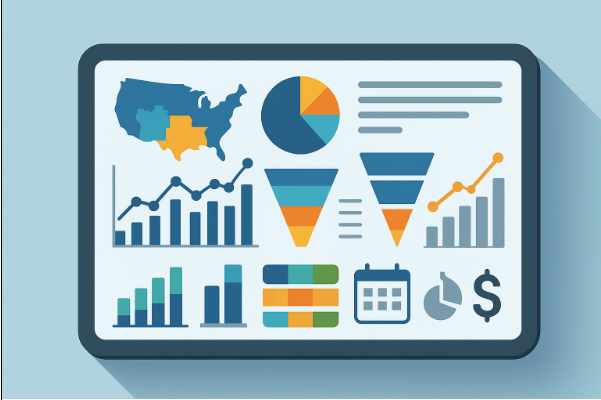
    Equipping your field sales team with real-time insights is essential. Field sales apps, powered by robust sales force automation software, help sales leaders optimize operations, track performance, and drive growth efficiently. One of the most valuable features of these apps is the sales rep performance dashboard.

    Here’s a look at the top dashboards that help businesses improve revenue generated, sales volume, and overall team productivity:

    1. Territory Performance Dashboard

    The territory performance dashboard shows how different regions are performing. Teams can see which areas generate the most revenue, identify underperforming territories, and allocate resources effectively. It’s an essential feature in field sales automation software.

    2. Daily Route & Activity Dashboard

    The daily route & activity dashboard provides real-time updates on client visits, completed tasks, and deviations from planned routes. Managers can monitor travel inefficiencies, ensure performance tracking, and maximize each rep’s time in the field.

    3. Order & Inventory Dashboard

    An order & inventory dashboard integrated with field sales apps gives reps live visibility into stock, pending orders, and delivery timelines. This improves coordination between field reps and back-end teams, enhances customer satisfaction, and increases upselling opportunities.

    4. Sales Rep Performance Dashboard

    The sales rep performance dashboard tracks individual metrics such as sales volume, revenue generated, and client visits. When paired with field sales automation software, it encourages healthy competition, accountability, and growth within the team.

    Why Dashboards Matter?

    Dashboards provide more than just data-they are decision-making tools. Using these dashboards in modern-day field sales apps gives managers real-time insights, reduces manual tracking, accelerates decision-making, and improves field operations digitization. Businesses can unlock team potential, reduce travel inefficiencies, and boost overall productivity.

    Investing in comprehensive field sales automation software with intelligent dashboards is crucial. Tools like Happisales combine all dashboards, making it easier to optimize operations, monitor performance tracking, and drive growth in a measurable way.

    What’s Next?

    Don’t let inefficiencies slow your field team. Upgrade to Happisales and track client visits, manage orders, optimize routes, and improve sales productivity in one platform.

    Schedule a demo of Happisales today to see how this field sales app can streamline your operations, increase your revenue, and help your team perform at its best. Call +91 9944585452 to get started.

  • Smart Sales App for Field Teams | Drive Growth Faster 

    Smart Sales App for Field Teams | Drive Growth Faster 

    Smart Sales App

    Field sales in India is fast and demanding. Teams travel across cities and towns, manage client visits, take orders, and plan routes daily. Every action matters, from converting leads to completing sales. A smart sales app gives teams live updates so they can act quickly and make better decisions. It helps them sell more, stay organized, and serve customers efficiently.

    Traditional methods like spreadsheets, calls, and manual reports slow work down and cause mistakes. They hide what is happening in the field and waste time. A field sales application brings planning, execution, and tracking together in a single mobile tool.

    Why Indian Field Teams Need a Smart Sales App?

    Field work in India has unique challenges. Teams face traffic jams, long commutes, and remote areas with poor connectivity. Managers often cannot see field activity in real time, which can cause delays and missed targets.

    A field sales mobile app tracks employees and vehicles live. Managers can check progress, plan efficient routes, and ensure accountability. Communication improves so tasks are completed correctly and on time.

    Benefits for Indian companies

    • Get real-time data access for field sales
    • Track attendance and performance
    • Monitor routes to ensure on-time delivery
    • Cut costs by reducing detours and idle time

     Real-Time Insights for Better Decisions

    A field sales tracking app shows field operations instantly. Reps can log visits, take orders, and record payments from their phones. Managers know where each person is and what they are doing.

    Quick insights help spot delays. If a delivery is late, managers can check if it is traffic, a missed stop, or a wrong route. Smart sales analytics show trends in visits, conversions, and route efficiency. Managers can assign territories, set realistic targets, and guide reps who need help.

    Improving Accountability and Safety

    Tracking field activity increases accountability. Employees perform better when their work is visible.

    Safety improves too. Geofencing alerts notify managers if someone leaves the assigned area. Driving behavior tracking helps prevent accidents and reduces fuel costs.

    Managers can maintain a responsible, secure, and productive field team while protecting company resources. Using a sales observations app or sales supervision app helps managers monitor performance without constant check-ins.

    Enhancing Customer Experience

    Customers expect timely and clear service. A field sales mobile app ensures reps have all the details before visiting clients. They can check past orders, payments, and preferences to provide personalized service.

    Live updates let managers share accurate delivery times. Customers know when to expect orders, reducing confusion and building trust. Easy access to real-time data for field sales helps companies strengthen relationships and keep clients happy.

    Optimizing Routes and Productivity

    Route planning matters in busy cities and remote areas. A mobile field sales software finds the best routes based on traffic, road conditions, and meeting schedules. Reps get updates on the go, and managers can adjust plans in real time.

    Benefits of route optimization

    • Save fuel by reducing detours
    • Deliver on time
    • Reduce overtime and idle time
    • Improve productivity

    Managers can also identify frequently delayed routes and make adjustments to improve efficiency and lower costs.

    Integrating CRM and Inventory

    A field sales management app links with CRM and inventory systems. Reps can see customer history, product availability, and payment status on the go. This helps them make fast decisions and process orders quickly.

    Integration reduces errors and duplicate data entry. Reps spend less time on paperwork and more time selling and building relationships. A field sales automation app helps teams stay focused and efficient.

    Using Automation for Sales Growth

    Modern apps do more than track work. They highlight products that sell well, suggest follow-ups, and help prioritize leads.

    Automation handles routine tasks so managers can focus on planning and coaching. Teams respond faster to market needs, improving performance and driving steady growth.

    Empowering Teams On the Go

    A mobile sales app for field team keeps field teams productive anywhere. Reps can:

    • Reschedule visits easily
    • Log expenses on the move
    • Update visit status instantly
    • Record orders and payments

    Managers can monitor performance without constant calls. Teams stay accountable while working independently.

    Measuring Performance with Analytics

    A smart sales management system provides clear insights into field operations. Managers can track:

    • Employee efficiency
    • Route performance
    • Conversion rates
    • Customer activity

    This data helps companies make informed decisions, assign tasks wisely, and improve sales strategies. Analytics also highlight weak spots and help teams improve steadily.

    Choosing the Right Smart Sales App

    When selecting a field sales app in India, look for:

    • Real-time GPS tracking
    • Attendance and task monitoring
    • Route optimization
    • CRM and inventory integration
    • Sales automation and analytics

    A reliable app keeps teams productive, customers satisfied, and managers informed.

    What’s next ?

    A smart sales app changes how field teams operate. Tracking and automation help managers monitor performance, improve accountability, and ensure safety. Analytics provide insights for better decisions. CRM and inventory integration makes operations smooth and communication clear.

    Investing in a smart sales app is necessary for field teams to work efficiently, make better decisions, and increase sales.

    Request a free demo today to see how Happisales can help your team work smarter and deliver better results.

    Frequently Asked Questions

    1.  What is the goal of a sales team?

    A sales team brings in revenue by converting leads into customers and keeping existing clients satisfied. They focus on meeting targets, growing the business, and providing good service.

    2. What are good sales objectives?

     Good objectives are clear and measurable. Examples include increasing revenue, improving retention, converting more leads, and shortening the sales cycle. Objectives guide reps, prioritize tasks, and let managers track progress.

    3. What are four SMART goals?

    • Specific – Know exactly what to do, like closing 20 new accounts in a month
    • Measurable – Track results using numbers like revenue or calls made
    • Achievable – Set targets that are realistic
    • Time-bound – Complete goals within a set timeframe

    4. What is the objective of a SMART sales call?

     A SMART sales call has a clear purpose and measurable outcome. It sets a goal, tracks results like orders or follow-ups, and ensures the task is done on time. This keeps reps organized, efficient, and focused on providing value to the customer.

  • Top 5 Features to Look for in a Field Sales App for Indian Market Conditions 

    Top 5 Features to Look for in a Field Sales App for Indian Market Conditions 

    Navigating the diverse and dynamic Indian market requires tools tailored to its unique challenges. A robust field sales app can empower sales teams to boost productivity and efficiency. Here are the top five features to prioritize when choosing the right solution for Indian market conditions. 

    1. Offline Functionality 

    India’s varied geography often means inconsistent internet connectivity, especially in rural areas. An app for field sales must offer offline support, allowing reps to log activities, manage leads, and access data without a network. Once connectivity is restored, the app should sync seamlessly, ensuring no data is lost. 

    2. Route Optimization and Real-Time Tracking 

    With traffic congestion and sprawling urban-rural landscapes, efficient route planning is critical. A sales force automation tool should include route optimization to minimize travel time and fuel costs. Real-time GPS tracking also helps managers monitor field reps, ensuring they visit clients as planned and improving accountability. 

    3. Multilingual Support 

    India’s linguistic diversity demands an app that supports multiple regional languages. Sales reps interacting with clients in languages like Hindi, Tamil, or Bengali need interfaces and customer data fields in their preferred language. This feature enhances communication and builds stronger client relationships. 

    4. Integration with Local Payment Systems 

    Cash flow management is vital for Indian businesses, often dealing with on-the-spot payments. The app should integrate with popular local payment systems like UPI or mobile wallets, enabling reps to collect payments, track unsettled invoices, and issue digital receipts instantly, streamlining financial operations. 

    5. Customizable Analytics for Market Insights 

    Understanding local market trends is key to success. The app must provide customizable analytics to track sales performance, monitor stock levels, and analyze regional demand patterns. Features like automated reports and dashboards help managers make data-driven decisions tailored to India’s fast-paced market. 

    Choosing a field sales app with these features ensures sales teams can tackle India’s unique challenges—unreliable connectivity, logistical hurdles, linguistic diversity, payment preferences, and market variability. By equipping reps with the right tools, businesses can drive efficiency, improve customer engagement, and boost revenue in this competitive landscape. 

  • Mastering Field Sales: How to Train Your Reps on Field Sales Apps and Sales Force Automation Software

    Mastering Field Sales: How to Train Your Reps on Field Sales Apps and Sales Force Automation Software

    Why Field Sales Engagement Platforms Matter

    In today’s market, using a robust field sales engagement platform is no longer optional, it’s a competitive necessity. These platforms streamline sales workflows, deliver real-time analytics, and enable better communication between field teams and managers.

    By leveraging a field sales engagement platform, businesses can:

    • Analyze customer interactions
    • Personalize field rep approaches
    • Increase customer satisfaction
    • Enable data-driven decision-making

    Staying ahead with the right field sales technology ensures your team adapts to evolving buyer behavior and market demands.

    Top Field Sales Apps in 2025

    What are the top field sales apps available, and how do they compare in terms of features and ease of use?

    Leading field sales apps in 2025 offer:

    • Offline data access
    • GPS tracking
    • Route optimization
    • In-app communication
    • Real-time order entry

    Comparison of top field sales apps:

    • App A: Known for user-friendly UI and custom workflows
    • App B: Strong in analytics and reporting
    • App C: Best for integration with legacy CRMs

    Evaluate based on ease of use, feature set, and scalability.

    Training Your Sales Team to Use Field Sales Apps

    How should I train my sales reps to effectively use new field sales technology?

    Effective field sales app training combines:

    • Hands-on experience
    • Role-playing exercises
    • E-learning and microlearning

    Start by identifying reps’ tech gaps and tailor the program accordingly. Create interactive workshops that simulate real-world usage. Reinforce learning with refresher sessions and support forums.

    Sales Force Automation Software: Benefits and Best Practices

    How can I determine which sales force automation software is best suited for my business needs?

    Sales force automation software (SFA) automates repetitive tasks and improves decision-making. Top benefits include:

    • Real-time lead prioritization
    • Automated scheduling
    • Accurate forecasting
    • Integration with marketing tools

    When evaluating sales force automation software:

    • Choose platforms with mobile-first design
    • Look for predictive analytics and lead scoring
    • Ensure CRM compatibility and API flexibility

    Implementing Effective Field Sales Training Programs

    A successful training program for field sales apps and SFA tools requires:

    • Clear KPIs and learning goals
    • Balanced curriculum (theory + practical)
    • Multiple learning formats (videos, simulations, live coaching)

    Encourage peer-to-peer learning and allow for real-time feedback collection to keep the program evolving.

    Measuring Training Success and App Adoption

    How can I measure the success of my field sales training program and app adoption?

    Metrics to track include:

    • Usage rates of the field sales app
    • Knowledge retention scores
    • Sales metrics before/after training
    • Rep satisfaction and confidence

    Use quizzes, live role-play evaluations, and CRM/app analytics to validate success.

    Case Studies: Field Sales Engagement Platforms in Action

    What are some real-world examples of companies successfully implementing field sales engagement platforms?

    1. FMCG Brand: Increased productivity by 25% within 6 months using a tailored field sales engagement platform.
    2. Pharma Company: Reduced sales cycle with sales force automation software and improved lead conversion.
    3. Retail Chain: Trained reps on a custom field sales app, leading to better customer satisfaction and repeat business.

    Future Trends in Field Sales Technology

    What future trends should I be aware of in field sales technology and automation?

    Trends shaping the next generation of field sales apps and SFA tools:

    • AI-powered sales recommendations
    • Voice-to-text note capturing
    • Predictive route planning
    • Embedded video calling within apps

    Investing early in emerging field sales technology helps future-proof your sales operations.

    FAQs

    What challenges do sales reps face when using field sales apps, and how can they be overcome?

    • Challenge: Tech resistance
      • Solution: Gamified onboarding and peer mentoring
    • Challenge: Poor mobile network coverage
      • Solution: Choose apps with offline functionality

    How do field sales apps help improve sales productivity and customer engagement?

    • Real-time insights and automation free up time
    • Location tracking and visit planning improve efficiency
    • Personalized follow-ups increase engagement

    What are the key features to look for in a field sales app or sales force automation software?

    • Custom workflows
    • CRM and ERP integration
    • AI and analytics
    • Offline support

    Book a demo today and experience how a tailored field sales engagement platform can elevate your sales strategy.

  • How a Field Sales App Benefits the Retail Industry

    How a Field Sales App Benefits the Retail Industry

    The retail industry has always been a competitive fast-paced environment, with businesses constantly striving to improve sales efficiency and customer satisfaction. One of the most significant advancements in recent years has been the adoption of field sales apps, which have changed the way retail businesses perform their sales operations. In this article, we will explore the numerous benefits that a field sales app offers to the retail industry, including improved sales automation, increased productivity, and enhanced customer relationships.

    1. Sales Automation and Digitization

    Efficient Management of Daily Tasks

    Field sales apps have made it incredibly convenient for businesses and sales teams to execute their sales operations. By automating monotonous tasks, these apps provide better control over ground execution and help streamline the sales process. With a field sales app, sales reps no longer need to rely on physical attendance registers, data entries, or notebooks for record-keeping. Instead, they can go digital and enjoy real-time collaborations between sales reps, retailers, and distributors for more efficient secondary sales execution.

    2. Aligned Ground Execution

    Strategic Implementation

    A key challenge that retail businesses face is ensuring that their field sales teams are executing the company’s Go-To-Market (GTM) strategy effectively. With a field sales automation platform, businesses can not only track and monitor the activities of their sales reps but also drive the ground execution of their GTM strategy. This ensures that sales teams work in alignment with the company’s overall business goals, increasing the likelihood of success.

    Goal-Driven Approach

    Field sales app like Happisales offer a goal-driven approach to sales management, allowing businesses to set bite-size targets for their sales teams to achieve. By breaking down larger objectives into smaller, more manageable tasks, field sales apps help sales teams stay focused and motivated, ultimately driving growth and improving overall sales performance.

    3. Improved Customer Relationship Management

    Personalized Engagement

    Today’s customers demand personalized experiences and value-adds. With a field sales app, sales teams can access customer data, understand their preferences, and purchase histories, allowing them to tailor their sales approach to each customer’s unique needs. This helps enhance the customer experience and ultimately leads to higher sales and improved customer retention.

    4. Intelligent Route Planning

    Optimized Travel Routes

    Sales reps often have to visit multiple locations to carry out their daily tasks. A field sales app with route optimization capabilities helps calculate the most efficient routes for covering outlets in a territory, reducing travel time and increasing face-to-face interaction with customers.

    Real-time GPS Tracking

    Field sales apps equipped with GPS tracking allow managers to monitor the movements of their sales reps in real time. This helps ensure that reps are following the most efficient routes and adhering to their visit schedules, thereby improving productivity and overall sales performance.

    5. Increased Sales Behavior

    Gamification and Employee Engagement

    New-age mobile field sales apps can help FMCG companies improve sales behaviour through input-based gamification. Sales reps are rewarded points and medals for exercising good sales behaviour, which not only provides insights into employee performance and learning needs but also fosters employee engagement.

    Intuitive Alerts and Nudges

    Advanced field sales apps use AI-based technology to generate real-time, consumable insights for field managers. These insights inform the company about potential challenges in field execution, such as low revenue from outlets or low visit adherence, and prompt managers to take corrective actions to address these issues and drive sales growth.

    6. Order Taking and Maximization

    Digitized Order Management

    A field sales app simplifies the order-taking process, reducing the time it takes to record orders and enabling sales reps to cross-sell and upsell through various promotional offers. 

    Swift Claim and Return Management

    Field sales app streamline the claims and returns process, ensuring that customers receive prompt and efficient service. This not only improves customer satisfaction but also helps maintain strong relationships with distributors and retailers.

    7. Real-time Rep Tracking and Performance Analysis

    Sales Rep Accountability

    Field sales apps allow managers to track the performance of their sales reps in real time. This includes monitoring the number of appointments attended, check-in check-out times, distance travelled, and other valuable metrics. By holding sales reps accountable for their performance, these apps help drive productivity and improve overall sales results.

    Actionable Insights and Analytics

    Field sales apps collect a wealth of data about sales rep performance and customer interactions, enabling businesses to generate personalized reports and gain valuable insights. By analyzing this data, companies can identify areas of weakness in their sales process and implement targeted strategies to boost productivity and revenue.

    8. Seamless Integration with Retailers

    Direct Communication and Data Exchange

    Field sales apps enable FMCG companies to connect directly with retailers, eliminating the need for slow and inefficient communication channels. By exchanging administrative data and sales reports in real time, businesses can stay informed about retail performance and make data-driven decisions to improve sales execution.

    Faster, More Accurate Retail Data

    By allowing sales reps to store retail data directly in a mobile app, field sales apps ensure that information is accurate and up-to-date. This not only streamlines the sales process but also helps businesses make informed decisions based on real-time retail data.

    9. Support for Expansion to New Markets

    Scalable Growth

    Field sales apps are designed to support the growth and expansion of retail businesses. By providing real-time access to crucial sales data and enabling seamless collaboration between sales teams and management, these apps help businesses scale their operations and enter new markets with confidence.

    Improved Sales Execution

    By automating key sales processes and providing actionable insights into customer behaviour and market trends, field sales apps empower sales teams to perform at their best. This results in stronger sales execution and increased market share in a competitive retail landscape.

    A field sales app is an essential tool for any retail business looking to improve sales efficiency, streamline operations, and enhance customer relationships. By leveraging the power of field sales automation platforms, businesses can stay ahead of the competition and drive sustainable growth in the retail industry.

    Take up 14-day free trial of Happisales and find out how our field sales app can improve the visibility and productivity of your field sales team.

  • 8 Steps to Choose Employee Monitoring Software

    8 Steps to Choose Employee Monitoring Software

    In today’s work environment, employee monitoring software has become an essential tool for companies to keep track of their employees’ activities. This software can help organizations to monitor the productivity, work quality, and overall performance of their employees. With so many options available in the market, choosing the right employee monitoring software can be a daunting task. This blog will outline the steps you can take to select the most suitable employee monitoring software for your organization.

    Employee monitoring software is a type of software designed to track and monitor employee activities while they are using company devices or networks. This software is commonly used by organizations to increase productivity, ensure compliance with company policies and legal regulations, and protect sensitive information.

    Employee monitoring software can be used to track employee activities on computers, mobile devices, and even company vehicles equipped with GPS technology. This software is typically used by businesses in industries such as finance, healthcare, and government, where compliance with strict regulations and protection of sensitive information are critical.

    While employee monitoring software can be beneficial for businesses, it can also raise ethical and legal concerns related to employee privacy. As a result, many businesses implement policies and guidelines to ensure that employee monitoring is conducted in a responsible and ethical manner.

    Here are 8 Steps to Choose Employee Monitoring Software.

    1. Identify your organization’s specific monitoring needs

    The first step in selecting the most suitable employee monitoring software for your organization is to identify your specific monitoring needs. You need to consider what kind of monitoring you want to do, such as monitoring email, chat, social media, or keystrokes. You should also consider the level of detail you need, such as capturing screenshots or recording audio. Additionally, you should consider the frequency of monitoring, whether it is real-time or periodic. By identifying your monitoring needs, you can narrow down the options and find a software that meets your requirements.

    2. Determine the legal implications of monitoring

    Before selecting any employee monitoring software, it is essential to understand the legal implications of monitoring. You should consult with legal experts and consider any legal requirements that may apply to your organization. In some countries, employee monitoring is strictly regulated, and employers must obtain consent from their employees before monitoring them. Failure to comply with legal requirements can result in lawsuits, fines, and damage to the company’s reputation.

    Read More : The Power of Sales Reporting App: How Our App Boosts Your Revenue

    3. Research different employee monitoring software options

    There are various employee monitoring software options available in the market, and it is essential to research each option thoroughly. You can start by reading online reviews, checking the software’s features, and comparing the pricing of different options. It is also crucial to consider the software’s compatibility with your existing systems and any additional hardware or software requirements.

    4. Evaluate the software’s features

    Once you have identified a few employee monitoring software options, the next step is to evaluate their features. You should consider whether the software provides real-time monitoring, screen capture, keystroke logging, file tracking, and other features that meet your specific needs. Additionally, you should consider the software’s user interface, ease of use, and any customization options.

    5. Consider the software’s reporting capabilities

    Another important factor to consider is the software’s reporting capabilities. You should consider whether the software provides detailed reports that can help you analyze your employees’ productivity and work quality. Additionally, you should consider whether the software provides customizable reports that allow you to track specific metrics and key performance indicators.

    6. Ensure the software is secure

    Security is a critical consideration when selecting employee monitoring software. You should consider whether the software provides adequate security measures, such as data encryption, secure login, and password protection. Additionally, you should consider whether the software complies with industry-standard security protocols, such as the General Data Protection Regulation (GDPR) or the Health Insurance Portability and Accountability Act (HIPAA).

    7. Test the software

    Before finalizing your decision, it is essential to test the software thoroughly. You can start by requesting a free trial or a demo version of the software. This will allow you to test the software’s features, user interface, and reporting capabilities. Additionally, you can evaluate the software’s compatibility with your existing systems and the level of technical support provided by the vendor.

    8. Seek feedback from employees

    Employee monitoring can be a sensitive issue, and it is essential to seek feedback from your employees before implementing any monitoring software. You should communicate with your employees about the reasons for monitoring and the benefits it can provide to the organization. Additionally, you should consider their concerns and ensure that the software’s features and reporting capabilities are not overly intrusive.

    Selecting the most suitable employee monitoring software for your organization requires careful consideration of your specific monitoring needs. Overall, Employee Monitoring Software is designed to provide employers with a range of features and capabilities that allow them to monitor employee activities and ensure compliance with company policies and legal regulations. By providing detailed insights into employee productivity and work quality, this software can help businesses optimize their operations and improve their bottom line.

    Check out Happisales and help your business thrive. Schedule a demo today!

    Happisales CTA


  • All you need to know about sales management

    All you need to know about sales management

    Without a doubt, sales management is one of the most difficult business domains to master and implement. However, your sales staff will be inspired and motivated if you have a robust sales management system.

    The top field force managers can comprehend the most up-to-date sales strategies and apply their best practices to help their staff close more transactions and increase sales revenue.

    It is sometimes harder to manage sales than make a sale on the field. You must, after all, manage your employees, customers, and processes. The stakes are high. However, the results are satisfying because you can watch your company expand rapidly.

    Therefore, to ace those sales, here’s a coherent explanation of sales management.

    What Is Sales Management?

    The practice of planning, managing, and managing the salesforce to achieve company objectives is known as sales management. It entails putting together a team, allowing the sales team, and inspiring team members to accomplish their responsibilities well.

    While the specific definition of sales management varies by organization, the following duties frequently come under the sales management umbrella:

    Hiring and training new personnel: You can’t manage a sales force if there isn’t one to manage. Development agents, salespeople, business development managers, and other employees work in sales teams. Sales managers are in charge of hiring and training these sales representatives.

    Setting sales targets and limits: The sales manager is in charge of establishing the sales targets that the sales staff aims to meet. These quotas must make sense to each team member and find the right balance between challenging and achievable.

    Controlling and adjusting the sales process: Sales managers must also decide on the sales processes that the sales force will follow. Again, these protocols must be well-planned and empirical support to guide the team in the proper route.

    Motivating co-workers: Sales may be a demanding profession. As a result, Field Sales teams require the correct kind and motivation to succeed. As a result, effective sales management must determine what works and what doesn’t.

    Preparing sales reports: Sales teams must employ a varied, precise range of data to drive their decision-making and attain results. As a result, sales managers must be able to compile reliable reports of their Field Sales Reporting that detail performance and highlight areas for development.

    What are the Objectives of Sales Management?

    Sales managers should ensure that their teams are appropriately engaged. Then your company will be able to meet these key goals.

    Achieve the sales volume that you want

    Salespeople worldwide are working hard to ensure that their companies achieve their sales targets. This concept is crucial since a bigger volume indicates appropriate penetration in a specific market. Therefore, the more clients you have, the more secure your firm will be.

    Contribute to the company’s profits

    Sales managers’ responsibilities should be carried out as efficiently as feasible. Then your sales department will be able to close more deals and increase your company’s turnover rate. In addition, you should sell each product at the correct pricing and employ the necessary tactics to maximize sales.

    Contribute to the growth of the company

    To satisfy shareholders and have a greater impact, businesses must expand. It’s critical for a sales department to contribute to this expansion. Handling the costs involved with sales is critical for the sales manager has to make sure that a business is financially profitable.

    What Is the Process of Sales Management?

    If you aim to succeed as a sales manager, you have to figure out what works and keep improving on it. You can’t switch from one strategy to the next at breakneck speed.

    This predictability will provide your team the confidence to work together and the capacity to iterate your strategy. Then you’ll be able to achieve the best results imaginably.

    A performant sales management process includes the following:

    • Assembling the ideal team
    • Creating a sales funnel
    • Working with marketing to find new leads
    • Improving prospecting skills
    • Making use of precise sales forecasts and reports

    Sales management strategies

    Great sales teams don’t just happen to form without some guidance. Instead, gifted minds purposefully construct them. Here are some techniques for building a high-performing team.

    Invest in your salespeople’s training and growth:

    Because selling behaviors and methods evolve, it’s critical to engage in learning and development programs to keep your staff sharp and current on current sales best practices.

    Create a culture that is both engaging and motivating:

    You want to show your salespeople that their efforts are recognized and appreciated when they pay off. Create a culture where victories are celebrated frequently and publicly.

    To create a positive workplace, use positive reinforcement:

    You have to bring positive vibes & support into your sales organization through upscale reinforcement because sales can be a cutthroat and demanding atmosphere.

    Sales management in the digital age

    The face of sales management is changing rapidly due to technological advancements. Sales managers in the digital age have a precise outline of their sales process. Leading indicators are used to track progress along the path. These modern-day managers make these actions visible to the entire team and encourage them to meet their goals. 

    They make victory visible and foster a winning culture. This new breed of sales managers leverages field force automation technologies and employs data analysis and technology to deliver intelligent coaching in real-time. In addition, they include science in the selling process.

    Final Thoughts:

    Field Sales Mobile App and other Field Force Manager can help you streamline your work, accomplish tasks and duties more quickly, have a greater impact on your team, and become a stronger leader. 
    Happisales is a one-stop solution for managing field force activities in real-time, allowing salespeople to focus on more critical responsibilities by automating sales tracking, reporting, and administration. So do look at what Happisales has to offer & reach out to us!

  • Which Trends are Shaping the Future of Field Service Management?

    Which Trends are Shaping the Future of Field Service Management?

    Managing your staff, whether it is the sales department or the dispatch department, needs organising. Keeping track of their tasks and the progress of each task is an important job for the manager. Gone are the days when these tasks were done manually with pen and paper. Managing targets and performance is generally time-consuming. Field service management as of today can be a breeze if organisations consider incorporating field service software. 

    Companies have begun to manage their on-field personnel with ease and efficiency thanks to cutting-edge field service software. To give you a head start for the trends that will be shaping the industry in the coming year, here are some pointers that we’ve put together on the future of field service management.

    Trends in Field Service Management in 2022

    1. Contactless service

    COVID-19 changed customer and field sales personnel interactions, and many customers are less interested in returning to pre-pandemic service standards. Many businesses also implemented safety protocols, such as contactless capabilities, to keep employees and customers safe during the pandemic. These organisations may find it easier to maintain these changes than to return to previous standards.

    Organisations must assess whether they can do more with contactless options to continue using them. For example: 

    Contactless service appointments- With this, field service personnel can do their jobs while limiting the number of customers they see, thereby lowering contact risks. Customers can be contacted to ensure their information is up to date, CRMs can be tailored to their preferences (such as contactless interactions), and data can be made more predictive for future needs.

    1. Using Data To Offer Superior Customer Experience

    Customer data comes in through a multitude of channels these days, including email, social media, mobile phones, and so on. Businesses must build a holistic analysis of each customer’s data by putting together a complete picture of their experiences across all channels. Customer service will increase rapidly if data is properly examined and marketing, sales, and communications decisions are made based on it. Because today’s customers want individualised communications via mobile sales app and customised experiences, data becomes critical in determining the customer’s activity patterns and tailoring their experience accordingly.

    1. Cashless/Digital payments

    Due to health concerns and constraints, fewer customers have utilised cash throughout the pandemic. The use of money in B2B transactions has declined, while the use of digital payments has soared. Customers prefer mobile payments to cash or physical cards because they are more convenient and secure.

    Mobile payments via mobile sales app can be enabled in different ways for organisations that cannot afford to invest in contactless card readers. Customers could, for example, pay online via a secure portal on the company’s website, a smartphone mobile sales app, or a separate service, or through a third-party payment processor such as PayPal, Square, or Stripe. 

    1. Inventory management 

    Supply chain concerns have caused delays, material and product shortages, and price rises in the trade and construction industries throughout the pandemic. To manage supply chain difficulties and track inventory changes in real-time, many businesses turned to inventory management software. The software may help keep track of inventory and spot price changes for better pricing. In the field service management arena, AI and machine learning-enabled applications incorporated with Field Sales Mobile App aid field service providers improve their efficiencies. Through the appropriate utilisation of data, forecasts of upcoming field service requirements may be made, and service scheduling decisions can be left to the software for better predictions. 

    1. AI-enabled automation

    Organisations in the healthcare and manufacturing industries are aggressively investing in IoT and AI. These technologies may also be beneficial to field service management in the future.

    Field service employees can use IoT sensors and augmented reality glasses to identify where customers need assistance and deliver remote assistance and support. COVID-19 also wreaked havoc on the supply chain. As people leave the workforce, the field service business, in particular, confronts a skills deficit. As a result, many businesses have embraced AI and automation. AI automates procedures and can schedule field service employees using algorithms, allowing enterprises to deliver jobs ahead of schedule and increase profitability. AI also delivers fresh data that firms can make use of to better understand customer experience, its strengths, and areas that need improvement. AI data can assist firms in developing reactive and proactive approaches to meeting service needs.

    Conclusion

    There are a lot of changes that will happen as we progress into the future. Having dealt with a pandemic, it is clear that we will increasingly start deploying technology in all walks of life. Field service management is one space where tech deployment and future advances will be seen progressively and it makes sense to trust those that change with the times too. Platforms such as Happisales are among those that are in touch with the trends and keep up with the advancements. Schedule a demo today and check for yourselves!