Tag: field sales

  • What Is Field Force Management Software? Features & Benefits

    What Is Field Force Management Software? Features & Benefits

    Managing field teams is not easy. Sales reps, service staff, and distributors spend most of their time in the field. Without proper tools, tracking visits, tasks, and performance is guesswork.

    Field force management software helps teams stay organized and productive. It tracks employees, manages orders and collections, and gives managers visibility into daily operations. Happisales field force software combines scheduling, tracking, and reporting in one platform.

    Why Businesses Use Field Force Management Software?

    Field teams face challenges. Missed appointments cost revenue. Manual reporting slows decisions. Poor route planning wastes time. Tracking employee performance is hard without proper tools.

    Field Force Tracking and Visit Verification

    Happisales provides field force tracking using GPS and geofencing to verify visits and ensure accountability.

    Field Force Scheduling Software for Efficient Task Management

    Use field force scheduling software to assign tasks, optimize routes, and plan daily work efficiently.

    Order and Collection Management Made Easy

    Order & collection management lets field reps record sales and payments instantly. Managers can approve and review reports in real time.

    Offline Field Force App and Real-Time Dashboards

    The offline field force app allows teams to log data without internet. Real-time dashboards give managers visibility into daily operations and team performance.

    Key Features of Happisales Field Force Software

    GPS Tracking for Employees and Route Optimization

    Track employees with GPS tracking for employees and plan the best paths using route optimization. Reduce travel time and increase coverage.

    Task and Visit Logging for Field Teams

    Log all customer interactions with task and visit logging. Keep accurate records of orders, collections, and service calls.

    Motivation Tools for Employees and Employee Performance Tracking

    Boost performance with motivation tools for employees and employee performance tracking. Managers get insights through ML-based insights to improve productivity.

    Benefits of Field Force Management Software

    • Enhanced productivity by reducing admin work
    • Increased transparency for managers
    • Operational efficiency through optimized routes and automated processes
    • Faster decision-making using dashboards and insights
    • Improved customer engagement with timely visits
    • Employee motivation via recognition and incentives
    • Scalable field operations as teams grow

    Industries That Benefit From Field Force Software

    • FMCG sales tracking and distribution management software
    • Pharma sales management and retail merchandising software
    • Financial services collections
    • Service and maintenance tracking

    How to Implement Field Force Management Software Successfully

    Start with a pilot program for field software. Train staff and managers, gather feedback, and adjust workflows. Gradually scale features like route optimization, expense tracking, and field force tracking.

    Important KPIs for Field Teams

    • Customer visit tracking
    • On-time visit percentage
    • Conversion rate per visit
    • Average travel time
    • Collections vs target
    • Active app usage

    Return on Investment From Field Force Software

    Companies see results in stages. First three months improve reporting and reduce admin work. Three to nine months increase visits and speed up orders. Nine to eighteen months optimize coverage and coaching. Happisales field force software helps improve ROI faster.

    Choosing the Right Field Force Management Software

    • Offline support and data syncing
    • GPS tracking, geofencing, and visit verification
    • Field force scheduling software for task management
    • CRM or ERP integration
    • Real-time dashboards and reports
    • Field staff training and onboarding
    • Scalability as teams grow

    Why Choose Happisales Field Force Software?

    Happisales platform is simple and practical. Log visits, orders, collections, and expenses easily. Works offline. Provides ML-based insights, notifications and reminders, and motivation tools for employees. Improves operational efficiency and employee performance tracking.

    Try a Happisales demo or start a Happisales trial Call- +91 9944585452 .

    What’s Next?

    Field force management software helps managers track operations and improves team efficiency. With Happisales field force software, scheduling, tracking, and reporting are simple. Teams stay accountable, managers stay informed, and customer service improves.


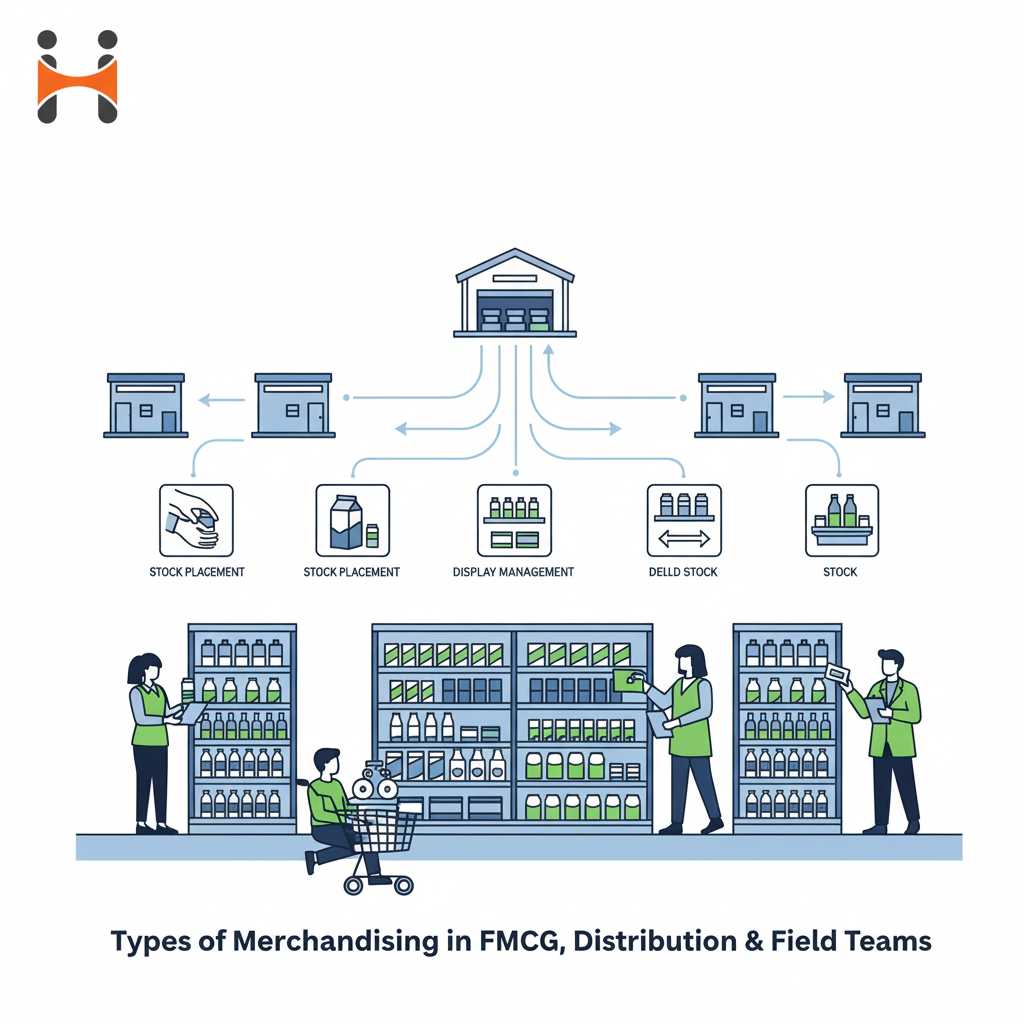
  • Types of Merchandising in FMCG, Distribution & Field Teams

    Types of Merchandising in FMCG, Distribution & Field Teams

    Merchandising plays a key role in FMCG, pharma, retail, and distribution. How products are displayed, managed, and sold affects sales, customer satisfaction, and operations. Businesses that want to track employee locations and improve field work need to understand the types of merchandising and use the right tools.

    At Happisales, we help distributors, retailers, and field teams handle merchandising smoothly while keeping inventory accurate and operations transparent. In this blog, we cover the main types of merchandising, common challenges, and how field force automation works in real situations.

    How Merchandising Supports FMCG and Distribution Operations?

    Merchandising covers all the work that helps sell products in retail and distribution. It is more than just placing items on shelves. It ensures products are available, visible, and attractive while giving your operations team useful data.

    Key activities in merchandising include:

    Product Placement

    Making sure products are easy to see and buy

    Inventory Management

    Keeping the right stock levels to avoid running out or having too much

    Promotional Execution

    Carrying out in-store promotions, discounts, and offers

    Retailer Engagement

    Building strong relationships with retailers to keep products available and follow compliance

    For businesses with field teams and distributors, merchandising includes field merchandising. This is the work done in stores to keep products in stock and make sure promotions are done correctly

    Main Types of Merchandising

    Merchandising can be divided into different types, each with its own goals, challenges, and benefits

    1. Field Merchandising

    Field merchandising is the work done by sales reps, merchandisers, and distributors in stores. We ensure that products are available, displayed properly, and sales opportunities are captured

    Key parts of field merchandising include:

    Shelf Audits
    Checking that products are placed correctly, fully stocked, and look appealing

    Order Capture
    Recording sales orders directly at the retailer

    Promotional Execution
    Carrying out in-store promotions and discounts

    Retailer Training
    Teaching store staff about product features, benefits, and promotions

    Personal Experience
    In our work with FMCG distributors, field merchandising proved very effective. Reps regularly conduct shelf audits and engage with retailers. This helps spot stock gaps and fix them before they affect sales. One client saw a 40 percent drop in order rejections within three months after setting up structured field merchandising processes

    Field merchandising is operational and links directly to inventory visibility, order management, and field force accountability. Software like Happisales makes this process easier.

    2. Product Merchandising

     Product merchandising focuses on organizing, pricing, and presenting items to boost appeal and sales. It overlaps with field merchandising but centers on the product rather than the execution.

    Key parts of product merchandising include:

    Product Placement
    Making sure high-demand items are easy to find

    Stock Rotation
    Tracking expiration dates and batches to reduce waste

    Price Accuracy
    Keeping prices correct across all locations

    POS Material Implementation
    Using banners, tags, and displays to promote products

    With tools like Happisales, sales reps can access product details and pricing on their mobile devices. This reduces errors, ensures compliance, and allows accurate order capture.

    3.  Trade or Promotional Merchandising

    Trade merchandising is about running promotions, discounts, and campaigns at the retailer level. It aims to influence buyers, increase sales, and make products more visible.

    Key parts of trade merchandising include:

    • Discounts and promotional offers
    • In-store displays and point-of-sale materials
    • Incentive programs for retailers
    • Campaign tracking and reporting

    The main challenges are inconsistent execution and difficulty tracking compliance across multiple stores. Happisales lets field teams record promotions in real time, so managers can track execution and results easily.

    4. Visual Merchandising

    Visual merchandising focuses on how products look and how appealing they are. While common in retail stores, it is also important in FMCG and distribution.

    Key parts of visual merchandising include:

    • Store layout optimization
    • Attractive displays and shelving
    • Placing high-margin or promotional products strategically
    • Keeping branding and signage consistent

    Visual merchandising depends on operational support from field teams. Even the best displays fail if products are not available or stock is outdated. Happisales helps by providing real-time stock visibility, accurate order placement, and timely replenishment.

    5. Digital Merchandising

    Digital merchandising is growing in importance with the rise of e-commerce and online retail.

    Key parts of digital merchandising include:

    • Accurate product listings and descriptions
    • Online promotions and campaigns
    • Managing customer reviews
    • Integration with digital ordering platforms for retailers

    Field teams help by making sure offline stock matches online listings. Software like Happisales keeps data synced between physical stores and digital channels.

    Top Issues in FMCG and Distribution Merchandising

    Even with clear merchandising strategies, businesses face several problems:

    1. Stockouts and Overstocking
      Without accurate inventory data, stores may run out of stock or have too much
    2. Inconsistent Execution
      Field reps may follow strategies differently across locations, causing uneven brand experience
    3. Manual Reporting
      Tracking merchandising activities by hand takes time and often has errors
    4. Employee Monitoring
      Supervising field teams and keeping them accountable is hard without real-time tracking

    These issues can lead to lost sales, unhappy retailers, and operational inefficiencies

    How Field Force Automation Supports FMCG Merchandising?

    To solve merchandising challenges, many businesses use field force automation platforms like Happisales. These tools combine merchandising with inventory management, order capture, route planning, and employee tracking.

    How Happisales Supports Field Merchandising?

    • Real-Time Inventory Visibility
      Sales reps and managers can see livestock across locations. This ensures accurate orders and reduces stockouts.
    • Offline Access
      Field staff can log orders, updates, and notes without internet. Data syncs automatically when connectivity returns.
    • Route Optimization
      Happisales plans efficient travel routes for field reps, cutting travel time and covering more stores.
    • Expense and Activity Tracking
      Track field staff visits, activities, and expenses to give managers useful insights.
    • Employee Location Tracking
      Managers can see field staff locations in real time, improving accountability and resource allocation.
    • Analytics and Reporting
      Happisales generates detailed reports on team performance, merchandising compliance, and operations. Managers can make decisions based on data.

    Personal Experience
    After using Happisales, a client in South India saw clear results. Field reps logged orders offline, routes were optimized, and managers tracked employees in real time. Orders were captured faster, stockouts dropped, and sales increased.

    Best Practices for Effective Field Merchandising

    To get the most from field merchandising, companies should follow these practices

    1. Regular Training
      Give field staff the knowledge they need about products, merchandising standards, and technology tools
    2. Consistent Communication
      Keep open channels between field teams and managers to address issues quickly
    3. Data-Driven Decisions
      Use insights from software to adjust merchandising strategies in real time
    4. Technology Integration
      Use field force automation to streamline work, track activities, and improve efficiency
    5. Performance Monitoring
      Check team performance regularly and provide feedback to help them improve

    Why FMCG and Distribution Companies Should Use Field Merchandising?

    Companies that use field merchandising with technology see clear results

    1. Better Stock Availability
      Products are available when needed and waste is reduced
    2. Stronger Retailer Relationships
      Orders are fulfilled on time and promotions are executed properly
    3. Higher Team Accountability
      Real-time tracking keeps field staff responsible for their work
    4. Increased Sales Efficiency
      Route planning and optimized visits help reps cover more stores
    5. Improved Decision-Making
      Analytics and reports provide actionable insights for managers

    Example
    One FMCG distributor saw a 40 percent drop in order rejections within three months of using Happisales. Field reps checked stock on their mobile devices before taking orders, ensuring customers got products reliably

    What’s Next?

    Merchandising is more than placing products on shelves. In FMCG and distribution, it combines field execution, operational visibility, and data-driven insights. Field merchandising makes sure products are available, orders are accurate, and promotions run smoothly.

    Happisales connects field teams, back-office staff, and managers with real-time data. This helps businesses improve merchandising, satisfy customers, and grow sustainably. click here for 14 days free and simplify field merchandising, inventory tracking, and team management with no credit card required.

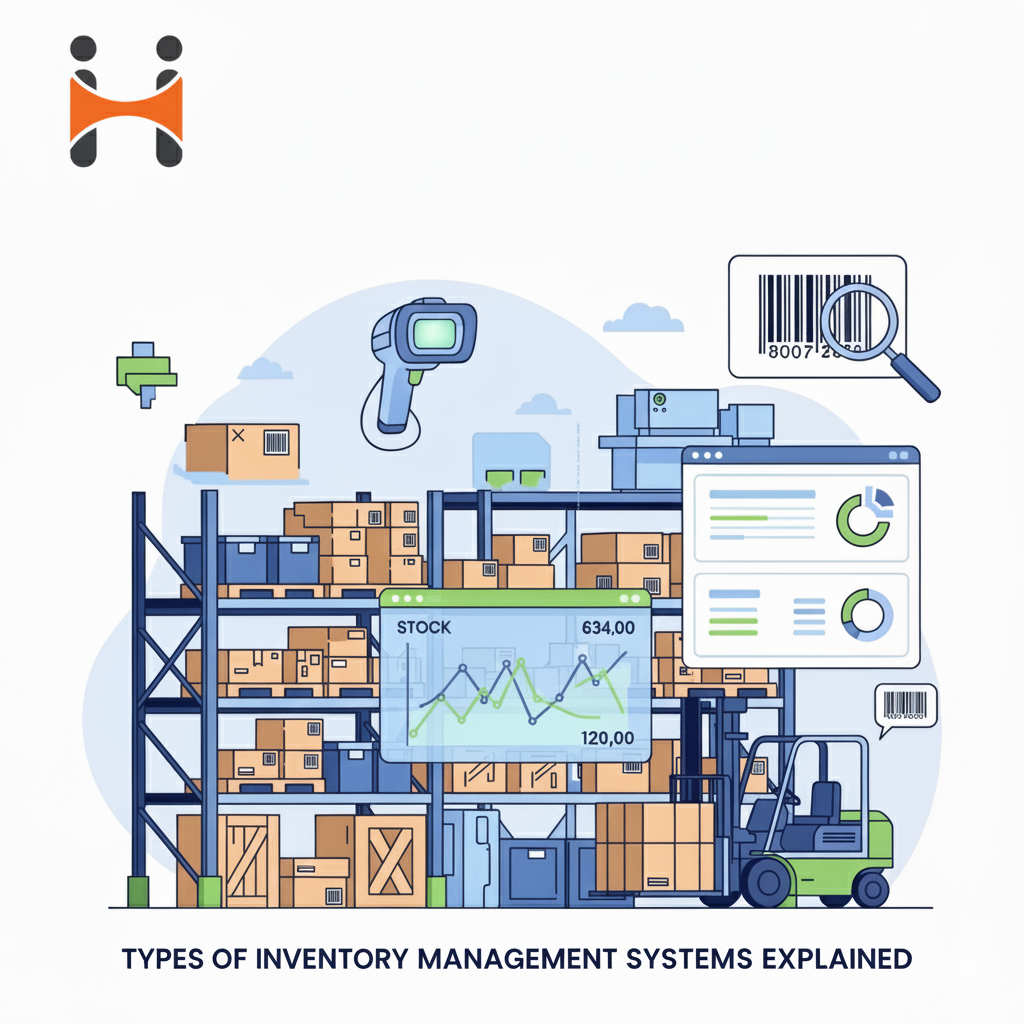
  • Types of Inventory Management Systems – Explained

    Types of Inventory Management Systems – Explained

    Running a business today means you can’t afford stockouts, delays, or messy inventory. If you’re in FMCG, pharma, retail, or distribution, your stock is the backbone of everything. The system you use to manage it isn’t optional anymore. It decides how smooth your operations run and how happy your customers stay.

    At Happisales, we work with companies that depend on field staff, distributors, and sales reps to keep things moving. One issue comes up again and again – no clear view of inventory. Managers often ask themselves simple but important questions. Do I know the stock levels right now? Are my reps placing orders based on what’s really available. How do I stop overstocking or empty shelves without slowing down sales.

    This blog breaks it down. We’ll walk through the types of inventory management systems, what each does well, where they fall short, and how modern tools like Happisales bring inventory and field force tracking together so you get full control.

    What are the different types of inventory management systems?

    Different businesses need different inventory systems depending on size, transaction volume, and industry. Here are the main ones.

    1. Perpetual Inventory System

    This system updates stock in real time with every sale, purchase, or return. It usually connects with POS, ERP, or field sales apps so stock levels adjust automatically.

    Pros

    • Real-time visibility
    • Fewer stockouts
    • Works best for FMCG and high-volume businesses

    Cons

    • Requires tech investment
    • Teams need training

    From experience, we worked with a large FMCG distributor that switched from spreadsheets to a perpetual system. Their sales reps now check stock on their mobile app before taking orders. Order rejections dropped 40 percent in three months.

    2. Periodic Inventory System

     This system counts stock at set intervals like monthly, quarterly, or annually. Books are only updated after each count.

    Pros

    • Low cost
    • Good for small businesses

    Cons

    • Stock data is outdated between counts
    • Higher chance of stockouts or overstocking

    This can work for small local retailers. For distributors managing thousands of SKUs, it quickly becomes inefficient.

    3. Just-in-Time (JIT) Inventory

     Made popular by Toyota, JIT keeps inventory low and replenishes only when needed.

    Pros

    • Lower carrying cost
    • Less waste

    Cons

    • Risk if suppliers delay
    • Works only with predictable demand

    This system suits businesses with stable demand cycles. For FMCG or pharma, were demand spikes often, JIT can leave shelves empty.

    4. Barcode and RFID Inventory Systems

     These systems track products with barcode scanners or RFID tags. Each SKU is tagged and updated instantly during stock movements.

    Pros

    • Fast and accurate
    • Cuts manual errors

    Cons

    • Higher setup cost
    • Needs strict discipline

    We’ve seen pharma companies use this to track medicines by batch, which helps with compliance and reduces expired stock losses.

    5. Cloud-Based Inventory Systems with Offline Support

    This is the most advanced option in use today. Inventory data is stored on the cloud so reps, managers, and warehouses see the same numbers. Orders can be logged offline and synced later.

    Pros

    • Works across locations
    • Mobile-first for field reps
    • No sales lost in poor network areas
    • Easy to link with ERP and CRM

    Cons

    • Ongoing Subscription Cost (though ROI is usually higher)

    One of our Happisales clients in South India had issues with poor connectivity in Tier 3 towns. After moving to our offline-first system, their reps never missed an order. Everything syncs automatically once they’re back online.

    How to Choose the Right Inventory Management System for Your Business?

    Which system you choose depends on a few factors.

    • Business size – small shops often start with periodic systems.
    • Industry – FMCG and pharma work best with perpetual, cloud-based systems.
    • Transaction volume – high-volume distributors benefit from automation.
    • Geography – businesses in semi-urban or rural areas need systems that work offline.

    Happisales usually recommends cloud-based, perpetual inventory systems for growing businesses. They scale well, improve accuracy, and give real-time visibility – things every modern business needs.

    How Happisales Goes Beyond Traditional Inventory Systems?

    Traditional systems track stock but rarely connect with field sales. Happisales is built differently.

    Our software brings together:

    • Real-time stock visibility – Reps check livestock before placing orders.
    • Offline mobile access – Orders logged offline sync once online.
    • Expense tracking and approvals – Managers handle claims alongside inventory data.
    • Route optimization – Reps plan the most efficient travel routes.
    • Team motivation tools -Track performance, set incentives, and recognize achievements.

    With Happisales, sales teams, back office, and warehouses all work on one platform.

    Why Inventory and Field Force Automation Matters in Distribution Management?

    When I began analyzing sales operations for distributors, I kept hearing the same issue. Sales reps took orders without knowing what was in stock. By the time the warehouse was checked, items were often unavailable.

    This hurt credibility with retailers and damaged supplier relationships.

    After implementing Happisales, the change was quick.

    • Reps stopped committing to stock that wasn’t there.
    • Managers saw inventory in real time.
    • Retailers got faster and more reliable service.

    It confirmed my view that combining inventory and field force automation is not optional. It is the future of distribution management.

    What’s Next?

    Inventory management keeps your business running. The system you pick will decide if you grow smoothly or get stuck with delays and errors. Small businesses can manage with periodic counts. But distributors and FMCG brands aiming to scale need systems that are real time, cloud based, and work offline. Happisales goes beyond stock tracking. It connects your field team, back office, and warehouse in one platform.

    Start a 14-day free trial with no credit card needed and see how Happisales makes inventory, sales, and employee tracking work together.

  • Best Sales Management Software in India (2025)

    Best Sales Management Software in India (2025)

    In my 10+ years as a product strategist and sales management software company founder in India, I’ve seen countless startups and SMEs struggle with a common problem: an ad-hoc sales process. Teams rely on a mix of WhatsApp, Excel sheets, and memory to manage leads, resulting in missed follow-ups, lost data, and a chaotic sales funnel. I’ve witnessed firsthand how a business with great potential can stagnate because its sales engine isn’t built on a solid, scalable foundation. 📈

    In a country where the software market is projected to hit US$18.4 billion by the end of 2025, according to IDC, the right sales technology isn’t a luxury—it’s a necessity for survival and growth. The Indian market, in particular, demands solutions that are not only powerful but also intuitive, affordable, and tailored to local sales workflows. This is where a dedicated sales management software becomes a game-changer. It helps you bring order to the chaos, providing your team with a clear, shared view of the sales pipeline.

    We’ll cover everything you need to know about choosing and implementing the best sales management software in India, with a special focus on the features and benefits that matter most for Indian businesses. We’ll also show why our own solution, happisales, is engineered to be the most effective tool for this market.


    The best sales management software in India centralizes lead data, automates follow-ups, and provides real-time analytics to help sales teams close deals faster and more efficiently.


    Why Indian Businesses Need a Dedicated Sales Management Software

    For Indian startups and SMEs, the sales landscape is highly competitive and fast-paced. A one-size-fits-all global CRM often fails to address the unique challenges of the Indian market.

    Key challenges we see every day include:

    • High lead volume from diverse sources: Leads pour in from IndiaMart, JustDial, social media ads, and even WhatsApp, making it difficult to consolidate and track them manually.
    • A mobile-first workforce: Sales reps are often on the move. They need a robust mobile app that works offline and allows them to update lead status, log calls, and access customer history from anywhere.
    • The need for local integrations: Seamless integration with popular local communication tools like WhatsApp and payment gateways is critical for a smooth sales process.
    • The desire for affordability and scalability: Businesses need a solution that is cost-effective and can grow with them, without prohibitive per-user pricing or complex, long-term contracts.

    A tailored sales management software directly addresses these pain points. It transforms a scattered, manual process into a streamlined, automated system. By adopting the right platform, companies can improve lead conversion rates, increase team productivity, and gain clear visibility into their sales performance, which is essential for making data-driven decisions.

    Essential Features to Look for in an Indian Sales CRM

    When you’re evaluating options for your business, don’t just look at a list of features. Think about how each feature will solve a specific problem for your sales team.

    Lead Management and Nurturing

    Effective lead management is the foundation of any successful sales process. The software should be able to:

    • Automatically capture leads from all your sources, including landing pages, social media, and third-party platforms.
    • Assign leads to the right salesperson instantly.
    • Score leads based on engagement, so your team focuses on the most promising prospects.
    • Provide a complete history of every interaction with a lead.

    Our experience with clients at happisales has shown that an automated lead assignment system can reduce response time by over 50%, directly impacting conversion rates.

    Pipeline and Opportunity Management

    A visual, drag-and-drop sales pipeline is a non-negotiable feature. It gives you a clear overview of where every deal stands.

    • Visual Pipeline: A clear, customizable pipeline view with different stages (e.g., Prospect, Qualified, Proposal, Closed-Won).
    • Deal Tracking: Ability to track deal value, expected close date, and activity history for each opportunity.
    • Task Automation: Automated reminders for follow-ups, calls, and meetings. This prevents leads from falling through the cracks, a common issue in a busy sales environment.

    Real-time Reporting and Analytics

    You can’t manage what you don’t measure. A good sales software provides deep, actionable insights.

    • Sales Dashboards: Customizable dashboards to track key metrics like revenue, won/lost deals, and team performance.
    • Forecast Reports: Accurate sales forecasting based on your pipeline data.
    • Performance Metrics: Individual and team performance reports to identify top performers and areas for coaching.

    Communication and Collaboration

    For sales teams, communication is everything. The software should facilitate seamless interaction with customers and within the team.

    • Integrated Calling and Email: The ability to make calls and send emails directly from the software, with automatic logging.
    • WhatsApp Integration: Given the prevalence of WhatsApp in Indian business communication, native integration is a massive advantage. This allows reps to chat with clients and log conversations directly in the CRM.
    • Internal Chat: A built-in chat function to quickly collaborate with team members on a specific deal.

    Mobility and Accessibility

    Sales reps in India are frequently on the road, meeting clients or visiting sites. A powerful mobile app is crucial.

    • Offline Access: The app should allow reps to work offline and sync data once they are connected to the internet.
    • Geo-tagging and Location Tracking: Features that help managers track field sales team activities and verify meeting locations.
    • Mobile-first UI: An intuitive, clean user interface that makes it easy to update records on the go.

    A Comparative Look at Sales Management Software in India (2025)

    The Indian market has a wide range of options, from global giants to home-grown solutions. Each has its own strengths, but the best fit depends on your business size, industry, and budget.

    Here’s a summary table comparing some of the most popular platforms in India in 2025:

    Tailored for India: Solutions like happisales are built specifically for the Indian market, contrasting with global giants like Salesforce, which are more suited for large enterprises and often come with high costs and complex implementation.

    Key Competitors: Global players like Salesforce, and more affordable, broader CRMs such as Zoho CRM and Freshsales, are also popular choices.

    Feature Focus: While Zoho CRM provides a wide range of business tools and Freshsales offers AI-powered features, happisales stands out with its seamless integrations for local tools like WhatsApp and a mobile app optimized for field sales.

    Implementation & Cost: For Indian startups and SMEs, the fast and simple implementation and affordable, transparent pricing of a localized solution like happisales are a significant advantage over the complex and costly rollout of a global platform.

    This is precisely why we built happisales. We saw a gap in the market for a sales management software that combines the power of a world-class CRM with the specific, on-the-ground needs of Indian businesses. From our simplified, transparent pricing to our native WhatsApp integration and mobile-first design, every feature is built to help an Indian sales team win.

    The Role of AI in Modern Sales Management for India

    Artificial Intelligence is no longer just a buzzword; it’s a powerful tool that is transforming how sales teams work. AI-powered features in sales management software can significantly enhance productivity and decision-making.

    Here’s how AI is making a difference:

    • AI Lead Scoring: Algorithms analyze lead data and past behavior to score prospects, telling you which ones are most likely to convert. This helps your team focus on high-priority leads and not waste time on dead ends.
    • Predictive Analytics: AI can forecast future sales trends and highlight potential risks in your pipeline, allowing you to proactively adjust your strategy.
    • Conversational Intelligence: AI analyzes call transcripts and meeting notes to identify keywords, sentiment, and action items. This provides invaluable coaching opportunities for sales managers and ensures no detail is missed.

    For example, a sales manager in a Delhi-based logistics company using an AI-powered CRM can see that a specific sales rep’s call transcripts consistently lack a mention of key competitor benefits. The manager can then provide targeted coaching to improve that rep’s pitch, leading to better outcomes.

    The Rise of Generative AI Chatbots for Sales and Support

    Beyond the core CRM, companies in India are increasingly adopting Generative AI Chatbots to automate initial customer interactions. These chatbots, when integrated with your sales software, can:

    • Handle routine inquiries 24/7 on your website or WhatsApp channel.
    • Qualify leads by asking a series of questions and then automatically creating a new lead in your CRM.
    • Provide instant answers to frequently asked questions, freeing up your sales team to focus on high-value conversations.

    This integration is a perfect example of how combining modern technology can create a highly efficient, automated sales funnel. You can learn more about how we help businesses build and implement these solutions with our Generative AI Chatbots service.

    From Spreadsheets to Software: The Implementation Journey

    Migrating from a manual system to a dedicated software can seem daunting, but a well-planned transition is key to success.

    Here’s a simple, four-step process we recommend for Indian businesses:

    1. Start with a small team: Don’t try to roll out the software to your entire sales force at once. Pick a small, tech-savvy team as a pilot group to test the new system and iron out any issues.
    2. Clean your data: Before migrating, ensure your existing lead and customer data is clean and organized. This is a critical step to ensure a smooth transition and maintain data integrity.
    3. Provide comprehensive training: Don’t just give your team a login and hope for the best. Provide hands-on training and ongoing support. Show them how the software will make their lives easier, not just add another task to their day.
    4. Celebrate small wins: Acknowledge and celebrate when the team uses the new system to close a deal or save time on a tedious task. This builds momentum and encourages wider adoption.

    We’ve seen businesses in Mumbai and Bangalore successfully make this transition. The most successful ones were those where the leadership was fully bought into the process and actively championed the new system.


    People Also Ask

    What are the main benefits of a sales management software?

    The main benefits include centralized lead data, automated workflows, improved team collaboration, and real-time analytics for better decision-making. These features help businesses close more deals and increase revenue.

    How is a sales management software different from a CRM?

    A sales management software is a type of CRM that focuses specifically on the sales process, while a CRM (Customer Relationship Management) is a broader category that can include modules for marketing, customer service, and sales. All sales management software is a CRM, but not all CRMs are focused solely on sales.

    Is CRM software expensive for small businesses in India?

    Not necessarily, as many Indian and global companies now offer affordable, scalable plans tailored to small and medium businesses. Solutions like happisales and freemium models from providers like Zoho CRM and HubSpot have made powerful sales tools accessible to businesses of all sizes in India.

    Can sales software integrate with WhatsApp?

    Yes, many modern sales software solutions, especially those designed for the Indian market, offer native or API-based integrations with WhatsApp. This allows sales teams to manage customer conversations directly from the CRM without switching apps.


    Conclusion: Investing in Your Sales Future

    Choosing the right best sales management software in India is one of the most important decisions you can make to drive growth. It’s an investment not just in a tool, but in the future of your sales team and your business. The market is full of options, but the key is to find a solution that understands the unique pulse of the Indian business landscape.

    We built happisales with this exact purpose. From our experience working with hundreds of Indian companies, we’ve identified and solved the core challenges that hold back sales teams. By providing an intuitive, powerful, and deeply localized platform, we are helping businesses transition from chaos to a confident, scalable sales operation.

    If you’re ready to streamline your sales process and empower your team to sell smarter, we invite you to explore what a purpose-built solution can do for you.

    Visit our website to learn more about our Product Engineering Services and how we can help you build a robust sales pipeline that works for your business.

  • Top 5 Field Team Best Practices for Retail Growth in 2025 

    Top 5 Field Team Best Practices for Retail Growth in 2025 

    The retail landscape in 2025 is defined by rapid digital transformation, evolving customer expectations, and the increasing importance of field teams as the backbone of in-store execution and customer engagement. For retailers seeking sustainable growth, empowering field teams with the right strategies and tools is no longer optional, it’s essential.  

    Here are the top five best practices for field teams to drive retail growth in 2025, leveraging modern technology and a people-first approach. 

    1. Leverage Advanced Field Sales Automation Software 

    Field teams today have access to powerful tools that streamline operations and maximize productivity. Investing in field sales automation software enables teams to automate routine tasks, such as order processing, route planning, and data entry, freeing up valuable time for customer engagement and relationship building. Automation not only reduces errors but also accelerates the sales cycle, ensuring that teams can cover more ground and respond to retailer needs in real time. A robust sales force automation app further enhances coordination, providing managers with real-time insights into team activities and performance. 

    2. Prioritize Data-Driven Decision Making 

    Data is the new currency in retail growth. Field teams equipped with a field sales app can collect, analyze, and act on real-time data from the field. This includes inventory levels, promotional compliance, and customer feedback. By leveraging these insights, teams can make informed decisions, optimize product placement, and identify growth opportunities at each store. Data-driven strategies help retailers stay agile, adapt to market trends, and consistently meet customer demands. 

    3. Focus on Training and Continuous Learning 

    Empowering field teams means investing in their development. Regular training sessions, upskilling programs, and access to digital learning resources ensure that team members stay updated on product knowledge, sales techniques, and new technologies. A sales force automation app can integrate training modules and performance tracking, making it easier for managers to monitor progress and provide targeted coaching. Continuous learning fosters a culture of excellence and adaptability, which is critical for long-term success. 

    4. Enhance Communication and Collaboration 

    Effective communication is the glue that holds field teams together. Utilizing digital tools such as a field sales app or collaboration platforms ensures that team members, managers, and support staff are always connected. Instant messaging, task assignments, and real-time updates enable seamless coordination, quick problem-solving, and consistent execution across multiple locations. Strong communication channels also help field teams share best practices, celebrate successes, and address challenges collectively. 

    5. Measure Performance and Recognize Achievements 

    Tracking key performance indicators (KPIs) is essential for driving growth and maintaining high standards. Field sales automation software and sales force automation apps provide managers with dashboards to monitor metrics such as sales targets, visit completion rates, and customer satisfaction scores. Recognizing top performers and celebrating achievements, whether through gamification, incentives, or public acknowledgment, boosts morale, motivates teams, and reinforces a culture of accountability and excellence. 

    In 2025, the success of retail growth hinges on the effectiveness of field teams. By leveraging field sales apps, field sales automation software, and sales force automation apps, retailers can streamline operations, empower employees, and make data-driven decisions. Prioritizing training, communication, and performance recognition ensures that field teams remain engaged, motivated, and equipped to deliver exceptional results. Embracing these best practices will position retailers for sustained growth and competitive advantage in an ever-evolving marketplace. 

  • From Paper Trails to Digital Success: Transforming Field Sales with Mobile Technology 

    From Paper Trails to Digital Success: Transforming Field Sales with Mobile Technology 

    Field sales has long been the backbone of business growth and customer engagement. Traditionally, sales representatives armed themselves with notebooks, paper order forms, and a Rolodex, spending countless hours on the road, often disconnected from the main office and reliant on outdated information. This paper-driven approach, while effective in its time, was fraught with inefficiencies, missed opportunities, delayed updates, and administrative burdens that slowed down the sales process. 

    The Digital Shift in Field Sales 

    The digital revolution has dramatically reshaped the field sales landscape. Mobile technology now empowers sales reps to access real-time information, manage schedules, update customer records, and even close deals on the spot, all from their mobile devices. This shift from paper trails to digital tools has not only streamlined operations but also elevated the customer experience, enabling faster responses and more personalized service. 

    Key Drivers of Transformation 

    • Connectivity and Real-Time Access: Mobile technology ensure that field sales teams remain connected to the central office and to each other, regardless of location. Reps can instantly retrieve product details, check inventory, and respond to customer inquiries, making them more agile and responsive in the field. 
    • Automation of Routine Tasks: Field sales automation software has revolutionized how teams operate by automating repetitive tasks such as lead generation, route planning, appointment scheduling, and reporting. This not only saves time but also allows sales reps to focus on building relationships and closing deals, rather than getting bogged down by paperwork. 
    • Enhanced Data Accuracy: Manual data entry is prone to errors, which can lead to missed opportunities and inaccurate forecasts. Digital tools ensure that data is captured accurately in real time, providing managers with actionable insights to refine strategies and drive better outcomes. 
    • Optimized Scheduling and Routing: AI-powered solutions help field sales teams plan their visits more efficiently, prioritize leads, and optimize routes, ensuring that every trip is productive and cost-effective. 

    The Role of Field Sales Apps 

    A modern field sales app is at the heart of this transformation. Designed for on-the-go access, these apps enable representatives to manage leads, update records, place orders, and monitor daily tasks from their smartphones or tablets. Features such as GPS navigation, e-signatures, and real-time analytics further enhance productivity and accountability. 

    For example, field sales apps allow sales reps to: 

    • Log activities and update customer information instantly 
    • Access up-to-date product catalogues and inventory levels 
    • Generate quotes and process orders in the field 
    • Communicate seamlessly with managers and team members 

    Benefits Beyond Efficiency 

    The adoption of mobile technology in field sales brings a host of benefits: 

    • Increased Productivity: By automating administrative tasks and providing instant access to information, sales teams can spend more time selling and less time on paperwork. 
    • Improved Customer Experience: Faster response times and personalized service lead to higher customer satisfaction and loyalty. 
    • Cost Savings: Optimized routes and reduced manual errors translate into lower operational costs and higher margins. 
    • Better Decision-Making: Real-time data and analytics empower managers to track performance, identify trends, and make informed decisions. 

    Embracing the Future 

    As market demands and customer expectations continue to evolve, the digital transformation of field sales is no longer optional, it’s a strategic imperative. Companies that invest in field sales automation software and embrace mobile-first solutions are better positioned to seize market opportunities, enhance team performance, and deliver exceptional customer value. 

    In summary, the journey from paper trails to digital success is redefining what’s possible in field sales. By leveraging the power of mobile technology, organizations are not just improving efficiency, they’re unlocking new levels of growth, agility, and competitive advantage. The future of field sales is digital, connected, and driven by innovation, are you ready to make the leap? 

  • Top 5 Features to Look for in a Field Sales App for Indian Market Conditions 

    Top 5 Features to Look for in a Field Sales App for Indian Market Conditions 

    Navigating the diverse and dynamic Indian market requires tools tailored to its unique challenges. A robust field sales app can empower sales teams to boost productivity and efficiency. Here are the top five features to prioritize when choosing the right solution for Indian market conditions. 

    1. Offline Functionality 

    India’s varied geography often means inconsistent internet connectivity, especially in rural areas. An app for field sales must offer offline support, allowing reps to log activities, manage leads, and access data without a network. Once connectivity is restored, the app should sync seamlessly, ensuring no data is lost. 

    2. Route Optimization and Real-Time Tracking 

    With traffic congestion and sprawling urban-rural landscapes, efficient route planning is critical. A sales force automation tool should include route optimization to minimize travel time and fuel costs. Real-time GPS tracking also helps managers monitor field reps, ensuring they visit clients as planned and improving accountability. 

    3. Multilingual Support 

    India’s linguistic diversity demands an app that supports multiple regional languages. Sales reps interacting with clients in languages like Hindi, Tamil, or Bengali need interfaces and customer data fields in their preferred language. This feature enhances communication and builds stronger client relationships. 

    4. Integration with Local Payment Systems 

    Cash flow management is vital for Indian businesses, often dealing with on-the-spot payments. The app should integrate with popular local payment systems like UPI or mobile wallets, enabling reps to collect payments, track unsettled invoices, and issue digital receipts instantly, streamlining financial operations. 

    5. Customizable Analytics for Market Insights 

    Understanding local market trends is key to success. The app must provide customizable analytics to track sales performance, monitor stock levels, and analyze regional demand patterns. Features like automated reports and dashboards help managers make data-driven decisions tailored to India’s fast-paced market. 

    Choosing a field sales app with these features ensures sales teams can tackle India’s unique challenges—unreliable connectivity, logistical hurdles, linguistic diversity, payment preferences, and market variability. By equipping reps with the right tools, businesses can drive efficiency, improve customer engagement, and boost revenue in this competitive landscape. 

  • Mastering Field Sales: How to Train Your Reps on Field Sales Apps and Sales Force Automation Software

    Mastering Field Sales: How to Train Your Reps on Field Sales Apps and Sales Force Automation Software

    Why Field Sales Engagement Platforms Matter

    In today’s market, using a robust field sales engagement platform is no longer optional, it’s a competitive necessity. These platforms streamline sales workflows, deliver real-time analytics, and enable better communication between field teams and managers.

    By leveraging a field sales engagement platform, businesses can:

    • Analyze customer interactions
    • Personalize field rep approaches
    • Increase customer satisfaction
    • Enable data-driven decision-making

    Staying ahead with the right field sales technology ensures your team adapts to evolving buyer behavior and market demands.

    Top Field Sales Apps in 2025

    What are the top field sales apps available, and how do they compare in terms of features and ease of use?

    Leading field sales apps in 2025 offer:

    • Offline data access
    • GPS tracking
    • Route optimization
    • In-app communication
    • Real-time order entry

    Comparison of top field sales apps:

    • App A: Known for user-friendly UI and custom workflows
    • App B: Strong in analytics and reporting
    • App C: Best for integration with legacy CRMs

    Evaluate based on ease of use, feature set, and scalability.

    Training Your Sales Team to Use Field Sales Apps

    How should I train my sales reps to effectively use new field sales technology?

    Effective field sales app training combines:

    • Hands-on experience
    • Role-playing exercises
    • E-learning and microlearning

    Start by identifying reps’ tech gaps and tailor the program accordingly. Create interactive workshops that simulate real-world usage. Reinforce learning with refresher sessions and support forums.

    Sales Force Automation Software: Benefits and Best Practices

    How can I determine which sales force automation software is best suited for my business needs?

    Sales force automation software (SFA) automates repetitive tasks and improves decision-making. Top benefits include:

    • Real-time lead prioritization
    • Automated scheduling
    • Accurate forecasting
    • Integration with marketing tools

    When evaluating sales force automation software:

    • Choose platforms with mobile-first design
    • Look for predictive analytics and lead scoring
    • Ensure CRM compatibility and API flexibility

    Implementing Effective Field Sales Training Programs

    A successful training program for field sales apps and SFA tools requires:

    • Clear KPIs and learning goals
    • Balanced curriculum (theory + practical)
    • Multiple learning formats (videos, simulations, live coaching)

    Encourage peer-to-peer learning and allow for real-time feedback collection to keep the program evolving.

    Measuring Training Success and App Adoption

    How can I measure the success of my field sales training program and app adoption?

    Metrics to track include:

    • Usage rates of the field sales app
    • Knowledge retention scores
    • Sales metrics before/after training
    • Rep satisfaction and confidence

    Use quizzes, live role-play evaluations, and CRM/app analytics to validate success.

    Case Studies: Field Sales Engagement Platforms in Action

    What are some real-world examples of companies successfully implementing field sales engagement platforms?

    1. FMCG Brand: Increased productivity by 25% within 6 months using a tailored field sales engagement platform.
    2. Pharma Company: Reduced sales cycle with sales force automation software and improved lead conversion.
    3. Retail Chain: Trained reps on a custom field sales app, leading to better customer satisfaction and repeat business.

    Future Trends in Field Sales Technology

    What future trends should I be aware of in field sales technology and automation?

    Trends shaping the next generation of field sales apps and SFA tools:

    • AI-powered sales recommendations
    • Voice-to-text note capturing
    • Predictive route planning
    • Embedded video calling within apps

    Investing early in emerging field sales technology helps future-proof your sales operations.

    FAQs

    What challenges do sales reps face when using field sales apps, and how can they be overcome?

    • Challenge: Tech resistance
      • Solution: Gamified onboarding and peer mentoring
    • Challenge: Poor mobile network coverage
      • Solution: Choose apps with offline functionality

    How do field sales apps help improve sales productivity and customer engagement?

    • Real-time insights and automation free up time
    • Location tracking and visit planning improve efficiency
    • Personalized follow-ups increase engagement

    What are the key features to look for in a field sales app or sales force automation software?

    • Custom workflows
    • CRM and ERP integration
    • AI and analytics
    • Offline support

    Book a demo today and experience how a tailored field sales engagement platform can elevate your sales strategy.

  • Best Use Cases for a Field Sales App in Pharma: Real-World Wins That Boost Rep Productivity

    Best Use Cases for a Field Sales App in Pharma: Real-World Wins That Boost Rep Productivity

    What if your best medical rep could see more doctors, cut down on admin work, and close more orders, all without burning out?

    Pharmaceutical sales isn’t just about selling, it’s about timing, trust, and total precision. With compliance, competition, and constant fieldwork in play, your reps need more than spreadsheets and schedules, they need smart tools that move as fast as they do.

    Enter the field sales app: a complete command center in your rep’s pocket.

    Here’s how it delivers real, repeatable value every day.

    ✅ Pro Move #1: Plan Smarter, Visit More

    Covering huge territories and juggling doctor appointments isn’t easy.
    A field sales app automatically maps optimized routes, tracks visit history, and helps schedule appointments so your reps stay sharp and on time.

    Result: More quality visits. Less burnout.

    📦 Pro Move #2: Track Every Sample and Detail

    Samples and promotional materials are critical,but they’re also heavily regulated.
    The app logs who received what, when, in real time. Say goodbye to lost samples and messy inventory sheets.

    Result: Full compliance. Zero guesswork.

    🧠 Pro Move #3: Sell Smarter with E-Detailing

    Forget outdated flipcharts. Today’s reps impress with interactive presentations, videos, and product literature, all directly inside the app.

    Result: Consistent messaging. Stronger engagement.

    🛒 Pro Move #4: Book Orders on the Spot

    Why wait to send an email when your rep can place an order live, check stock, and apply deals, right from the chemist’s shop?

    Result: Faster conversions. Happier distributors.

    📊 Pro Move #5: Real-Time Reporting Made Easy

    No more late-night reports or manual tracking. The app logs every visit, order, and detail as it happens. Managers get live dashboards and reps get their time back.

    Result: Instant visibility. Total control.

    📣 Pro Move #6: Capture What Competitors Miss

    Doctors share things, new competitors, shifting preferences, feedback. The app makes it easy to capture those insights and feed them into your marketing playbook.

    Result: Smarter strategies. Data-backed moves.

    It’s Time to Power Up Your Field Force

    In today’s high-pressure pharmaceutical environment, even top-performing reps can hit walls with outdated systems. If your team is still managing doctor visits, order booking, and reporting with spreadsheets, you’re missing a huge opportunity.

    With Happisales, pharma field teams get:

    • 🗺️ Smarter route planning & visit tracking
    • 📦 Real-time sample and promotional stock logging
    • 🧾 Instant chemist orders with stock insights
    • 📽️ Interactive e-detailing and brand presentations
    • 📊 Live dashboards for managers
    • 📝 Field-level insights for marketing and strategy

    ⭐ Trusted by Leading Pharma Brands

    From generics to specialty medicines, Happisales is trusted by pharma companies across India to help MRs stay productive, compliant, and ahead of the curve. Whether your team has 10 reps or 1,000, the platform scales with you.

    🚀 See the Difference for Yourself

    Start your free trial today and explore why pharma leaders are choosing Happisales to digitize their field force.

    ✅ Instant access
    ✅ No credit card required
    ✅ Full-feature access from Day 1

    👉 Click here to start your free trial

    Your competitors are already switching—don’t get left behind.

  • Best Field Staff Tracking Software for Transport Companies

    Best Field Staff Tracking Software for Transport Companies

    The transportation industry depends on accuracy. Deliveries need to arrive on time, drivers need safe routes, and every employee on the road must be accounted for. Coordinating all of this is difficult when staff are spread across cities, highways, and customer locations. For transport companies, having visibility into employee activities is not just useful, it is essential.

    Field employee tracking software and field staff tracking software make this possible. These tools let companies monitor their workforce in real time, track vehicles, improve accountability, and plan better routes. With the right system, transport companies can cut costs, reduce risks, and provide better service to customers. This article shows why these tools are important, how they work, and the benefits they offer to transportation businesses.

    Why Transportation Companies Need Field Employee Tracking Software?

    Transportation relies on a mobile workforce. Drivers, field staff, and logistics teams rarely stay in one place. Without tracking systems, managers often do not know where employees are, how well they are working, or if they are following assigned routes.

    Field employee tracking software solves this by offering real-time visibility so managers always know employee locations. It also ensures workforce accountability by recording tasks, routes, and attendance. Companies save fuel, time, and resources, and customers get accurate delivery updates.

    Field staff tracking software adds more control. With GPS, geofencing, and data insights, transportation companies can run operations more efficiently and safely.

    Effective Ways to Track Employees in the Transportation Sector

    Tracking tools help managers stay on top of employees while they are on the move.

    1. Real time GPS tracking

    With field staff real time tracking, companies can see where employees are at any moment. This makes it easier to check routes, prevent unnecessary detours, and cut down on idle time. Managers can respond quickly when delays happen because of traffic or roadblocks.

    If a delivery truck takes longer than expected, they can check whether it is due to congestion or an off route stop. This reduces downtime and keeps operations more reliable.

    2. Attendance and Work Hour Tracking

    Employee field tracking records attendance automatically when staff start or finish a route. This removes the need for manual timesheets and reduces payroll errors. It also helps companies prevent unnecessary overtime. For transportation firms with large fleets, this brings accuracy in pay and better workforce planning.

    3. Geofencing for Smarter Monitoring

    Field tracking software can create virtual boundaries around depots, client locations, or delivery zones. Managers get alerts when employees enter or leave these areas. This helps improve safety. For example, if a driver leaves a set highway route late at night, the system flags it right away.

    4. Driver Behavior Monitoring

    Fuel and safety are two major costs in transportation. With field employee tracking solutions, companies can watch driver habits such as sudden braking, speeding, or long idling. Correcting these patterns helps improve safety and lowers fuel use. Many transport firms see fewer accidents and better mileage when driver behavior is monitored.

    5. Route Optimization

    Efficient route planning saves time and costs. Field sales employee tracking software calculates the best routes using traffic, weather, and road conditions. Drivers receive these routes automatically. Managers can adjust them in real time if conditions change. This reduces fuel use and helps deliveries reach customers faster. It also makes delivery times more reliable for customers.

    Benefits of Field Employee Tracking Software for Transportation

    1. Increased Productivity

    Track field employees features let managers see all tasks clearly without relying on calls or guesswork. Employee activity is recorded, keeping staff accountable. Managers can reassign work quickly when delays happen. This reduces downtime and improves overall productivity.

    2. Enhanced Employee Safety

    Safety is a top priority for drivers and field staff. Field staff location tracking lets managers know where employees are at all times. In case of emergencies or breakdowns, help can be sent immediately. Monitoring behavior reduces reckless driving and lowers accident risks. Employees feel more secure knowing their location is visible to their employer.

    3. Cost Reduction

    Extra miles and idling increase costs. Field employee tracking solutions help companies save fuel by planning efficient routes. They reduce maintenance costs by monitoring driving habits. Automated attendance tracking lowers payroll errors. Small savings on each trip add up to significant reductions over time.

    4. Better Customer Service

    Customers expect more than fast delivery. They want transparency. Employee transportation tracking provides real-time updates on deliveries. Delays can be communicated accurately, avoiding confusion. Reliable tracking builds trust and loyalty. For logistics companies, this clarity gives a competitive advantage.

    5. Smarter Decision Making

    Detailed reports on routes, attendance, and performance give managers useful insights. They can see which employees are most efficient, which routes cause delays, and where resources are being wasted. Analytics from field employee tracking software help businesses make better decisions and improve operations over time.

    What’s Next?

    The transportation industry is moving fast, and manual tracking is no longer enough. Companies need to adopt field employee tracking software and field staff tracking software to get real-time visibility, improve efficiency, and keep employees safe.

    With GPS monitoring, geofencing, attendance tracking, driver behavior insights, and route optimization, businesses can manage their workforce better and adapt to changing demands. These tools help managers run operations smarter, safer, and more focused on customers.

    Request a free demo today to see how our happisales field employee tracking software can improve efficiency and results for your transportation business.


    Frequently Asked Questions

    1. What is the best field employee tracking software for transportation companies?

    The best software depends on your business size and needs. Choose one with real-time GPS tracking, attendance management, driver behavior monitoring, geofencing, and route optimization. These features help manage staff, save costs, and make deliveries reliable.

    2. How can I track my field staff in real time?

     Field employee tracking software uses GPS to show where staff are at any moment. Managers can monitor routes, track tasks, and respond quickly to delays. This keeps employees accountable and deliveries on schedule.

    3. How does GPS tracking improve efficiency and reduce costs for transport businesses?

    GPS tracking shows the location of vehicles and staff. It prevents detours, cuts idle time, and plans efficient routes. This lowers fuel use, reduces overtime, and saves money while keeping operations productive.

    4. Can driver behavior and safety be monitored with field tracking software?

    Yes. The software tracks speeding, harsh braking, sudden acceleration, and long idling. Monitoring these habits reduces accidents, saves fuel, and gives employees peace of mind knowing support is available.

    5. How does route optimization help delivery fleets save time and fuel?

     Route optimization finds the fastest, most efficient paths based on traffic, weather, and road conditions. Drivers get automatic updates, and managers can adjust routes in real time. This reduces fuel use, ensures on-time deliveries, and improves customer satisfaction.

    Happisales CTA