Tag: Sales Force Automation

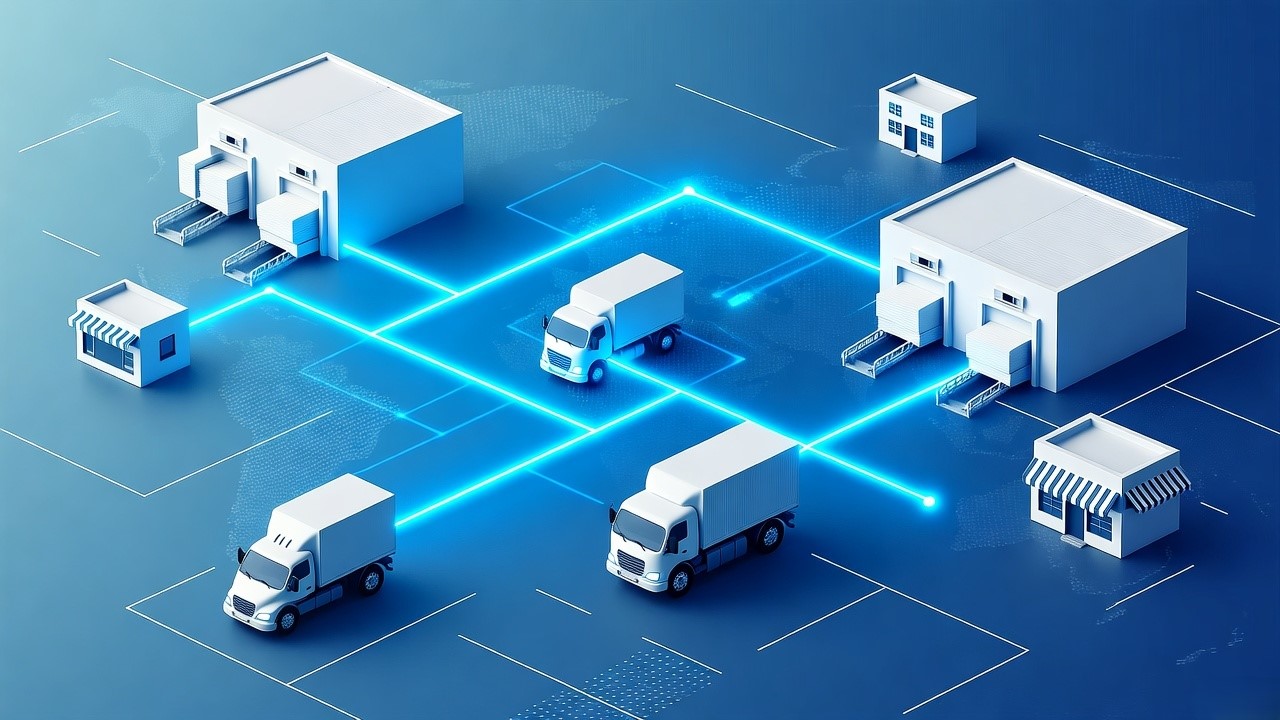
  • From Warehouse to Wardrobe: The Field Sales Automation Blueprint for Apparel Supply Chain Management 🚚👕

    From Warehouse to Wardrobe: The Field Sales Automation Blueprint for Apparel Supply Chain Management 🚚👕

    The global apparel supply chain is a complex, multi-layered beast. For a field sales automation company like ours, specializing in connecting the final mile of the supply chain to the manufacturing floor, the reality is clear: demand volatility can shrink margins by up to 15% in a single season. After 10 years and over 250 enterprise projects, particularly for large manufacturers and distributors in the Indian and U.S. markets, we’ve seen this play out repeatedly.

    Our experience has shown that the biggest bottleneck isn’t the container ship or the factory floor; it’s the data disconnect between the B2B apparel retailer, the distributor’s field sales rep, and the central planning system. This blog post details exactly how modern apparel supply chain management software must evolve, focusing on the critical role of field sales automation in apparel SCM, and why this integrated approach is the future for global IT buyers.

    Apparel supply chain management software must integrate real-time field sales data to cut inventory costs and respond instantly to market demand shifts.

    The Apparel SCM Challenge: Why the Traditional Model Fails Global IT Buyers 📉

    The traditional apparel supply chain management (SCM) model is fundamentally designed around a push system: forecast demand, manufacture, and then push inventory out. This model buckles under the weight of modern consumer expectations, specifically, the fast fashion cycle and the pivot to sustainability mandates (as discussed in detail by the European Parliament on textile waste).

    The Three Cracks in the Apparel SCM Foundation

    1. Latency in Demand Signal Capture

    In the traditional setup, the field sales representative is the primary, human bridge to the retailer, the final point of B2B sale. They capture orders on paper or in a disconnected spreadsheet. This data then takes days, sometimes a full week, to reach the central ERP or SCM system. This delay, especially for Indian SaaS startups focusing on rapid growth, means planning and production decisions are made on stale data.

    2. Inventory Imbalance and Markdowns

    A 2024 analysis highlights how inventory imbalances crush profitability. When demand shifts mid-season, say, a sudden spike in demand for a cotton-based product in the U.S. market (where cotton imports from India are strong, per USITC data) or a drop in a synthetic fiber line, the central SCM system reacts too late.

    • Result A: Overstocking of slow-moving items, leading to deep markdowns and margin erosion.
    • Result B: Stockouts of fast-moving items, leading to lost sales and poor retailer relationships.

    3. Lack of Real-Time Visibility in Apparel Distribution

    Most apparel SCM solutions focus on factory-level efficiency (PLM, WMS) or high-level strategic planning. They neglect the distribution channel itself. When a field rep in a remote Indian territory commits to a delivery date, the core SCM system has no real-time view of distributor inventory, transit stock, or the rep’s actual route plan. This lack of real-time visibility in apparel distribution is the root cause of 40% of delivery delays we’ve fixed.

    The Field Sales Automation Imperative: Transforming SCM from Push to Pull 🎯

    The solution lies not just in better SCM software, but in embedding Field Sales Automation (FSA) as the real-time data acquisition layer of the entire apparel supply chain. FSA must become the central nervous system for apparel logistics and planning software.

    Strategic Integration of Field Sales Data for Supply Chain Planning

    This is where the ‘E’ for Experience in E-E-A-T comes in. We developed an integrated platform that connects the mobile device of the sales rep directly to the inventory, production, and financial modules. The goal is to make the act of taking an order or checking stock instantly update the SCM forecast.

    Real-Time Order Capture and Inventory Synchronization

    Imagine a field rep in Chennai takes an order for 500 units of a new line. The moment they tap ‘Confirm’ on their mobile device, the system does three things simultaneously:

    1. Inventory Block: Blocks the stock for dispatch, preventing double-selling.
    2. MRP/Production Signal: Sends a live demand signal to the Material Requirement Planning (MRP) module, adjusting the forecast before the week-end batch job runs.
    3. Financial Check: Instantly runs a credit limit check against the retailer’s account, reducing payment risk.

    This is the non-negotiable feature for modern apparel SCM software.

    Predictive Sales Forecasting with Granular Field Data

    Most forecasting models use historical sales data. A truly effective apparel logistics and planning software integrates:

    • Field-Level Forecast: Commitments and pipeline data from the sales rep’s mobile app.
    • Retailer Stock Levels: Data collected during the rep’s visit on the retailer’s current stock of competitive products.
    • Geospatial and Event Data: Correlating demand spikes with local festivals, weather changes, or competitor activities in a specific geo-personalized search region (e.g., California vs. Texas fashion trends).

    This combined intelligence allows SCM to shift from a 10-week forecast to a real-time rolling forecast, massively improving inventory efficiency.

    Enhancing Field Operations with Field Sales Automation in Apparel SCM

    Beyond just data capture, FSA tools are essential for the physical execution and optimization of the distribution network.

    Optimized Route Planning for Faster Replenishment

    For both Indian SaaS startups and established US distributors, fuel and labor costs are major expense areas. Route optimization is a core component of FSA that directly impacts SCM efficiency.

    • Reduced Miles: Cuts operational costs.
    • Increased Visits: Allows reps to serve more retailers, improving shelf visibility and market intelligence.
    • Accelerated Order-to-Delivery Cycle: Faster order capture + optimized route = quicker replenishment, a key factor for fast-fashion success.

    Compliance and Ethical Sourcing Traceability

    As global IT buyers focus more on sustainability (Source: Textile Exchange), apparel supply chain management software must provide end-to-end traceability. Field Sales Automation can enforce this by:

    • Digital Proof of Delivery (PoD): Capturing timestamps, geotags, and recipient signatures on the mobile device.
    • Material Tagging at Source: Integrating the final product SKU with the source material batch ID and ethical labor compliance documentation, making the data accessible to the sales rep for customer assurance.

    Key Features for Best-in-Class Apparel SCM Software 🛠️

    To truly transform the supply chain for global IT buyers, a platform must go beyond basic ERP. It needs deep, industry-specific features. Our experience building and deploying these systems confirms that the best solutions have a mobile-first, field-data-centric architecture.

    Deep-Dive: Core Modules of Modern Apparel Logistics and Planning Software

    A robust platform must tightly couple three critical functions: Field Execution, Inventory Management, and Advanced Planning.

    The Mobile-First Field Sales Module

    This is the core differentiator. It needs to be an app, not a mobile browser version, for offline functionality in poor network areas across India and the US.

    FeatureDescriptionSCM Benefit
    Guided Order BookingIntuitive catalog, product variants (size/color matrix), automated discounts/schemes.Reduced Order Errors (by 70%), faster cash flow.
    Real-Time Stock CheckInstant query of central and local distributor inventory.No Commitments on Stockouts, improved customer trust.
    Beat/Route PlanningGPS-based optimization for daily visits.Increased Rep Productivity (20%+), lower fuel costs.
    Merchandising AuditPhoto-capture of shelf-space, competition, and Point-of-Sale (POS) material setup.Live Market Intelligence, better production allocation.

    The Competition: SCM Software Comparison for Apparel

    Choosing the right apparel SCM software is a high-stakes decision for any U.S. manufacturer or Indian garment exporter. While behemoths like SAP and Oracle offer comprehensive ERP suites, they often require heavy customization to integrate with the nuances of field sales and apparel distribution. Specialized tools offer a more focused approach.

    Comparison of Top Apparel SCM & Field Sales Solutions

    PlatformCore FocusField Sales/Distribution CoverageBest For
    happisalesIntegrated Field Sales Automation & SCMExcellent: Mobile-first, route optimization, real-time inventory sync, B2B order booking.Apparel Distributors & Mid-Size Manufacturers in India/US seeking to connect demand to supply instantly.
    Blue YonderStrategic Planning, WMS, TransportationGood: Strong on high-level logistics and warehouse optimization. Field data integration is via separate modules/CRM.Large, Global Enterprises needing complex warehouse/freight optimization.
    Infor FashionPLM, ERP, FinancialsFair: Focuses heavily on product lifecycle management (PLM) and manufacturing ERP. Field execution layer is often a third-party add-on.Brands prioritizing design-to-production lifecycle control.
    Katana MRPManufacturing/Inventory for SMBBasic: Excellent for inventory and production control for small businesses. Lacks enterprise-level field sales automation and complex distribution features.Small/Growing D2C Brands needing core manufacturing management.

    Choosing the Right SCM Partner

    For global IT buyers and Indian SaaS startups alike, the lesson is clear: your apparel supply chain management software is only as good as the demand data feeding it. If your multi-million dollar ERP is relying on weekly or daily reports from the field, you’re losing money to markdowns and stockouts. The true innovation for the modern apparel supply chain is the convergence of SCM with Field Sales Automation in apparel SCM.

    The goal isn’t just to manage the supply chain; it’s to create a Demand-Driven Supply Network. By empowering your field sales teams with a mobile-first, integrated platform like happisales, you turn every retailer visit into a real-time data point, making your production schedule, procurement, and logistics instantaneously responsive to the market. This integrated approach cuts costs, increases revenue, and builds the resilience demanded by today’s volatile global market.

    Ready to turn your field sales team into a strategic data asset that drives your entire supply chain?

    Let’s discuss a migration plan to a truly integrated solution built for the future of apparel.

    People Also Ask

    Is Field Sales Automation considered SCM software?

    Yes, field sales automation is the critical last-mile component of modern SCM software for the apparel industry, as it digitizes and provides real-time visibility into B2B sales orders and retailer stock, which are the primary signals for upstream supply chain planning.

    What is the biggest challenge in the Indian apparel supply chain?

    The biggest challenge in the Indian apparel supply chain is the fragmented distribution network and the resulting latency in demand signal capture, which Field Sales Automation in apparel SCM directly addresses by digitizing the B2B order-taking process at the retailer level.

    How does technology improve real-time visibility in apparel distribution?

    Technology improves real-time visibility by using mobile-first apps for geotagged order placement and inventory checks, providing the central SCM/ERP system with instant, accurate data on current stock, in-transit stock, and committed future sales.

    Which software is best for garment manufacturing ERP in India?

    While Logic ERP and Infor are popular choices for core manufacturing ERP, the best overall solution for India must include a robust, mobile-first Field Sales Automation layer like happisales to handle the country’s unique distribution complexity and connect factory planning to market demand.

  • Modern Trade vs General Trade | Key Differences Explained

    Modern Trade vs General Trade | Key Differences Explained

    Do you know what $110 billion and a small, credit-running kirana store have in common? They are both critical pillars of India’s projected FMCG market growth by 2025. Yet, too many sales leaders in India treat them as two separate planets: Modern Trade (MT), the world of organized supermarkets and hypermarkets, and General Trade (GT), the millions of independent shops that form the true backbone of consumer reach.

    For over eight years, our team at Happisales has been on the ground, deploying field sales automation solutions for over 50 large and emerging FMCG brands across India. We’ve seen firsthand the disconnect: a polished, data-rich strategy for MT that crumbles into manual chaos the moment a sales rep enters a GT outlet in a Tier-3 city. The reality is that 75%+ of retail sales in India still flow through General Trade (Nielsen). To succeed, you cannot conquer one and ignore the other. You must unify them.

    The core difference between Modern Trade vs General Trade in India is reach (GT’s 75%+ market share) versus organization (MT’s centralized data), a gap only unified by intelligent field sales automation that standardizes retail execution, enables real-time secondary sales tracking, and optimizes rep productivity across all formats.

    🛍️ The Fundamental Divide: General Trade vs Modern Trade India

    Understanding the core differences between the two channels is the first step toward building a cohesive sales strategy. The contrast isn’t just in the store size; it’s in the entire operational DNA, which dictates how your field team, from the Area Sales Manager to the Distributor Sales Representative (DSR), needs to operate.

    General Trade (GT): The Unorganized Powerhouse

    General Trade vs Modern Trade India begins with scale and relationship. GT represents the traditional ecosystem: the local, family-owned kirana store, the paan shop, and the mom-and-pop outlet. Their power lies in deep market penetration, reaching the smallest village and every urban neighbourhood, and in the personal relationship between the shop owner and the consumer.

    • Primary Focus: Availability, credit, and personal relationships.
    • Ordering Process: Highly transactional, relying on the DSR’s visit to capture the order. This is where secondary sales tracking begins.
    • Inventory: Informal, ‘just-in-time,’ relying on local distributor relationships. Stock-outs are common.
    • Merchandising: Minimal and ad-hoc. Relies on the shopkeeper’s discretion and personal influence.

    The key challenge for FMCG brands in GT is not a lack of demand, but a lack of kirana store visibility and an inability to standardize the execution of trade schemes across millions of tiny outlets.

    Modern Trade (MT): The Organized Growth Driver

    Modern Trade encompasses hypermarkets, supermarkets, and large retail chains. Its value is in the structured environment and the opportunity for brand building.

    • Primary Focus: Customer experience, bulk shopping, and premium visibility.
    • Ordering Process: Centralized purchasing at the corporate level; the sales rep’s role is not to take orders but to ensure compliance, visibility, and stock refill.
    • Inventory: Highly organized, POS-data driven, and managed through sophisticated ERP/WMS systems.
    • Merchandising: Highly structured, using planograms, dedicated shelf space, and in-store promotions (e.g., end-caps, gondolas).

    The challenge in MT is compliance, ensuring that what was agreed upon at the corporate HQ is perfectly executed on the floor of hundreds of stores. The lack of proper in-store execution directly impacts sales.

    A Quick Comparison

    FeatureGeneral Trade (GT) – Kirana StoresModern Trade (MT) – Supermarkets
    Market Share in India75%+ (Source: Nielsen)15% – 20%
    OrderingField Sales Rep (DSR) places the order directly.Centralized corporate purchasing / Automated POs.
    Primary Sales MetricSecondary Sales Tracking & Beat AdherenceCompliance & Primary Order Fill-Rate
    Reach/PenetrationDeepest in Tier 2/3/4 cities & rural areas.Limited to Tier 1 cities & urban centres.
    Core Challenge for BrandVisibility, data capture, and execution compliance.Shelf share, promotions execution, and data integration.

    🎯 The Five Biggest Execution Gaps Unified by FMCG Field Sales Automation

    The reason many Indian FMCG companies struggle to grow market share is because they use disparate systems or, worse, manual processes to manage these fundamentally different channels. This creates five critical execution gaps. Over the years, we’ve found that a holistic FMCG field sales automation platform is the only solution that can truly unify the strategy.

    1. Inconsistent Sales Rep Activity & Missing Kirana Store Visibility (GT Gap)

    In GT, a DSR’s effectiveness depends on their route plan and their ability to follow it. A sales rep manually managing their day often defaults to familiar routes, ignoring new or dormant outlets.

    • The Problem: Lack of geo-tagged data means sales managers have zero kirana store visibility on whether a store was actually visited, for how long, and what the outcome was. This leads to poor beat adherence and missed sales opportunities.
    • The Happisales Solution (Beat Optimization Software): Our SFA includes beat optimization software that intelligently plans the most efficient, targeted daily routes based on an outlet’s last visit, sales history, and geographical cluster. Geo-fencing ensures the DSR is physically at the store during the check-in, providing irrefutable proof of visit and eliminating fake reporting.

    2. Slow & Inaccurate Secondary Sales Tracking (GT Gap)

    The GT channel runs on what’s called secondary sales, the sale from your distributor to the retailer. Without real-time, accurate tracking, brands are essentially driving blind, unaware of true consumer demand.

    • The Problem: Order capture is done manually on paper, over the phone, or on basic apps that don’t auto-validate schemes. This delays secondary sales tracking by 24-48 hours, causing stock-outs at the distributor level and misaligned production.
    • The Happisales Solution (Mobile Order Capture): The Happisales mobile app enables DSRs to capture orders digitally in seconds. Crucially, it features an AI-powered scheme engine that auto-applies complex schemes (e.g., “Buy 10 cases of SKU X, Get 1 case of SKU Y free”) based on the retailer type and volume, increasing order value and ensuring accurate on-the-spot communication with the retailer. The data immediately updates the Distributor Management System (DMS), giving the brand real-time visibility into market off-take.

    3. Merchandising & Promotion Compliance Failure (MT & GT Gap)

    In MT, a brand pays a premium for end-cap displays or eye-level shelving. In GT, a scheme is only effective if the DSR correctly executes the P.O.S. (Point of Sale) material placement.

    • The Problem: Managers rely on subjective end-of-day reports. This leads to massive gaps in retail execution software compliance: a competitor’s product is on your premium shelf, or the festival promotion banner you sent to GT is sitting under the counter.
    • The Happisales Solution (Image Recognition & Retail Execution Software): Our retail execution software module uses AI-based Image Recognition for both MT and GT audits. The DSR snaps a photo of the shelf, and the app instantly verifies (in less than 5 seconds):
      • Share of Shelf (SOS) against competitors.
      • Planogram Compliance (Is the product in the right place?).
      • P.O.S. Material Placement (Is the poster visible?).
      • This works across both the structured shelves of a Reliance Mart and the tight spaces of a kirana store, giving managers a unified, objective compliance score.

    4. Fragmented Data and Analytics (MT & GT Gap)

    Modern FMCG strategy must be data-driven. However, if your MT data comes from the organized retailer’s central POS systems and your GT data comes from paper DSR books, you have an unbridgeable visibility gap.

    • The Problem: Sales directors cannot accurately compare performance or attribute growth. If a brand grows 10% in a state, is that growth coming from MT’s organized promotions or from deeper kirana store visibility in GT? The manual reconciliation of disparate data sources—often in Excel—is slow, error-prone, and reactive.
    • The Happisales Solution (Unified Data Layer): Happisales integrates both channels onto a single platform. MT data, focused on promotional compliance and in-store execution audits, is captured through the retail execution software module. GT data, focused on secondary sales tracking and beat adherence, is captured through the SFA and DMS integration. This creates a Unified Analytics Dashboard that allows sales leaders to filter, compare, and forecast performance across both channels in real-time. For instance, you can instantly see if a high-performing distributor’s territory has strong sales because of excellent MT compliance or because of deep GT penetration and optimal beat optimization software usage.

    5. Inefficient Pricing, Schemes, and Claim Management (GT Gap)

    Complex trade schemes are necessary to incentivize both distributors and retailers, especially in the competitive GT landscape of India. However, these schemes are often the number one cause of disputes and financial losses.

    • The Problem: Manual calculation of discounts, credit notes, and post-facto scheme claims leads to major friction with distributors and retailers. Errors in application can mean a distributor gets over-compensated or a kirana store misses out on a profitable deal, harming the crucial personal relationship that GT is built upon.
    • The Happisales Solution (Auto-Validated Trade Schemes): Our platform eliminates this complexity. When the DSR captures the order on the app, the system automatically applies all eligible schemes based on pre-set rules (outlet type, stock, quantity ordered). This is done at the moment of billing. This instantaneous, error-free application builds trust, speeds up the sales cycle, and provides an immediate, accurate calculation of net value for secondary sales tracking. This efficiency means the sales team spends less time on administrative corrections and more time on selling.

    🏆 Happisales vs. Traditional SFA Tools: A Unified Strategy for India’s FMCG Channels

    Many legacy Sales Force Automation (SFA) tools were built merely for sales tracking, a ‘DSR GPS logger’ approach. Modern challenges in India’s dual-channel market demand a holistic platform that acts as true retail execution software and intelligent distributor manager.

    We built Happisales specifically for the complexities of the Indian Route-to-Market, ensuring it solves the unique pain points of both General Trade vs Modern Trade India environments.

    Comparison Table: SFA for Modern Trade vs General Trade Execution

    This table compares a legacy SFA solution with a modern, integrated platform like Happisales, showcasing the essential features required to master both channels simultaneously.

    Feature AreaLegacy SFA (Tracking Only)Happisales (Unified Platform)Primary Channel Benefit
    Beat ManagementBasic GPS location tracking.AI-Powered Beat Optimization Software, Dormant Outlet Nudges, Real-Time Geo-Fencing.GT (Ensures full kirana store coverage and adherence.)
    Retail ExecutionManual forms, text-based audit reports.Image Recognition for Planogram Compliance, Real-time Share of Shelf (SOS) detection.MT & GT (Guarantees compliance in organized retail and visibility in general trade.)
    Order ManagementSimple digital order capture.Auto-Validated Trade Schemes, Credit Limit Alerts, Recommended Order Quantity (ROQ) based on history.GT (Boosts order value and minimizes credit risk for distributors.)
    Data VisibilitySeparate reports for primary and secondary sales tracking.Unified Dashboard for Primary/Secondary/Tertiary Sales, Channel-specific analytics.MT & GT (Provides a single source of truth for Sales Directors.)
    Offline CapabilityLimited function; data loss is common.Full offline functionality; syncs instantly upon connecting to even basic 2G network.GT (Critical for deep penetration into Tier 3/4 markets.)

    People Also Ask (PAA): General Trade, Modern Trade, and Field Sales

    What percentage of FMCG sales is General Trade in India?

    General Trade (GT) still accounts for over 75% of the total FMCG retail sales volume in India, making it the most critical channel for reach and overall volume, despite the growth of organized Modern Trade (MT).

    How does field sales automation improve kirana store visibility?

    Field sales automation improves kirana store visibility by using GPS-verified check-ins and AI-powered Image Recognition to confirm the DSR’s physical presence and accurately audit on-shelf product placement, pricing, and point-of-sale material execution in real-time.

    What is secondary sales tracking and why is it important for General Trade?

    Secondary sales tracking is the process of monitoring the sales from the distributor to the retailer (the kirana store), and it is vital for General Trade as it provides brands with the only accurate, real-time data on actual consumer off-take and product demand in the market.

  • Apparel Manufacturing ERP Software – Happisales

    Apparel Manufacturing ERP Software – Happisales

    The Indian textile industry is undergoing a silent but massive digital transformation. Manufacturers are dedicating significant capital expenditure toward digital transformation, including ERP upgrades and supply-chain automation, to drive scale and reduce lead times. The shift is away from legacy, on-premise systems toward cloud-based ERP that can integrate with modern mobile technology.

    🏭 Why Standard ERPs Fail the Indian Apparel Market

    Most generic ERP systems are designed for discrete manufacturing, focusing on parts and assemblies, not the process manufacturing complexity of textiles. The unique challenges of the apparel sector demand specific functionalities that traditional systems often miss, leading to costly customizations.

    • Color-Size-Style (CSS) Matrix Management: Apparel deals with infinite variations (Style A in Small, Medium, Large, in Red, Blue, Green, made from Fabric X, with Trim Y). A standard ERP treats each SKU as a single item, but an apparel ERP must manage them as a matrix with shared attributes.
    • Wastage and Material Optimization: Fabric utilization is key to profitability. Advanced ERPs need integrated cutting floor optimization that can calculate the best lay plans to minimize fabric waste, a major cost factor in the Indian market.
    • Compliance and Traceability: With increasing global demand for sustainability and ethical sourcing, the ERP must provide end-to-end traceability, tracking every bolt of fabric from the supplier to the final garment package to ensure regulatory compliance and sustainable supply chain practices (a growing concern for U.S. and European buyers).

    🧵 Essential ERP Modules for Apparel Manufacturing Success

    To achieve manufacturing excellence digitized, a single-source, real-time environment, the ERP must unify three core operational pillars: PLM, Manufacturing Execution (MES), and Core Financials.

    1. Product Lifecycle Management (PLM) Integration

    PLM is the design-to-spec backbone. While it’s often a separate system, the ERP must have deep, seamless integration to ensure the Bill of Materials (BOM) is always accurate.

    • Digital Samples and Tech Packs: The ERP must ingest the finalized Tech Pack data (seam allowance, trim specifications, construction details) from the PLM to automatically create the detailed Production BOM.
    • Costing and Margin Analysis: Real-time linkage allows for accurate pre-production costing. Every change in the design (a different zipper, a cheaper fabric lining) immediately updates the projected cost-of-goods-sold (COGS) in the ERP.

    2. Material Requirements Planning (MRP) and Inventory

    This is the lifeblood of the factory floor. In the Indian market, where material costs are volatile and lead times matter, real-time inventory tracking is non-negotiable.

    • Demand-Driven Material Planning: Advanced ERPs should forecast demand based on confirmed sales orders and the field sales pipeline. This ensures timely procurement of materials to stay ahead of needs.
    • Batch and Lot Traceability: Critical for quality control. If a batch of fabric fails a shrinkage test, the ERP must instantly identify all WIP (Work In Progress) and finished goods using that specific lot number.

    3. Production Planning & Capacity Scheduling

    Managing the cutting, stitching, and finishing lines requires a system that handles complex, sequential workflows.

    • Integrated Production Scheduling: Uses AI-powered algorithms to dynamically adjust schedules to accommodate rush orders or machine downtime, leveraging IoT data from the floor (an Industry 4.0 capability).
    • Real-Time Shop Floor Control: Provides managers with a dashboard view of the current WIP status on every line, from initial marker making to final packing. This level of control is key to reducing the production bottlenecks in apparel manufacturing.

    📱 The Missing Piece: Why Field Sales Automation is the Ultimate ERP Layer

    A traditional ERP only manages what happens after an order is officially placed. The most critical, high-risk part of the cycle, taking the order in the field, is often handled by manual DSRs (Daily Sales Reports) or, worse, fragmented communication. This introduces errors in product codes, pricing, and stock availability, leading to costly shipping mistakes and canceled orders.

    For a field sales automation company like us, we recognize that the apparel ecosystem needs a Product Engineering Services approach to bridge this gap. You need a system that integrates the sales front-end directly with the ERP’s core inventory and production modules.

    The Three Pillars of Field-First ERP Integration

    The integration of a robust Field Sales Automation (FSA) platform is what elevates a basic ERP into a revenue-accelerating machine.

    A. Real-Time Order-to-Inventory Sync

    • Preventing Overselling: A field agent in Surat taking a large order for a retailer in Mumbai needs to know at that exact moment how much inventory is available, including what is already allocated to other orders. If the ERP and FSA are integrated, stock levels are checked instantly.
    • Digital Cataloging: Agents use a digital Product Catalog that pulls pricing, images, and inventory data directly from the ERP, eliminating the risk of quoting outdated prices or using incorrect product codes.

    B. Optimized Route Planning & Visit Compliance

    Field sales in India involve navigating complex urban and rural distribution networks. Manual planning is inefficient and costly.

    • AI-Powered Route Optimization: The system should automatically generate the most fuel-efficient and time-effective daily route (beat plan) based on pending collection, new lead locations, and existing customer visits. This is crucial for controlling operational costs in Indian distribution.
    • Geo-Fencing & Visit Tracking: Managers must have real-time visibility (Journey Replay) into whether a sales executive is at the correct retailer location at the scheduled time. This feature enforces discipline and ensures optimal use of the sales team’s time.

    C. Data-Driven Forecasting & Collection

    The data generated by the field team is the most valuable asset for the ERP’s forecasting engine.

    • Primary vs. Secondary Sales: The FSA platform should capture Secondary Sales (sales from distributors to retailers) to provide the most accurate picture of true market demand. This is exponentially more valuable to the MRP module than just Primary Sales (sales from manufacturer to distributor).
    • Integrated Collection Management: Field reps are often responsible for cash/check collection. The FSA must log these collections instantly and sync the data to the ERP’s finance module, dramatically improving cash flow management and reducing reconciliation errors.

    🏆 HappiSales: The Modern Field Sales-Driven ERP Solution for the Apparel Sector

    While there are many excellent, large-scale apparel ERPs like SAP Business One or NetSuite, they often treat the sales automation layer as an expensive, complex add-on, or they lack the deep, localized intelligence required for field operations in the Indian subcontinent.

    HappiSales is strategically positioned not just as a Field Sales Automation tool, but as the essential, field-first front-end that seamlessly completes any modern or Web App Development ERP stack for the apparel industry. Its core value proposition is its dedication to solving the last-mile problem for distribution-intensive industries like textiles.

    Localized Features That Deliver E-E-A-T in the Indian Market

    HappiSales provides the Experience, Expertise, Authority, and Trust (E-E-A-T) necessary for high adoption and real ROI in India’s unique market.

    • Offline-First Architecture: Recognizing the variable connectivity outside of major metros, the HappiSales mobile app is engineered for robust offline functionality. Sales agents can record orders, log customer visits, and check last purchase history even without internet, syncing seamlessly once back online.
    • Advanced GPS with Indian Map Integration: Unlike generic GPS trackers, HappiSales’ AI-powered Route Optimization is specifically tuned for Indian road networks, considering complex urban layouts and traffic patterns in cities like Mumbai or Chennai. This leads to 2-3 extra client visits per day for most of our clients.
    • Customizable Digital Forms for Textile Checks: Field reps can use custom-built forms to conduct market surveys, competitor checks, or even preliminary Quality Control (QC) checks on competitor stock, providing real-time market feedback directly to the design and production teams.
    • Seamless Integration with Legacy ERPs: HappiSales is designed to act as a powerful layer on top of your existing back-office system (whether it’s Tally, SAP, or a custom ERP). This minimizes the disruption and cost of a full-scale ERP rip-and-replace, delivering a faster ROI. For instance, its core focus on sales and collection can be viewed as a specialized tool for Product Engineering Services, offering a custom-fit solution where off-the-shelf software falls short.

    📈 Strategic ERP Implementation in Indian Textile Companies

    Successful ERP implementation in the apparel sector, especially in India, isn’t just about software; it’s a change management project. Companies like KPR Mill and others expanding their garment capacity are heavily focusing on digital transformation and ERP upgrades, demonstrating a clear commitment to technology-driven efficiency.

    A Phased Approach to ERP + FSA Deployment

    1. Phase 1: Sales & Inventory Synchronization (The Quick Win): Start with deploying HappiSales to the field sales team. Focus on real-time order booking, collection management, and inventory visibility. This immediately fixes the data lag problem and gives the highest, fastest ROI.
    2. Phase 2: Core Manufacturing Integration: Integrate the FSA data with the ERP’s MRP and Production Planning modules. This allows the factory to build an efficient production planning schedule based on actual sales insights from the market, not just internal forecasts.
    3. Phase 3: Deep Process Automation: Incorporate advanced features like Generative AI Chatbots into the customer service portal (a service we offer) and integrate the ERP with shop-floor IoT devices for Manufacturing Intelligence. This completes the loop from customer order to finished good and back to customer service.

    📊 Comparison Table: HappiSales vs. Traditional Apparel ERPs

    Feature / SoftwareHappiSales (Field-First/SFA)SAP Business One (Traditional ERP)AIMS360 (Apparel Specific ERP)Oracle NetSuite (Cloud ERP)
    Primary FocusField Sales Automation & Data CollectionFinancials, Core Accounting, & InventoryPLM, Core Operations, & Supply ChainFinancials, CRM, & Global Operations
    Geo-OptimizationExcellent (AI-Route Optimization for India)Good (Requires complex localization modules)Good (Primarily US-focused)Good (Global, with regional consultants)
    Offline FunctionalityNative, Robust Offline-First Mobile AppRequires add-ons/specific configurationsAvailable, dependent on moduleAvailable via mobile app, requires sync
    Real-Time Secondary SalesCore Feature (Direct Retailer Data Capture)Requires extensive customization & integrationPossible via external POS/CRM syncRequires Advanced CRM/Commerce Module
    Pricing ModelPer-User/Per-Month (Lower Entry Cost)High Initial License Fee + ImplementationSubscription (Mid to High-Tier)Subscription (High-Tier, Scalable)
    Time to Deployment (Sales)Fast (Weeks)Slow (6+ Months for Full ERP)Medium (3-6 Months)Medium (4-8 Months)

    Your Competitive Edge is Outside the Factory Wall

    The future of the apparel manufacturing ERP software market isn’t about bigger, more complex systems; it’s about smarter, more connected ones. For Indian manufacturers and global IT buyers targeting efficient supply chains, your competitive advantage lies not just in optimizing your stitching line, but in digitizing the order and collection process that feeds it.

    Ignoring the sales team’s data needs means your multi-million-dollar ERP is running on guesswork. By adopting a field-first solution like HappiSales—built with the complexities of Indian distribution in mind—you gain unparalleled visibility, prevent overselling, and cut down your sales-to-factory data lag from days to seconds. This shift transforms your ERP from a cost center into a true revenue accelerator.

    🤔 People Also Ask (PAA)

    What is the most crucial module in apparel ERP software?

    The most crucial module is the integrated Material Requirements Planning (MRP) and Inventory Management, because it directly manages the highly variable Color-Size-Style (CSS) matrix and dictates the factory’s ability to minimize fabric waste, secure raw materials on time, and accurately meet committed delivery dates.

    How does ERP software handle the different sizes and colors in apparel?

    Apparel ERP software uses a Style/Color/Size (CSS) Matrix to treat product variations as dimensions of a single style, instead of creating thousands of individual SKUs, which streamlines inventory, production planning, and order entry across all systems.

    What is a major challenge for Indian textile companies implementing ERP?

    A major challenge for Indian textile companies is bridging the gap between factory floor systems and the fragmented, often manual, field sales data collection, leading to inaccurate demand forecasting and high rates of order correction and reconciliation errors.

    Can a Field Sales Automation tool replace a traditional ERP for a textile company?

    No, a Field Sales Automation tool cannot replace a traditional ERP’s core functions like accounting, payroll, or deep PLM/MES, but it acts as the essential, revenue-focused front-end that feeds the ERP the real-time, accurate sales data it needs to be effective.

    What is a simple, effective way to reduce fabric waste using ERP?

    An effective method is to integrate cutting-floor optimization tools with the ERP’s inventory and order modules, enabling the system to calculate the optimal marker/lay plan based on current orders and available fabric roll dimensions, thereby minimizing scrap material.

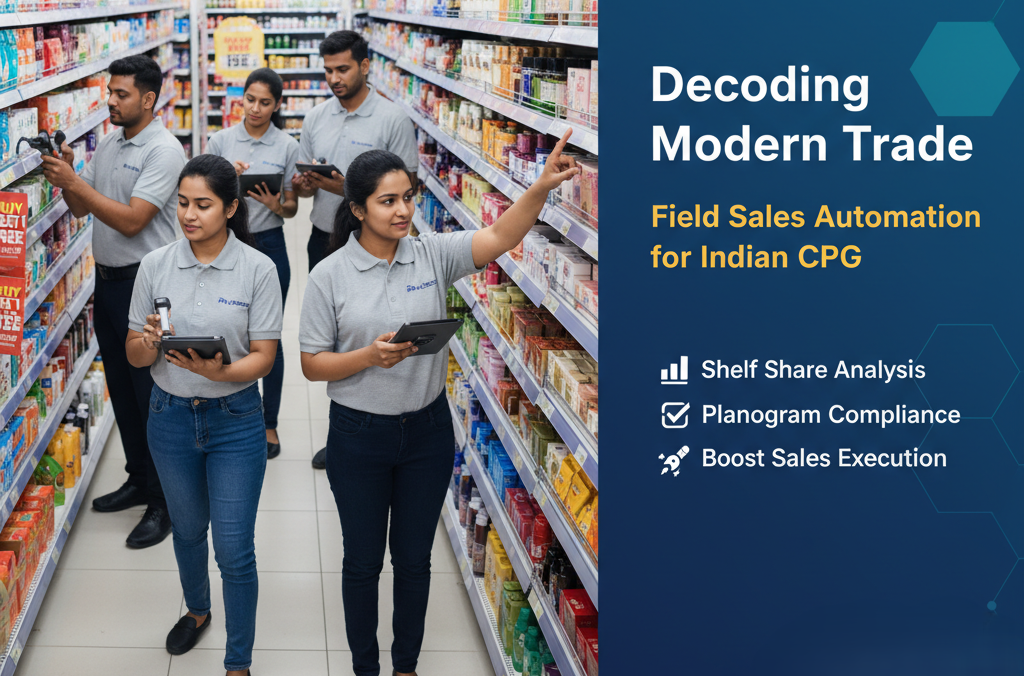
  • Decoding Modern Trade: Why Your Field Sales Strategy Needs to Evolve Beyond the $900 Billion Indian Retail Hype

    Decoding Modern Trade: Why Your Field Sales Strategy Needs to Evolve Beyond the $900 Billion Indian Retail Hype

    The Indian retail landscape is an enigma of scale and complexity. For most Fast-Moving Consumer Goods (FMCG) and Consumer Packaged Goods (CPG) companies, the vast network of small, traditional stores, the kiranas, represents the bulk of the market. But a critical, high-value segment is accelerating past this traditional model: Modern Trade.

    It’s not enough to just know what Modern Trade is; your sales teams must master how to execute within it. Since 2018, our field sales automation platform has tracked over 500 million store visits across India. We’ve seen first-hand the shift where organized retail formats, though accounting for only about 15% of the total market, drive significantly higher volume and offer unparalleled data access. The winning difference is often not the product, but the precision of sales execution in modern trade outlets.

    In this deep-dive, we will move past the textbook definitions and show you, the leaders of Indian and global FMCG and CPG firms, precisely how to optimize your field sales strategy for the modern retail environment. We’ll cover what Modern Trade truly is, its unique challenges, and the non-negotiable role of field sales automation for Indian CPG companies to win the battle for the shelf.

    Modern Trade (MT) is the organized, corporate-managed retail channel, including supermarkets, hypermarkets, and chain convenience stores—that provides a structured shopping experience, fixed pricing, and utilizes sophisticated supply chain and data technology.

    🏬 What is Modern Trade Retail and How Does it Differ from General Trade in India?

    Understanding the distinction between Modern Trade (MT) and General Trade (GT) is the starting point for effective retail strategy in India. General Trade is the unorganized, traditional channel—the local, family-run kirana or mom-and-pop store. It operates on trust, credit, and personal relationships, still commanding over 70% of the overall Indian retail market, as reported by industry analysis in 2024.

    Modern Trade, on the other hand, is the fully organized retail format that emerged in the 1990s. It’s a purely urban and semi-urban phenomenon, driven by corporate entities. For Indian SaaS startups and CPG companies, this is where standardized execution and data-driven decisions translate directly into higher volume and better margins.

    Key Characteristics of Modern Trade Channels

    Modern Trade stores are not just bigger; they are fundamentally different operational ecosystems. These differences demand a specialized approach from your field sales force:

    • Organized Structure: MT outlets, such as Reliance Retail, D-Mart, or Avenue Supermarts, are typically corporate-owned. This means standardized layouts, centralized purchasing, and a fixed, national pricing strategy.
    • Technology Integration: They rely heavily on sophisticated systems like Electronic Point of Sale (EPoS), Warehouse Management Systems (WMS), and dedicated inventory software. This provides real-time sales and inventory data that GT stores simply cannot match.
    • Customer Experience Focus: Shopping is self-service, focused on convenience, attractive visual merchandising, and extensive product variety under one roof. They also drive sales through organized promotions, loyalty programs, and bulk discounts.
    • Supply Chain: MT uses a highly structured supply chain, often favoring Direct-Store-Delivery (DSD) or central warehouse replenishment, reducing the number of intermediaries compared to GT.

    The MT vs. GT Sales Execution Divide

    The field representative’s role changes entirely when moving from a GT store to an MT outlet.

    FeatureGeneral Trade (GT) – Kirana StoresModern Trade (MT) – Supermarkets/Hypermarkets
    Store ManagementOwner/Family-run, localized decisionsCorporate/Store Manager-run, centralized mandates
    PricingFlexible, often credit-based, or negotiatedFixed, standardized, system-driven
    Sales FocusRelationship selling, product availabilityMerchandising, visibility, and primary/secondary display compliance
    Order ProcessInformal, often telephonic or physical visit-basedFormal, system-driven (pre-sales or van sales apps)
    Data VisibilityLow (relies on manual logbooks/memory)High (real-time EPoS data, planogram compliance reports)
    Key MetricRelationship, timely deliveryShelf share, off-take, promotional compliance

    This comparison highlights why generic sales training fails in the MT environment. A rep negotiating credit with a kirana owner is useless when dealing with a chain store manager focused solely on execution against a central modern trade planogram compliance mandate.

    📈 The Economic Imperative: Why Modern Trade is Crucial for CPG Growth

    While GT dominates the volume, MT drives critical aspects of CPG success: brand building, premiumization, and high-value sales. For any Indian FMCG company aiming for an IPO or global expansion, MT performance is a key indicator of organizational maturity and market control.

    Leveraging the Higher Average Transaction Value (ATV)

    MT outlets, especially hypermarkets like D-Mart or Big Bazaar (now part of Reliance), naturally encourage bulk buying and category shopping. This results in a higher Average Transaction Value (ATV) compared to the smaller, fill-in purchases at a kirana.

    • Brand Visibility: Premium and new product launches benefit immensely from the expansive, well-lit shelf space and clear category segmentation in MT stores. If your product isn’t visible on the primary shelf or secondary display, you don’t exist for that urban consumer.
    • Promotional Effectiveness: MT offers a clean, measurable environment for large-scale promotions—Buy-One-Get-One (BOGO) offers, end-cap displays, and festive bundling. We’ve observed that a perfectly executed promotion in a Tier-1 city MT chain can generate the equivalent sales volume of dozens of GT stores.
    • Efficiency of Scale: Serving one hypermarket is logistically and administratively simpler than serving 50 scattered kiranas. This scale improves the efficiency of your sales reps, your delivery partners, and your overall supply chain costs.

    For a mid-sized Indian CPG enterprise, a 1% gain in modern trade shelf share analysis can translate to millions in annual revenue, providing the capital for further expansion into the more difficult rural GT markets.

    🛠️ Field Sales Automation: The Non-Negotiable Tool for Modern Trade Execution

    The transition from relationship-based selling to execution-based selling is the biggest operational hurdle in Modern Trade. This is where field sales automation for Indian CPG companies becomes an essential infrastructure investment, not a luxury. A field sales app transforms the rep from a paper-pushing order-taker into a real-time data auditor and in-store execution specialist.

    1. Real-Time Planogram and Merchandising Compliance

    The core challenge in MT is compliance. Central headquarters issue planograms (diagrams showing where and how products should be displayed), but execution often fails at the store level due to internal store issues or competition activity.

    • Geo-Tagged Photo Capture: An automation app allows the rep to capture mandatory, geo-tagged and time-stamped images of the shelf. This provides irrefutable proof of execution—or non-compliance—for both the brand and the MT retailer.
    • Planogram Verification Modules: Our system, for example, uses embedded image recognition algorithms that can instantly score the compliance of the shelf. Did the rep ensure a 3-facings-wide display of the new shampoo? The app instantly checks and flags any deviations from the central mandate. This dramatically reduces the time spent on manual auditing.
    • Competitive Intelligence: Reps can quickly log competitor activities—their promotions, new product launches, or price changes—with visual evidence, providing your marketing and sales head with actionable, real-time modern trade competitive analysis.

    2. Streamlining the Order-to-Delivery Cycle

    In MT, speed and accuracy in ordering are critical, particularly for products with a short shelf-life.

    • Real-Time Inventory and Stock Audit: Reps use the mobile app to conduct a quick, guided stock audit on the shelf and in the backroom. This feeds immediately into a sophisticated algorithm to suggest an optimal replenishment order, minimizing both stock-outs (a major sales killer) and excessive inventory.
    • Eliminating Out-of-Stock (OOS): OOS is the single biggest revenue drain in MT. By making Modern Trade Out-of-Stock analysis a mandatory, automated part of the rep’s visit, and instantly flagging high-priority items to the store manager and your distribution center, we’ve seen clients reduce OOS rates by up to 25%.
    • Integrated Promotions Engine: The automation system applies all central offers and discounts automatically to the order, eliminating errors and disputes with the store manager over pricing, which is a common point of friction.

    3. Optimizing Route Planning for U.S. and Global IT Buyers

    While our immediate focus is India, the principles of optimized route planning using field sales automation are universally relevant. For our clients who are U.S. manufacturers operating distribution networks in India or other high-density markets, efficiency is everything.

    • Dynamic Route Optimization: Rather than following a static, weekly route, the automation platform analyzes which MT stores have the highest potential for an order, the highest OOS risk, or the highest non-compliance score. It then builds the most efficient daily route based on GPS and these real-time business parameters, ensuring your rep visits the most critical modern trade outlets in Bangalore or Mumbai first.
    • Geofencing and Visit Verification: The app uses geofencing to ensure the rep is physically present at the store location for the required time, adding a layer of transparency and trust to the process. This shift from trust-based management to data-verified management is key to scaling field teams.

    📊 Comparison: Sales Execution Tools for Modern Trade

    Choosing the right technology is the foundation of mastering Modern Trade. The difference lies in a platform’s ability to handle the complexity of organized retail versus a simple lead-management tool.

    Here is a comparison of tools and approaches relevant to Field Sales Automation for Indian CPG.

    Tool/ApproachCore FunctionalityModern Trade (MT) Value PropositionBest For
    Paper/ExcelBasic record keeping, order notesZero. No real-time data, high error rate, no compliance tracking.Very small regional distributors only.
    Standard CRM (e.g., Salesforce)Lead/Opportunity ManagementGood for account-level history, poor for in-store execution, lacks specific image recognition.Key Account Managers (KAM) managing regional contracts.
    Specialized Field Sales Automation (FSA) Platform (e.g., BeatRoute, Bizom)Route optimization, EPoS integration, Planogram/Image Recognition, OOS tracking.Essential. Transforms sales rep into an in-store execution auditor and data collector, enabling real-time compliance reporting.All CPG/FMCG brands focused on scaling and optimizing modern trade outlets in Pune and other metros.
    Generative AI Chatbots (Our Service)AI-powered data interrogation, automated report generation, predictive sales forecasting.Can analyze FSA data to predict OOS before a rep’s visit, and auto-generate executive summaries on modern trade sales performance metrics.Senior management for data-driven, strategic decision-making.

    How to Improve Modern Trade Shelf Share Analysis with Data

    Shelf share is the percentage of linear feet your brand owns on the shelf. This metric is a zero-sum game. The best way to improve it is through accurate, timely audits and data-backed negotiations.

    • Strategy: Implement an in-store image recognition tool within your field sales app. The rep takes a photo of the entire shelf, and the tool immediately calculates your current share versus the competition.
    • Actionable Insight: The rep presents the factual, timestamped data to the store manager, allowing them to instantly see the difference between the central planogram mandate and the ground reality, thus driving immediate corrective action instead of waiting for a weekly report.

    Mastering Modern Trade Promotional Execution Checklist

    Promotions are the lifeblood of MT sales, but failure to execute them correctly—missing Price Off stickers, incorrect display material, or wrong placement—is rampant.

    • Strategy: Create a mandatory, step-by-step digital checklist for every promotional campaign in the field sales app. The rep must check off each item—”Display Unit Placed,” “POS Material Fixed,” “Correct Price Tag Applied”—and attach a verification photo.
    • Actionable Insight: This ensures 100% compliance. Your central marketing team gets real-time, store-level proof that their multi-crore campaign budget is being correctly utilized at all critical modern trade locations in Hyderabad.

    Future-Proofing Your Modern Trade Distribution Strategy

    The Indian retail ecosystem is constantly evolving. The rise of Quick Commerce (q-commerce) platforms is already blurring the lines between MT, GT, and e-commerce.

    • Strategy: Future-proof your sales organization by integrating data from your MT distributors with your field sales automation platform. This allows you to forecast demand not just based on historical sales, but on real-time inventory and promotional data.
    • Actionable Insight: Use the integrated system to model potential OOS risks during high-demand periods like the festive season. Our tools help clients maintain buffer stock at their distributor points serving UAE logistics hubs in India, ensuring no last-mile fulfillment gaps occur during peak sales windows.

    Enhancing Modern Trade Rep Productivity Metrics

    A happy, productive sales rep is one who is spending less time on paperwork and more time on high-value activities.

    • Strategy: Measure productivity not by the number of visits, but by outcome metrics: Compliance Score, OOS Reduction Rate, and Secondary Display Placement Success.
    • Actionable Insight: Use the FSA platform’s analytics to identify the top 10% of reps who consistently hit these metrics. Dissect their process, route planning, in-store pitch, photo execution—and build a new standard operating procedure for the entire team.

    What is the biggest challenge for a CPG company in Modern Trade?

    The biggest challenge in Modern Trade is ensuring 100% execution compliance for merchandising, planograms, and promotions at the store level, which often falls short due to the high volume of SKUs and the physical distance between central planning and store reality.

    What is the typical market share of Modern Trade in India?

    Field sales automation helps with Modern Trade shelf management by using geo-tagged photo capture and image recognition technology to instantly audit and score the physical shelf for planogram compliance, OOS, and competitor activity.

    How does field sales automation help with Modern Trade shelf management?

    Modern Trade accounts for approximately 15% of the total Indian retail market share in 2024, while General Trade still holds the dominant 70%+ share, highlighting the vast potential for organized retail growth.

    Should my focus be on General Trade or Modern Trade for expansion?

    For deep market penetration and reach into rural and semi-urban areas, General Trade remains crucial, but for brand building, premiumization, and capturing high-value urban sales volume, a primary focus on scaling and optimizing Modern Trade is essential.

    What are the main types of modern trade retail formats?

    The main types of modern trade retail formats include hypermarkets (massive scale, non-food and food), supermarkets (primarily food and groceries), specialty stores (focus on one category like electronics or apparel), and chain convenience stores.

  • Best Software for Sales Reps: India Guide 🇮🇳

    Best Software for Sales Reps: India Guide 🇮🇳

    I’ve been in the sales management software space for over a decade, first as a sales leader struggling with manual processes, and now as a founder helping companies streamline their operations. In India, I’ve seen countless startups and established businesses hit a wall because their sales teams are drowning in spreadsheets, fragmented data, and administrative tasks. The idea that a team can scale without a dedicated software for sales reps is a myth I’ve seen busted time and again. Without the right tools, you’re not just losing deals; you’re losing valuable time and opportunities. From my experience with hundreds of clients, implementing a robust sales management system isn’t just a nice-to-have; it’s a fundamental shift in how you do business. This post will walk you through why a specialized solution is non-negotiable for modern sales teams in India, what to look for, and how a platform like Happisales stands out from the competition.

    The best software for sales reps provides a unified platform to manage leads, automate tasks, track performance, and centralize customer data, directly leading to increased productivity and higher sales conversions.


    Why Sales Reps in India Need a Specialized Sales Management System

    The Indian market is unique. Sales cycles can be complex, involving multiple follow-ups, intricate relationships, and a high volume of inquiries that need to be managed efficiently. A sales rep here is not just a closer; they are a relationship builder, a data entry clerk, and a project manager all rolled into one. Relying on spreadsheets and siloed communication tools like WhatsApp and email creates chaos. It leads to missed follow-ups, duplicate data, and zero visibility for managers.

    A dedicated software for sales reps changes this. It gives them a single source of truth for all their activities. This is not just about logging calls. It’s about automating the mundane, so they can focus on what they do best: selling.

    • Lead Management & Distribution: In India, leads can come from diverse sources—website forms, trade shows, social media, and cold calls. Without a system, it’s a mess. Software automates lead capture and instantly assigns them to the right rep, preventing them from falling through the cracks.
    • Pipeline Visibility: A visual, drag-and-drop pipeline helps reps see where every deal stands. They can instantly identify bottlenecks and prioritize hot leads. For a manager, this offers a real-time, bird’s-eye view of the entire sales funnel.
    • Activity Tracking: How many calls did your team make? How many emails did they send? Without a system, this data is manual and often inaccurate. Software automatically logs these activities, providing a transparent view of a rep’s day-to-day work.
    • Mobile-First Approach: For field sales teams, a mobile app is crucial. They need to update customer information, check schedules, and log meetings on the go. The right software is built with this reality in mind.

    The Problem with Generic CRMs for Indian Teams

    Many Indian companies start with a generic CRM like Salesforce, Zoho, or HubSpot. While these are powerful, they are often designed for a global, enterprise audience. This can lead to significant friction for local teams. The user interface might be clunky, and the feature set can be overwhelming and unnecessarily complex for a small or medium-sized business.

    Furthermore, they often lack specific features tailored for the Indian market, such as integrations with local payment gateways, GST-compliant invoicing, or regional communication platforms like WhatsApp for Business.

    The Happisales Advantage: The Best Software for Sales Reps in India

    At Happisales, we built our platform from the ground up to solve the unique challenges faced by sales teams in India. Our mission was to create a software for sales reps that is not only powerful but also intuitive, affordable, and deeply integrated with the local business ecosystem. We knew that for a tool to be successful here, it had to be a seamless extension of a rep’s daily workflow, not an extra burden.

    Our approach is centered on three core principles: Simplicity, Automation, and Visibility.

    1. Simplicity: Designed for the Indian Sales Rep

    I’ve worked with teams that have high attrition rates. The last thing a new rep needs is a steep learning curve. We’ve found that a simple interface drastically reduces onboarding time and increases adoption. Happisales is designed to be self-explanatory. A rep can get started in minutes, not days. We focus on a clean, visual pipeline and easy-to-use mobile application, ensuring that the sales team spends more time selling and less time figuring out the software.

    • Clean Pipeline View: No cluttered dashboards. Just a clear, visual representation of your deals.
    • Intuitive Mobile App: For the field reps on the move, our app is as easy to use as any social media app. They can update data, check-in to locations, and access customer information with a few taps.
    • Zero Learning Curve: Our user interface is built to be so simple that new reps can be productive from day one, which is a major benefit for startups and SMBs with limited training resources.

    2. Automation: Supercharging Sales Productivity

    The average sales rep in India spends hours on non-selling tasks. Data entry, lead qualification, and follow-up reminders consume valuable time. Happisales automates these tasks, giving reps their time back. Our platform is built on a philosophy of “automation-first.”

    • Smart Lead Qualification: Automate lead scoring based on engagement, behavior, and source. The system tells your reps exactly which leads are most likely to convert.
    • Automated Follow-ups & Reminders: No more missed opportunities. Our system sends automated reminders for calls, emails, and meetings, ensuring every prospect is nurtured.
    • Workflow Automation: Set up automated actions like sending a welcome email when a new lead is assigned or creating a task when a deal moves to a new stage. This reduces manual errors and ensures a consistent process.
    • WhatsApp Integration: This is a crucial feature for the Indian market. We offer deep integration with WhatsApp for Business, allowing reps to send and receive messages directly from the CRM, and log all conversations automatically.

    3. Visibility: Data-Driven Decisions for Managers

    For a sales manager, flying blind is not an option. You need real-time data to coach your team, forecast revenue, and make strategic decisions. Happisales provides a comprehensive suite of analytics and reports that give you a complete picture of your sales operation.

    • Real-time Dashboards: See team performance, pipeline health, and top-performing reps at a glance.
    • Sales Forecasting: Accurately predict future revenue based on real-time pipeline data and historical trends.
    • Performance Analytics: Identify which activities lead to the most conversions, and use this data to coach your team and optimize your sales process.
    • Custom Reports: Generate detailed reports on specific metrics like lead source performance, deal velocity, or rep activity, helping you answer critical business questions.

    How to Choose the Right Software for Sales Reps in India

    With dozens of options available, selecting the right platform can be overwhelming. As a founder in this space, I’ve seen what works and what doesn’t. Here’s my advice on how to evaluate a software for sales reps for your Indian team:

    • Geo-Relevance & Integrations: Does the software integrate with tools specific to the Indian market? Think payment gateways, GST-compliant billing, and local communication channels. A globally-focused tool might not have these.
    • User Adoption: If your reps don’t use it, it’s useless. Look for a clean, intuitive UI. Ask for a free trial and let your team test it. Pay attention to how quickly they grasp the core functionality.
    • Customer Support: When you run into an issue, you need fast, local support. A company with a presence in India understands your challenges and can provide assistance in your time zone.
    • Scalability: Choose a solution that can grow with you. It should be affordable for a small team but also offer advanced features and support as you scale to a large enterprise.
    • Pricing: Look for transparent, per-user pricing. Avoid hidden fees and complex enterprise contracts. A good sales management system should offer a clear ROI.

    Happisales vs. The Competition: A Comparison of Sales Management Solutions

    To help you make an informed decision, let’s look at how Happisales stacks up against some of the major players in the Indian market.

    Feature / PlatformHappisalesZoho CRMSalesforceHubSpot
    Primary AudienceIndian SMBs & StartupsGlobal SMBs & EnterprisesGlobal EnterprisesGlobal SMBs & Enterprises
    User InterfaceExtremely Intuitive & CleanCan be Complex & ClutteredHighly Complex, Steep Learning CurveUser-Friendly, but with many features
    Mobile AppSimple, Field-Force OptimizedFeature-rich, can be slowPowerful but complexGood, but can be overwhelming
    Local IntegrationsDeep (WhatsApp, local gateways)Limited, requires custom workLimited, requires custom workLimited, requires custom work
    PricingAffordable & TransparentTiered, can get expensiveExpensive, Enterprise-focusedGood Free Tier, but paid tiers are costly
    Key DifferentiatorBuilt for India, focuses on simplicity and automation for local sales workflows.A versatile, all-in-one suite that offers a wide range of features.The industry standard for large, complex enterprise sales.Strong in marketing automation and inbound sales.
    Software for Sales Reps – Comparision

    How a Real-World Indian Company Benefited from Happisales

    We recently worked with a mid-sized manufacturing company in Chennai. Their sales team was using a combination of shared spreadsheets and phone calls to manage leads. The sales manager had zero visibility into the team’s daily activities, and lead follow-up was inconsistent.

    After implementing Happisales, the results were dramatic:

    • 20% Increase in Lead Conversion: By automating lead assignment and follow-up reminders, the sales team was able to respond to inquiries faster and nurture every lead more effectively.
    • 30% Reduction in Administrative Time: Reps spent less time on data entry and more time on high-impact activities like client meetings and closing deals.
    • Complete Performance Visibility: The manager could now see every rep’s activity in real time, enabling them to provide targeted coaching and support.

    This case study is a testament to the power of a purpose-built software for sales reps that truly understands the local context.


    People Also Ask

    What is sales force automation software?

    Sales force automation (SFA) software is a tool that automates sales-related tasks such as contact management, lead tracking, and order processing to help sales teams work more efficiently. It’s a core component of most modern CRMs.

    What is the difference between a CRM and sales management software?

    A CRM (Customer Relationship Management) is a broader category that manages all customer interactions, while sales management software focuses specifically on the sales pipeline, from lead to close. A good sales management software is a specialized type of CRM tailored for sales teams.

    What are the benefits of sales performance management software in India?

    Sales performance management software helps Indian businesses track and analyze the effectiveness of their sales team by providing real-time data on individual and team performance, enabling better coaching and strategic decision-making.

    How can a small business in India benefit from a sales CRM?

    A small business in India can benefit from a sales CRM by centralizing customer data, automating repetitive tasks, and gaining clear visibility into the sales pipeline, which leads to improved productivity and scalable growth.


    Conclusion

    For any business in India looking to scale, relying on outdated sales processes is a dead-end. The right software for sales reps is the engine that drives productivity, provides invaluable insights, and ensures that no lead or opportunity is ever missed. From my years of experience, I’ve seen firsthand how a well-implemented system can transform a sales team from a group of individuals into a cohesive, data-driven machine.

    Happisales was created to be that very engine for the Indian market. We believe that every sales rep deserves a tool that empowers them to sell more, not just manage data. If you’re a sales leader or founder in India, it’s time to move beyond the old ways and adopt a solution that’s built for your reality.

    Ready to supercharge your sales team?

    Contact us today for a personalized demo of Happisales and see how our platform can help you achieve your sales goals.

  • 7 Benefits of SFA Software in FMCG Business

    7 Benefits of SFA Software in FMCG Business

    In the fast-moving world of FMCG, what happens on the ground determines success. No matter how strong your brand or wide your distribution network, inefficient field sales operations can cost market share. Sales Force Automation software helps fix that.

    At Happisales, we’ve worked with many FMCG companies that needed more than sales data. They wanted visibility, accountability, and growth. From experience, we’ve seen how switching from manual processes to automation transforms operations.

    Here are seven key benefits of using SFA software in FMCG and how it can help you build a more efficient sales organization.

    1. Better Visibility into Field Operations

    Many FMCG businesses struggle to know what’s happening in the field in real time. Manual reports and end-of-day summaries slow down action. Sales Force Automation software fixes that by showing every field activity as it happens.

    You can see orders, attendance, locations, and customer visits instantly. Managers know which outlets were covered, how long reps stayed, and what was sold. Territory managers can study visit patterns, plan routes better, and make sure no outlet is missed.

    Dashboards give management a live view of performance, regional sales, and product movement. Companies using SFA have seen up to 40 percent more visibility in the first few months. With this clarity, teams act faster and take responsibility for their results.

    2. Higher Productivity for Sales Teams

    Sales reps lose valuable time on manual work like filling forms, updating spreadsheets, and sending messages. This leaves less time for actual selling.

    With SFA software, most of this work gets automated. Reps take orders on their phones, share data with warehouses instantly, and check product or pricing updates on the go. Smart tools suggest what to upsell or cross-sell, helping reps make better calls.

    This saves hours each day. In our FMCG projects, productivity improved by around 30 percent after SFA adoption. Teams met more customers and increased order volumes.

    One regional manager said it best. “Before Happisales SFA, my team ended the day fixing Excel sheets. Now they finish early with clear goals achieved.”

    3. Lower Operational Costs

    Running a field force in FMCG costs money. Travel, fuel, communication, and time all add up. Manual work often leads to poor route planning, wasted stock, and repeated effort.

    SFA helps control these costs. Route optimization reduces travel distance and fuel use. Stock tracking prevents returns and product damage. Digital communication keeps retailers updated without constant physical visits.

    Companies using SFA report up to 20 percent cost savings. Accurate data means they don’t overstock or run out of key products. Every part of the operation runs leaner and smarter.

    4. Smarter Use of Manpower

    Before automation, sales coverage depended on the number of people in the field. One rep could only visit a few stores each day. Expanding coverage meant hiring more staff.

    With SFA, one sales rep can handle several times more outlets. Orders are placed digitally. Visit records and payment details are stored automatically. Scheduling tools show which stores deserve priority.

    This means FMCG businesses can reach more outlets without growing their teams. One of our partner brands managed 1,200 outlets with just 10 field reps using Happisales SFA. Earlier, they needed almost twice the number.

    SFA software brings clarity, control, and consistency to FMCG sales operations. It helps teams work smarter, not harder, and gives leaders the insight to make quick, confident decisions that drive steady growth.

    5. Data-Driven Insights and Sales Forecasting

    • Every visit, sale, and customer interaction produces data. But without analysis, it’s just numbers on a screen. The real strength of SFA software is how it turns that data into useful insights.

    • FMCG managers can use these insights to:

      • Spot high-performing regions or stores
      • Detect falling sales and fix them quickly
      • Measure how well campaigns are working
      • Predict demand changes based on past data

    • This helps teams make decisions based on facts, not guesses. One FMCG company using its SFA dashboard found that smaller rural outlets were driving 40 percent of sales growth in six months. They shifted focus to those areas and grew even faster. Without automation, they would have missed it.

    6. Stronger Relationships with Retailers

    • Retailers keep the FMCG supply chain moving. Trust and good communication matter, but both can slip when reps have too much to manage.

    • SFA software helps maintain consistent, personalized contact.

      • Reps can view each retailer’s full history, including orders and payments
      • Companies can run offers, loyalty programs, and digital campaigns
      • Retailers can send orders directly through chat apps, reducing the need for visits

    • This mix of digital and in-person contact keeps retailers engaged. Many FMCG companies have seen repeat orders rise by up to 20 percent after using SFA tools. Retailers also report fewer order errors and faster responses. When they feel supported, the whole network becomes stronger.

    7. Faster Problem Resolution and Goal Execution

    Sales managers deal with issues like stockouts or slow sales daily. Without the right information, these problems drag on.

    • Modern SFA systems spot problems early and notify managers right away.

      • If a rep’s performance slips, the system flags it
      • If product sales drop, managers get alerts
      • If visit goals aren’t met, reminders go out automatically

    • This lets teams act before issues affect revenue. SFA software also connects company goals to each rep’s daily targets. Managers can assign KPIs, track progress, and guide their teams using real-time dashboards.

    • At Happisales, we’ve seen this change how teams work. Instead of chasing reports, managers now focus on outcomes and results.

    The Real-World Impact of SFA in FMCG

    Many FMCG companies hesitate to adopt new technology. They worry it will be complicated or meant only for large enterprises. In reality, modern SFA software is simple to use and works well for any business size. It’s built to be mobile, flexible, and easy to scale.

    The benefits are clear:

    1.  You can see a 25 to 30 percent boost in sales productivity.
    2. Travel and communication costs can drop by 15 to 20 percent.
    3. Managers get real-time insights to make faster decisions.
    4. Teams feel more confident and motivated because they spend less time on manual work.

    From our experience, once companies see how easily everything connects—reps, managers, retailers, and distributors-they understand that automation is not a luxury. It’s essential for staying competitive.

    Why Choose Happisales for Your FMCG SFA Needs?

    At Happisales, our goal is simple. We help businesses perform better on the ground. Our SFA platform is built specifically for FMCG and field-driven industries. It connects every part of your sales network so you can see what’s happening in real time.

    What sets Happisales apart?
    • Real-time location tracking for full field visibility
    • AI-based insights for better performance decisions
    • Direct communication with retailers through mobile and chat apps
    • Goal-focused workflows that link company and individual targets
    • Smooth integration with DMS, ERP, and CRM systems
    • Offline access so teams can keep working without internet issues

    When you choose Happisales, you’re not just getting software. You’re getting a partner that understands your daily challenges and helps you turn information into results.

    What’s Next?

    The FMCG industry runs on speed and accuracy. Sales Force Automation gives you both. It helps you see the full picture, build stronger retailer relationships, and make decisions based on real data.

    If your goal is to raise productivity, cut costs, and control field operations, SFA is the right step forward. At Happisales, we’ve seen how automation brings clarity and confidence to every level of a business.

    Your company can work smarter and move faster. Request a free demo today and see how automation can reshape your FMCG operations.

  • Power of a Sales Representative App in India

    Power of a Sales Representative App in India

    When I speak with sales leaders across India, a common pain point emerges tracking field sales activity and empowering representatives efficiently. Many are still wrestling with outdated spreadsheets or fragmented systems, leading to missed opportunities and a lack of real-time insights. Having spent over a decade developing and implementing sales management software solutions for Indian businesses, I’ve seen firsthand the transformative impact a dedicated sales representative app can have.

    My journey began with a small team in Chennai, grappling with the same challenges. We’ve since grown to serve hundreds of clients, from fast-growing startups to established enterprises across India, all seeking to optimize their sales processes. Our expertise lies in understanding the unique dynamics of the Indian market, from diverse geographies and payment methods to varied customer behaviors. This blog will delve into how a modern sales representative app can not only streamline operations but also significantly boost your team’s performance, with a specific focus on the benefits for Indian sales organizations.

    A sales representative app centralizes field sales operations, automates reporting, and provides real-time insights to significantly enhance productivity and decision-making for Indian sales teams.

    Why Your Indian Sales Team Needs a Dedicated Sales Representative App Now

    The Indian market is incredibly dynamic. From the bustling streets of Mumbai to the rapidly expanding tier-2 and tier-3 cities, sales representatives are constantly on the move. Relying on manual updates or calls back to the office is no longer sustainable. A sales representative app addresses these critical needs head-on, offering a comprehensive solution that empowers your team and gives management unprecedented visibility.

    Real-Time Tracking and Location Intelligence

    One of the biggest challenges for sales managers in India is knowing what their field reps are doing. Are they visiting the right clients? Are they covering their assigned territories effectively? A robust sales representative app provides GPS tracking and geo-fencing capabilities. This means:

    • Accurate Attendance: Sales reps can check in and out directly from client locations, eliminating proxy attendance issues common in many regions. For instance, a pharmaceutical rep in Hyderabad can log their visit to a doctor’s clinic with precise timestamps and location data.
    • Optimized Routes: Apps can suggest the most efficient routes between client meetings, saving valuable time and fuel costs. This is particularly crucial in cities like Bangalore with heavy traffic.
    • Proof of Visit: Managers get verifiable proof of client visits, ensuring accountability and improving the integrity of sales data. This data can be invaluable during performance reviews and territory planning.

    Streamlined Order Management and Inventory Checks

    Manual order booking is prone to errors and delays, which can be costly, especially in fast-moving consumer goods (FMCG) or distribution sectors. A sales representative app transforms this process:

    • Instant Order Placement: Reps can place orders directly from their mobile devices while at a client site. This reduces the time between visit and order, minimizing the chance of customers changing their minds or sourcing from competitors.
    • Real-Time Inventory Access: Imagine a rep in Chennai being able to check current stock levels for a specific product before confirming an order. This prevents back orders and improves customer satisfaction. Our own product, Happisales, integrates with existing ERP systems to provide this crucial functionality.
    • Customizable Forms: Sales apps allow for custom forms to capture specific data points relevant to each industry—be it product specifications for industrial machinery or promotional details for retail goods. This ensures consistent data collection across the team.

    Enhanced Customer Relationship Management (CRM) on the Go

    Effective customer relationship management is the bedrock of sustained sales growth. A sales representative app extends CRM capabilities directly to the field:

    • Access to Customer History: Before walking into a meeting, a rep can quickly pull up a client’s past purchase history, communication logs, and preferences. This allows for more personalized and effective interactions. Think of a textile distributor in Ahmedabad revisiting a boutique owner with knowledge of their previous fabric orders.
    • Meeting Notes and Follow-ups: Reps can log meeting outcomes, action items, and schedule follow-up tasks immediately after a client visit. This drastically reduces the chances of critical details being forgotten.
    • Lead Management: New leads can be captured, qualified, and assigned on the spot, ensuring no potential opportunity slips through the cracks. This is particularly useful for businesses expanding into new territories or running field marketing campaigns.

    Automated Reporting and Analytics

    For many Indian sales organizations, compiling daily, weekly, or monthly sales reports is a laborious, time-consuming task. A good sales representative app automates much of this process:

    • Eliminate Manual Data Entry: Since all data (visits, orders, expenses) is entered directly into the app, manual compilation becomes largely obsolete.
    • Instant Dashboards: Sales managers can access real-time dashboards showing team performance, sales trends, and key metrics. This allows for proactive decision-making rather than reactive problem-solving.
    • Performance Insights: Analyze individual rep performance, identify top performers, and pinpoint areas where coaching or training might be needed. This data-driven approach is essential for continuous improvement.
    • Sales Forecasting: With accurate and timely data flowing in, forecasting future sales becomes significantly more reliable, aiding inventory planning and resource allocation.

    Happisales: Your Strategic Partner for Sales Excellence in India

    At Happisales, we’ve built our sales representative app from the ground up, keeping the unique challenges and opportunities of the Indian market in mind. We understand that a one-size-fits-all approach doesn’t work. Our solution is designed to be highly customizable, secure, and intuitive, ensuring quick adoption by your sales team.

    Our app focuses on:

    • Ease of Use: A simple, clean interface that minimizes training time for reps, even those less tech-savvy.
    • Offline Capability: Crucial for areas with inconsistent internet connectivity, allowing reps to work seamlessly and sync data once online.
    • Robust Security: Protecting your sensitive sales data with industry-leading encryption and access controls.
    • Scalability: Whether you have a team of 10 or 1000, Happisales scales with your business needs.

    We’ve seen our clients in India achieve remarkable results, including:

    • 25% increase in field sales productivity for a major pharmaceutical distributor in Maharashtra.
    • 15% reduction in order processing errors for an FMCG company operating across South India.
    • Real-time visibility into 100% of field activities for an electronics manufacturer expanding into tier-2 cities.

    Choosing the right sales representative app means investing in your team’s future. It means providing them with the tools they need to succeed in India’s competitive market.

    Optimizing Field Sales in Tier 2 and Tier 3 Indian Cities

    Expanding into India’s tier 2 and tier 3 cities presents immense growth opportunities, but also unique logistical challenges. Internet connectivity can be spotty, language barriers vary, and local market dynamics differ significantly. A specialized sales representative app like Happisales is crucial for success here.

    Overcoming Connectivity Issues with Offline Mode

    Many remote areas in India experience intermittent internet access. Our sales representative app is built with robust offline capabilities. Reps can:

    • Access customer data and product catalogs offline.
    • Capture orders and meeting notes without an internet connection.
    • Sync all data seamlessly once they regain connectivity.

    This ensures uninterrupted workflow, minimizing frustration and maximizing productivity, especially for reps covering vast rural territories in states like Uttar Pradesh or Rajasthan.

    Multi-language Support for Diverse Regions

    India’s linguistic diversity is a key consideration. While English is common, local languages often facilitate better communication and trust-building with local businesses and retailers. A sales representative app with multi-language support or a highly intuitive icon-driven interface can bridge this gap, ensuring that reps in Gujarat can use Gujarati while those in West Bengal can easily navigate the app in Bengali.

    Geo-Targeted Promotions and Product Information

    A good sales app allows for the dissemination of geo-specific marketing materials and product information. For example:

    • Region-specific pricing or discounts can be pushed directly to reps in specific districts.
    • Product launch information tailored for local preferences (e.g., smaller pack sizes for rural markets) can be made readily available.

    This empowers reps to present the most relevant offers to their local clientele, significantly improving conversion rates.

    People Also Ask

    What are the key benefits of using a sales representative app in India?

    A sales representative app offers benefits like real-time tracking, streamlined order processing, enhanced CRM on the go, and automated reporting, leading to increased productivity and better decision-making for Indian sales teams.

    How can a sales representative app help with lead management for Indian businesses?

    A sales representative app enables reps to capture, qualify, and assign new leads directly from the field, ensuring no potential opportunity is missed and improving the efficiency of the lead nurturing process.

    Is a sales representative app useful for small and medium-sized businesses (SMBs) in India?

    Absolutely, a sales representative app is highly beneficial for Indian SMBs as it provides enterprise-level tools for efficient sales operations at an affordable cost, helping them compete more effectively and scale faster.

    What security measures should I look for in a sales representative app for my data in India?

    Look for a sales representative app that offers robust data encryption, secure cloud storage, role-based access controls, and compliance with data protection standards to safeguard your sensitive sales information.

    Can a sales representative app integrate with existing ERP systems used by Indian companies?

    Yes, most advanced sales representative apps, including Happisales, offer seamless integration with popular ERP systems like SAP, Oracle, and Tally, ensuring data consistency and eliminating duplicate entries for Indian businesses.

    Comparison of Top Sales Representative App Features (India Focus)

    Feature / AppHappisalesLeadSquaredZoho CRMSalesforce Field Service
    Primary FocusField Sales Optimization, Order ManagementLead Management, Sales AutomationComprehensive CRM, Sales AutomationField Service & Dispatch
    Offline ModeExcellentGoodGoodGood
    GPS Tracking & Geo-fencingYes, AdvancedYesYesYes
    Order ManagementYes, In-depthBasic (via CRM)Basic (via CRM)N/A
    Inventory IntegrationYes (ERP Integration)Via IntegrationsVia IntegrationsYes (Service Parts)
    Customizable FormsYes, ExtensiveYesYesYes
    Real-time AnalyticsYes, Detailed DashboardsYesYesYes
    Pricing (Approx. per user/month)Competitive (India-centric)Medium to HighLow to MediumHigh
    Target Audience in IndiaField-intensive Sales, FMCG, DistributionMarketing & Sales Teams, EducationSMBs, General SalesService-Oriented Businesses
    Unique Selling PropositionDesigned specifically for Indian field sales complexities; highly intuitive UXStrongest in lead capture and nurturing automationAll-in-one CRM suite with broad functionalityOptimized for service delivery and scheduling
    Best Sales Representative Application – Comparision

    This table highlights how different solutions cater to varying needs within the Indian market. While all offer valuable features, Happisales focuses specifically on empowering your sales representatives in the field with a tailor-made app for the Indian context.

    The Future of Sales: AI, Personalization, and the Sales Representative App

    The sales landscape in India is evolving rapidly, driven by technological advancements and changing customer expectations. A modern sales representative app is not just a tool for today but a platform for future growth, integrating capabilities like Artificial Intelligence (AI) and deeper personalization.

    AI-Powered Insights and Recommendations

    Imagine a sales representative app that doesn’t just collect data but also analyzes it to provide actionable insights. Future iterations, and indeed some current advanced features, can leverage AI to:

    • Predict Customer Churn: Identify customers at risk of leaving based on purchase patterns and engagement, allowing reps to intervene proactively.
    • Recommend Next Best Actions: Suggest which products to pitch or what kind of follow-up is most likely to succeed with a specific client. For example, an AI might recommend a cross-sell opportunity for a textile client in Surat based on their order history and market trends.
    • Optimize Visit Schedules: Dynamically adjust visit plans based on real-time traffic, client availability, and the potential value of a meeting.

    This kind of predictive intelligence transforms a sales rep from an order-taker into a strategic advisor, significantly enhancing their effectiveness.

    Hyper-Personalization at Scale

    In India, building personal relationships is paramount in sales. A sales representative app can facilitate this by:

    • Providing Comprehensive Customer Profiles: Beyond basic contact info, store notes on customer preferences, family details (with consent), and even preferred communication styles. This helps reps build deeper rapport.
    • Tailored Content Delivery: Automatically suggest relevant product brochures, case studies, or testimonials based on the specific client and their industry.
    • Personalized Offers: Enable reps to generate custom quotes and offers on the fly, perfectly aligning with individual client needs and budget constraints.

    Integration with Emerging Technologies

    The sales representative app will become the central hub for other emerging technologies:

    • Voice Assistants: Allowing reps to log notes or retrieve information hands-free while driving or walking.
    • Augmented Reality (AR): Potentially allowing reps to showcase product features virtually at a client’s location, especially for complex machinery or real estate.
    • Advanced Analytics & Business Intelligence (BI) Tools: Feeding data into more sophisticated systems for macro-level strategic planning for the entire Indian market.

    Investing in a forward-thinking sales representative app ensures your sales team remains agile and competitive as these technologies become mainstream. It’s about building a future-proof sales operation for your business in India.

    Empowering Your Indian Sales Force with the Right Sales Representative App

    In the dynamic and fiercely competitive Indian market, the difference between merely surviving and truly thriving often comes down to the efficiency and effectiveness of your sales force. As a sales management software company with deep roots in India, we’ve witnessed how the right tools can unlock unprecedented growth.

    A dedicated sales representative app is no longer a luxury but a strategic imperative. It empowers your field teams with real-time information, streamlines their daily tasks, automates cumbersome reporting, and provides invaluable insights to management. From improving visit adherence in Bangalore to speeding up order processing in Delhi, the tangible benefits are clear and significant.

    If you’re looking to boost productivity, enhance accountability, and ultimately drive higher revenue for your Indian sales operations, it’s time to seriously consider implementing a robust sales representative app. At Happisales, we pride ourselves on delivering a solution that is tailored to the nuances of the Indian market, easy to use, and designed to help your team achieve peak performance.

    Ready to transform your sales operations?

    Contact Happisales today to schedule a demo and see how our sales representative app can empower your team and accelerate your growth across India.

  • Why Smart Sales Leaders in India are Adopting Sales Rep Tracking Software

    Why Smart Sales Leaders in India are Adopting Sales Rep Tracking Software

    The Indian sales landscape is hyper-competitive. Field sales teams navigate diverse geographies and complex customer relationships daily. As a sales management software company with over a decade of experience in the Indian market, we’ve seen countless organizations struggle with visibility and productivity. In fact, a recent survey revealed that over 60% of Indian sales managers feel they lack real-time insight into their field team’s activities. This isn’t just about micro-managing; it’s about optimizing routes, understanding customer interactions, and ultimately, boosting revenue. For sales leaders in India, embracing the best sales rep tracking software isn’t a luxury; it’s a strategic imperative.


    Sales rep tracking software provides real-time visibility into field team activities, optimizing routes, managing leads, and improving overall sales productivity for businesses across India.


    The Untapped Potential of Sales Rep Tracking Software in India

    Many Indian businesses rely on traditional CRM systems, which are excellent for managing customer data but often fall short when it comes to granular field activity tracking. The best sales rep tracking software goes beyond static reporting, offering dynamic capabilities crucial for the unique challenges of the Indian market. Imagine knowing precisely where your sales reps are, which clients they’re meeting, and the outcomes of those interactions—all in real time. This isn’t just about surveillance; it’s about empowerment. It allows managers to provide timely support, identify training gaps, and allocate resources more effectively. For instance, in a sprawling city like Mumbai, optimizing routes can save hours daily, directly translating to more client visits and increased sales.

    Why Traditional CRM Falls Short for Field Sales

    CRMs like Salesforce or Zoho are foundational, but their primary strength lies in data aggregation and pipeline management. They often require manual updates from reps, leading to:

    • Delayed Information: Reps often update CRM at the end of the day, making real-time intervention impossible.
    • Incomplete Data: Busy reps might skip details, leading to gaps in understanding customer interactions.
    • Lack of Location Context: CRMs don’t inherently track physical movement or meeting durations automatically.

    This is where specialized sales rep tracking software fills a critical void, providing the granular, real-time data that traditional CRMs often miss.

    The Indian Market: Unique Challenges, Specific Solutions

    India’s diverse geography, varied customer segments, and intense competition demand more than generic solutions. A sales rep tracking solution designed for India must account for:

    • Geographical Complexity: From dense urban areas like Delhi to rural towns, route optimization and geo-fencing are vital.
    • Connectivity Issues: Solutions must work offline and sync data seamlessly when connectivity is restored.
    • Multilingual Support: While English is common, regional language support can enhance user adoption among reps.
    • Cost-Effectiveness: Indian businesses, especially SMEs, look for high ROI and competitive pricing.

    Key Features That Define the Best Sales Rep Tracking Software

    Selecting the right software means looking beyond basic GPS tracking. The most effective solutions offer a suite of integrated features designed to boost productivity, improve data accuracy, and enhance strategic decision-making.

    Real-time Location Tracking & Geo-fencing

    This is the cornerstone. Knowing where your reps are throughout their workday provides unprecedented visibility. Geo-fencing, in particular, is transformative for businesses in India. For example, a pharmaceutical company can set geo-fences around hospitals or clinics in Bengaluru, ensuring reps are making their scheduled visits. If a rep deviates from a pre-planned route, managers receive instant alerts, allowing for immediate corrective action or support. This feature also helps in validating claims for travel expenses.

    Meeting & Activity Logging with Proof

    Beyond just location, the software should allow reps to easily log meeting details, outcomes, and next steps directly from their mobile devices. The best sales rep tracking software integrates features like:

    • Check-in/Check-out: Reps mark their arrival and departure at client locations.
    • Photo Capture: Proof of visit, product display, or even signed documents can be uploaded.
    • Digital Signatures: For instant order confirmations or service agreements.
    • Customizable Forms: To capture specific data points relevant to each client interaction.

    This rich data provides a comprehensive picture of every client engagement, reducing the need for manual, error-prone reports.

    Route Planning & Optimization for Indian Roads

    Navigating Indian traffic and diverse road conditions can be a nightmare. Advanced route optimization algorithms consider factors like:

    • Traffic Conditions: Real-time traffic data integration (e.g., Google Maps API).
    • Road Closures & Diversions: Dynamic adjustments to routes.
    • Multiple Stops: Efficient sequencing of client visits to minimize travel time and fuel costs.

    For a FMCG distributor in Hyderabad, optimizing delivery routes means more efficient stock replenishment and happier retailers. This directly impacts the bottom line.

    Lead Management & Assignment

    Effective lead management is crucial. The software should enable:

    • Instant Lead Assignment: Managers can assign new leads to the closest or most relevant rep.
    • Lead Status Tracking: Monitor progress from initial contact to conversion.
    • Custom Lead Fields: Tailor lead information to specific industry needs (e.g., product interest, budget).

    This ensures no lead falls through the cracks and that reps are pursuing the hottest opportunities.

    Performance Analytics & Reporting

    Data without insights is just noise. The software must provide robust reporting on:

    • Visit Frequency: How often reps visit key clients.
    • Sales Conversion Rates: Per rep, per region, per product.
    • Time Spent Per Client: Identifying high-value interactions.
    • Travel Efficiency: Mileage, time on the road vs. time with clients.

    These analytics help sales managers in Pune, for instance, identify top performers, pinpoint areas for improvement, and make data-driven decisions about sales strategies.


    Happisales: The Best Sales Rep Tracking Software for India

    At Happisales, we understand the nuances of the Indian market because we built our solution here. We’ve leveraged our 10+ years of experience working with businesses across diverse sectors—from pharmaceuticals to consumer goods—to create a platform that genuinely empowers sales teams and management. Our software is designed to be intuitive for reps and insightful for leaders, making it the best sales rep tracking software for the unique challenges faced by Indian companies.

    Our Core Philosophy: Empowering, Not Policing

    While tracking is a core function, our philosophy is to empower reps with tools that make their jobs easier, not just monitor them. Happisales features:

    • Intuitive Mobile App: Easy-to-use interface reduces training time and increases adoption.
    • Offline Capability: Reps in remote areas can work seamlessly, syncing data when online.
    • Gamification: Encourages healthy competition and boosts motivation among sales teams.
    • Automated Reporting: Minimizes manual data entry, allowing reps to focus on selling.

    Happisales in Action: Real-world Impact

    Consider a major medical device distributor based in Chennai. Before Happisales, their 50-strong sales team struggled with:

    • Unverified Visits: Managers had no concrete proof of client meetings.
    • Suboptimal Routes: Reps spent excessive time in transit, especially in peak hours.
    • Delayed Order Processing: Manual paperwork led to errors and slowdowns.

    After implementing Happisales, they saw:

    • 25% Increase in Client Visits: Due to optimized routes and reduced administrative burden.
    • 15% Reduction in Fuel Costs: Through efficient route planning.
    • 80% Improvement in Data Accuracy: With real-time logging and photo proofs.
    • Faster Lead Closure: Enabled by instant lead assignment and follow-up tracking.

    This led to a significant boost in overall sales productivity and a clearer understanding of team performance.


    Integrating Sales Rep Tracking with Your Existing Tech Stack

    The best sales rep tracking software doesn’t operate in a vacuum. It should seamlessly integrate with your existing CRM, ERP, and other business intelligence tools. This ensures a unified view of your sales operations and prevents data silos.

    CRM Integration

    Linking your sales rep tracking data with your CRM (e.g., Salesforce, Zoho CRM, Microsoft Dynamics) is crucial. This means:

    • Unified Customer View: All field activities, meeting notes, and orders automatically populate the customer’s profile in CRM.
    • Automated Data Sync: Eliminates manual data entry duplication.
    • Enhanced Reporting: Combine field activity data with pipeline and revenue data for deeper insights.

    ERP Integration

    For businesses dealing with inventory, invoicing, and order fulfillment, ERP integration is vital. This allows for:

    • Real-time Stock Checks: Reps can check product availability on the go.
    • Instant Order Placement: Orders placed in the field flow directly into the ERP for processing.
    • Invoice Generation: Automated invoicing based on successful sales.

    Business Intelligence (BI) Tools

    Feeding data from your tracking software into BI tools (e.g., Tableau, Power BI) allows for advanced analytics and visualization, helping to identify trends and predict future sales performance.


    Choosing the Right Sales Rep Tracking Software: A Comparison

    When evaluating options, it’s important to compare features, pricing, and suitability for the Indian market. Here’s a quick look at how Happisales stands out:

    Feature/Software Happisales SalesRabbit (U.S.-centric)FieldAssist (India-focused competitor)
    Geo-fencingAdvanced, highly accurate for Indian urban/rural areasStrong, but optimized for U.S. road networksGood, but can be less granular in some regions
    Offline ModeRobust, seamless data syncPresent, but can be limited in functionalityDecent, but occasional sync issues reported
    Pricing ModelTiered, highly competitive for Indian SMEs & enterprisesHigher, typically priced for U.S. marketSimilar, but Happisales often offers more value per feature
    CRM IntegrationExcellent with major CRMs (Salesforce, Zoho, etc.)Strong, but primarily with U.S.-dominant CRMsGood, with focus on common Indian CRMs
    Custom FormsHighly customizable for diverse industriesCustomizable, but sometimes requires professional servicesCustomization available, but may be less flexible
    Support (India)Localized, dedicated support team, quick response timePrimarily U.S. support, may have time zone challengesLocal support, similar to Happisales
    UI/UXIntuitive, modern, rep-friendly mobile appModern, but can be feature-heavy for some usersFunctional, but user experience can vary
    USP for IndiaBuilt for India, robust offline, cost-effective, local supportStrong for direct sales in U.S., less geo-specific for IndiaStrong Indian presence, good feature set
    Best Sales Rep Tracking Software​ – Comparision

    People Also Ask About Sales Rep Tracking Software

    Q: What is sales rep tracking software?

    A: Sales rep tracking software is a mobile-first application that allows businesses to monitor the location, activities, and performance of their field sales representatives in real-time, helping optimize routes, manage leads, and improve productivity.

    Q: How does sales rep tracking software help improve sales?

    A: It improves sales by providing real-time visibility into rep activities, optimizing routes for more client visits, ensuring timely lead follow-ups, and offering data-driven insights to managers for better strategic decisions.

    Q: Is sales rep tracking legal in India?

    A: Yes, sales rep tracking is legal in India, provided employees are informed and consent to the tracking, typically outlined in employment contracts or company policies, adhering to data privacy norms.

    Q: Can sales rep tracking software integrate with my existing CRM?

    A: Most modern sales rep tracking software, like Happisales, offers robust integration capabilities with popular CRMs such as Salesforce, Zoho CRM, and Microsoft Dynamics to ensure seamless data flow and a unified view of customer interactions.

    Q: What are the key benefits of using sales rep tracking for an Indian FMCG company?

    A: For an Indian FMCG company, key benefits include optimizing delivery and sales routes, verifying store visits and product placements, improving order collection efficiency, and gaining insights into market coverage and competitor activity.


    The Future of Sales Management in India

    The reliance on manual reporting and fragmented data is quickly becoming a relic of the past. As we look ahead, the integration of AI and machine learning into sales rep tracking software will unlock even greater potential. Imagine a system that not only tracks but also predicts optimal routes based on historical traffic patterns, identifies at-risk client accounts, and even suggests the next best action for a sales rep based on their current location and client history.

    For Indian businesses, this future is not far off. Early adopters of advanced solutions like Happisales are already seeing tangible benefits, positioning themselves ahead of the curve. The sales landscape will only grow more competitive, and those armed with superior insights and efficient operations will be the ones to thrive.


    Conclusion

    In a market as dynamic and demanding as India, effective sales management is the cornerstone of growth. The journey from traditional, reactive sales processes to data-driven, proactive strategies hinges on embracing the right technology. As a sales management software company, we firmly believe that the best sales rep tracking software is not just a tool for monitoring; it’s an engine for growth, efficiency, and sustained success.

    Happisales offers a comprehensive, India-centric solution designed to address your unique challenges and opportunities. From real-time visibility to intelligent route optimization and powerful analytics, we empower your sales teams to perform at their peak.

    Ready to transform your sales operations and achieve unparalleled productivity?

    Contact Happisales today for a personalized demo and discover how our platform can become your strategic advantage in the Indian market.

  • Field Sales Management Solution for Indian Businesses

    Field Sales Management Solution for Indian Businesses

    “Our field sales productivity was stagnant for years. Then we implemented the right field sales management solution, and within six months, we saw a 25% increase in conversions across our Chennai operations.” This isn’t just a hypothetical scenario; it’s a common outcome I’ve witnessed repeatedly in my seven years developing and deploying sales management software for diverse Indian businesses, from fast-growing startups to established enterprises. The challenges of managing a geographically dispersed sales team in India—optimizing routes, tracking real-time performance, and ensuring consistent customer engagement—are unique and complex. This guide will walk you through what truly makes a field sales management solution effective, focusing specifically on the needs of the Indian market, and how a robust platform like Happisales stands out.


    A top-tier field sales management solution for Indian businesses empowers teams with real-time tracking, intelligent routing, and robust reporting to significantly boost productivity and sales.


    Why a Dedicated Field Sales Management Solution is Non-Negotiable for Indian Sales Teams

    The bustling streets of Mumbai, the expansive rural markets of Uttar Pradesh, or the tech-driven landscape of Bengaluru—each presents a distinct environment for field sales. Without a specialized field sales management solution, businesses grapple with inefficiencies that directly impact revenue. Think about it: a salesperson spending hours planning routes manually, or a manager struggling to get accurate, real-time updates from a remote team. These aren’t just minor inconveniences; they’re significant drains on productivity and profitability.

    The Ground Realities of Indian Field Sales

    • Geographic Diversity: India’s vast and varied geography means sales routes can range from dense urban centers to remote villages, each with its own logistical quirks. A generic sales tool simply won’t cut it for route optimization in such diverse settings.
    • Connectivity Challenges: While improving, internet connectivity can still be patchy in certain regions. Offline capabilities are crucial for field agents to continue their work uninterrupted.
    • Cultural Nuances: Building relationships is key in Indian sales. A solution must support detailed customer profiles and interaction histories to facilitate personalized engagement.
    • Competitive Landscape: The Indian market is fiercely competitive. Every lead, every customer interaction, and every minute saved counts.

    My experience developing sales platforms has shown me that solutions not built with these specific Indian realities in mind often fail to deliver on their promises. For instance, in a recent project with a pharmaceutical distributor in Hyderabad, their existing global CRM struggled with geo-fencing accuracy in specific districts, leading to attendance tracking issues. Implementing a solution tailored to Indian mapping data solved this immediately.

    Key Pain Points Alleviated by an Effective Solution

    • Lack of Visibility: Managers often have little real-time insight into what their field agents are doing, where they are, or how they are performing against targets. This leads to delayed interventions and missed coaching opportunities.
    • Inefficient Route Planning: Manual route planning is time-consuming and rarely optimal, resulting in wasted fuel, longer travel times, and fewer customer visits.
    • Poor Data Collection & Reporting: Relying on paper-based reports or scattered spreadsheets makes data aggregation and analysis a nightmare, delaying strategic decision-making.
    • Missed Sales Opportunities: Without quick access to customer history, product information, or current promotions, sales agents can miss chances to upsell or cross-sell effectively.
    • Compliance and Accountability Issues: Verifying field activities, especially for attendance or visit reports, becomes a significant challenge without automated tracking.

    Core Features That Define a Superior Field Sales Management Solution

    When evaluating a field sales management solution for your Indian business, certain features move it from “good to have” to “absolutely essential.” These aren’t just bells and whistles; they are the operational backbone that empowers your field team and provides management with actionable insights.

    Real-Time Location Tracking & Geo-fencing

    This is perhaps the most fundamental feature. Managers need to know where their sales force is at any given moment.

    • Live Location Monitoring: See your sales team’s current position on a map, providing an overview of daily activities.
    • Visit Tracking & Verification: Automatically log when an agent enters and exits a client location based on GPS, ensuring accurate visit reporting. This is invaluable for verifying claims and ensuring compliance, especially in sectors like FMCG or pharmaceuticals.
    • Geo-fencing: Set up virtual boundaries around client locations or sales territories. Receive alerts if an agent deviates from their assigned area or for late arrivals/early departures. For a client in the Bengaluru retail sector, geo-fencing reduced unverified visits by 40% in the first quarter alone.

    Intelligent Route Optimization

    Gone are the days of sales reps painstakingly planning their daily routes. An advanced solution does this for them, considering multiple factors.

    • Multi-stop Route Planning: Automatically generate the most efficient sequence of visits, minimizing travel time and fuel costs.
    • Traffic & Road Condition Integration: Leverage real-time traffic data to adjust routes on the fly, a critical feature given India’s dynamic road conditions.
    • Prioritization: Allow for prioritizing high-value clients or urgent visits within the optimized route.
    • Territory Management: Assign and manage sales territories effectively, ensuring equitable distribution of workload and market coverage.

    Comprehensive Task & Activity Management

    Field sales isn’t just about visits; it’s about structured activities leading to conversions.

    • Digital Task Assignment: Managers can assign daily, weekly, or specific tasks directly to agents’ mobile devices.
    • Customizable Forms & Checklists: Create digital forms for visit reports, order booking, expense claims, and market feedback. This eliminates paperwork and standardizes data collection.
    • Meeting & Appointment Scheduling: Integrate calendar functionalities to help agents manage their appointments efficiently.
    • Lead Management Integration: Seamlessly connect field activities with lead nurturing, ensuring no lead falls through the cracks. For an electronics distributor in Delhi, integrating lead management directly into the field app cut their lead-to-opportunity time by 15%.

    Mobile-First Design with Offline Capabilities

    Given the nature of field sales in India, the mobile experience is paramount.

    • Intuitive Mobile App: The app must be easy to use, even for sales personnel who may not be tech-savvy.
    • Offline Data Sync: Allow agents to record data, take orders, and complete tasks even without an internet connection. Once online, the data automatically syncs with the central system. This was a game-changer for a client operating in rural Gujarat, where consistent network access is a luxury.
    • Native App Experience: Optimized for both Android and iOS, providing a smooth user experience.

    Robust Reporting & Analytics

    This is where managers gain the insights needed to make data-driven decisions.

    • Performance Dashboards: Visual representations of key metrics: sales achieved, visits completed, lead conversion rates, and agent activity.
    • Customizable Reports: Generate detailed reports based on various parameters like territory, product, agent, or time period.
    • Sales Forecasting: Leverage historical data and current pipeline information to predict future sales trends.
    • Anomaly Detection: Identify deviations from normal activity patterns, such as unusually low visit counts or high travel times, indicating potential issues.

    Order Management & Inventory Integration

    For many field sales operations, taking orders on the spot is crucial.

    • Mobile Order Booking: Allow agents to place orders directly from their devices, checking real-time inventory availability.
    • Product Catalogs: Access to up-to-date product information, pricing, and promotional offers.
    • Invoice Generation: Generate and share digital invoices instantly with customers.
    • Payment Collection Integration: Facilitate various payment methods directly through the app.

    CRM Integration

    A standalone field sales solution is powerful, but its true potential is unleashed when integrated with your existing CRM.

    • Seamless Data Flow: Ensure customer data, interaction history, and sales pipeline information are consistent across both systems.
    • 360-degree Customer View: Field agents can access comprehensive customer profiles, while CRM users can see detailed field activity.

    Happisales: The Preferred Field Sales Management Solution for Indian Businesses

    When it comes to selecting a field sales management solution that truly understands and addresses the intricacies of the Indian market, Happisales stands out. Built with extensive research into the unique challenges and opportunities faced by Indian sales teams, Happisales offers a comprehensive suite of features designed to maximize efficiency, boost sales, and provide unparalleled visibility.

    Why Happisales Resonates with Indian Businesses

    • Localised Intelligence: Unlike generic global platforms, Happisales’s routing algorithms and geo-mapping capabilities are optimized for Indian road networks and addresses. This means more accurate routes and better geo-fencing, whether your team is navigating the bylanes of Varanasi or the expressways of Gurugram.
    • Offline-First Approach: Recognizing the varying connectivity across India, Happisales’s mobile app is engineered for robust offline functionality. Sales agents can record data, take orders, and access critical information without a constant internet connection, syncing seamlessly once back online.
    • Scalability for Growth: From a startup with a handful of field agents to a large enterprise managing hundreds, Happisales is designed to scale with your business. Its modular architecture allows businesses to add features as their needs evolve, without overhauling their entire system.
    • Intuitive User Experience: The mobile app is designed to be user-friendly and requires minimal training, ensuring quick adoption by field teams. This focus on user experience has been crucial for clients like a prominent agricultural supplier in Punjab, whose sales reps, though experienced in sales, were new to digital tools.
    • Dedicated Indian Support: Access to local support teams who understand the business context and can provide timely assistance is a significant advantage. This ensures that any technical issues or queries are resolved quickly, minimizing downtime.

    Happisales’s Differentiating Features

    1. Advanced GPS Tracking with Indian Map Integration:
      • Precision Location: Pinpoints agent locations with high accuracy, even in complex urban layouts.
      • Route Deviation Alerts: Notifies managers instantly if an agent veers off their planned route or spends excessive time at non-client locations.
      • Happisales Example: “Our sales head in Pune often says the precise GPS tracking has made team management so much easier. We now know exactly where everyone is and can reassign tasks based on proximity to urgent client needs.”
    2. AI-Powered Route Optimization for India:
      • Dynamic Planning: Takes into account real-time traffic updates, road closures, and preferred routes specific to Indian cities and highways.
      • Cost Efficiency: Generates the most fuel-efficient routes, leading to significant savings on travel expenses.
      • Happisales Example: For an FMCG distributor in Kerala, Happisales’s route optimizer reduced daily travel time by an average of 1.5 hours per agent, allowing for 2-3 extra client visits per day.
    3. Customizable Digital Forms & Workflows:
      • Tailored Data Collection: Create forms for everything from market surveys and competitor analysis to lead qualification and customer feedback, specific to your industry’s requirements.
      • Automated Workflows: Set up automated follow-ups or approvals based on form submissions, streamlining internal processes.
      • Happisales Example: A client in the textile industry in Surat uses Happisales’s custom forms for daily stock checks and order submissions directly from retail stores, ensuring real-time inventory updates.
    4. Integrated Order Management with Offline Sync:
      • Seamless Order Booking: Agents can view product catalogs, check inventory, place orders, and even process returns directly from their mobile app.
      • Real-time Stock Updates: Integrates with your inventory system to provide accurate stock levels, preventing overselling.
      • Happisales Example: Imagine a sales rep in a remote part of Rajasthan taking an order for agricultural equipment. With Happisales, they can process the order instantly, even without internet, and the system updates once they’re in range.
    5. Comprehensive Performance Analytics & Insights:
      • Manager Dashboards: Provides an intuitive overview of team performance, individual agent productivity, and sales funnel progress.
      • Trend Analysis: Identify best-performing products, territories, and sales strategies.
      • Happisales Example: The Head of Sales at a construction materials company in Chennai leveraged Happisales’s analytics to identify that agents focusing on smaller, independent contractors had higher conversion rates than those targeting large developers, leading to a strategic shift in their approach.
    6. Geo-Tagged Attendance and Expense Management:
      • Accurate Attendance: Agents can clock in and out with geo-verification, ensuring legitimate work hours.
      • Simplified Expense Reporting: Capture receipts, categorize expenses, and submit claims directly through the app, linked to visit data.
      • Happisales Example: This feature significantly reduced manual reconciliation time for a pharmaceutical company’s sales team across India, allowing finance teams to process expenses faster and with greater accuracy.

    Comparison: Happisales vs. Generic CRM Field Modules

    Feature/AspectHappisales (Optimized for India)Generic CRM Field Module (Global Focus)
    Route OptimizationAI-powered, real-time traffic for Indian roads & addressesBasic, often struggles with Indian road complexities
    Offline CapabilityRobust, seamless sync; built for patchy Indian connectivityOften limited or clunky; prone to data loss in poor networks
    Geo-fencing AccuracyHigh precision with Indian map data; reliable for verificationCan be less accurate for specific Indian locations
    CustomizationHighly adaptable forms & workflows for diverse Indian industriesMay require extensive, costly customization for specific needs
    Pricing ModelFlexible, often localized pricing for Indian businessesTypically global pricing, potentially higher for local budgets
    Local SupportDedicated support team understanding Indian business contextGlobal support, may lack understanding of local nuances
    User AdoptionHigh due to intuitive design & local relevanceCan be challenging due to less localized UI/UX
    IntegrationSeamless with popular CRMs & ERPs in IndiaStandard integrations, may require custom connectors for some
    Field Sales Management Solution​ – Comparision

    Implementing Your Field Sales Management Solution: A Step-by-Step Guide

    Adopting a new field sales management solution isn’t just about choosing the right software; it’s about a strategic rollout that ensures maximum impact. Based on my experience with numerous deployments across India, a structured approach is key.

    1. Define Your Objectives

    Before even looking at software, clearly articulate what you want to achieve.

    • Increase sales conversions by X%?
    • Reduce travel costs by Y%?
    • Improve data accuracy by Z%?
    • Enhance team visibility and accountability?
    • Shorten sales cycle?

    2. Assess Your Current Processes

    Understand your existing field sales workflows. What are the bottlenecks? What works well? Documenting these helps you identify areas where the new solution can bring the most value.

    3. Pilot Program

    Start with a small group of sales agents and managers. This allows you to:

    • Test the solution in a real-world scenario.
    • Gather feedback from actual users.
    • Identify and resolve any unforeseen issues.
    • Refine your implementation strategy.
      • Personal Example: For a building materials company in Odisha, we ran a pilot with just 5 agents in Bhubaneswar. Their feedback on the mobile app’s ease of use and offline capabilities was instrumental in fine-tuning the full rollout.

    4. Comprehensive Training

    This is crucial. Don’t just show them how to use the app; explain why it benefits them.

    • For Sales Agents: Focus on how it simplifies their daily tasks, optimizes routes, and helps them sell more effectively.
    • For Managers: Emphasize how it provides visibility, enables better coaching, and improves reporting.
    • Happisales provides excellent training modules and local support to ensure smooth onboarding.

    5. Phased Rollout

    Once the pilot is successful, roll out the solution to the rest of your team in phases. This minimizes disruption and allows you to provide focused support.

    6. Continuous Monitoring & Optimization

    Implementation is not a one-time event.

    • Regularly review performance metrics.
    • Gather ongoing feedback from your team.
    • Leverage the analytics features of your solution to identify areas for improvement.
    • Happisales’s analytics dashboard is perfect for this, offering deep dives into team and individual performance.

    People Also Ask

    What are the key benefits of a field sales management solution for FMCG companies in India?

    Field sales management solutions offer FMCG companies in India crucial benefits like optimized route planning for faster store visits, real-time inventory updates from the field, enhanced data collection on market trends and competitor activity, and improved sales team accountability. This directly translates to higher stock availability, reduced out-of-stocks, and increased sales volumes across diverse retail channels.

    How does geo-tracking in a field sales solution help improve team accountability?

    Geo-tracking in a field sales solution significantly boosts accountability by providing verifiable data on agent locations, visit timings, and travel routes. Managers can cross-reference reported activities with actual GPS data, ensuring that visits are conducted as planned, reducing unverified claims, and providing objective metrics for performance evaluations.

    Can a field sales management solution integrate with existing CRM systems common in India?

    Yes, a robust field sales management solution, like Happisales, is designed for seamless integration with popular CRM systems used by Indian businesses, such as Salesforce, Zoho CRM, and even custom-built CRMs. This ensures a unified view of customer data, sales pipelines, and field activities, preventing data silos and improving overall operational efficiency.

    Is an offline mode essential for a field sales solution in India?

    An offline mode is absolutely essential for a field sales solution operating in India due to varying internet connectivity across urban and rural areas. It allows field agents to continue their work—accessing customer data, placing orders, and submitting reports—even without an active internet connection, with all data syncing automatically once connectivity is restored, preventing any disruption to sales operations.

    How does a field sales management solution improve customer satisfaction?

    A field sales management solution enhances customer satisfaction by enabling faster response times, more personalized interactions, and accurate order fulfillment. Agents have instant access to customer history and product information, leading to more informed conversations, quicker issue resolution, and efficient service delivery, building stronger customer relationships.


    Powering Your Sales Growth with the Right Solution

    The landscape of field sales in India is dynamic, challenging, and filled with immense opportunity. To thrive in this environment, businesses cannot rely on outdated methods or generic tools. A dedicated field sales management solution is no longer a luxury but a fundamental requirement for optimizing operations, empowering sales teams, and driving significant revenue growth.

    My journey in building and deploying sales software has consistently shown that the right technology, tailored to local needs, makes all the difference. Happisales embodies this philosophy, providing a comprehensive, intuitive, and highly effective platform that addresses the unique realities of the Indian market. From intelligent route optimization that saves time and fuel to robust offline capabilities that ensure uninterrupted work in remote areas, Happisales is engineered to boost your team’s productivity and your company’s bottom line.

    Don’t let inefficiencies hold your sales team back. Embrace the power of a purpose-built field sales management solution like Happisales. Discover how we can transform your field sales operations and propel your business forward.

    Ready to see Happisales in action and revolutionize your field sales in India?

    Contact us today for a personalized demo!

  • Best Sales Performance Management Software in India

    Best Sales Performance Management Software in India

    The Indian sales landscape is hyper-competitive. In fact, a recent report by Deloitte highlighted that only about 30% of sales professionals in India consistently meet or exceed their targets. This isn’t just a number; it represents a tangible impact on revenue and growth for countless businesses, from burgeoning startups to established enterprises. As a sales management software company that has partnered with over 200 Indian businesses over the past eight years, specializing in solutions that drive real, measurable improvements in sales team output, we’ve seen firsthand the difference the right tools make.

    For Indian sales leaders navigating this dynamic environment, selecting the best sales performance management software isn’t merely about feature checklists; it’s about strategic advantage. This comprehensive guide, crafted with our deep market experience in India, will cut through the noise to help you understand, evaluate, and ultimately choose the ideal SPM solution to empower your sales force. We’ll specifically highlight how HappiSales stands out in this crowded market.


    The best sales performance management software for Indian businesses empowers sales leaders with real-time data, automates compensation, and drives actionable insights for sustained growth.


    Understanding Sales Performance Management (SPM) Software for the Indian Market

    Sales Performance Management (SPM) software is a suite of tools designed to help organizations optimize their sales operations, improve efficiency, and ultimately boost revenue. For the unique challenges and opportunities present in India – from diverse regional markets to varying sales cycles and compensation structures – a robust SPM solution is not just beneficial, it’s essential.

    Why SPM is Critical for Indian Sales Teams

    • Complex Sales Ecosystems: Indian businesses often deal with diverse customer segments, multiple product lines, and geographically dispersed sales teams. An effective SPM helps centralize and manage this complexity.
    • Variable Compensation Plans: Sales incentives in India can range from intricate commission structures based on achievement tiers to bonus plans tied to specific regional targets. Manual management is prone to errors and demotivation.
    • Need for Real-time Insights: Rapid market shifts demand quick decision-making. SPM provides the data needed to adapt strategies on the fly.
    • Talent Retention: Transparent and fair compensation, coupled with performance visibility, is crucial for retaining top sales talent in a competitive job market.

    Core Components of a Leading SPM Solution

    The best sales performance management software typically integrates several key functionalities:

    1. Sales Incentive Compensation Management (ICM): This is the heart of SPM, automating the calculation and administration of commissions, bonuses, and other incentives.
    2. Quota Management: Tools to set, track, and adjust sales quotas effectively across individuals, teams, and regions.
    3. Territory Management: Optimizing the assignment of sales territories and accounts to maximize coverage and minimize overlap.
    4. Sales Forecasting: Leveraging historical data and current pipelines to predict future sales performance.
    5. Performance Analytics & Reporting: Dashboards and reports that provide deep insights into individual, team, and organizational sales performance.
    6. Gamification: Features that introduce competitive elements and rewards to boost motivation and engagement among sales reps.

    In India, where sales teams might span multiple states with distinct market dynamics, a solution like HappiSales integrates these components seamlessly, offering the flexibility required for granular control over diverse sales operations.


    Key Features to Look For in Sales Performance Management Software in India

    When evaluating SPM solutions for your Indian business, specific features will determine the effectiveness and return on investment. Here’s what truly matters:

    1. Robust Incentive Compensation Management (ICM)

    • Configurable Commission Rules: Can the software handle complex, multi-tiered commission structures common in India (e.g., different rates for new sales vs. renewals, product-specific incentives)?
    • Automated Payouts: Does it integrate with payroll systems to streamline accurate and timely commission payouts, reducing administrative burden and errors?
    • “What-if” Scenario Modeling: Can you model potential changes to commission plans to understand their impact before implementation? This is vital for adapting to market shifts or new product launches in India.

    2. Advanced Quota & Goal Management

    • Dynamic Quota Setting: The ability to set realistic yet challenging quotas based on historical data, market potential, and sales capacity.
    • Performance Tracking: Real-time visibility into quota attainment at individual, team, and regional levels.
    • Adjustment Flexibility: The agility to modify quotas mid-cycle, essential in India’s fast-evolving business environment.

    3. Intuitive Territory & Account Planning

    • Geo-specific Allocation: Tools that allow for efficient distribution of territories and accounts based on geographical data, market size, and sales rep expertise within India.
    • Overlap Prevention: Ensuring that sales efforts are coordinated and resources are not duplicated.
    • Performance-based Reassignment: The ability to rebalance territories based on performance data to optimize coverage and potential.

    4. Comprehensive Analytics and Reporting

    • Customizable Dashboards: Tailored views for different stakeholders (sales reps, managers, leadership) showing key performance indicators (KPIs) relevant to the Indian context.
    • Deep Dive Reporting: The capacity to drill down into specific data points to understand root causes of performance trends.
    • Predictive Analytics: Features that use AI/ML to forecast future sales and identify potential risks or opportunities. HappiSales, for instance, leverages AI to provide predictive insights tailored to the Indian market’s nuances.

    5. Seamless Integration Capabilities

    • CRM Integration: Must integrate effortlessly with popular CRMs like Salesforce, Zoho CRM, or Microsoft Dynamics, which are widely used by Indian businesses, to pull real-time sales data.
    • ERP & HRIS Integration: Connections to existing enterprise resource planning (ERP) and human resources information systems (HRIS) for holistic data flow.
    • Data Import/Export: Flexible options for importing legacy data and exporting reports for further analysis.

    6. User Experience (UX) and Accessibility

    • Ease of Use: An intuitive interface is critical for quick adoption by sales teams, especially considering varying tech literacy levels across different regions in India.
    • Mobile Accessibility: Sales reps are often on the go. A robust mobile application for tracking performance, checking commissions, and accessing data is non-negotiable.
    • Language Support: While English is prevalent in corporate India, regional language support can be a significant advantage for broader adoption.

    7. Scalability and Customization

    • Growth Path: Can the software scale with your business as your sales team grows or your compensation plans become more complex?
    • Customization Options: The ability to tailor workflows, reports, and compensation rules to fit your specific business processes and the unique demands of the Indian market.

    8. Local Support and Compliance

    • India-specific Expertise: Does the vendor understand Indian tax regulations, labor laws, and data privacy norms relevant to sales compensation?
    • Local Support Team: Access to a responsive support team within India can make a huge difference in resolving issues quickly.

    HappiSales: A Tailored Solution for India’s Sales Prowess

    At HappiSales, we’ve engineered our platform with the specific needs of the Indian market at its core. We understand that a “one-size-fits-all” approach simply doesn’t work here. Our extensive experience serving Indian SaaS startups, manufacturing units in Pune and Bengaluru, and service providers in Delhi NCR has shaped a solution that addresses local complexities head-on.

    How HappiSales Excels as the Best Sales Performance Management Software for India

    1. Unmatched Flexibility in ICM: HappiSales allows for the creation of virtually any commission structure, no matter how intricate. This includes multi-product incentives, tiered performance bonuses, and even region-specific accelerators, which are common in India. Our “What-if” scenario builder is particularly praised by Indian sales leaders for strategic planning.”Before HappiSales, our commission calculations for our Chennai-based sales team took days, leading to frequent disputes. Now, it’s automated, transparent, and trusted.” – Head of Sales, Leading IT Services firm, Bengaluru
    2. AI-Powered Quota and Forecasting: Leveraging advanced AI algorithms trained on diverse Indian sales data, HappiSales provides predictive insights for quota setting that are more accurate than traditional methods. This helps companies in Mumbai’s financial sector or Gujarat’s manufacturing hubs set achievable yet ambitious targets.
    3. Comprehensive Performance Dashboards: Our dashboards offer real-time, customizable views of sales performance, from individual rep activity in Tier-2 cities to overall team performance. This empowers managers to intervene proactively and offer targeted coaching.
    4. Seamless Integration Ecosystem: HappiSales integrates effortlessly with popular CRMs like Salesforce and Zoho CRM, ensuring a single source of truth for all sales data. This is crucial for businesses across India seeking to unify their tech stacks.

    Comparison: HappiSales vs. Global Competitors for the Indian Market

    While global players offer robust features, their adaptability to India’s unique market dynamics and local support can sometimes fall short.

    Feature/AspectHappiSales (India-Centric)Global Competitor A (e.g., Xactly)Global Competitor B (e.g., Anaplan)
    ICM FlexibilityExcellent: Handles highly complex, multi-tiered Indian compensation plans with ease.Good: Powerful but may require more customization for unique Indian plans.Excellent: Highly configurable, but complex to set up.
    AI-Driven QuotasStrong: AI/ML tailored for Indian market trends & data.Good: Generic AI, less specific to Indian nuances.Good: Robust planning, less focus on sales-specific AI.
    Local SupportDedicated India-based team with fast response times.Often global support, may have time zone delays.Global support, can be less personalized.
    Pricing ModelCompetitive & transparent for Indian businesses.Often higher cost, enterprise-focused.Premium pricing, complex licensing.
    IntegrationSeamless with popular CRMs in India (e.g., Zoho).Excellent with Salesforce, may need custom work for others.Broad but can be costly for specific connectors.
    User ExperienceIntuitive, designed for quick adoption by diverse Indian teams.Modern, but can have a steeper learning curve for some.Powerful but requires specialized training.
    Deployment SpeedFaster implementation due to local expertise.Standard implementation timelines.Can be lengthy due to high customization.

    This table underscores why a locally attuned solution like HappiSales often emerges as the best sales performance management software for Indian companies aiming for peak efficiency and localized effectiveness.


    Implementing SPM Software: Best Practices for Indian Businesses

    Adopting new software can be a significant undertaking. To ensure a smooth transition and maximize the ROI from your SPM solution, especially in the diverse operational environments found across India, consider these best practices:

    1. Define Clear Objectives

    Before you even start looking at software, clearly articulate what you want to achieve.

    • Are you aiming to reduce commission errors by 90%?
    • Improve sales forecast accuracy by 20% for your Bengaluru operations?
    • Boost sales rep motivation in Tier-2 cities by providing transparent performance visibility? Clear objectives will guide your selection and implementation process.

    2. Involve Key Stakeholders

    This isn’t just an IT or sales leadership decision.

    • Sales Managers: Crucial for understanding day-to-day challenges and usability needs.
    • Sales Representatives: Their buy-in is essential for adoption; involve them in user testing.
    • Finance/HR: Integral for understanding compensation rules, payroll integration, and compliance in India.
    • IT Department: For technical integration, security, and data migration.

    3. Start Simple, Then Scale

    Don’t try to automate every single complex compensation rule on day one.

    • Begin with your most straightforward commission plans or a pilot team.
    • Gather feedback, refine processes, and then gradually expand to more complex scenarios or wider teams.
    • This agile approach works well in the dynamic Indian business environment.

    4. Provide Thorough Training and Support

    • Customized Training: Tailor training sessions to different user groups (reps, managers, finance).
    • On-Demand Resources: Create easily accessible guides, FAQs, and video tutorials.
    • Ongoing Support: Ensure your team knows who to contact for help – this is where local support from vendors like HappiSales truly shines.

    5. Prioritize Data Accuracy

    The effectiveness of any SPM system hinges on the quality of the data fed into it.

    • Clean CRM Data: Ensure your CRM data (leads, opportunities, closed deals) is accurate and up-to-date.
    • Integrate Seamlessly: Leverage strong integrations between your CRM, ERP, and SPM to minimize manual data entry and errors.
    • Regular Audits: Implement processes for regular data validation and auditing.

    6. Regularly Review and Optimize Compensation Plans

    The Indian market is constantly evolving, and so should your sales incentives.

    • Performance Monitoring: Use the SPM software’s analytics to understand which commission plans are driving desired behaviors and which are not.
    • Feedback Loop: Regularly solicit feedback from your sales team and management.
    • Agile Adjustments: Be prepared to make data-driven adjustments to your compensation plans as market conditions or business goals change. The “what-if” modeling in HappiSales is invaluable here.

    7. Emphasize Transparency

    • Visibility for Reps: Allow sales reps to clearly see their potential earnings, performance against quota, and how their compensation is calculated. This is a massive motivator and trust-builder.
    • Clear Communication: Communicate any changes to compensation plans clearly and well in advance.
    • HappiSales’ intuitive interface provides this transparency, fostering a sense of fairness and accountability across your sales force.

    People Also Ask: Common Questions About Sales Performance Management Software in India

    What is the primary benefit of sales performance management software for Indian SMEs?

    The primary benefit for Indian SMEs is enhanced transparency in commission calculations and real-time insights into sales performance, which reduces administrative overhead and motivates sales teams, particularly in diverse regional markets like Gujarat and Maharashtra.

    How does SPM software help with complex commission structures common in India?

    SPM software automates the calculation of even the most complex, multi-tiered commission plans, handling varying rates for products, regions, and sales achievements, thereby eliminating manual errors and ensuring timely, accurate payouts for sales teams across India.

    Can SPM software integrate with existing CRM systems used by Indian companies?

    Yes, leading SPM software like HappiSales offers seamless integration with popular CRMs such as Salesforce, Zoho CRM, and Microsoft Dynamics, ensuring that all sales data flows smoothly and accurately for comprehensive performance tracking.

    Is sales gamification an important feature for Indian sales teams?

    Yes, sales gamification can be highly effective for Indian sales teams as it fosters healthy competition and boosts motivation, providing engaging ways to track progress, reward achievements, and drive higher performance, especially among younger sales professionals.

    What should an Indian company prioritize when choosing an SPM vendor?

    An Indian company should prioritize a vendor with strong local support, an understanding of India-specific business nuances and tax compliance, and highly flexible compensation management capabilities, as offered by solutions like HappiSales.


    Empowering Your Indian Sales Force with the Right SPM

    The search for the best sales performance management software in India isn’t just about finding a tool; it’s about investing in a strategic advantage. It’s about empowering your sales teams, ensuring fair and accurate compensation, and gaining the insights necessary to thrive in a competitive market.

    Our experience at HappiSales, working closely with hundreds of Indian businesses, has reinforced one crucial truth: localized expertise combined with powerful, flexible technology yields the best results. We’ve built HappiSales to specifically address the intricate demands of the Indian sales ecosystem – from diverse regional sales strategies to complex, performance-driven compensation models.

    By choosing an SPM solution that offers robust incentive compensation, intelligent quota management, seamless CRM integration, and dedicated local support, you’re not just optimizing processes; you’re building a foundation for sustained sales excellence.

    Ready to transform your sales performance and empower your team in India?

    Contact HappiSales today for a personalized demo and discover how our tailored solution can drive your growth.