Tag: Sales Tracking Software

  • Best Field Force Automation Software for Small Businesses in 2025

    Best Field Force Automation Software for Small Businesses in 2025

    Introduction – why field force automation matters now?

    Without field force automation software do your businesses with mobile teams face constant headaches. You deal with missed orders, messy routes, slow payments, and no clue what your team does. I’ve worked with FMCG and retail businesses, and Happisales system fixes these problems. It increases store visits, stops stockouts, speeds up cash flow, and tracks growth clearly. This post explains how to choose field force automation software, how it solves tracking and productivity issues, and how to evaluate vendors without wading through sales talk.

    What is field force automation software?

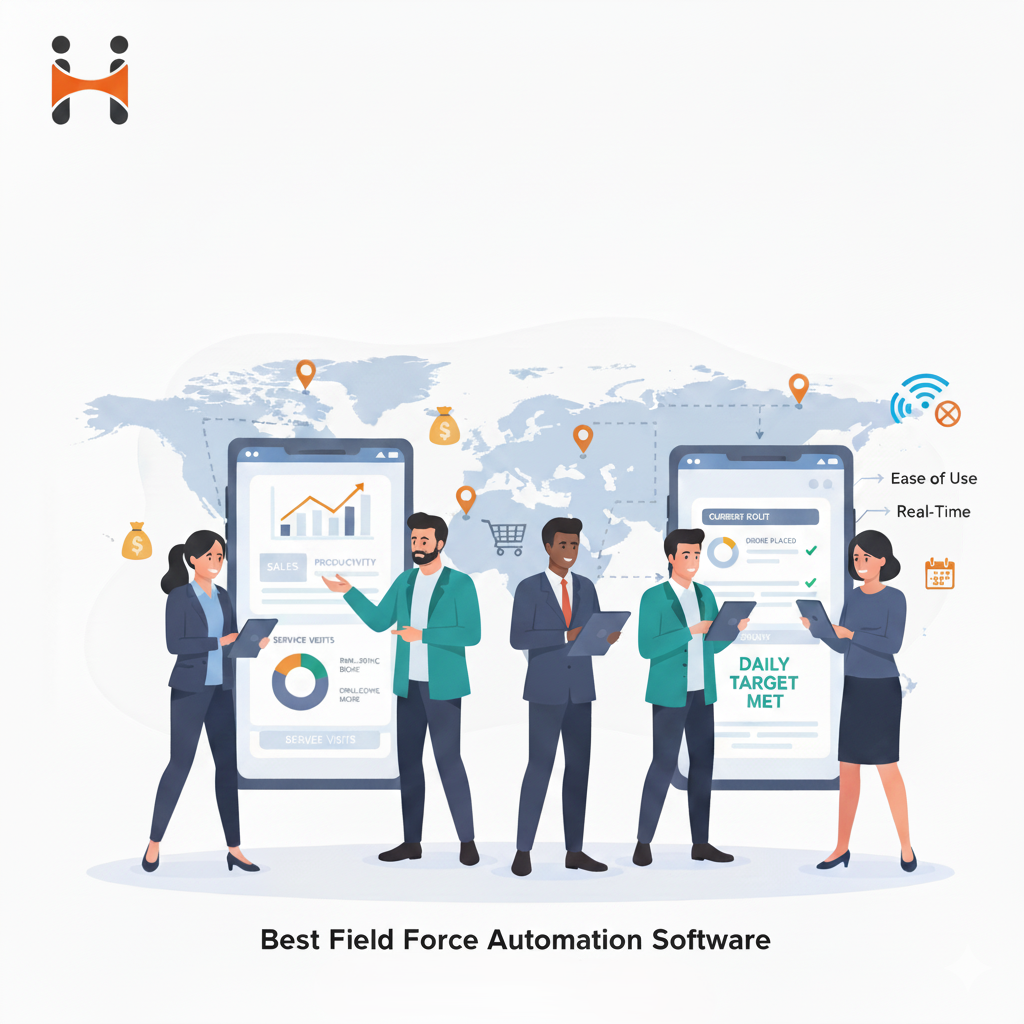
    Field force automation software streamlines mobile team operations. Struggling with manual processes? It fixes this with real-time data and clear insights. It helps managers make decisions based on facts. Here’s what it does:

    • Manages sales, collections, orders, and service visits through mobile apps.
    • Plans routes to save time and increase store visits.
    • Works offline to keep field teams productive in low-network areas.
    • Provides dashboards to track performance and growth.
    • Replaces paper, Excel, or WhatsApp with instant data updates.

    Challenges Small Businesses Face Without Automation

    Small businesses with mobile teams face big challenges. Without field force automation software, you lose sales and waste time. From working with distributors and retail teams, I’ve seen these issues slow growth. Lack of transparency is the biggest hurdle. Fix that, and other problems get easier. Here are the key issues:

    • Inventory shortages kill sales– Reps arrive at stores with no stock because inventory isn’t synced.
    • Poor travel paths burn time– Bad planning raises fuel costs and cuts visits.
    • Weak oversight hurts progress– Supervisors can’t confirm visits or coach staff well.
    • Slow payments hurt cash flow– Paper receipts and delayed approvals create delays.
    • Spotty networks stop work– Apps must work offline in smaller towns.

    Key Features of the Best Field Force Automation Software

    Picking the right field force automation software matters for small businesses. Don’t have the right mobile workforce tools? You’ll waste time and money. Focus on these features to ensure the software helps your team. They solve real problems and drive results. Here’s what to prioritize:

    • Location tracking with geotagged visits – It confirms field visits, builds coverage maps, and prevents fake reports. Check for passive tracking versus manual check-ins, battery usage, and privacy settings like work-hours-only tracking.
    • Offline-first mobile app- It lets reps log orders and data in areas with weak networks. Look for automatic data sync, conflict handling, and support for file or photo uploads.
    • Route optimization with planned schedule- It boosts daily visits and cuts travel costs. Ensure it offers multi-stop routing, prioritizes key customers, and adjusts routes dynamically.
    • Order and inventory sync in real time or near real time– It stops stockouts, prevents extra deliveries, and speeds reordering. Check for SKU-level updates, warehouse visibility, and low-stock alerts.
    • Expense capture with fast approvals– It cuts reimbursement delays and boosts team morale. Look for receipt scanning, simple approval workflows, and payroll or ERP integration.
    • Custom dashboards with performance analytics– They turn data into coaching insights, not just numbers. Ensure metrics cover visit conversion, average order size, route adherence, and collections aging.
    • Privacy-focused tracking– It builds trust with mobile teams. Verify it tracks only during work hours, limits data retention, and restricts access to managers.

    Real Benefits of Field Force Automation for Small Businesses

    Our company has worked with small distributors and retail chains. Here’s what happens when automation is done right.

    • More store visits– Smart routing and planning boost visits by 15-25% early on.
    • Fewer stockout-. Real-time inventory and order syncing cut stockouts. Customers reorder more consistently.
    • Quicker collections– Automated reminders and cash reconciliation speed up payment cycles and improve cash flow.
    • Lower travel costs– Optimized routes save on fuel and overtime.
    • Better coaching– Data-driven reviews make weekly sessions focused and useful.
    • These results aren’t automatic, they come when teams stick to new processes and use the software regularly.

    Buying Checklist: Questions to Ask Field Force Automation Vendors

    Use this checklist when talking to vendors. It helps separate marketing claims from real features.

    • Does the mobile app work offline and sync automatically when back online?
    • How does geolocation work? Is it continuous tracking, check-in based, or both? How do you manage battery drain?
    • Can routes be auto-planned and visits reassigned on the fly?
    • Is inventory synced at the SKU level between field orders and the warehouse?
    • What approval processes are there for expenses and returns?
    • Can dashboards be tailored to track specific KPIs like visits, DSO, or order value?
    • What integrations are available for ERP, payroll, or accounting systems?
    • How is employee privacy protected, like time-limited tracking or data retention policies?
    • What onboarding and training support is provided?
    • Is there a free trial or pilot with real data and support?

    Implementation Tips for Field Force Automation in Small Businesses

    Small businesses succeed by starting with a quick pilot and scaling slowly.

    • Test with a 2-4 week pilo- Select one area with 10-30 reps to try out processes.
    • Chart current workflows–  Keep what’s effective and digitize it first.
    • Use short training– Go for 30-45 minute practical sessions, not long lectures.
    • Pick three KPIs for the first 90 days– Measure daily rep visits, order conversion, and payment aging.
    • Be clear about tracking– Share how it helps, what it does, and how privacy is protected.
    • Adjust fast- Use pilot feedback to improve routes, alerts, and dashboards.
    • Teams using this approach see better adoption and less resistance in the first month.

    Quick Vendor Comparison Framework for Small Businesses

    Pick the best vendors with this simple framework. Use it when you have 4-6 options.

    • Core features (40%)– Check location tracking, offline app, route planning, inventory sync.
    • Ease of use (20%)– Look for simple app design, good training, local language support.
    • Integration and security (15%)– Confirm API options, encryption, compliance.
    • Support and onboarding (15%)– Ensure rollout help, pilot support, local assistance.
    • Cost (10%)– Demand clear pricing and ROI.
    • Score each vendor 1-5 on these points to build a shortlist for pilots.

    Field Story: How Automation Improved Productivity and Sales?

    Our company helped a regional distributor whose field reps were unsure about tracking. We ran a two-week trial focusing on route planning and offline order entry. After a month, reps made 18% more visits on average. Stockouts dropped because warehouses got orders instantly. The team got excited about weekly leaderboards showing top performers, and more reps started using the system. The key was openness. The manager showed dashboards in weekly meetings, praised good work, and fixed minor issues. Putting people first worked better than tight control.

    Choosing the Right Field Force Automation Software

    To decide this week, follow these steps:

    • Download two vendor apps. Test with a small team of 7-15 reps.
    • Track three KPIs for 30 days. Measure daily visits, order conversion, collections DSO.
    • Focus on adoption. Choose the tool reps find easiest.
    • Protect privacy. Use time-window tracking before full rollout.
    • Request a live demo. Use your customer list to test inventory and route features.

    What’s next?

    Small businesses can boost sales, cut costs, and manage their field teams efficiently with Happisales Field Force Automation Software. Start a 14-day free trial to track visits, orders, collections, and service tasks in real-time, even offline. Get a custom pilot and live demo tailored to your workflow, with actionable insights, notifications, and progress tracking to motivate your field executives.

    Frequently Asked Questions

    1. What is field force automation software?

    Field force automation software is a tool designed for small businesses to manage mobile teams efficiently. It streamlines tasks like sales, order management, collections, and service visits. Key features include route optimization, offline mobile access, real-time inventory syncing, and performance dashboards to track team productivity.

    2. What are the different types of field forces?

    Types of Field Forces

    1. Sales Force – Sells products/services directly to customers; tracks leads, orders, and routes.
    2. Marketing/Brand Ambassadors – Promotes products, runs demos, collects customer feedback.
    3. Service/Support Force – Handles on-site installation, maintenance, and repairs.
    4. Collection/Finance Force – Manages cash collection, invoicing, and payment follow-ups.
    5. Distribution/Delivery Force – Delivers products, monitors stock, and optimizes routes.

    3. What are the key features to look for in field force automation software?

    When choosing software, focus on features like geotagged location tracking, offline mobile app functionality, route optimization, real-time order and inventory sync, expense capture, custom performance dashboards, and privacy-focused employee tracking.

    4. How does field force automation software improve productivity and sales?

    Field force automation improves productivity by optimizing routes, reducing stockouts, accelerating collections, lowering travel costs, and providing actionable insights for coaching your mobile teams. This leads to more store visits, better customer coverage, and higher sales efficiency.

    5. How can small businesses choose the right field force automation software vendor?

    Small businesses should evaluate vendors based on core features, ease of use, integration capabilities, support, and cost. Running a small pilot with key KPIs like daily visits, order conversion, and collection timelines helps ensure the software fits your team before a full rollout.

  • How Field Sales Software Boosts In-Store Branding: 6 Proven Ways to Win Shoppers

    How Field Sales Software Boosts In-Store Branding: 6 Proven Ways to Win Shoppers

    The importance of In-Store Branding

    Most people think branding happens through ads, social media, or digital campaigns. The truth? 70% of buying decisions happen inside the store. That’s where in-store branding- product placement, shelf visibility, displays, and sales rep engagement- decides who wins the customer.

    At Happisales, we’ve seen how poor execution ruins campaigns: shelves go empty, displays are skipped, and managers lack real-time visibility. This is where field sales software changes the game. In this blog, we explain how tools like Happisales help brands achieve consistent, high-impact in-store branding.

    What Is In-Store Branding?

    In-storebranding is how a company shows its products and brand inside retail stores. Done well, it creates a smooth experience that guides customers to buy.

    Key parts of in-store branding include:

    Shelf placement and merchandising– Products should be at eye level and follow planograms.
    Promotional displays– Banners, stands, and digital screens highlight offers.
    Packaging and visibility– Clean and stocked shelves build trust.
    Sales rep engagement– Field staff influence buying through product knowledge and service.

    The hard part is making this happen in every store and knowing when things are missed. Using retail execution software and a system to track performance of sales persons ensures consistency and accountability.

    Challenges Brands Face in In-Store Branding

    From our work with enterprises, these are the main issues we see

    Lack of visibility– Managers at HQ cannot see in real time if branding is done right.
    Inconsistent execution– Sales reps may skip tasks or follow branding rules in different ways.
    Delayed reporting– By the time photos or reports come in, promotions may already be over.
    Accountability gaps– Without a system to track performance of sales persons, it is hard to know if tasks are completed.
    Missed opportunities– Weak in-store branding leads to lost sales and fewer repeat buyers.

    Field sale software and store visit tracking close these gaps by turning guesswork into clear data.

    6 Ways Field Sales Software Supports In-Store Branding

      1. Real-time visibility with photo proof
      With Happisales, field staff use a mobile sales app to capture photos of shelves, branding materials, and product placement inside the store. These upload instantly so managers can see what is happening in every outlet.

      Example. An FMCG client found that 40 percent of outlets were missing displays. Real-time alerts helped them fix it in hours instead of weeks.

      2. Task assignment and compliance tracking
      Managers create checklists for in-store branding. Tasks may include placing new standees, checking stock on shelves, or confirming signage matches the campaign. Reps mark tasks as done and attach photos. Compliance reports show which stores followed the plan. Using retail execution software makes it easier to track these tasks consistently.

      3. GPS and geofencing for store visits
      Some sales teams skip stores under pressure. Store visit tracking in Happisales ensures every assigned outlet is visited. Automated check-ins confirm presence and flag missed visits.

      4. Planogram compliance and shelf audits
      Planograms show how products should be placed in stores. Field sales software helps check if these layouts are followed. Reps upload photos and in some systems image recognition can spot mistakes.
      Example. A retail electronics brand using Happisales improved shelf compliance by 60 percent in three months by auditing digitally instead of on paper.

      5. Instant reporting and data insights
      Field sales software turns store data into useful reports. Managers no longer wait weeks for updates. Dashboards show compliance levels, which stores need more materials, and which reps follow branding tasks regularly. This helps companies act quickly instead of fixing problems after the fact.

      6. Employee productivity and accountability
      Field staff perform better when their work is tracked. With Happisales, managers can set KPIs tied to branding. Features like leaderboards and recognition messages encourage teams. A system to track performance of sales persons ensures fairness and motivation.

      Why In-Store Branding Matters More Than Ever?

      • Most buying decisions happen inside the store
      • Good branding in stores leads to more impulse purchases
      • Strong visibility in stores makes online ads more effective
      • Brands with consistent execution usually see 10 to 20 percent more sales
      • Without field tools like a mobile sales app or retail execution software, much of this potential is lost

      Personal Experience When Branding Failed vs When It Worked

      • When branding failed
        A beverage client launched a nationwide campaign but used only manual reporting. Many outlets never set up the displays. By the time the brand found out, the campaign had ended. Sales dropped and the brand lost visibility.

      • When branding worked
        An FMCG client used Happisales to track branding tasks in real time. Store photos were uploaded instantly. Compliance reached 95 percent. Sales rose by 15 percent during the campaign.

      • The difference
        Field sales software with store visit tracking ensured accountability and speed.

      Benefits of Using Field Sales Software for In-Store Branding

      • Consistency across stores
        Branding looks the same everywhere.
      • Faster issue resolution
        Problems are spotted and fixed quickly.
      • Higher sales impact
        Better visibility leads to more purchases.
      • Improved rep efficiency
        Clear tasks save time and effort.
      • Data-driven decisions
        Managers see which stores and reps perform best.

      How Happisales Makes a Difference?

      Happisales helps sales teams manage field work more easily. The software supports in-store branding with real-time photo uploads and compliance checks. GPS tracking confirms store visits. Automated reminders keep reps on track. Managers can use dashboards to monitor performance. Reps can log tasks even without internet.

      Clients in FMCG, retail, and pharma say these features give them control over in-store branding that they did not have before.

      Future of In-Store Branding with Technology

      In-store branding will rely more on AI and image recognition to check shelves automatically. Predictive insights show which stores need attention. AR and VR can create immersive shopper experiences. Companies using retail execution software and mobile sales apps now will be ready for these innovations.

      What’s Next?

      In-store branding is about consistent experiences where people make buying decisions. Without the right tools, it fails. Happisales provides real-time visibility, data insights, and keeps reps on track. This improves branding and boosts sales.

      Contact us for a demo to see how store visit tracking, mobile sales apps, and retail execution software bring accountability and performance to your retail execution.

    1. 7 Time Management Strategies to get more Efficient & Productive during the day

      7 Time Management Strategies to get more Efficient & Productive during the day

      It’s all about doing the right things in a shorter time. Perfect focus is like a workout for getting forward in your job, completing assignments effectively, or even getting a promotion with a salary raise. It may not be easy, but staying on track with the actions that assist your projects and clients is essential.

      The superior you are at remaining focused and managing your time, the more you will be able to do and the easier it will be to leave work on time while still having time to live. Effective time management skills help you produce better outcomes at work, but they also benefit you outside of work. Your job will improve as more of you remain for the long term.

      7 Time Management Strategies

      It’s all about personal time management, which means taking control of your time instead of letting it dominate you. We have compiled a list of 7-time management ideas for Field Force Help for the initial start.

      1. Start your day early

      Ascertain what you want to do and what you definitely must complete as your first work-related action of the day. Then, before you read your email and begin responding to questions and resolving difficulties, start your day early and become focused on this goal. Setting a clear goal for your day may take five minutes, but it may save you hours of wasted time and effort.

      1.  Focus on high-value activities

      Recognize the action that would have the biggest beneficial impact on your project, your team, and your customer if you dealt with it right now before you start something new. 

      This time management technique is implemented by successful businesses who recognize that there are both urgent and important things every day. Therefore, they try to find a fine balance and postpone the more monotonous tasks until later in the day.

      1.  Use a Planning Tool

      Time management experts advocate adopting a customised planning tool to increase productivity. Personal planning tools include planners, calendars, phone applications, wall charts, index cards, pocket diaries & mobile sales apps. 

      Jotting down your to-do lists, schedules, and things to consider frees up your thoughts to concentrate on your most critical responsibilities. Auditory learners may prefer to dictate their views rather than speak. The key is to choose one planning tool that works for you and adhere to it.

      1.  Stop Procrastinating

      If you have trouble remaining focused or procrastinating, making an external commitment to yourself may be beneficial. For example, plan a meeting in two days when you will show your work and by which time all of your actions must be accomplished. Completing the most disagreeable duties first thing in the morning and rewarding yourself with minor prizes once you’ve finished them is also helpful.

      1. Learn to delegate

      Take the time to interview and hire the greatest people so that you may have confidence in your team. Therefore, you may give some control and allocate responsibilities to individuals who work for you rather than attempting to accomplish everything yourself.

      1. Apply the 80/20 rule

      The Pareto Principle (the 80/20 rule) states that 20% of activities produce 80% of results. The remaining 80% accounts for only 20% of the outcomes. It translates to successful field force managers understanding that their top objectives will generate the most significant outcomes. The remainder is delegated.

      Similarly, rather than completing many low-value activities, focus on some high-value jobs. Remember the 80/20 rule: 80% of your output originates from 20% of your inputs.

      1.  Assign time limits to tasks.

      As per the psychological studies, Multitasking does not help save you any time. In many cases, the reverse is true. When switching from a different location, you might lose time and productivity. Multitasking regularly might make it harder to concentrate and sustain attention. 

      Setting time limits on tasks instead of working until they’re finished should be part of your planning approach. Also, close all doors demanding your attention to reduce distractions and get more work done!

      Final Thoughts:

      Take some time to assess the effectiveness of your time management tactics. If you make a determined effort to improve your time management abilities, you’ll discover that your days and tasks will go more smoothly!Organisations want to define, manage, and assess goals across the firm, not simply broad goals that only top-level employees know. Successful time management with a Field Sales Mobile App leads to increased personal satisfaction, more success at home, and a more fulfilling future for the company!

    2. Important metrics to measure your sales performance in 2022

      Important metrics to measure your sales performance in 2022

      Marketing and sales teams are under much pressure regarding working performance. They must not only generate revenue but also demonstrate it. If you don’t have the correct data, you’ll have difficulty proving your direct (and indirect) effect on new leads and sales.

      Only 23% of marketers are convinced that they are tracking the proper KPIs, indicating that this is a problem that many marketers are dealing with. Everything you do at work has to have a measurable return on investment.

      In the sales & marketing arena, this is particularly true. Along with it, field sales tracking tools have evolved. In sales and marketing, creativity is crucial, but you also need methods and statistics to back it up.

      Thanks to robust AI-based solutions, we now have more sales data at our fingertips than ever before—but merely having access to sales metrics and analytics isn’t enough. Understanding what to assess and how to interpret the data is critical.

      What Are Sales Metrics? 

      A sales metric is a variable that indicates a business or industry. For monitoring performance and examining trends, sales metrics follow the money. In other words, they measure what you are doing well and incorrectly in your sales process. You may successfully measure how well or poorly your firm is doing by developing a good understanding of its sales KPIs and optimizing and improving performance.

      On the other hand, sales data analytics examines sales data, metrics, and trends to gain insights that can help enhance sales team performance, efficiency, and profitability, drive more accurate sales projections, and optimize the overall sales process.

      Sales analytics helps field force managers enhance performance by showing the strong points and flaws of individual sales reps and the sales team, allowing them to alter behaviors and sales strategy to assure success. 

      Problems with common ways to measure your marketing and sales performance

      Marketing and sales performance management enables businesses to plan marketing efforts strategically, measure their impact, and make more informed sales decisions. They can evaluate data, create forecasts, and optimize marketing efforts and resources by analyzing data and making predictions. 

      Businesses that employ the field assist app cite advantages such as sales performance alignment with specified targets, budget optimization, increased accountability, and data inclusion.

      Unfortunately, many companies struggle with marketing performance management and fail to reap the benefits. They cannot optimize sales efforts since their databases are insufficient and erroneous. 

      For sales and marketing reps, data is a vital resource. In an increasingly competitive global economy, 64 percent of marketing professionals feel that data-driven marketing is critical to success. But, having too much data, especially from several sources, can be troublesome, and businesses cannot gain valuable insights from multiple data sources.

      In marketing and sales performance management, non-automated reporting is also a major issue. It’s inconvenient and time-consuming, leaving space for costly errors and data integration issues.

      Six sales metrics to measure performance

      The key performance indicators you designate as critical to your business model are used to discover the crucial metrics for your organization and your team. Here are 6 of the most critical sales metrics for any revenue team:

      • Customer Acquisition Cost

      Customer Acquisition Cost (CAC) is a system that compares the cost of acquiring a new client to the customer’s long-term worth. Startups and organizations use it to determine how much they’re spending on customer acquisition through marketing methods.

      • Average Revenue per Unit 

      You gain an average amount from 1 unit, to put it simply. Therefore, the important KPIs of any subscription service company can be the average revenue per user (ARPU) and average revenue per account (ARPA). The formula divides the total revenue earned in a particular time by the average number of customers to that service during that same period.

      • Customer Churn Rate

      The churn rate is the number of customers who cancel or do not renew their subscriptions during a given period. Your plan’s churn rate is an important metric. It can assist you in determining whether you should cut your rates, improve client satisfaction, change your goals, and more. In addition, it’s a popular measure that SaaS companies use to track customer retention.

      • MRR Growth Rate

      The net MRR growth rate is a widely used industry indicator for assessing a company’s financial health. This marketing metric estimates the percentage increase in your company’s monthly recurring income. In addition, you can use this scale for tracking your company’s overtime performance.

      • Conversion Rate

      For an E-commerce business, this is the most important number. The conversion rate is a percentage that indicates how many visitors to your site perform the action you desire. The conversion rate depicts the visitor’s percentage who become customers.

      • Cost per Acquisition

      CPA stands for Cost Per Action. It indicates the amount of money you spend on a non-customer, such as advertising to generate leads, new users or registrations, or transactions made during a free trial period. 

      The cost per acquisition (also known as the cost per conversion) is a metric that analyses the total marketing costs incurred due to user action that results in revenue.

      Final Words:

      Organizations require the correct metrics to assess achievement in the right business sectors, such as the right Field Force Tracking Solution. They also require leadership to recognize which metrics are most important to allocate resources better. 

      While selecting performance indicators and establishing baseline targets, sales executives must align their teams on a clear set of strategic objectives and measures.

      With real-time sales data analytics, best-in-class revenue teams utilize Happisales, a Field service software, to spot risk and act on opportunities. In addition, revenue teams may track sales activity data automatically with Happisales.

      Are you interested in understanding how real-time sales analytics from Happisales can help you provide your sales team additional visibility? To chat with one of our revenue experts, request a demo or send us a note.

    3. 4 Ways to Measure the Productivity of Field Sales Employees

      4 Ways to Measure the Productivity of Field Sales Employees

      Consistently exceeding sales targets pays everyone’s bills, including commissions and bonuses, and guarantees the company’s bottom line is powerful. The biggest determinant you have for consistently managing and delivering on your goals is measuring and tracking your Field Sales Team’s performance and progress.

      You cannot afford to lose vision of the woods and only see individual trees. The first step towards determining sales team performance is to have clear visibility. It is far more efficacious than piecing together the entire picture from the operations of individual sales reps, which is time-consuming.

      Implementing sales tracking may appear difficult, but it does not have to be. There are only a few practical steps required to develop an effective method for measuring, tracking, and reporting on the performance of your sales team.

      4 Ways to Measure Sales Productivity:

      • Establish key performance indicators – 

      KPI, also known as the Key Performance Indicator, is a value that measures the performance of various aspects of the firm to determine whether or not it has met its targets. Any sales organization must create a real-time dashboard to track the performance of their sales team. 

      Also, a Field Force Automation Solution is equally enabled to track the performance and productivity of your sales reps’ team. 

      • Evaluate forecasted business vs. Targeted business – 

      Forecasting your business is more than just a numbers game. Rather, it is a well-researched estimation that defines an organization’s future tendencies. 

      Accurate prediction reports express how many deals are necessary to fulfill your goal, the most likely buyers, and how much prospecting is required to fill your sales pipeline. field sales reporting apps are perfect for such predictions. The accurate forecast numbers provide a benchmark for salespeople to see if they are on track to meet their goals.

      • Make time for constant follow up – 

      It is also tough to set aside time to check in with each individual. Use this opportunity to debate how their performance compares to the team’s goals and emphasize any key areas for improvement.

      • Measure long and short-term goals – 

      The most impactful performance metrics balance short-term task completion with long-term performance. This combination of objectives and incentives promotes a positive work ethic.

      With the right investigating tools and a field service management software designed to help you track performance in real-time, you can begin working smarter and smacking those team targets regularly! With such intelligent solutions, you can monitor, track, and analyze your revenue-generating activities and ensure maximum productivity every time! Visit us at Happisales to learn more.

    4. Can sales force automation help the Pharma industry in the pandemic?

      Can sales force automation help the Pharma industry in the pandemic?

      The Pandemic has hit every industry in the country. The second wave was ruthless and the pharmaceutical industry wasn’t left either. As the country shows resilience in the face of the third way, industries have adapted to new ways of life and have shown significant changes in the way they operate. The pharmaceutical industry is touted to rise again from the ashes to become one of the leaders in the economic charts. Industries have taken to the idea of sales force automation widely and the pharma industry has quickly stepped into it too

      When it comes to the pharmaceutical industry, sales is a big deal. Even as an outsider, one could find pharma reps in clinics and small health care institutions trying to win over the prescriptions of a doctor. Back in the pre-internet era, one could find a rep waiting for hours just to gather a day’s appointment of the doctor. 

      Although things have changed dramatically over the last few decades, sales in the pharma industry have been quite a challenge and take a day’s time from the sales team. A Mobile Sales App helps the sales crew manage multiple prospective clients where he could schedule appointments and meet more than two people rather than warming the waiting bench. If you are from the pharma industry, you would know better, but if you would want to know how sales force automation can help during these dire and testing times, here are a few things that can help you with.

      Streamline the Sales team

      Any sales force automation system implemented in any business has its priority set straight. The app’s primary gift to a business would be to manage, operate and execute sales in a very structured way. It’s not the first time we have spoken about this particular point. Try reading one of our blogs here to help you understand (in detail) how automation can help better your sales team more. 

      Reduce cost through digitalisation

      One of the most traditional ways of keeping track of business transactions is filling up the filing cabinet. A look at the combined yearly expenses spent on files and papers could put a frown on your finance team’s face. What if you could cut down on such expenses, or find a way around it. This is where sales force automation lends a helping hand.

      Adopting a sales force tracker app in your establishment can do a lot more than your average filing cabinet. The app can store every data that you would need to pull out in the near future under any circumstances. Bills received, invoices raised, new client agreements, date of purchases, credit periods, customer disputes – everything and anything that happens between the business and its customers are noted with fine precision and in real-time. Apart from reducing your expense on papers and petty cash needs, it also organises your files automatically and can help you look out for information based on time or customers whenever and wherever needed. If this doesn’t put a smile on your finance team, we can help you with more!

      Spotless order & inventory management

      Let’s be honest. The pandemic was and still prevails to be a hard-hitting punch to the guts of many businesses around the world. The worst part of it was the inability of the business to have its manpower restored to its optimal levels. Such cases had overworked crew, chaos on the sheets and numbers that mismatched with the actuals.

      It is no surprise that small scale businesses adopted salesforce automation to tackle such a dire consequence. A sales force tracker app tracks the inward and the outward movement of goods with zero errors. The user-friendly UI makes the user understand the details on screen more than on paper. Keeping track of the orders that come in along with the location of the order and the expected time of delivery, and matching it with the available goods in the inventory/warehouse gives for proper planning and execution. This way your orders can be executed with precision and eradicates any chance of inventory mismanagement

      Tasks & reports automation

      Managing a team of more than 5 would be a handful while working remotely, and to think of getting updates and providing them with their tasks is horrific. The pandemic has pushed the management to think out of the box and sales force automation has made it easier than ever. 

      Forget spending time on conference or status calls, the sales force tracker app helps you manage your team without having to move from your couch. Assigning tasks and tracking your team’s whereabouts are now possible with the GPS tracking modules and real-time data inputs. This way, you would know what Vinodh was doing at 12:46 PM last Monday! No more spending time on calls, you can now use all that extra hours to usher a new age of sales vibes into your sales reports! Forget keeping up the team’s sales standards, It might even help your team get an extra client or two than be

      Workaround pandemic restrictions

      The restrictions have been severe in the last few months and businesses were forced to surrender their operations. As businesses were forced to operate with closed doors, and their employees working from home, the major network of the sales team was disrupted and possibly left alone to rot. 

      An Sales Employee Tracking App helps manage such situations. It helps the management team to understand the best possible way to cater to the needs of new leads. It helps find people of the sales team closer to a possible lead and can let them connect with them from the comfort of their geographic location. Even more, with the help of an automated sales force, people could get things done with ease.


      Let us just put a thought into your mind as we end this long essay. With a workforce management app giving you the benefit of cutting down costs and comforting you sales team, one could use the saved up costs to sponsor them the covid shield vaccine without a second thought.- Give it a thought, but if you are thinking about getting your industry automated, visit us at happisales and we would love to give you a demo!

    5. Using an avant-garde Software For Tracking Sales is Planning or Spying?

      Using an avant-garde Software For Tracking Sales is Planning or Spying?

      A few years ago, salesmen breaking-into a house used to be a threat to the public. The advent of technology has given birth to softwares for tracking sales people and field force employees across diverse industries – FMCG, Ecommerce, Health Care & Pharma, Finance and Local Services. A source from SalesForce states that 71% of Sales Reps / Field Sales Employees spend ample time on data entry. The field sales management found the automation process expedient to both team management and customer experience. Organizations have been deploying online real-time GPS trackers to administer the field force employees’. The method has been effective resulting in happy customers and a productive team. 

      When we say real-time employee tracking, it leaves any field sales executive with a fear of doubt that he/she is spied upon by the application from their management. 

      So, let’s probe into the details of employee location tracking – planning or spying?

      Industries that demand employee / sales force tracking 

      Considering the present COVID situation, customer safety has been paramount to all businesses offering door-to-door delivery services. Thereby, a sales tracking software or system has become the need of the hour for such service providers. Some of the industries that are getting benefited from this are:

      -FMCG

      -Ecommerce

      -Healthcare & Pharma

      -Financial services

      -Local Services

      Are they spying on their sales or field force employees or the management is seeing this as an act of resource planning? To answer this question, let’s try to understand what a Field Service Management Software can do. 

      Realtime Location for Customer Visits

      A sales personnel who belongs to the field force is provided with an online real-time location/GPS tracking application to understand his customers are demarcated based on territories. 

      By implementing this:

      -The job of a sales person becomes easier in locating the customer. 

      -He/she gets visibility to nearby customers so that their focus is shifted to more new customers to expand their company’s business. 

      -The number of customer visits done by a salesperson contributes to the monthly target that measures their performance. 

      -The performance of each field force / salesperson is being monitored by this application. 

      -The application can also track where the salesperson is spending his working hours. This can help the management in cross-validation in case of any discrepancies. 

      Would a sales force tracker that can do all of the above interest you? 

      It doesn’t stop here and there’s more to it. 

      Attendance Tracking

      What if a field sales person claims that he was present on a particular day at the customer’s place but he was not? How does a conventional attendance tracking system help in boosting your sales team’s productivity?

      If these have been your pain points with field sales or sales force management, then your eye-opener is here!

      While there are numerous employee tracking systems and android applications available in the market, what are the features you can expect from one such software to upgrade your sales team?

      -Login and Logout time Administration

      Enabled with an online real-time GPS tracker, Sales Employee Tracking App should be capable of tracking both logins and logouts times of an employee seamlessly. Apart from this, an attendance tracking application should also be able to clock the number of hours spent by each sales employee. This shall aid the management in measuring the productivity of the employee, and analyze the time that goes into each activity carried out by the employee throughout his working hours. 

      In cases where the employee has lost possession of his mobile phone, the application should still be able to track the last login or logout time so that tracking the employee’s working hours is not affected. 

      -Leave Management

      Do it with ease by both managers and employees – a leave management module in any online employee tracking app can benefit both in terms of planning and management of resources across the organization.

      Workflow and Task Management

      The best Field Service Software gives you the ease of usability with workflow and task management. While choosing one such application for your sales, the following features can save time and increase the productivity of the team as a whole. 

      -Creation of Tasks

      -Assignment of Tasks

      -Delegation of Pending Tasks and Responsibilities 

      -Data collection of completed tasks like customer visits and documents. 

      -Supporting features like chat and voice notes to ease inter-team communication

      If you are looking for a tool for your local services business, then there are some of the features that can help you in field force management. Read on to get an understanding of how this can work!

      • A field force employee is mapped to a particular territory (a locality in this case).
      • He takes charge of customer visits and service with this particular territory. When (s)he completes their day’s target with this territory, the pending visits in the nearby territory can be allocated to the employee. 
      • Further, the employee can also store the customer documents – photographs of a particular complaint with a local service availed by them and share it with the management. The management can take immediate responsibility and help the customer resolve the problem. 
      • In case of any issues, chat and voice note options are available for the employee to communicate the customer issues to the management. 

      By doing this, you increase the chances of customer satisfaction, retention and service. 

      Document Upload and Data Security

      What would a customer fear for when your organization is using such employee tracking applications? With no second thoughts, it’s their data. 

      All your customer data is in the hands of your field sales. To quote an example, a field force employee who works with a financial institution has access to customer data like Bank Statements, Aadhar Card, PAN Card and Signatures when there is a customer request for a Loan Account. This data requires a secured spot to be uploaded and stored. 

      Choose an online employee tracking application that can be compatible with both android and IOS mobiles offering complete security to your customer data. 

      Added to this, the customer data misuse could be easily tracked if it happens when you deploy cutting-edge field tracking software which is best in the market. 

      Happisales promises utmost secrecy of data and is trusted by 100+ businesses and customers for data security. Read more about the app here!

      Leaderboard for Performance Measurement 

      Sales appraisals can never happen without a performance measurement system. A leaderboard module in field force management is not only advantageous for performance analysis but also motivates the peers with achieving targets. Of the teams in an organization, the sales teams are said to have the most remunerative benefits in the form of bonuses. In some organizations, this happens frictionlessly with managers not being partial towards their team members. 

      Are you encountering such situations in your organization? It’s high time you switch to a software for tracking your sales team and their performance. 

      Summing up: The features like real time location tracking and attendance tracking might throw an impression that an employee is being spied on by the managers. But, deriving benefits from a sales tracking software for your teams testifies the following. 

      -Happenings in the field

      -Cross-validate the field sales team in case of any discrepancies

      -Areas where the sales personnel spend most of their time – Time spent with existing and new customers. 

      This can help the management team to plan the activities of the field sales, instructing them to spend more time with the new customers in order to increase sales and revenue. Therefore, an employee tracking app used by the field sales personnel is righteously being used by the management for planning and not spying.