Tag: sales tracking

  • Why is Route Optimization Important in Field Sales Management?

    Why is Route Optimization Important in Field Sales Management?

    Field sales are still relevant in every industry segment and are thought to be the most successful in generating fantastic business opportunities. Managing field trips, tracking salespeople’s routes, measuring the number of time salespeople spend on the road, keeping track of meetings, prioritizing client obligations, and optimizing routes are some of the basic statistics that field force management requires.

    It necessitates using a route planner/sales route management tool to effectively manage the complete sales path. The traditional system involved manually plotting maps and routes, which resulted in longer hours and mismanaged timetables. 

    Now comes the automation of route planning and scheduling visits, thanks to an efficient system that can help field force managers optimize routes to their maximum potential. Sales route planning has proven extremely effective in linking sales reps with significant business possibilities at the proper time and location. 

    Start with explaining sales route optimization and then look at why a key route planner is so important for field sales teams.

    What is Route Optimization?

    Identifying the most efficient route for a given number of waypoints is known as route optimization. It is an extremely sophisticated procedure, and the number of alternative routes grows exponentially as the number of waypoints grows. Building the shortest route for the provided waypoints based on time or distance must also consider other parameters such as the number of intersections.

    Route planning and optimization can help you determine the quickest and most efficient routes, lowering fuel expenses and reducing the amount of time field salespeople spend driving.

    The Significant Impact in Field Sales using Route Optimization:

    People who work in sales need to go from one area to another swiftly and efficiently. Many salespeople have to drive 30 to 45 minutes to and from their sales zone. With this in mind, your sales force must have access to the necessary planning tools to stay productive when on the road. 

    Field Force Automation Tools will assist them in planning routes that they are confident will get them to and from their destinations in the shortest time possible. It can help them cut down on travel time, allowing them to be on time at work and increasing their chances of selling more. Appointments are an important aspect of a company’s sales process. 

    The Sales Representatives must travel to visit clients at various locations, and the number of appointments they can complete is determined by the routes they take. The following are some of the advantages of route optimization for businesses:

    1. To Save Money, Time & Fuel Efficiency:

    The total distance and average miles driven between waypoints are minimized when Sales Reps design and optimize their itineraries. Gasoline efficiency improves as the distance is reduced. When the total money spent on fuel by an organization is added together, route optimization alone saves money.

    1. Improve Client Satisfaction:

    Sales reps can spend more time serving clients and enhance overall customer satisfaction by planning and optimizing their routes ahead of time. Furthermore, addressing spontaneous meetings becomes simple because the route may easily be modified to incorporate extra waypoints.

    1. Aim for a higher On-Time Performance Rate:

    One of the most vital benefits of Route Optimization is that Sales Representatives can boost their on-time performance rate. Because the routes have been adjusted, Sales Representatives may reach customers on time and avoid keeping them waiting. 

    Even if your field sales representatives are unavailable in the office, you can view real-time updates on customer data and the newest deals as a manager with route optimization. In addition, you can see your sales team’s performance by stacking sales reps according to how many check-ins are made, closed sales, and their income with a sales employee tracking app.

    Are Route Planners much needed for Optimizing Field Sales?

    Using route planning software for your sales staff has numerous advantages. First, your salespeople will appreciate the increased efficiency. 

    They will be more effective and in a better mood if they have a route planner that resolves various issues in organizing their journeys. A route planner offers much more than just a list of destinations to visit and the best routes to take to get there. 

    It provides you the optimum period to go, hold back, traffic, and environmental factors. Knowing these elements will enable your sales team to make more accurate and timely judgments, allowing them to achieve more.

    1. Advanced Sales Force Activity Planning:

    A route planner assists field salespeople in arranging their sales activities ahead of time, resulting in a well-organized framework that can be managed and monitored. For example, a route map can be developed to display the distances to be traveled, the client list, and other options available. Sales managers can use this information to optimize and successfully organize the entire schedule.

    1. Complete visibility:

    Implementing a route planning module keeps managers up to date on the most up-to-date real-time data, allowing them to conveniently monitor and manage the field force. In addition, more coordination and interaction between the road teams and the managers provide a complete view of the situation.

    1. Relief from Inefficient Expenditure:

    A strong software solution for route planning and management like Happisales can save the sales force money and time by preventing them from making unnecessary journeys. Furthermore, it aids in the extraction of the finest feasible paths by which sales agents can save money and time.

    Final Words:

    A strong sales force management solution is built upon intelligent and effective route planning. Therefore, a few vital aspects of a Field service management software & must be prioritized from the beginning to the end.
    A comprehensive sales route management module, such as Happisales, can aid salespeople and managers in various ways, including increasing sales and ensuring a seamless operating flow between routes. As a result, when adopting any Field Force Help, good sales route planners are necessary and must be given proper consideration.

  • Important metrics to measure your sales performance in 2022

    Important metrics to measure your sales performance in 2022

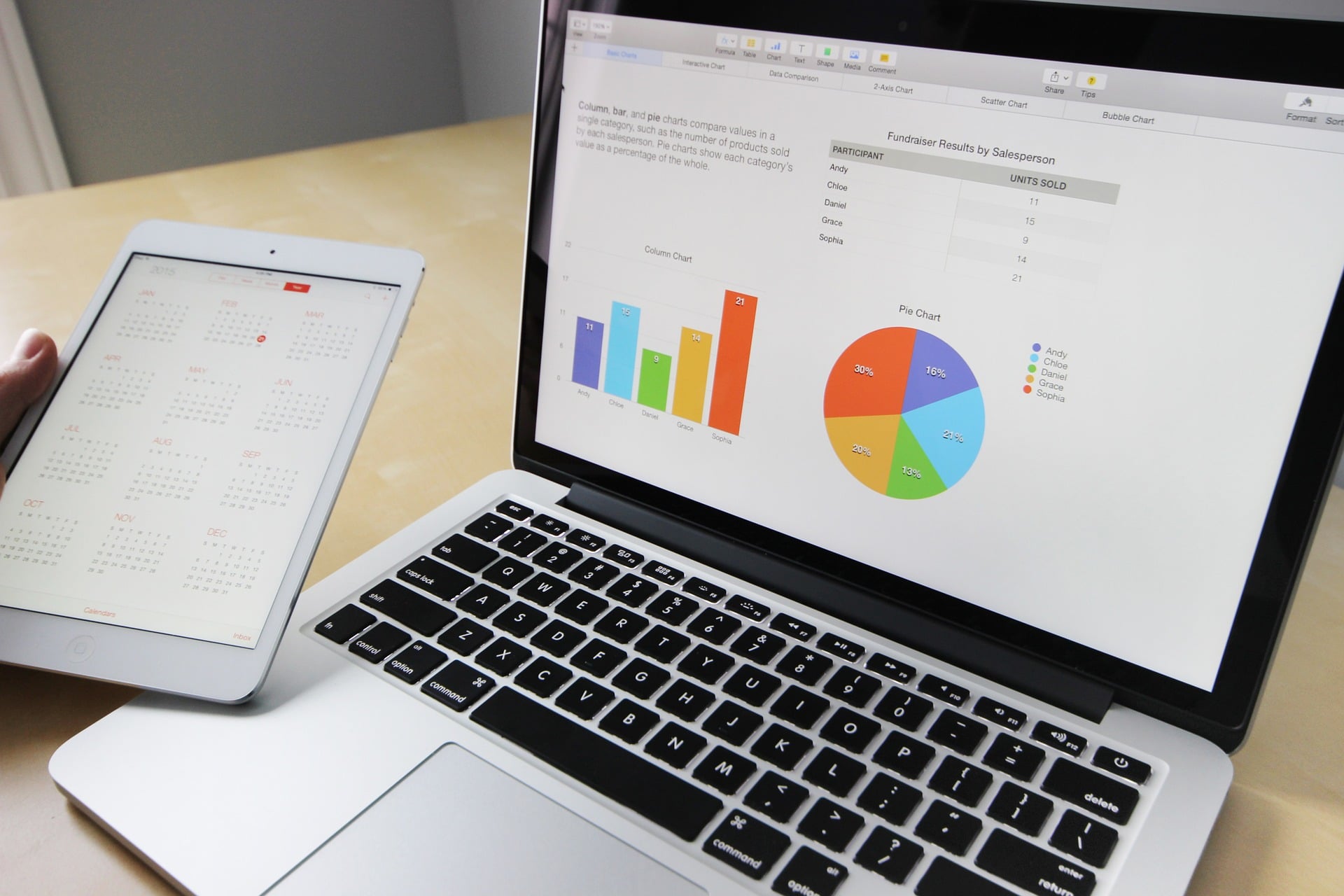
    Marketing and sales teams are under much pressure regarding working performance. They must not only generate revenue but also demonstrate it. If you don’t have the correct data, you’ll have difficulty proving your direct (and indirect) effect on new leads and sales.

    Only 23% of marketers are convinced that they are tracking the proper KPIs, indicating that this is a problem that many marketers are dealing with. Everything you do at work has to have a measurable return on investment.

    In the sales & marketing arena, this is particularly true. Along with it, field sales tracking tools have evolved. In sales and marketing, creativity is crucial, but you also need methods and statistics to back it up.

    Thanks to robust AI-based solutions, we now have more sales data at our fingertips than ever before—but merely having access to sales metrics and analytics isn’t enough. Understanding what to assess and how to interpret the data is critical.

    What Are Sales Metrics? 

    A sales metric is a variable that indicates a business or industry. For monitoring performance and examining trends, sales metrics follow the money. In other words, they measure what you are doing well and incorrectly in your sales process. You may successfully measure how well or poorly your firm is doing by developing a good understanding of its sales KPIs and optimizing and improving performance.

    On the other hand, sales data analytics examines sales data, metrics, and trends to gain insights that can help enhance sales team performance, efficiency, and profitability, drive more accurate sales projections, and optimize the overall sales process.

    Sales analytics helps field force managers enhance performance by showing the strong points and flaws of individual sales reps and the sales team, allowing them to alter behaviors and sales strategy to assure success. 

    Problems with common ways to measure your marketing and sales performance

    Marketing and sales performance management enables businesses to plan marketing efforts strategically, measure their impact, and make more informed sales decisions. They can evaluate data, create forecasts, and optimize marketing efforts and resources by analyzing data and making predictions. 

    Businesses that employ the field assist app cite advantages such as sales performance alignment with specified targets, budget optimization, increased accountability, and data inclusion.

    Unfortunately, many companies struggle with marketing performance management and fail to reap the benefits. They cannot optimize sales efforts since their databases are insufficient and erroneous. 

    For sales and marketing reps, data is a vital resource. In an increasingly competitive global economy, 64 percent of marketing professionals feel that data-driven marketing is critical to success. But, having too much data, especially from several sources, can be troublesome, and businesses cannot gain valuable insights from multiple data sources.

    In marketing and sales performance management, non-automated reporting is also a major issue. It’s inconvenient and time-consuming, leaving space for costly errors and data integration issues.

    Six sales metrics to measure performance

    The key performance indicators you designate as critical to your business model are used to discover the crucial metrics for your organization and your team. Here are 6 of the most critical sales metrics for any revenue team:

    • Customer Acquisition Cost

    Customer Acquisition Cost (CAC) is a system that compares the cost of acquiring a new client to the customer’s long-term worth. Startups and organizations use it to determine how much they’re spending on customer acquisition through marketing methods.

    • Average Revenue per Unit 

    You gain an average amount from 1 unit, to put it simply. Therefore, the important KPIs of any subscription service company can be the average revenue per user (ARPU) and average revenue per account (ARPA). The formula divides the total revenue earned in a particular time by the average number of customers to that service during that same period.

    • Customer Churn Rate

    The churn rate is the number of customers who cancel or do not renew their subscriptions during a given period. Your plan’s churn rate is an important metric. It can assist you in determining whether you should cut your rates, improve client satisfaction, change your goals, and more. In addition, it’s a popular measure that SaaS companies use to track customer retention.

    • MRR Growth Rate

    The net MRR growth rate is a widely used industry indicator for assessing a company’s financial health. This marketing metric estimates the percentage increase in your company’s monthly recurring income. In addition, you can use this scale for tracking your company’s overtime performance.

    • Conversion Rate

    For an E-commerce business, this is the most important number. The conversion rate is a percentage that indicates how many visitors to your site perform the action you desire. The conversion rate depicts the visitor’s percentage who become customers.

    • Cost per Acquisition

    CPA stands for Cost Per Action. It indicates the amount of money you spend on a non-customer, such as advertising to generate leads, new users or registrations, or transactions made during a free trial period. 

    The cost per acquisition (also known as the cost per conversion) is a metric that analyses the total marketing costs incurred due to user action that results in revenue.

    Final Words:

    Organizations require the correct metrics to assess achievement in the right business sectors, such as the right Field Force Tracking Solution. They also require leadership to recognize which metrics are most important to allocate resources better. 

    While selecting performance indicators and establishing baseline targets, sales executives must align their teams on a clear set of strategic objectives and measures.

    With real-time sales data analytics, best-in-class revenue teams utilize Happisales, a Field service software, to spot risk and act on opportunities. In addition, revenue teams may track sales activity data automatically with Happisales.

    Are you interested in understanding how real-time sales analytics from Happisales can help you provide your sales team additional visibility? To chat with one of our revenue experts, request a demo or send us a note.

  • Can a field scheduling software help mitigate business risk?

    Can a field scheduling software help mitigate business risk?

    Business enterprises confront a slew of risks that must be managed properly at virtually every stage of their operations. Traditionally, many of these risks have been handled by making changes to the planning, sourcing, and manufacturing execution processes. The selling process is one area where there is a lot of room for mitigation in this respect. A field force automation tool can help greatly in working on activities that are counter-productive on a daily basis. From expensive communication lapses to out-and-out theft, a field service management solution can save your business from heavy expenses. With every success, there are innumerable risks that threaten since the beginning. Risks are so common in every business activity that they’ve become an inherent part of the corporate landscape. Companies big and small are equally concerned with risks and are actively searching for ways to mitigate as well as minimize the frequency of risks in business.

    Choosing the best solution for your sector, in terms of security measures and features, is critical. Read further to find out how field service software can help you mitigate business risk

    What is field service software?

    Field service software is designed to help an organisation manage staff activities and work schedules. Also referred to as sales tracking software, this solution is quite popular among field service firms. It can assist in decreasing expenses and increasing efficiency. Furthermore, the software can help with asset tracking, resource dispatch, staff safety, inventory support and integration, and back-end solutions. Businesses may use such a system to access consumer data, manage orders efficiently, and execute route planning and review at a low cost.

    How can sales tracking software help?

    It can help you identify the risks – this is basically the first step towards providing any remedies for the various risks.

    The next step is to analyse. This is critical to understand the nature of the problem

    Subsequently, you can respond to the risk identified and analysed with measures to mitigate and minimize future occurrences.

    The final step is to monitor and control. This is done via regular reports on task progress to comprehensively alleviate risk. 

    • Effective and Smooth Scheduling

    Scheduling may be one of the most time-consuming activities for a manager, whether you’re seeking to cover shifts at a restaurant or aligning your field service personnel with a week’s client demands. The fact that many individuals try to handle this process using basic spreadsheets makes it much more laborious and leaves more potential for error.

    When you select a tool that does not track field sales reporting automatically to construct your timetable, you may encounter issues. Visual signals and drag-and-drop capabilities in the field service management software lets you rapidly construct realistic schedules without typical mistakes like duplicate booking.

    • Skill-based task assignment

    To make scheduling even more efficient, sales tracking software allows you to create rule sets. These rulesets decrease the chances of scheduling the wrong person for a task or having someone manage an installation before the proper equipment arrives. You can also use filters and tags to assist managers in swiftly selecting the best resources for a project. You may, for example, send a plumber with shower and tub installation knowledge, someone who you may have previously categorised as good with fearful or fussy customers. Assigning tasks based on your personnel’s skill will help mitigate any customer complaints you may get, you can be assured of the personnel doing a great job at the task assigned. 

    • Real-time data tracking

    A field service management software tool can notify you if the team is involved in a new task in the coming days. Field sales reporting solutions minimise overall friction in all of your processes by bringing teams together so that everyone is on the same page about priorities and scheduling. Employees know they’ll get updates on new priorities as quickly as possible, allowing them to focus on their task without worrying about surprises at work or if they’re going to the correct client next. It’s typical for field reps and others who don’t work in the main office to feel disconnected from communications, which can diminish their value.

    •  Transparency across departments

    Thanks to the availability of data on the sales tracking software system, every department has access to all the data in real-time and your managers and superiors can assess where a specific task is at, at any given point in time. The centralization of the system makes this possible – data access anytime anywhere thereby bringing transparency across different departments that are involved in the same project.  

    A field service software surely can, in a nutshell, identify risks, assess their likelihood and effect, link them to mitigating measures, and follow their resolution. If you are keen on alleviating the risks to your business and would like to know more about this solution, visit Happisales and schedule a demo today!

  • Top 7 ways to improve sales productivity  to improve productivity

    Top 7 ways to improve sales productivity to improve productivity

    Every sales head in any company dreams of skyrocketing sales just like how it happens in renowned movies like The Wolf of Wall Street or Rocket Singh, Salesman of the Year. But, what matters the most is how productive your sales reps are for you to achieve your sales target as a team. Do you measure your sales reps’ work with tracking software? Then, this would interest you even more. 

    The effectiveness of sales reps is measured by the number of successful face-to-face meetings they had with the prospects which is followed by signups or follow up meetings. It looks like a lot of time is involved here. 

    Having said that, how do sales reps spend their time? Has automation been any good for the sales force so that productivity is boosted? 

    YES! 

    How do Salesmen spend their time?

    Have you ever passed by the inbound sales team bay where there is a lot of pandemonium throughout the day? Believe it or not, a lot of conversions can begin or end here. As surveyed by Sales Insights Lab, 42% of the sales people say that the phone is the most prudent sales tool. But how does this impact sales?

    The quality of the data received is the pivotal factor that determines sales productivity in any organization. Void fields and redundant entries block the sales reps way further. 

    Followed by the first one, the sales reps are left with spending a lot of time to research about the prospects as there is insufficient data for them to proceed. 

    With accurate data, the task to-do by each salesman can be easily automated into a workflow. A lot of companies today do it through Field Service management Software.

    Believing that sales is the revenue avenue, a handful of globally renowned companies have been capitalizing on sales and marketing every year. Here’s a sneak peek to it. 

    On the other hand, intuitive CRMs and automation have eased Salesmen’s jobs that eventually contribute to revenue. Are you thinking of a sales force automation anytime sooner?Then this is all you should be knowing. 

    7 Ways to Improve Sales Productivity

    1. Power of Sales Tools

    A bunch of sales tools have proved effective and efficient, enabling sales reps to perform without wasting their time. A mobile CRM is one good example of a powerful sales tool which can also be a Field Service Software. How does this route help?

    Territory specific customer management – You get to organize your customers based on their territories and keep a track of customer interactions in a timeline. 

    Sales activity management – You can manage the activities of your sales reps like customer visits, calls and orders. This can help them achieve their monthly targets. 

    Order management – You can collect orders on the go, manage customer orders, provide discounts and a lot more.

    Collect payments -. Enables your sales reps to collect payments from customers with subtle reminders. 

    Customer complaint management – Your customers are your advocates. Resolve complaints with a seamless workflow before it impacts your business. 

    Impressive isn’t it? We provide all of these features and even more that can lead to a productivity spike in your sales team”. Check out Happisales, a Sales Tracking Software that could level up your business. It is a cutting-edge mobile tool developed exclusively for sales that gives you an edge over other applications.

    Preparing your sales team to get upgraded to such a mobile sales tool would be your first step towards being productive as a Sales Team. 

    2. Capitalizing on Training of Sales Representatives / Sales Team

    When you are prepared to upscale your sales team with Field Force Automation Tool, you are also set to invest in training them to use the product. Apart from technical training, as an organization you are also bound to train them on how to face customers and answer their queries. 

    Experts also recommend another strategy called individual sales training or one-on-one sales training that has actually worked wonders with productivity improvement .

    3. Task Automation & Time Management

    Automation is a time-saver in disguise. Speaking of it, there goes a list of tasks that can be automated when you are in sales. It is made possible using a tech savvy sales employee tracking app. Some of the time-consuming tasks that can be automated are: 

    1. Customer Data Entry
    2. Daily tasks for sales reps
    3. Follow up emails 
    4. Reminders to customers for payments

    For instance: With a field sales executive in the finance industry – (Non-banking sector per se) the maximum amount of time goes into collection of data, documents and payment dues. Automating this using a Field Force Help app saves his time therefore enabling him to be more productive. 

    4. Lead Scoring

    The sales teams have  always been ambitious to close the leads faster. Through Lead Scoring, you can easily evaluate potential leads. This can further avoid time consumption by your field sales executives with non-buyers. 

    Sales teams use traits, characteristics, demographics and historical data to evaluate and score leads. Most companies have this feature in their field assist application. It has helped sales teams make judicious decisions with prospects, understand their buyer persona and convert them based on the data provided. 

    5. Incentivizing Reps

    Employees in the sales team tend to earn more than the ones in the other teams. Sounds like a corporate myth? Ideally, sales employees get the perks of being incentivized. Rewards and recognitions help gain momentum and motivate them to perform better. 

    Gamification is a technique leveraged by big-league companies to empower sales employees and make them productive. 

    Try it and see your sales team perform better. 

    6. Referral

    Your existing customers are your brand ambassadors. Get vouched to have your brand name spread among their peers through traditional word of mouth. Leads that come through word of mouth would be more open to knowing what you offer. The possibilities of converting leads from referrals are higher compared to the ones that come from other channels. 

    With this, you can also put a smile on your existing customers’ faces by providing them with referral coupons and offers. This is another tried-and-tested method of improving sales productivity. 

    7. Alignment of Sales and Marketing

    Sales and Marketing teams in every company have always been rivals for the methods and approaches that are believed and practiced by each team. 

    Here are some tips to get the teams aligned and see them perform better. 

    To quote an example, the MQL or (Marketing Qualified Lead) is one that is considered by the marketing team through behavior and analytics who is likely to become a customer. This lead is sent to the sales team for them to pay more attention to the process of conversion. 

    The Sales Qualified Lead (SQL) is a qualified lead and a potential buyer / customer displaying interest towards the product or service. 

    Mostly, the difference of opinion between marketing and sales teams tends to arise when the sales team considers some of the MQL as low quality leads. In order to avoid the drift between the two and produce quality leads, you should have regular touch points with the teams. 

    If you are already trying these methods at your organization and looking for a technology change, then try Happisales, a software to aid you with tracking field service as a sale begins there. 

    Happi-Selling!